

328M Users for Errand Services: China's Local Life Digital Infrastructure Powers Global E-Commerce
As of December 31, 2025, China’s on-demand errand and instant delivery services reached over 328 million active users, with annual real-time delivery orders totaling 60 billion. This scalable, high-frequency local life digital infrastructure is now being exported to support cross-border e-commerce fulfillment — particularly in Southeast Asia and Latin America — signaling material implications for fast-moving consumer goods (FMCG), beauty, personal care, and pet food sectors.
Event Overview
On December 31, 2025, official data confirmed that China’s instant delivery ecosystem served more than 328 million active users, processing 60 billion real-time delivery orders nationwide during the year. Logistics platforms including Cainiao and JD Logistics have begun deploying modular components of their ‘30-minute intra-city delivery’ systems overseas, enabling local merchants in Southeast Asia and Latin America to integrate with Chinese-style instant retail back-end infrastructure. Demand has risen sharply among international brand owners for integrated SaaS-plus-hardware solutions developed in China, especially for high-repurchase FMCG categories such as beauty, personal care, and pet food.
Industries Affected
Direct Trade Enterprises
These enterprises face evolving expectations for speed and system interoperability in overseas markets. The export of Chinese instant delivery modules means foreign retailers and distributors may increasingly adopt localized fulfillment standards aligned with Chinese platform logic — affecting order routing, inventory synchronization, and returns handling.
Supply Chain Service Providers
Third-party logistics providers and last-mile operators in target regions (e.g., SEA, LATAM) are encountering new integration requirements. As local merchants adopt Chinese-origin backend systems, service providers must adapt APIs, tracking protocols, and SLA frameworks to remain compatible — particularly for time-bound deliveries like ‘30-minute intra-city’ promises.
FMCG Brand Owners (Beauty, Personal Care, Pet Food)
Brands in these categories benefit from higher repurchase frequency and tighter inventory-turn cycles — traits well-supported by Chinese instant retail infrastructure. The growing procurement of Chinese SaaS+hardware bundles indicates a shift toward embedded, end-to-end fulfillment capabilities rather than standalone logistics outsourcing.
What Enterprises and Practitioners Should Monitor and Do Now
Track rollout scope and technical compatibility in priority markets
Monitor which Southeast Asian and Latin American countries are piloting or scaling the deployed ‘30-minute intra-city’ modules — especially regarding API documentation, middleware requirements, and local regulatory acceptance of automated dispatch logic.
Assess integration readiness for Chinese-origin backend systems
Evaluate current ERP, OMS, and POS systems against known technical specifications of exported Chinese SaaS modules (e.g., order batching rules, real-time inventory deduction logic, dynamic zone-based pricing triggers) — not just for compliance, but for operational continuity.
Prepare for category-specific fulfillment benchmarks
For beauty, personal care, and pet food exporters, anticipate tightening service-level expectations (e.g., sub-2-hour delivery windows, same-day restocking alerts) in markets where Chinese infrastructure is adopted — and align warehouse location strategy and packaging standardization accordingly.
Separate policy announcements from actual deployment timelines
While platform-level announcements signal capability transfer, actual merchant onboarding, hardware installation, and system stabilization often lag by 6–12 months. Prioritize engagement with local platform partners over headline-driven assumptions about market readiness.
Editorial Perspective / Industry Observation
Observably, this development is less a fully realized global standard and more an early-stage infrastructure signal — one rooted in proven domestic scale but still undergoing localization testing abroad. Analysis shows that the export is modular and selective (e.g., dispatch algorithms and real-time inventory engines, not full platform ownership), suggesting it functions as a capability accelerator rather than a wholesale replacement of existing systems. From an industry perspective, what matters most is not whether Chinese models will dominate globally, but how quickly adjacent service layers — payment reconciliation, reverse logistics, and regulatory-compliant labeling automation — evolve alongside them. Current adoption remains concentrated among digitally native brands and regional e-commerce enablers; broad enterprise uptake requires further validation of ROI and compliance alignment.
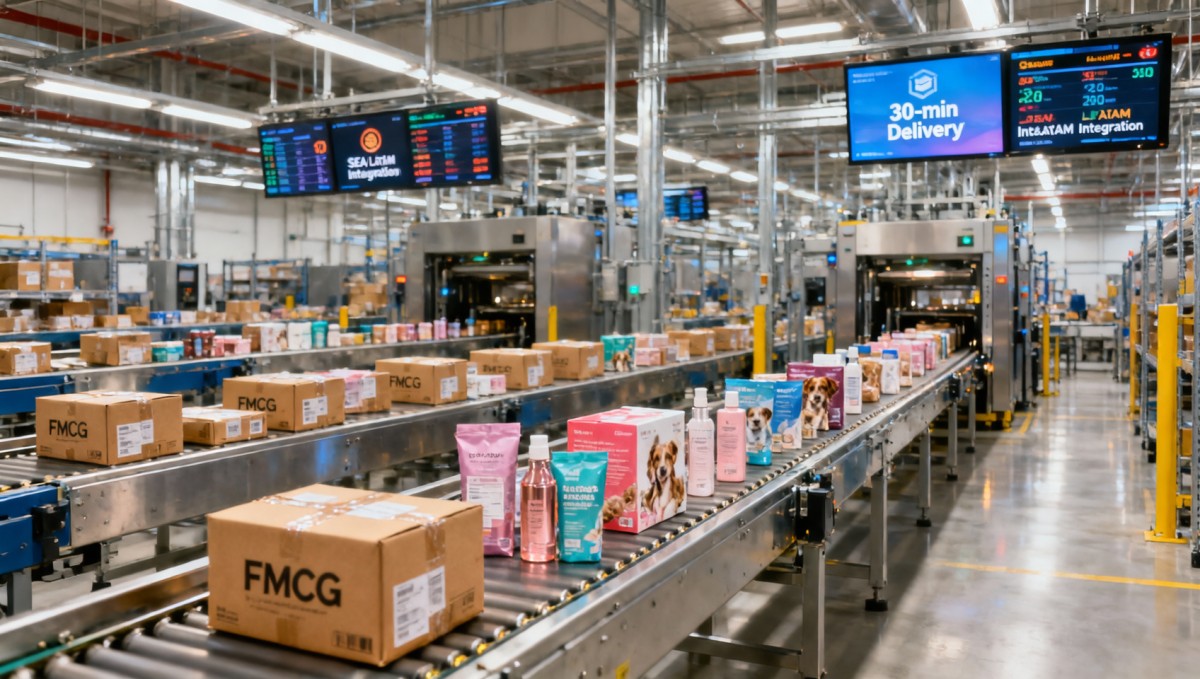
Conclusion: This milestone reflects maturation in China’s local life digital stack — not merely as a domestic utility, but as a configurable, exportable infrastructure layer. It does not signify immediate displacement of incumbent logistics or retail tech providers, but rather introduces a new reference architecture for speed-sensitive FMCG fulfillment. Currently, it is best understood as an emerging interoperability benchmark — one that invites scrutiny of technical integration paths, not just competitive positioning.
Source Attribution:
— Official national instant delivery statistics released December 31, 2025
— Public deployment announcements by Cainiao and JD Logistics regarding modular system exports to Southeast Asia and Latin America
Note: Long-term scalability, regulatory adaptation, and local merchant retention rates beyond initial pilots remain under observation.
 Which global manufacturing trends by sector matter most for sourcing plans?Global manufacturing trends by sector: identify sourcing risks, supplier resilience, compliance demands, and cost drivers to build smarter, more reliable procurement plans.
 What industrial trade intelligence pricing should include before you subscribeIndustrial trade intelligence pricing explained: compare coverage, data quality, access rights, and workflow value before choosing a subscription that supports smarter trade decisions.
 How an industrial trade intelligence dashboard can identify new supplier marketsDiscover how an industrial trade intelligence dashboard helps identify new supplier markets by comparing capacity, landed cost, logistics resilience, and compliance risk.
 Which global market entry barriers should exporters assess first?Global market entry barriers exporters should assess first: tariffs, compliance, buyer qualification, logistics, and payment risk. Build a practical strategy for confident market entry.
 How trade data aggregation analytics can reveal emerging supplier marketsTrade data aggregation analytics reveals emerging supplier markets by connecting trade flows, capacity signals, logistics, and compliance insights for smarter sourcing decisions.
 When an export market analysis platform can validate demand in a new marketExport market analysis platform insights help validate new-market demand through buyer fit, regulations, logistics, competition, and profitable entry conditions.
 What is driving the beauty and personal care market in the USA?Beauty and personal care in USA is driven by targeted solutions, selective premiumization, digital discovery, clean-label trust, diverse needs, and compliance. Explore key growth opportunities.
 How trade flow monitoring reports reveal changing regional demandTrade flow monitoring reports reveal changing regional demand through import volumes, sourcing shifts, product mix, logistics signals, and regulatory trends. Explore actionable market insights.
 How international market intelligence for investors reduces market-entry riskInternational market intelligence for investors reduces market-entry risk by validating demand, regulations, logistics, and competition before capital is committed.
 How international sourcing intelligence helps identify supplier risk earlyInternational sourcing intelligence helps businesses spot supplier risks early, protect supply continuity, and make smarter global procurement decisions.
 How trade data aggregation analytics reveals emerging supplier marketsTrade data aggregation analytics reveals emerging supplier markets through export trends, input flows, logistics, and regulatory signals. Discover smarter sourcing insights.
 What industrial cluster monitoring in Vietnam reveals about site riskIndustrial cluster monitoring Vietnam reveals hidden site risks across labor, utilities, logistics, compliance, and supplier dependencies. Make smarter sourcing and expansion decisions.
 Food Technology Trends Reshaping Shelf Life, Safety, and Product InnovationFood technology is reshaping shelf life, safety, and innovation. Discover the trends helping food businesses cut risk, improve compliance, and unlock stronger global market growth.
 How electronics manufacturing services are changing with low-volume demandElectronics manufacturing services are evolving fast with low-volume demand. Learn how agile EMS partners improve flexibility, compliance, sourcing resilience, and speed to market.
 How Can Buyers Reduce Procurement Risks for Electronic Components?How to reduce procurement risks for electronic components: learn how buyers assess traceability, lead times, compliance, and supplier types to avoid costly sourcing mistakes.
 What Sourcing Intelligence India Reveals About Supplier Risk and Cost ShiftsSourcing intelligence India reveals hidden supplier risk, compliance gaps, logistics pressure, and real cost shifts—helping buyers compare vendors smarter and source with more confidence.
 Fashion Trends 2026: Which Materials, Colors, and Silhouettes Are Gaining Ground?Fashion trends 2026 spotlight tactile fabrics, mineral colors, and controlled volume. Explore the materials, shades, and silhouettes shaping smarter, more wearable style.
 Smart Device Market Outlook: Key Growth Drivers, Segments, and Business OpportunitiesSmart device market trends are shifting toward system value, industrial demand, and resilient supply chains. Explore key growth drivers, high-potential segments, and business opportunities.
 How Global Trade Intelligence Services Help B2B Firms Evaluate Markets and SuppliersGlobal trade intelligence services help B2B firms compare suppliers, assess market potential, and uncover compliance, logistics, and pricing risks before costly decisions are made.
 Manufacturing Sector Updates for Investors: What Signals Matter Most in 2025?Manufacturing sector updates for investors in 2025: track orders, margins, supply chains, regulation, and exports to spot resilient manufacturers and smarter investment signals.
 How Energy Market Intelligence Helps Businesses Track Price Risks and Demand ShiftsEnergy market intelligence helps businesses spot price risks, demand shifts, and supply pressure early—improving procurement, resilience, and faster strategic decisions.





















Global Trade Insights & Industry
Our mission is to empower global exporters and importers with data-driven insights that foster strategic growth.
Search News
Popular Tags
Industry Overview
The global commercial kitchen equipment market is projected to reach $112 billion by 2027. Driven by urbanization, the rise of e-commerce food delivery, and strict hygiene regulations.