

AI Robotics in Warehouses: ROI Risks to Check in 2026
[Technical Procurement Intelligence Summary]:As warehouses accelerate automation in 2026, AI robotics is moving from pilot projects to board-level investment decisions. Yet ROI is not guaranteed: integration costs, labor redesign, data readiness, maintenance complexity, and vendor lock-in can quickly erode expected gains. For enterprise decision-makers, the real question is not whether robots can improve throughput, but whether the full operating model can support profitable, scalable deployment. This article highlights the key ROI risks to assess before committing capital.
Why AI Robotics ROI Is Harder to Prove in 2026
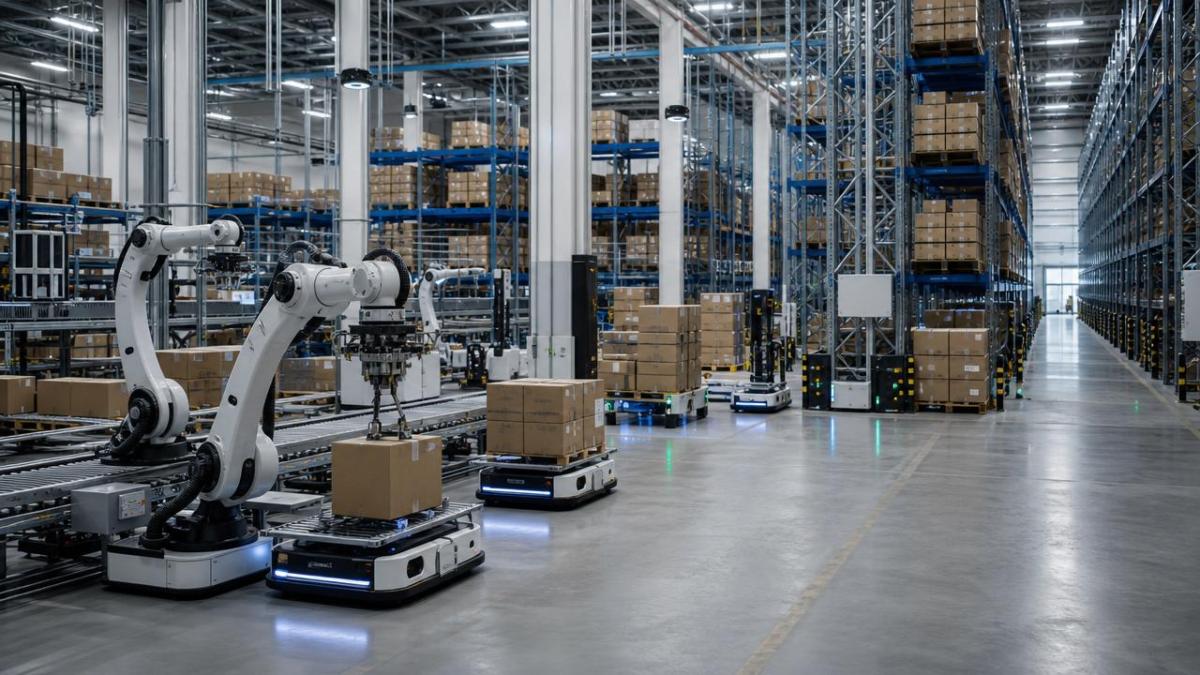
AI robotics is no longer limited to experimental picking arms or small autonomous mobile robot fleets. It now affects facility design, labor planning, inventory accuracy, safety controls, and supplier contracts.
For enterprise decision-makers, the difficulty is not only technical performance. The larger challenge is whether automation economics remain valid under changing demand, wage pressure, energy costs, and cross-border supply volatility.
A warehouse may show faster cycle times during a controlled pilot. However, ROI can weaken when the solution expands across multiple sites, SKUs, shifts, and regional compliance environments.
The business case must include hidden operating variables
- System integration cost, including WMS, ERP, fleet management software, barcode standards, sensor networks, and exception handling workflows.
- Labor redesign, covering supervisor training, technician availability, safety procedures, shift scheduling, and human-robot collaboration rules.
- Data readiness, including item master quality, location accuracy, packaging consistency, and real-time operational visibility.
- Lifecycle risk, such as spare parts supply, software update policies, warranty terms, and vendor financial stability.
Which Warehouse Scenarios Create the Strongest Automation Case?
AI robotics delivers stronger value where repeatable workflows, predictable product dimensions, and high labor intensity exist together. It is weaker where orders are highly irregular or packaging standards vary widely.
Executives should classify use cases before selecting equipment. A technology-first purchase often leads to expensive retrofits, while a workflow-first approach protects capital discipline.
The following comparison helps decision-makers judge whether AI robotics is suitable for different warehouse functions and where ROI assumptions require closer review.
This scenario view prevents a common mistake: treating AI robotics as a universal productivity tool. The stronger question is where automation removes measurable bottlenecks without creating new operational fragility.
ROI Risks That Boards Should Challenge Before Approval
A credible AI robotics business case should survive direct questioning from finance, operations, procurement, compliance, and IT. If one function is excluded, the ROI model is incomplete.
1. Integration costs are often underestimated
Robots rarely operate as isolated assets. They require stable data exchange with WMS, ERP, inventory systems, transport equipment, conveyors, scanners, and facility safety infrastructure.
Enterprises should budget for middleware, testing environments, operational downtime, cybersecurity reviews, user training, and post-launch optimization. These costs can materially change payback periods.
2. Labor savings may not equal workforce savings
AI robotics can reduce walking time, repetitive lifting, or manual transport. Yet companies may need robotics technicians, workflow analysts, safety supervisors, and exception management teams.
A better metric is labor productivity per order, per pallet, or per line item, not only headcount reduction. This avoids unrealistic savings assumptions.
3. Data quality determines real-world performance
AI models depend on consistent product dimensions, accurate slotting data, reliable location mapping, and clean transaction records. Poor data can produce delays, mispicks, and manual overrides.
Before buying AI robotics, leaders should audit SKU data, packaging variance, label readability, exception frequency, and master data governance across facilities.
4. Vendor lock-in can limit future flexibility
Some platforms use proprietary fleet controls, closed software interfaces, bundled maintenance contracts, or specialized spare parts. These conditions may restrict future expansion or supplier switching.
Procurement teams should request API documentation, service-level commitments, data ownership terms, upgrade policies, and exit options before signing long-term automation agreements.
Procurement Checklist: What to Compare Beyond the Robot Price
Capital cost is only one part of AI robotics procurement. Decision-makers need a multi-variable comparison covering technology fit, operating resilience, commercial terms, and compliance readiness.
The following checklist can support internal approval meetings, vendor negotiations, and supplier shortlisting across logistics, manufacturing, retail, healthcare, food, and industrial supply chains.
A structured checklist reduces the chance of choosing AI robotics based on presentation demos. It also supports fair comparison between global suppliers with different pricing and service models.
Cost Model: Where ROI Is Gained or Lost
ROI calculations should separate one-time investment, recurring operating expense, and risk-adjusted savings. Blending them into a single payback number can hide fragile assumptions.
The most useful model compares the current baseline against phased AI robotics deployment, including utilization rates, maintenance cost, downtime exposure, and process redesign requirements.
A stronger ROI case does not always mean buying the most advanced system. Often, the best result comes from matching AI robotics scope to measurable constraints.
Compliance, Safety, and Data Governance Must Enter the Investment Case
AI robotics changes warehouse risk profiles. Mobile robots, robotic arms, vision systems, cloud software, and worker interfaces introduce safety, cybersecurity, and documentation obligations.
Enterprises should consider general machine safety principles, regional conformity requirements, workplace safety obligations, and cybersecurity controls. Requirements differ by jurisdiction and application.
Practical compliance questions for executives
- Has the vendor provided a documented risk assessment covering human-robot interaction, traffic routes, emergency stops, and restricted zones?
- Are software updates, remote access, and operational data protected by clear cybersecurity procedures and user permission controls?
- Can the solution support audit trails for regulated sectors such as healthcare, food, electronics, or cross-border logistics?
- Does the deployment plan include worker training, signage, incident reporting, and periodic safety validation?
Compliance review should not begin after installation. It belongs in vendor selection because documentation gaps can delay launch and weaken ROI.
Implementation Roadmap: How to Reduce Payback Risk
A phased roadmap gives decision-makers control over capital exposure. It also creates operational evidence before the company commits to multi-site AI robotics deployment.
Step-by-step approach for scalable deployment
- Map bottlenecks by process, including receiving, putaway, replenishment, picking, packing, staging, returns, and line-side delivery.
- Build a baseline using current throughput, labor hours, error rates, downtime, inventory accuracy, and peak-season performance.
- Run a controlled pilot with real SKUs, actual shift patterns, exception events, and measurable acceptance criteria.
- Negotiate scale-up terms only after confirming integration stability, worker adoption, maintenance response, and cost transparency.
- Create a governance team covering operations, procurement, finance, IT, safety, and regional compliance functions.
This approach turns AI robotics from a technology gamble into a controlled transformation program. It also gives boards clearer evidence for capital allocation.
FAQ: Questions Enterprise Buyers Ask About AI Robotics
How should companies calculate AI robotics ROI?
Start with a verified operational baseline. Include capital cost, software fees, integration work, maintenance, training, downtime risk, and realistic productivity gains by process.
Avoid judging ROI only by labor replacement. Better indicators include order cycle time, pick accuracy, capacity during peaks, space utilization, and reduced injury exposure.
Is robotics-as-a-service safer than buying robots?
Robotics-as-a-service may reduce upfront capital and support phased adoption. However, recurring fees, data terms, service limits, and exit clauses require close review.
Ownership may suit facilities with stable long-term volume. Subscription models may suit businesses with uncertain demand or limited internal maintenance capacity.
Which warehouse data should be cleaned before deployment?
Companies should verify SKU dimensions, weight records, barcode quality, storage locations, inventory accuracy, packaging profiles, transaction logs, and exception codes.
Poor data does not only reduce robot accuracy. It can increase manual intervention, slow integration testing, and create misleading performance reports.
What is a common mistake in AI robotics procurement?
A common mistake is choosing the most impressive demonstration instead of the most compatible operating model. Real warehouses have exceptions, constraints, and human workflows.
Procurement teams should compare vendors using actual facility data, documented service commitments, integration requirements, and risk-adjusted cost models.
Why Choose GTIIN for AI Robotics Investment Intelligence
GTIIN supports enterprise decision-makers with structured trade intelligence across logistics, automated warehousing, advanced machinery, electronics, manufacturing, healthcare, food, and global supply chains.
Our analysts help reduce information gaps by reviewing supplier realities, regional market conditions, compliance variations, component dependencies, and cross-border procurement risks.
For AI robotics projects, GTIIN can support parameter confirmation, vendor comparison, sourcing alternatives, delivery cycle review, certification questions, and quotation discussion preparation.
If your organization is evaluating warehouse automation in 2026, consult GTIIN before final approval. A stronger decision begins with verified intelligence, not assumptions.
 When dual sourcing makes sense in a sourcing strategy for manufacturersSourcing strategy for manufacturers: learn when dual sourcing strengthens supply continuity, reduces disruption risk, and protects production without adding unnecessary complexity.
 How bulk commodities pricing affects long-term supply contractsBulk commodities pricing shapes long-term supply contracts through index rules, freight, quality, volume, and currency risk. Explore strategies for resilient costs and supply security.
 Which global manufacturing trends by sector matter most for sourcing plans?Global manufacturing trends by sector: identify sourcing risks, supplier resilience, compliance demands, and cost drivers to build smarter, more reliable procurement plans.
 What industrial trade intelligence pricing should include before you subscribeIndustrial trade intelligence pricing explained: compare coverage, data quality, access rights, and workflow value before choosing a subscription that supports smarter trade decisions.
 How an industrial trade intelligence dashboard can identify new supplier marketsDiscover how an industrial trade intelligence dashboard helps identify new supplier markets by comparing capacity, landed cost, logistics resilience, and compliance risk.
 Which global market entry barriers should exporters assess first?Global market entry barriers exporters should assess first: tariffs, compliance, buyer qualification, logistics, and payment risk. Build a practical strategy for confident market entry.
 How trade data aggregation analytics can reveal emerging supplier marketsTrade data aggregation analytics reveals emerging supplier markets by connecting trade flows, capacity signals, logistics, and compliance insights for smarter sourcing decisions.
 When an export market analysis platform can validate demand in a new marketExport market analysis platform insights help validate new-market demand through buyer fit, regulations, logistics, competition, and profitable entry conditions.
 What is driving the beauty and personal care market in the USA?Beauty and personal care in USA is driven by targeted solutions, selective premiumization, digital discovery, clean-label trust, diverse needs, and compliance. Explore key growth opportunities.
 How trade flow monitoring reports reveal changing regional demandTrade flow monitoring reports reveal changing regional demand through import volumes, sourcing shifts, product mix, logistics signals, and regulatory trends. Explore actionable market insights.
 How international market intelligence for investors reduces market-entry riskInternational market intelligence for investors reduces market-entry risk by validating demand, regulations, logistics, and competition before capital is committed.
 How international sourcing intelligence helps identify supplier risk earlyInternational sourcing intelligence helps businesses spot supplier risks early, protect supply continuity, and make smarter global procurement decisions.
 How trade data aggregation analytics reveals emerging supplier marketsTrade data aggregation analytics reveals emerging supplier markets through export trends, input flows, logistics, and regulatory signals. Discover smarter sourcing insights.
 What industrial cluster monitoring in Vietnam reveals about site riskIndustrial cluster monitoring Vietnam reveals hidden site risks across labor, utilities, logistics, compliance, and supplier dependencies. Make smarter sourcing and expansion decisions.
 Food Technology Trends Reshaping Shelf Life, Safety, and Product InnovationFood technology is reshaping shelf life, safety, and innovation. Discover the trends helping food businesses cut risk, improve compliance, and unlock stronger global market growth.
 How electronics manufacturing services are changing with low-volume demandElectronics manufacturing services are evolving fast with low-volume demand. Learn how agile EMS partners improve flexibility, compliance, sourcing resilience, and speed to market.
 How Can Buyers Reduce Procurement Risks for Electronic Components?How to reduce procurement risks for electronic components: learn how buyers assess traceability, lead times, compliance, and supplier types to avoid costly sourcing mistakes.
 What Sourcing Intelligence India Reveals About Supplier Risk and Cost ShiftsSourcing intelligence India reveals hidden supplier risk, compliance gaps, logistics pressure, and real cost shifts—helping buyers compare vendors smarter and source with more confidence.
 Fashion Trends 2026: Which Materials, Colors, and Silhouettes Are Gaining Ground?Fashion trends 2026 spotlight tactile fabrics, mineral colors, and controlled volume. Explore the materials, shades, and silhouettes shaping smarter, more wearable style.
 Smart Device Market Outlook: Key Growth Drivers, Segments, and Business OpportunitiesSmart device market trends are shifting toward system value, industrial demand, and resilient supply chains. Explore key growth drivers, high-potential segments, and business opportunities.
 How Global Trade Intelligence Services Help B2B Firms Evaluate Markets and SuppliersGlobal trade intelligence services help B2B firms compare suppliers, assess market potential, and uncover compliance, logistics, and pricing risks before costly decisions are made.





















Global Trade Insights & Industry
Our mission is to empower global exporters and importers with data-driven insights that foster strategic growth.
Search News
Popular Tags
Industry Overview
The global commercial kitchen equipment market is projected to reach $112 billion by 2027. Driven by urbanization, the rise of e-commerce food delivery, and strict hygiene regulations.