

Russia Fast-Tracks Chinese Electric Forklifts with Dual Certification
Russia has introduced a streamlined certification pathway for Chinese electric forklifts, marking a significant policy shift amid rising e-commerce logistics demand and tightening environmental regulations. Though the exact timing of implementation remains unspecified, the Russian Ministry of Industry and Trade announced the measure in May, directly impacting global material handling equipment trade and supply chain dynamics.
Event Overview
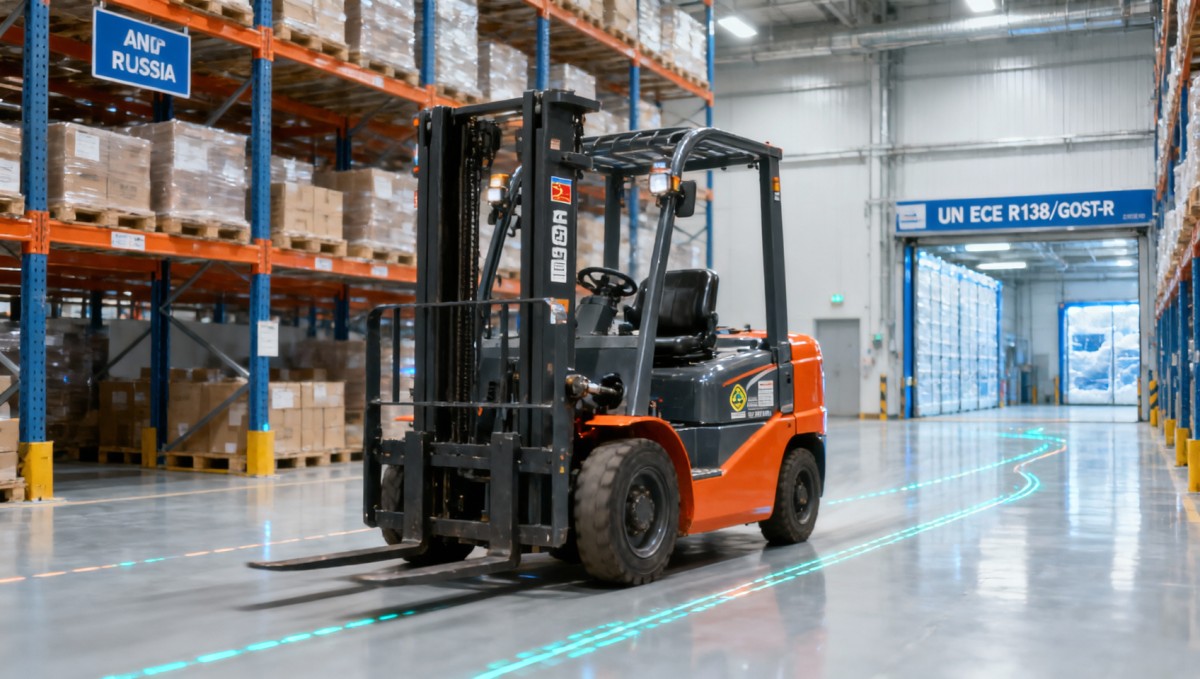
In May, the Russian Ministry of Industry and Trade announced a fast-track GOST-R certification channel for Chinese electric forklifts compliant with UN ECE Regulation No. 138. Certification cycle is reduced to 12 working days. The policy applies to multiple product categories—including internal combustion forklift replacements, cold-storage AGV forklifts, and narrow-aisle stacker cranes—and enables dual conformity recognition under both GOST-R and UN ECE R138 standards.
Industries Affected
Direct Exporters & Trading Enterprises: Chinese OEMs and export-focused distributors gain accelerated market access to Russia—a historically certification-intensive jurisdiction. Reduced time-to-market lowers inventory holding costs and improves responsiveness to tender cycles in Russian warehousing and logistics infrastructure upgrades.
Raw Material Procurement Firms: Suppliers of lithium-ion battery cells, thermal management components, and high-grade aluminum alloys face heightened demand visibility. However, procurement planning must now account for tighter compliance-linked delivery windows—especially for materials requiring traceability documentation aligned with UN ECE R138’s functional safety requirements.
Contract Manufacturing & Component Producers: Manufacturers of CNC-machined structural parts, battery PACK assemblies, and vehicle-mounted control systems benefit from expanded order scope and longer-term project visibility. Yet, they must verify whether their current quality management systems (e.g., ISO/TS 16949 or IATF 16949) meet UN ECE R138’s software validation and failure mode analysis expectations—not just mechanical tolerances.
Supply Chain Service Providers: Third-party testing labs, certification consultants, and freight forwarders specializing in CIS markets see increased demand for integrated GOST-R + UN ECE R138 support packages. Notably, service providers must now coordinate parallel technical documentation reviews—rather than sequential submissions—adding complexity to document control workflows.
Key Considerations and Recommended Actions
Verify UN ECE R138 Compliance Beyond Labeling
Manufacturers should not assume conformance based solely on existing CE or GB/T certifications. UN ECE R138 specifically mandates electromagnetic compatibility (EMC), battery system functional safety (ISO 26262 ASIL-B alignment), and charge-discharge cycle validation under sub-zero conditions—requirements that go beyond typical domestic Chinese standards.
Engage Accredited CIS Certification Bodies Early
Only laboratories accredited by Rosaccreditation and recognized under the UN ECE Mutual Recognition Agreement may issue valid R138 test reports accepted for GOST-R fast-tracking. Pre-submission technical audits with such bodies are strongly advised before formal application.
Update Technical Documentation for Dual-Regime Alignment
Operating manuals, type approval certificates, and EU Declaration of Conformity must explicitly reference UN ECE R138 test reports and include Russian-language annexes meeting GOST R ISO/IEC 17050-1:2021 formatting rules—particularly for hazard labeling and maintenance intervals.
Editorial Insight / Industry Observation
Observably, this policy reflects Russia’s broader strategic pivot toward import substitution in intralogistics automation—not as a protectionist barrier, but as an efficiency-driven recalibration. Analysis shows the 12-day certification window is not merely administrative simplification; it signals institutional capacity-building within Rosstandart to handle complex EV-type approvals. From an industry perspective, the inclusion of cold-storage AGVs and narrow-aisle stackers suggests targeted support for modernization in food distribution and high-density urban fulfillment centers—segments where Chinese suppliers already hold cost and integration advantages.
Conclusion
This development does not represent a one-off regulatory concession, but rather a structural opening in Russia’s industrial equipment import regime. It reinforces China’s role as a supplier of vertically integrated electromechanical solutions—not just hardware—while raising the bar for technical documentation rigor and cross-regulatory interoperability. A rational interpretation is that success will favor exporters who treat certification not as a compliance checkpoint, but as a design-phase requirement embedded in R&D and production planning.
Source Attribution
Official announcement: Russian Ministry of Industry and Trade (May 2024); Technical basis: UN ECE Regulation No. 138 (Revision 2, 2023); GOST-R conformity framework: GOST R ISO/IEC 17067-2021. Note: Implementation details—including list of approved testing labs and eligibility criteria for ‘fast-track’ status—are still pending formal publication. Continuous monitoring of Rosaccreditation bulletins and Eurasian Economic Commission updates is recommended.
 Which global manufacturing trends by sector matter most for sourcing plans?Global manufacturing trends by sector: identify sourcing risks, supplier resilience, compliance demands, and cost drivers to build smarter, more reliable procurement plans.
 What industrial trade intelligence pricing should include before you subscribeIndustrial trade intelligence pricing explained: compare coverage, data quality, access rights, and workflow value before choosing a subscription that supports smarter trade decisions.
 How an industrial trade intelligence dashboard can identify new supplier marketsDiscover how an industrial trade intelligence dashboard helps identify new supplier markets by comparing capacity, landed cost, logistics resilience, and compliance risk.
 Which global market entry barriers should exporters assess first?Global market entry barriers exporters should assess first: tariffs, compliance, buyer qualification, logistics, and payment risk. Build a practical strategy for confident market entry.
 How trade data aggregation analytics can reveal emerging supplier marketsTrade data aggregation analytics reveals emerging supplier markets by connecting trade flows, capacity signals, logistics, and compliance insights for smarter sourcing decisions.
 When an export market analysis platform can validate demand in a new marketExport market analysis platform insights help validate new-market demand through buyer fit, regulations, logistics, competition, and profitable entry conditions.
 What is driving the beauty and personal care market in the USA?Beauty and personal care in USA is driven by targeted solutions, selective premiumization, digital discovery, clean-label trust, diverse needs, and compliance. Explore key growth opportunities.
 How trade flow monitoring reports reveal changing regional demandTrade flow monitoring reports reveal changing regional demand through import volumes, sourcing shifts, product mix, logistics signals, and regulatory trends. Explore actionable market insights.
 How international market intelligence for investors reduces market-entry riskInternational market intelligence for investors reduces market-entry risk by validating demand, regulations, logistics, and competition before capital is committed.
 How international sourcing intelligence helps identify supplier risk earlyInternational sourcing intelligence helps businesses spot supplier risks early, protect supply continuity, and make smarter global procurement decisions.
 How trade data aggregation analytics reveals emerging supplier marketsTrade data aggregation analytics reveals emerging supplier markets through export trends, input flows, logistics, and regulatory signals. Discover smarter sourcing insights.
 What industrial cluster monitoring in Vietnam reveals about site riskIndustrial cluster monitoring Vietnam reveals hidden site risks across labor, utilities, logistics, compliance, and supplier dependencies. Make smarter sourcing and expansion decisions.
 Food Technology Trends Reshaping Shelf Life, Safety, and Product InnovationFood technology is reshaping shelf life, safety, and innovation. Discover the trends helping food businesses cut risk, improve compliance, and unlock stronger global market growth.
 How electronics manufacturing services are changing with low-volume demandElectronics manufacturing services are evolving fast with low-volume demand. Learn how agile EMS partners improve flexibility, compliance, sourcing resilience, and speed to market.
 How Can Buyers Reduce Procurement Risks for Electronic Components?How to reduce procurement risks for electronic components: learn how buyers assess traceability, lead times, compliance, and supplier types to avoid costly sourcing mistakes.
 What Sourcing Intelligence India Reveals About Supplier Risk and Cost ShiftsSourcing intelligence India reveals hidden supplier risk, compliance gaps, logistics pressure, and real cost shifts—helping buyers compare vendors smarter and source with more confidence.
 Fashion Trends 2026: Which Materials, Colors, and Silhouettes Are Gaining Ground?Fashion trends 2026 spotlight tactile fabrics, mineral colors, and controlled volume. Explore the materials, shades, and silhouettes shaping smarter, more wearable style.
 Smart Device Market Outlook: Key Growth Drivers, Segments, and Business OpportunitiesSmart device market trends are shifting toward system value, industrial demand, and resilient supply chains. Explore key growth drivers, high-potential segments, and business opportunities.
 How Global Trade Intelligence Services Help B2B Firms Evaluate Markets and SuppliersGlobal trade intelligence services help B2B firms compare suppliers, assess market potential, and uncover compliance, logistics, and pricing risks before costly decisions are made.
 Manufacturing Sector Updates for Investors: What Signals Matter Most in 2025?Manufacturing sector updates for investors in 2025: track orders, margins, supply chains, regulation, and exports to spot resilient manufacturers and smarter investment signals.
 How Energy Market Intelligence Helps Businesses Track Price Risks and Demand ShiftsEnergy market intelligence helps businesses spot price risks, demand shifts, and supply pressure early—improving procurement, resilience, and faster strategic decisions.





















Global Trade Insights & Industry
Our mission is to empower global exporters and importers with data-driven insights that foster strategic growth.
Search News
Popular Tags
Industry Overview
The global commercial kitchen equipment market is projected to reach $112 billion by 2027. Driven by urbanization, the rise of e-commerce food delivery, and strict hygiene regulations.