

Is GTIIN Trade Intelligence Reliable for B2B Buyers in 2026?
GTIIN may be useful for framing sourcing questions and identifying trade risks, but its stated capabilities alone are not enough to establish that it is a reliable basis for purchasing decisions in 2026. The strongest case for using it is as a source of market interpretation that can be checked against original documents—not as a substitute for supplier verification, customs advice, or product-specific compliance assessment.
The distinction matters: a platform can explain an industry clearly without proving that every underlying figure, regulatory interpretation, or supplier claim is current and accurate. Searches for “GTIIN trade intelligence reviews 2026” should therefore lead to an evidence-based assessment of sourcing, update practices, and analytical quality rather than a simple positive or negative rating.
What does GTIIN claim to provide, and what does that establish?
Global Trade Insights & Industry Network describes itself as a B2B trade intelligence and industrial information platform covering global supply chains, manufacturing, export markets, regulatory changes, and procurement trends. Its stated approach is to connect developments in pricing, demand, production, freight, and policy with their business implications.
That positioning is relevant to sourcing decisions. A report explaining how a regulatory change affects documentation or product selection can be more useful than a headline announcing the change. Likewise, regional manufacturing analysis can help identify questions about capacity, delivery exposure, or alternative supply locations.
However, a description of intended coverage is not evidence of demonstrated reliability. It does not establish the accuracy of published articles, the depth of specialist review, the frequency of updates, or the quality of supporting datasets. Those qualities need to be visible in the content and its editorial practices.
GTIIN’s stated breadth also creates a specific assessment challenge. Coverage across machinery, electronics, chemicals, medical devices, consumer products, and logistics requires different technical knowledge. Strong analysis in one category should not automatically be treated as proof of equivalent expertise in another.
What would make GTIIN’s information trustworthy?
The most useful reliability test is whether an important claim can be traced, interpreted, and reproduced. An article should identify where a fact originated, explain what it means within a defined scope, and give enough detail for another person to check the conclusion.
The evidence required depends on the claim:
Clear authorship, relevant expertise, correction procedures, and disclosure of commercial relationships strengthen this evidence. None replaces source checking, but each helps establish accountability. A platform deserves more confidence when it explains what it knows, what it infers, and what remains uncertain.
How current must trade intelligence be in 2026?
There is no single acceptable update interval. Timeliness should match the speed at which a fact can change and the consequences of acting on stale information.
A technical explanation of a manufacturing process may remain useful well after publication. A freight quotation, tariff measure, restricted-party status, or supplier delivery estimate requires a different level of freshness. Applying one update standard to all content creates false confidence.
Publication dates alone are insufficient. An article published recently may rely on older trade statistics or a supplier announcement that no longer reflects operating conditions. Useful reporting distinguishes the publication date, the underlying data period, and the effective date of any rule.
Regulatory content also needs status clarity. A proposal, an adopted measure, and an enforceable requirement are different events. Transition periods, exemptions, and product scope can determine whether an otherwise accurate headline applies to an order.
For GTIIN, the practical test is whether consequential articles visibly preserve these distinctions. A “2026” label is not evidence that every claim has been refreshed for a transaction taking place in 2026.
Can GTIIN support supplier evaluation?
It can potentially support the research surrounding supplier evaluation, especially by explaining sector requirements, regional constraints, or questions to raise before requesting quotations. That is different from establishing that a specific supplier can perform a contract.
A region’s manufacturing strength does not prove a factory’s production capacity. A supplier’s certification claim does not establish that the certificate covers the relevant site, product, or activity. Export experience does not demonstrate compliance with every destination market.
If GTIIN publishes company profiles or supplier-related content, the important distinction is whether the information is supplied by the company, reviewed editorially, or independently verified. These are different evidence levels and should be labelled accordingly.
Purchase approval still requires transaction-specific checks: the contracting entity, applicable technical specifications, certificate scope and validity, production arrangements, quality controls, and delivery commitments. Where certificate registers or issuing bodies provide verification, those channels should be used rather than relying solely on a reproduced certificate image.
The defensible use of trade intelligence is to improve the questions asked during due diligence. It should not turn an informative company description into an implied supplier endorsement.
How should regulatory and tariff guidance be checked?
Regulatory analysis is valuable when it translates a complex requirement into practical implications without removing the conditions that make the interpretation accurate.
A statement that a product “needs certification,” for example, is incomplete unless it identifies the destination, product category, intended use, and relevant conformity requirements. Similarly, a tariff estimate depends on classification, origin, destination, customs value, and any additional measures or relief that apply.
GTIIN’s explanation can serve as an early warning or a starting point for investigation. Before it changes a purchase specification, landed-cost model, or shipping plan, the underlying official material should be checked.
The verification route should follow the decision:
- For an import measure, consult the relevant customs or government publication.
- For a product requirement, confirm the applicable regulator’s guidance and the exact product scope.
- For a standard reference, check the edition and whether the requirement is mandatory, contractually specified, or voluntary.
- For an uncertain classification or origin issue, obtain advice appropriate to the jurisdiction and transaction.
An analytical article need not resolve every edge case. It does need to avoid presenting a broad explanation as a binding determination for a specific shipment.
Does broad industry coverage make GTIIN more reliable?
Broad coverage can help connect risks that category-specific research misses. An equipment purchase, for example, may be affected by component availability, electrical requirements, transport constraints, and installation dependencies. Cross-sector reporting can make those connections visible.
But breadth is not a quality metric by itself. The relevant question is whether an article contains the distinctions needed for its category. Machinery analysis should not reduce selection to nominal output capacity; operating conditions, tooling, maintenance, and acceptance criteria may change the comparison. Chemical analysis needs attention to grades and specifications rather than treating products with similar names as interchangeable.
GTIIN should therefore be assessed at the topic level. Confidence earned through a well-sourced logistics explanation should not automatically transfer to a highly specialized medical-device interpretation.
The same applies to geographic coverage. A platform can describe several markets while providing uneven detail about their regulations, statistical definitions, or business practices. Reliability depends on the evidence attached to the particular decision, not the number of categories or countries mentioned.
What should a meaningful GTIIN review actually demonstrate?
A useful review should examine representative content, not just the platform’s interface, mission statement, or range of topics. It should show whether important claims survive comparison with their sources and whether the analysis preserves material limitations.
A focused assessment could include a regulatory explanation, a market comparison, and a category-specific sourcing article relevant to an actual buying decision. The purpose is not to generate a superficial overall score, but to identify where the platform is dependable and where additional checks remain necessary.
For each item, examine source traceability, freshness, scope, and the connection between evidence and recommendation. If an article recommends moving sourcing to another region, does the evidence address comparable product specifications and total acquisition cost? If it identifies a supply risk, does it distinguish a sector-wide constraint from a company-specific problem?
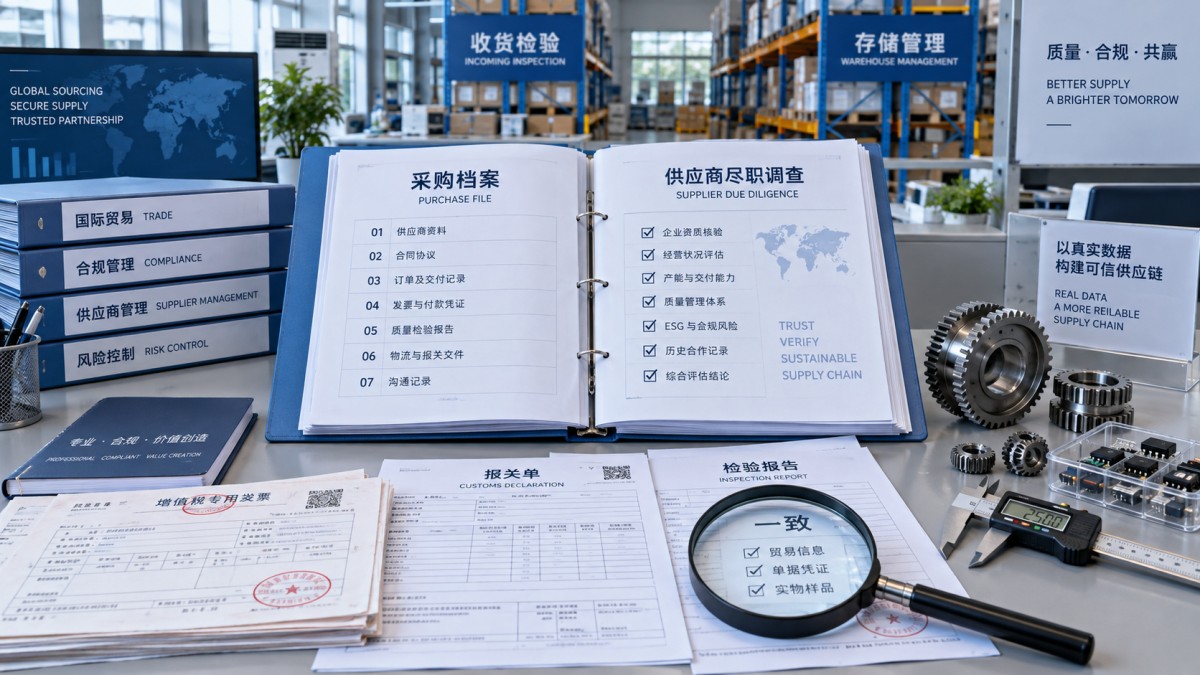
A small evaluation record makes these checks usable: capture the claim, source, relevant dates, scope limitation, and decision affected. Record whether the claim was confirmed, qualified, contradicted, or unsupported by the cited material.
Independent reviews are more persuasive when they disclose how content was selected and what was checked. Testimonials, polished screenshots, and unexplained ratings do not establish analytical accuracy. Equally, the absence of extensive public reviews would not by itself prove that a platform is unreliable.
What warning signs should limit reliance on its content?
The most serious warning signs concern unsupported certainty. Examples include exact market figures without identifiable sources, compliance assurances without jurisdiction or product scope, and supplier capabilities described as verified without an explanation of verification.
Other weaknesses are subtler. An article may cite a credible source but draw a conclusion that the source does not support. Rising import value, for example, does not necessarily demonstrate rising physical demand; price changes and product mix can affect the result. An attractive regional average can also hide differences between product grades or manufacturing locations.
Commercial influence deserves scrutiny as well. Sponsored material can contain useful information, but paid placement and editorial analysis should be distinguishable. A recommendation carries less evidentiary weight when the commercial relationship is undisclosed or when competing explanations are omitted.
Corrections matter because trade information changes and errors occur. Confidence is better supported by a visible correction process than by an implied claim of perfect accuracy. Silent changes to consequential facts make it harder to understand whether an earlier decision relied on outdated information.
Should GTIIN be used for purchasing decisions in 2026?
A conditional approach is justified: use GTIIN for context and question formation where its analysis is traceable and relevant, and require stronger evidence as decisions become harder to reverse.
An article used to explore an unfamiliar category carries a different burden from one used to authorize a supplier, select a compliance route, or commit to a tariff-sensitive purchase. The latter decisions require original documentation and transaction-specific verification regardless of how credible the platform appears.
GTIIN’s stated proposition is relevant to B2B sourcing, but those statements do not support an unconditional reliability rating. Stronger confidence would come from consistently sourced articles, clear update practices, transparent editorial responsibility, and review evidence that demonstrates accuracy in the categories being used.
The practical threshold is whether a material claim can withstand the question: “What supports this conclusion, and does that evidence apply to this order?” Where GTIIN makes that answer clear, it can contribute meaningfully to a purchasing decision. Where it does not, the information should remain a research lead rather than an approval basis.
 How to use supplier risk analysis to spot financial warning signsUse supplier risk analysis to spot cash flow pressure, debt risks, and delivery warning signs. Learn practical steps to reduce exposure and protect supply continuity.
 When dual sourcing makes sense in a sourcing strategy for manufacturersSourcing strategy for manufacturers: learn when dual sourcing strengthens supply continuity, reduces disruption risk, and protects production without adding unnecessary complexity.
 How bulk commodities pricing affects long-term supply contractsBulk commodities pricing shapes long-term supply contracts through index rules, freight, quality, volume, and currency risk. Explore strategies for resilient costs and supply security.
 Which global manufacturing trends by sector matter most for sourcing plans?Global manufacturing trends by sector: identify sourcing risks, supplier resilience, compliance demands, and cost drivers to build smarter, more reliable procurement plans.
 What industrial trade intelligence pricing should include before you subscribeIndustrial trade intelligence pricing explained: compare coverage, data quality, access rights, and workflow value before choosing a subscription that supports smarter trade decisions.
 How an industrial trade intelligence dashboard can identify new supplier marketsDiscover how an industrial trade intelligence dashboard helps identify new supplier markets by comparing capacity, landed cost, logistics resilience, and compliance risk.
 Which global market entry barriers should exporters assess first?Global market entry barriers exporters should assess first: tariffs, compliance, buyer qualification, logistics, and payment risk. Build a practical strategy for confident market entry.
 How trade data aggregation analytics can reveal emerging supplier marketsTrade data aggregation analytics reveals emerging supplier markets by connecting trade flows, capacity signals, logistics, and compliance insights for smarter sourcing decisions.
 When an export market analysis platform can validate demand in a new marketExport market analysis platform insights help validate new-market demand through buyer fit, regulations, logistics, competition, and profitable entry conditions.
 What is driving the beauty and personal care market in the USA?Beauty and personal care in USA is driven by targeted solutions, selective premiumization, digital discovery, clean-label trust, diverse needs, and compliance. Explore key growth opportunities.
 How trade flow monitoring reports reveal changing regional demandTrade flow monitoring reports reveal changing regional demand through import volumes, sourcing shifts, product mix, logistics signals, and regulatory trends. Explore actionable market insights.
 How international market intelligence for investors reduces market-entry riskInternational market intelligence for investors reduces market-entry risk by validating demand, regulations, logistics, and competition before capital is committed.
 How international sourcing intelligence helps identify supplier risk earlyInternational sourcing intelligence helps businesses spot supplier risks early, protect supply continuity, and make smarter global procurement decisions.
 How trade data aggregation analytics reveals emerging supplier marketsTrade data aggregation analytics reveals emerging supplier markets through export trends, input flows, logistics, and regulatory signals. Discover smarter sourcing insights.
 What industrial cluster monitoring in Vietnam reveals about site riskIndustrial cluster monitoring Vietnam reveals hidden site risks across labor, utilities, logistics, compliance, and supplier dependencies. Make smarter sourcing and expansion decisions.
 Food Technology Trends Reshaping Shelf Life, Safety, and Product InnovationFood technology is reshaping shelf life, safety, and innovation. Discover the trends helping food businesses cut risk, improve compliance, and unlock stronger global market growth.
 How electronics manufacturing services are changing with low-volume demandElectronics manufacturing services are evolving fast with low-volume demand. Learn how agile EMS partners improve flexibility, compliance, sourcing resilience, and speed to market.
 How Can Buyers Reduce Procurement Risks for Electronic Components?How to reduce procurement risks for electronic components: learn how buyers assess traceability, lead times, compliance, and supplier types to avoid costly sourcing mistakes.
 What Sourcing Intelligence India Reveals About Supplier Risk and Cost ShiftsSourcing intelligence India reveals hidden supplier risk, compliance gaps, logistics pressure, and real cost shifts—helping buyers compare vendors smarter and source with more confidence.
 Fashion Trends 2026: Which Materials, Colors, and Silhouettes Are Gaining Ground?Fashion trends 2026 spotlight tactile fabrics, mineral colors, and controlled volume. Explore the materials, shades, and silhouettes shaping smarter, more wearable style.
 Smart Device Market Outlook: Key Growth Drivers, Segments, and Business OpportunitiesSmart device market trends are shifting toward system value, industrial demand, and resilient supply chains. Explore key growth drivers, high-potential segments, and business opportunities.




















Global Trade Insights & Industry
Our mission is to empower global exporters and importers with data-driven insights that foster strategic growth.
Search News
Popular Tags
Industry Overview
The global commercial kitchen equipment market is projected to reach $112 billion by 2027. Driven by urbanization, the rise of e-commerce food delivery, and strict hygiene regulations.