

Bird Cages Wholesale Orders: What Often Causes Return Issues
In bird cages wholesale orders, return problems rarely come from one dramatic defect. Most cases are caused by small specification gaps, weak quality control, transit damage, or missing compliance details that only become visible after delivery and installation.
For after-sales teams, the priority is not just handling complaints faster. It is learning how to classify return causes accurately, reduce repeated disputes, and turn each case into a preventive checkpoint for future shipments.
This article explains what most often drives returns in bird cages wholesale transactions, how to identify the real source of failure, and which inspection points help protect customer trust and margin.
Why return issues in bird cages wholesale orders are often preventable
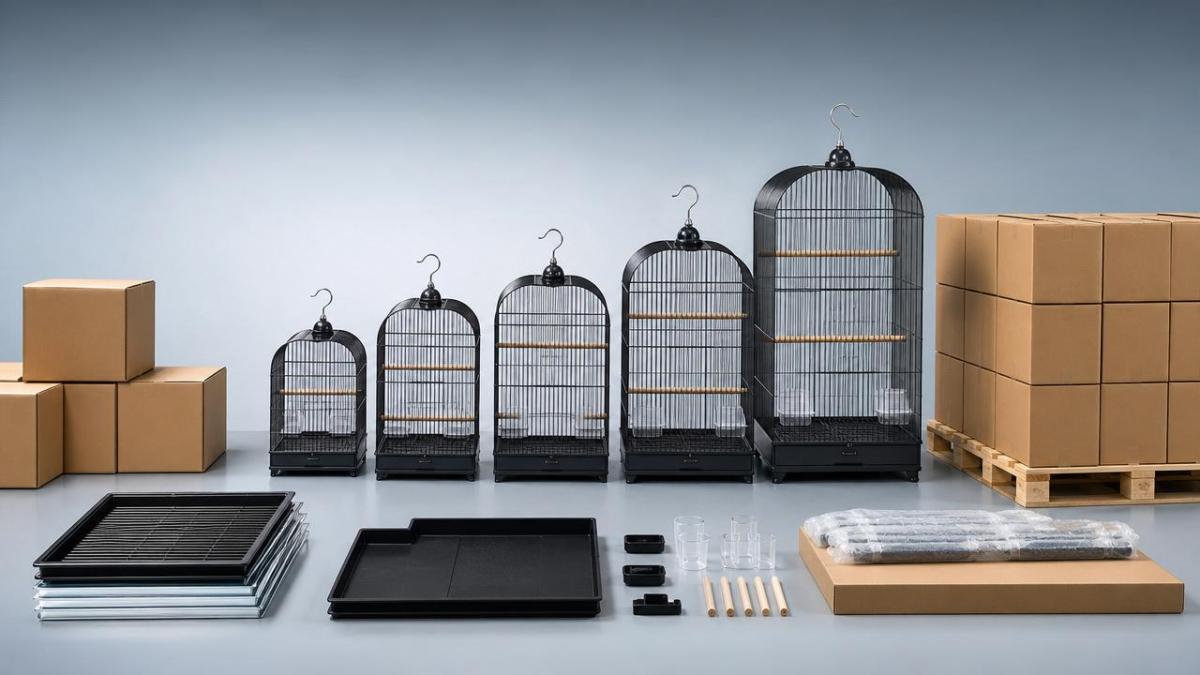
In the pet supplies trade, cages are functional products with visible quality expectations. Buyers judge them on dimensions, finish, safety, assembly ease, and shipping condition almost immediately after unpacking.
That means return requests often arise before a product has even been used for long. A scratched coating, warped panel, poor weld, missing accessory, or incorrect label can trigger claims quickly.
For after-sales staff, the key insight is this: many returns are not random. They are traceable to recurring patterns in specification control, production consistency, packaging design, and communication between supplier and buyer.
When teams treat every case as an isolated complaint, they miss the opportunity to reduce future return rates. When they classify complaints by root cause, they can improve both resolution speed and supplier accountability.
Which return reasons appear most often after delivery
Across bird cages wholesale orders, the most common return triggers usually fall into five groups: size mismatch, coating defects, weak structural joints, packaging-related damage, and non-compliant or inaccurate labeling.
These categories matter because they affect not only product acceptance but also resale viability. A cage can be technically usable yet still unsellable if its finish looks poor or its label fails local market requirements.
After-sales teams should avoid broad labels such as “quality issue” or “customer dissatisfaction.” Those terms are too vague to support corrective action. A better approach is to define a detailed failure taxonomy.
For example, separate “dimension out of tolerance” from “assembly misfit,” and separate “paint scratch from transit” from “powder coating adhesion failure.” Better classification leads to better claims negotiation.
How sizing and specification mismatches create avoidable returns
One of the most frequent causes of return disputes is that the delivered cage does not match the buyer’s practical expectation, even when the factory believes it followed the order sheet.
This usually happens because dimensions were technically listed but not fully clarified. Outer carton size, assembled cage size, inner living space, bar spacing, tray depth, and stand height may all be interpreted differently.
For pet retailers and distributors, small dimension differences can create major downstream issues. Shelf placement changes, compatibility with accessories fails, and end users may consider the cage unsuitable for the intended bird type.
After-sales staff should first verify which dimension was promised in pre-sale documentation. Compare the purchase order, technical drawing, sample approval, product page, and carton marking before assigning responsibility.
Another common issue is bar spacing. A cage may look correct overall, but if spacing is too wide or too narrow for the target bird category, customers may reject it on safety grounds.
To reduce repeat cases, suppliers and buyers should confirm a specification matrix before mass production. This matrix should list key tolerances, measuring method, assembled state, and any market-specific pet safety expectations.
Why coating quality complaints often lead to returns instead of partial compensation
Surface finish is highly visible, so coating defects are among the fastest triggers of dissatisfaction. Even minor damage can make a cage look old, unsafe, or low quality, especially in retail-facing channels.
Common complaints include paint chipping, uneven powder coating, color inconsistency, bubbling, rust spots, sharp drips, and odor concerns from poor curing. These issues often appear as soon as the carton is opened.
For after-sales teams, it is important to distinguish whether the problem began in production or during transit. Peeling at bends may suggest poor pretreatment or insufficient curing, while isolated abrasions may point to packaging friction.
Ask for close-up photos of affected zones, carton condition, and batch information. If multiple units show the same failure around welds, corners, or hooks, the issue is likely process-related rather than accidental.
Coating complaints often escalate to returns because appearance directly affects resale. A distributor may refuse rework if labor costs, image risk, and customer complaints outweigh the value of partial reimbursement.
The preventive answer is not only better paint quality. It also includes salt-spray testing where relevant, adhesion checks, edge protection, interlayer separation materials, and clear acceptable quality limits for cosmetic defects.
How welding and structural weakness damage trust in wholesale cage orders
Bird cages must feel stable and safe. If joints flex excessively, welds crack, doors misalign, or stands wobble, buyers often view the product as a risk rather than a simple defect case.
Structural complaints can emerge during assembly, during store display, or shortly after use. Because cages are used for living animals, even minor weakness can trigger immediate return requests and strong customer reactions.
Typical issues include broken spot welds, detached feeder doors, bent frames, misaligned screw holes, unstable bases, and weak tray runners. In some cases, the cage survives shipping but fails during normal setup.
After-sales teams should collect evidence in a structured way: assembly video, affected connection points, lot number, and whether the customer used tools correctly. This helps separate true manufacturing defects from assembly misuse.
However, teams should be careful not to overuse “improper assembly” as a default defense. If instructions are unclear or parts require excessive force to align, the design itself may be contributing to failures.
Factories can reduce return risk through fixture consistency, weld penetration control, load testing for stands and hanging points, and pre-shipment assembly audits on random units from each production batch.
Why packaging design is a major hidden factor behind returns
Many return cases classified as product defects actually begin with inadequate packaging. In bird cages wholesale shipments, wire structures and coated surfaces are especially vulnerable to rubbing, denting, and compression damage.
Transit risks increase when cages are packed with insufficient corner protection, unstable stacking design, weak inner fixation, or tray components that move freely inside the box and scratch coated parts.
Outer cartons may also be too weak for long-distance export routes, especially where containers face humidity, rough loading, and repeated handling. By the time goods arrive, the damage may appear to be a factory issue.
After-sales teams should therefore request not only product photos but also images of the outer carton, pallet condition, sealing method, and internal protective structure. Packaging evidence can reshape the whole claim assessment.
If damage is concentrated on exposed corners or repeated pressure points, the packaging design likely needs revision. If random isolated damage appears across mixed SKUs, the logistics chain may be the stronger suspect.
For prevention, suppliers should validate packaging through drop testing, vibration review, compression assessment, and route-specific packaging adaptation. The right packaging often costs less than repeated returns and credits.
How labeling and compliance problems can trigger full order rejection
Some of the most expensive return cases have nothing to do with cage performance. They happen because labels, warnings, origin marks, barcodes, or material declarations do not match the buyer’s market requirements.
In cross-border pet supplies trade, missing or inaccurate compliance information can prevent warehouse intake, retail listing, or customs clearance. Once that happens, buyers may reject all or part of the shipment.
Examples include incorrect country-of-origin marking, absent safety warnings, mismatched SKU labels, carton label errors, or unsupported claims about coating safety, corrosion resistance, or intended species use.
After-sales personnel should confirm whether the complaint concerns legal compliance, customer expectation, or documentation mismatch. These are different risk levels and require different response paths.
A mislabeled retail carton may be relabeled locally in some markets. But a non-compliant declaration involving materials or consumer safety statements may require product hold, recall, or negotiated return.
The best defense is a pre-shipment document review that includes artwork approval, carton label verification, barcode scan checks, and alignment between commercial invoice, packing list, and physical product identification.
What after-sales teams should check first when a return complaint arrives
Speed matters, but structure matters more. A clear intake process helps after-sales teams avoid emotional back-and-forth and gather enough evidence to identify the true cause of the complaint.
Start with five checkpoints: product model and batch, quantity affected, defect type, packaging condition, and whether the issue was found at unpacking, assembly, retail display, or post-use stage.
Then request standardized evidence. This should include photos from different angles, close-ups, carton images, label images, measurement proof where relevant, and a short written description of functional impact.
Next, compare the complaint against approved specifications and previous cases. If the defect pattern matches a known issue from the same supplier or batch, escalation should be immediate.
It is also useful to decide early whether the case is suitable for replacement parts, field repair, discount settlement, or full return. Not every issue requires reverse logistics, and not every defect is salvageable.
A disciplined triage system improves resolution speed and reduces internal friction between quality, sales, logistics, and sourcing teams. It also gives management better data for supplier scorecards.
How to reduce future return rates in bird cages wholesale programs
Reducing returns is rarely about one action. It requires tighter coordination between product development, sourcing, quality control, packaging engineering, and after-sales reporting.
First, define critical-to-quality points for each cage model. These usually include overall dimensions, bar spacing, weld integrity, coating adhesion, moving-part fit, packaging protection, and label accuracy.
Second, make those points measurable. A specification is only useful if inspectors and suppliers can verify it using the same method and tolerance standard before shipment.
Third, close the loop between complaints and prevention. Every confirmed return cause should lead to one of three outputs: revised spec, stronger inspection item, or updated packaging and handling standard.
Fourth, track supplier performance by defect category instead of only total return value. This reveals whether a factory’s main weakness lies in finish control, structural consistency, packing discipline, or documentation accuracy.
Finally, review product pages and sales materials. Sometimes returns happen because the product was described too broadly. Better expectation setting can prevent valid-but-avoidable complaints from the start.
Conclusion
In bird cages wholesale business, return issues are usually not mysterious. They most often come from predictable weaknesses in sizing clarity, coating durability, weld quality, packaging protection, and compliance labeling.
For after-sales maintenance teams, the biggest advantage comes from accurate diagnosis. When complaints are classified correctly and linked to evidence, teams can resolve cases faster and help prevent recurrence.
The practical goal is not just to close tickets. It is to build a feedback system that improves product consistency, reduces dispute costs, and strengthens buyer confidence across future orders.
When after-sales insights are treated as operational intelligence rather than cleanup work, bird cage return management becomes a source of quality improvement and long-term trade reliability.
 How an industrial trade intelligence dashboard can identify new supplier marketsDiscover how an industrial trade intelligence dashboard helps identify new supplier markets by comparing capacity, landed cost, logistics resilience, and compliance risk.
 Which global market entry barriers should exporters assess first?Global market entry barriers exporters should assess first: tariffs, compliance, buyer qualification, logistics, and payment risk. Build a practical strategy for confident market entry.
 How trade data aggregation analytics can reveal emerging supplier marketsTrade data aggregation analytics reveals emerging supplier markets by connecting trade flows, capacity signals, logistics, and compliance insights for smarter sourcing decisions.
 When an export market analysis platform can validate demand in a new marketExport market analysis platform insights help validate new-market demand through buyer fit, regulations, logistics, competition, and profitable entry conditions.
 What is driving the beauty and personal care market in the USA?Beauty and personal care in USA is driven by targeted solutions, selective premiumization, digital discovery, clean-label trust, diverse needs, and compliance. Explore key growth opportunities.
 How trade flow monitoring reports reveal changing regional demandTrade flow monitoring reports reveal changing regional demand through import volumes, sourcing shifts, product mix, logistics signals, and regulatory trends. Explore actionable market insights.
 How international market intelligence for investors reduces market-entry riskInternational market intelligence for investors reduces market-entry risk by validating demand, regulations, logistics, and competition before capital is committed.
 How international sourcing intelligence helps identify supplier risk earlyInternational sourcing intelligence helps businesses spot supplier risks early, protect supply continuity, and make smarter global procurement decisions.
 How trade data aggregation analytics reveals emerging supplier marketsTrade data aggregation analytics reveals emerging supplier markets through export trends, input flows, logistics, and regulatory signals. Discover smarter sourcing insights.
 What industrial cluster monitoring in Vietnam reveals about site riskIndustrial cluster monitoring Vietnam reveals hidden site risks across labor, utilities, logistics, compliance, and supplier dependencies. Make smarter sourcing and expansion decisions.
 Food Technology Trends Reshaping Shelf Life, Safety, and Product InnovationFood technology is reshaping shelf life, safety, and innovation. Discover the trends helping food businesses cut risk, improve compliance, and unlock stronger global market growth.
 How electronics manufacturing services are changing with low-volume demandElectronics manufacturing services are evolving fast with low-volume demand. Learn how agile EMS partners improve flexibility, compliance, sourcing resilience, and speed to market.
 How Can Buyers Reduce Procurement Risks for Electronic Components?How to reduce procurement risks for electronic components: learn how buyers assess traceability, lead times, compliance, and supplier types to avoid costly sourcing mistakes.
 What Sourcing Intelligence India Reveals About Supplier Risk and Cost ShiftsSourcing intelligence India reveals hidden supplier risk, compliance gaps, logistics pressure, and real cost shifts—helping buyers compare vendors smarter and source with more confidence.
 Fashion Trends 2026: Which Materials, Colors, and Silhouettes Are Gaining Ground?Fashion trends 2026 spotlight tactile fabrics, mineral colors, and controlled volume. Explore the materials, shades, and silhouettes shaping smarter, more wearable style.
 Smart Device Market Outlook: Key Growth Drivers, Segments, and Business OpportunitiesSmart device market trends are shifting toward system value, industrial demand, and resilient supply chains. Explore key growth drivers, high-potential segments, and business opportunities.
 How Global Trade Intelligence Services Help B2B Firms Evaluate Markets and SuppliersGlobal trade intelligence services help B2B firms compare suppliers, assess market potential, and uncover compliance, logistics, and pricing risks before costly decisions are made.
 Manufacturing Sector Updates for Investors: What Signals Matter Most in 2025?Manufacturing sector updates for investors in 2025: track orders, margins, supply chains, regulation, and exports to spot resilient manufacturers and smarter investment signals.
 How Energy Market Intelligence Helps Businesses Track Price Risks and Demand ShiftsEnergy market intelligence helps businesses spot price risks, demand shifts, and supply pressure early—improving procurement, resilience, and faster strategic decisions.
 Precision Hardware Tools Market: Key Demand Drivers, Segments, and Growth OutlookPrecision hardware tools market trends are reshaping sourcing, compliance, and automation. Explore key demand drivers, segment shifts, regional supply patterns, and growth opportunities.
 How to Use Customs Import Data to Find Buyers, Track Competitors, and Spot Demand?Customs import data helps you find real buyers, track competitors, and spot demand shifts early. Learn practical ways to turn trade records into smarter global business decisions.





















Global Trade Insights & Industry
Our mission is to empower global exporters and importers with data-driven insights that foster strategic growth.
Search News
Popular Tags
Industry Overview
The global commercial kitchen equipment market is projected to reach $112 billion by 2027. Driven by urbanization, the rise of e-commerce food delivery, and strict hygiene regulations.