

How to Verify Chemical Trade Leads Before Requesting Quotes
Before sending RFQs, buyers need a reliable way to screen chemical trade leads for legitimacy, compliance, and supply capability. In a market where inaccurate listings and hidden risks can delay sourcing decisions, verifying chemical trade leads helps procurement teams reduce uncertainty and negotiate with greater confidence. This guide outlines practical checks that support safer supplier selection and more efficient quote requests.
For procurement teams, the core search intent behind this topic is straightforward: how to tell whether a chemical supplier lead is real, compliant, and worth engaging before time is spent on quotation rounds, samples, and internal approvals. Buyers are not looking for theory alone. They want a practical screening method that reduces supplier risk, avoids wasted RFQs, and improves sourcing speed.
The biggest concerns usually include whether the company actually exists, whether it can legally and consistently supply the product, whether its documents are current, whether the contact person is legitimate, and whether the quoted business claims match operational reality. The most useful content, therefore, is not a generic overview of lead generation, but a due diligence framework procurement teams can use immediately.
Why buyers should verify chemical trade leads before requesting quotes
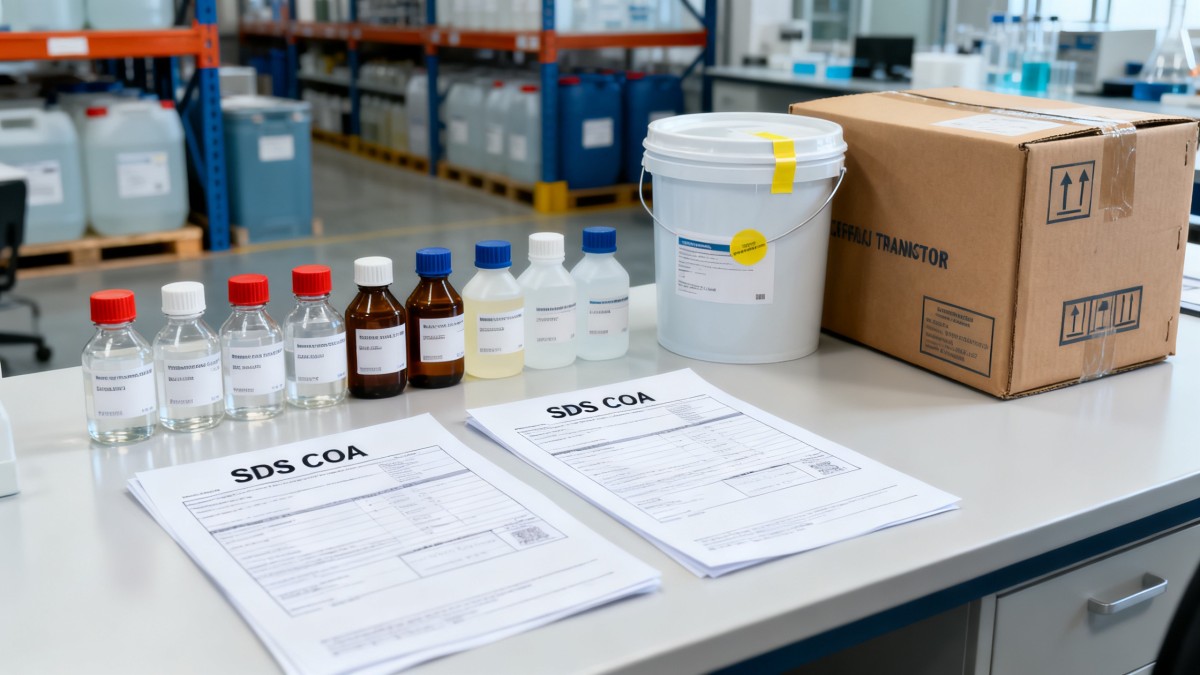
In chemicals sourcing, a weak lead does more than waste inbox space. It can trigger compliance failures, shipment delays, quality disputes, payment exposure, and production interruptions. A supplier that looks credible in a listing may still lack export experience, valid registrations, hazardous goods handling capability, or the manufacturing capacity needed for your volume.
This matters even more in the chemicals sector because procurement decisions often affect product safety, plant continuity, and downstream customer commitments. Unlike low-risk commodity purchases, chemical sourcing frequently involves regulatory restrictions, storage constraints, transport classification, specification sensitivity, and documentation requirements that must be checked before commercial negotiation goes too far.
Verifying chemical trade leads early gives buyers a better shortlist. Instead of requesting quotes from every contact found online, procurement teams can focus only on leads that pass basic identity, compliance, and supply checks. That improves quote quality, speeds comparison, and gives internal stakeholders more confidence in the sourcing process.
In short, the objective is not to eliminate all risk with one review. It is to remove obviously unsuitable suppliers before RFQ issuance and identify which leads deserve deeper qualification. That simple shift often saves more time than aggressive price shopping with unverified contacts.
Start with a basic legitimacy check: is the supplier real and reachable?
The first layer of verification is business identity. Before discussing price, confirm that the supplier is a legally registered entity with a traceable operating presence. Buyers should review the company’s full legal name, registration number, incorporation date, country of registration, and business scope. If the firm cannot provide these details promptly, that is an early warning sign.
Next, compare information across multiple sources. The company website, trade platform profile, customs data references, industry directories, and corporate social channels should broadly align. Differences in address, product focus, or company age do not automatically prove fraud, but they do justify additional checking.
Contact legitimacy also matters. A serious supplier should communicate through a domain-based business email rather than only free mailbox services. The website should contain a verifiable company address, phone number, and product details that go beyond generic claims. Buyers should also test response quality by asking specific questions about grade, packaging, lead time, and export markets. Vague replies usually indicate either a trader with limited product control or a low-quality lead.
It is also useful to validate whether the contact person appears connected to the business. Check professional networking profiles, trade event participation, or company team pages where available. In chemical trade, deals are often delayed because buyers engage with intermediaries who lack authority, technical knowledge, or access to actual inventory.
Check whether the supplier can legally sell and export the chemical you need
A lead can be real and still be unsuitable. In chemicals procurement, legal and regulatory fit is often the dividing line between a viable supplier and a costly dead end. Buyers should first confirm whether the supplier is allowed to manufacture, distribute, store, or export the product in question under the relevant local rules.
Ask for the core documents that support lawful trade. Depending on the product and market, this may include business licenses, manufacturing permits, export registrations, REACH-related support, SDS documentation, product specifications, COA samples, hazardous goods declarations, and quality certifications such as ISO systems. The exact list varies by substance and destination country, but credible suppliers should understand what documentation their product category requires.
It is important to review whether documents are current and consistent. Expired certificates, mismatched company names, incomplete SDS sections, or poorly formatted technical files can signal weak compliance management. Procurement teams should not treat document collection as a box-ticking exercise. The question is whether the supplier demonstrates operational control over compliance, not just access to old files.
For restricted or hazardous materials, buyers should also verify transport and labeling readiness. Some suppliers can produce a chemical but have limited experience with international hazardous shipments. That gap often appears later as packing errors, booking issues, or customs delays. Verifying capability at the lead stage helps avoid RFQs from companies that cannot complete the order smoothly.
Confirm supply capability, not just product availability claims
One of the most common problems with chemical trade leads is the gap between marketing language and actual delivery capability. Many profiles list long product catalogs, but not all listed products are manufactured, stocked, or regularly exported by that company. Before requesting a quote, buyers should determine whether the supplier can reliably meet the required specification, volume, and delivery pattern.
Start with product-level questions. Ask whether the supplier is a manufacturer, authorized distributor, stockist, or broker for the exact chemical. Then request information on annual output, standard MOQ, available packaging formats, common purity ranges, and normal lead times. If answers are inconsistent or overly broad, the lead may not be strong enough for immediate RFQ inclusion.
Capacity consistency matters more than a one-time “yes.” A supplier may be able to ship a trial order but fail to support repeat demand. For strategic buyers, it is worth asking about production lines, backup plants, raw material sourcing stability, and recent supply disruptions. You do not need a full audit at this stage, but you do need enough evidence to judge whether the supplier can support your sourcing model.
Export experience is another practical filter. Suppliers familiar with your region usually understand destination documentation, packaging norms, and customer expectations better than first-time exporters. Ask where they currently sell, what industries they serve, and whether they have shipped comparable products to your market before. This helps distinguish a qualified supply partner from a lead that is technically capable but commercially unprepared.
Use document and data cross-checks to spot weak or risky leads
Strong verification does not rely on one source. Procurement teams should cross-check supplier claims using external data wherever possible. This can include customs shipment records, chamber of commerce listings, exhibition participation, certification databases, sanctions screening tools, and third-party business intelligence platforms.
For example, if a supplier claims to be a major exporter of a solvent or specialty intermediate, but there is no visible shipment history, no technical literature, and no evidence of industry activity, buyers should slow down. A lack of external signals does not automatically disqualify a company, especially in some regional markets, but it does reduce confidence and increases the need for direct proof.
Technical consistency is also revealing. Compare the product specification sheet, SDS, COA sample, and sales claims. Do purity, CAS number, application scope, storage conditions, and hazard classifications line up? In chemicals trade, poor internal consistency often points to copied documents, low technical support, or weak product ownership.
Pricing claims should be checked in context as well. If a lead offers a price far below the market without a clear reason such as local feedstock advantage, inventory clearance, or lower specification, buyers should investigate carefully. Unrealistic pricing can indicate quality substitution, non-compliant origin, hidden commercial terms, or a lead with no actual supply behind it.
Ask the right pre-RFQ questions to qualify chemical trade leads faster
Many procurement teams can improve lead quality simply by standardizing the first outreach. Instead of immediately asking for price, send a short qualification checklist. This reduces back-and-forth and makes it easier to compare suppliers objectively.
A practical pre-RFQ question set might include: Are you a manufacturer or trader for this product? What is the exact product grade and specification range? What is your typical lead time? What packaging options do you provide? Which export markets do you currently serve? Can you share a recent COA sample and current SDS? What certifications or registrations apply to this product? What is your monthly or annual supply capacity? Do you support third-party inspection or sample testing?
The value of these questions is not just the answers themselves, but how the supplier responds. Reliable suppliers usually reply with structured, product-specific information and relevant attachments. Weak leads often avoid specifics, send generic brochures, or repeatedly shift the conversation back to price before qualification is complete.
This step is particularly effective for buyers managing multiple chemical trade leads at once. A uniform screening template creates comparable records, helps teams justify why certain leads were excluded, and supports cleaner RFQ rounds with fewer surprises later.
Know the warning signs that a chemical lead should not move forward
Some leads fail not because of one major red flag, but because of repeated minor issues that together indicate elevated risk. Buyers should be cautious when a supplier refuses to share basic corporate details, uses inconsistent company identities, provides poor-quality compliance documents, or cannot answer basic technical questions about the product.
Other warning signs include pressure for fast payment before qualification, refusal to provide samples when appropriate, unusually broad product portfolios with little depth, inability to explain production origin, and contradictory statements about stock, lead time, or export history. These patterns often show that the contact lacks control over the supply chain.
Buyers should also pay attention to communication discipline. In chemical procurement, precision matters. Slow replies can happen, but repeated ambiguity on specifications, packaging, Incoterms, or documentation often predicts future execution problems. A supplier that is unclear before the RFQ stage is unlikely to become more reliable under shipment pressure.
Not every imperfect lead should be rejected immediately. Some may simply require a lower trust score and additional review. The key is to avoid treating all leads as equal when deciding where to spend procurement time.
Build a simple verification workflow your procurement team can repeat
The most effective approach is a tiered process. First, screen for identity and reachability. Second, review legal and compliance fit. Third, confirm product and supply capability. Fourth, compare external signals and documents. Only after passing these checks should a lead move into the formal RFQ pool.
Many teams benefit from using a simple scorecard. You can rate each supplier lead across categories such as company legitimacy, documentation quality, regulatory readiness, product fit, production capacity, export experience, and communication reliability. This turns subjective impressions into a more defensible sourcing process.
It also helps to separate lead verification from full supplier approval. The purpose of pre-RFQ screening is to decide whether the lead deserves commercial engagement, not to replace deeper QA or compliance audits required for final onboarding. Keeping that distinction clear makes the process faster and more practical.
For organizations sourcing across regions and product categories, access to structured market intelligence can improve this workflow significantly. Platforms that aggregate industry data, supplier visibility signals, and cross-border trade insights can help procurement teams identify stronger leads earlier and reduce dependence on incomplete listings or one-channel discovery.
Conclusion: better lead verification leads to better chemical sourcing outcomes
Verifying chemical trade leads before requesting quotes is not an administrative extra. It is a sourcing control that protects time, budget, compliance, and continuity. For procurement teams, the most important question is not who replies first, but who can be trusted to supply the right chemical under the right conditions.
The most useful verification process is practical: confirm the company is real, check whether it can legally sell and export the product, test whether its supply capability matches your requirement, and cross-check claims with documents and external data. If a lead passes those steps, your RFQ process will be faster, cleaner, and more likely to produce usable offers.
In a market where chemical trade leads vary widely in quality, disciplined screening gives buyers a measurable advantage. It reduces noise, sharpens supplier comparison, and supports more confident negotiations. For procurement professionals, that is often the difference between chasing quotes and building a dependable sourcing pipeline.
 How an industrial trade intelligence dashboard can identify new supplier marketsDiscover how an industrial trade intelligence dashboard helps identify new supplier markets by comparing capacity, landed cost, logistics resilience, and compliance risk.
 Which global market entry barriers should exporters assess first?Global market entry barriers exporters should assess first: tariffs, compliance, buyer qualification, logistics, and payment risk. Build a practical strategy for confident market entry.
 How trade data aggregation analytics can reveal emerging supplier marketsTrade data aggregation analytics reveals emerging supplier markets by connecting trade flows, capacity signals, logistics, and compliance insights for smarter sourcing decisions.
 When an export market analysis platform can validate demand in a new marketExport market analysis platform insights help validate new-market demand through buyer fit, regulations, logistics, competition, and profitable entry conditions.
 What is driving the beauty and personal care market in the USA?Beauty and personal care in USA is driven by targeted solutions, selective premiumization, digital discovery, clean-label trust, diverse needs, and compliance. Explore key growth opportunities.
 How trade flow monitoring reports reveal changing regional demandTrade flow monitoring reports reveal changing regional demand through import volumes, sourcing shifts, product mix, logistics signals, and regulatory trends. Explore actionable market insights.
 How international market intelligence for investors reduces market-entry riskInternational market intelligence for investors reduces market-entry risk by validating demand, regulations, logistics, and competition before capital is committed.
 How international sourcing intelligence helps identify supplier risk earlyInternational sourcing intelligence helps businesses spot supplier risks early, protect supply continuity, and make smarter global procurement decisions.
 How trade data aggregation analytics reveals emerging supplier marketsTrade data aggregation analytics reveals emerging supplier markets through export trends, input flows, logistics, and regulatory signals. Discover smarter sourcing insights.
 What industrial cluster monitoring in Vietnam reveals about site riskIndustrial cluster monitoring Vietnam reveals hidden site risks across labor, utilities, logistics, compliance, and supplier dependencies. Make smarter sourcing and expansion decisions.
 Food Technology Trends Reshaping Shelf Life, Safety, and Product InnovationFood technology is reshaping shelf life, safety, and innovation. Discover the trends helping food businesses cut risk, improve compliance, and unlock stronger global market growth.
 How electronics manufacturing services are changing with low-volume demandElectronics manufacturing services are evolving fast with low-volume demand. Learn how agile EMS partners improve flexibility, compliance, sourcing resilience, and speed to market.
 How Can Buyers Reduce Procurement Risks for Electronic Components?How to reduce procurement risks for electronic components: learn how buyers assess traceability, lead times, compliance, and supplier types to avoid costly sourcing mistakes.
 What Sourcing Intelligence India Reveals About Supplier Risk and Cost ShiftsSourcing intelligence India reveals hidden supplier risk, compliance gaps, logistics pressure, and real cost shifts—helping buyers compare vendors smarter and source with more confidence.
 Fashion Trends 2026: Which Materials, Colors, and Silhouettes Are Gaining Ground?Fashion trends 2026 spotlight tactile fabrics, mineral colors, and controlled volume. Explore the materials, shades, and silhouettes shaping smarter, more wearable style.
 Smart Device Market Outlook: Key Growth Drivers, Segments, and Business OpportunitiesSmart device market trends are shifting toward system value, industrial demand, and resilient supply chains. Explore key growth drivers, high-potential segments, and business opportunities.
 How Global Trade Intelligence Services Help B2B Firms Evaluate Markets and SuppliersGlobal trade intelligence services help B2B firms compare suppliers, assess market potential, and uncover compliance, logistics, and pricing risks before costly decisions are made.
 Manufacturing Sector Updates for Investors: What Signals Matter Most in 2025?Manufacturing sector updates for investors in 2025: track orders, margins, supply chains, regulation, and exports to spot resilient manufacturers and smarter investment signals.
 How Energy Market Intelligence Helps Businesses Track Price Risks and Demand ShiftsEnergy market intelligence helps businesses spot price risks, demand shifts, and supply pressure early—improving procurement, resilience, and faster strategic decisions.
 Precision Hardware Tools Market: Key Demand Drivers, Segments, and Growth OutlookPrecision hardware tools market trends are reshaping sourcing, compliance, and automation. Explore key demand drivers, segment shifts, regional supply patterns, and growth opportunities.
 How to Use Customs Import Data to Find Buyers, Track Competitors, and Spot Demand?Customs import data helps you find real buyers, track competitors, and spot demand shifts early. Learn practical ways to turn trade records into smarter global business decisions.





















Global Trade Insights & Industry
Our mission is to empower global exporters and importers with data-driven insights that foster strategic growth.
Search News
Popular Tags
Industry Overview
The global commercial kitchen equipment market is projected to reach $112 billion by 2027. Driven by urbanization, the rise of e-commerce food delivery, and strict hygiene regulations.