

When Does Healthcare Management Consulting Actually Pay Off?
Healthcare management consulting pays off when healthcare organizations face complex decisions that internal teams cannot solve efficiently alone. For business leaders, the real value lies in sharper strategy, faster operational improvements, stronger compliance, and measurable financial outcomes. This article explores when healthcare management consulting delivers a clear return on investment, what warning signs to watch for, and how decision-makers can assess whether outside expertise will truly accelerate growth and performance.
For decision-makers across hospitals, outpatient groups, diagnostics providers, digital health businesses, and cross-border healthcare service networks, the key question is not whether consultants sound useful. The real question is whether external expertise can reduce risk, shorten execution cycles, and improve margins within 90, 180, or 365 days.
In practice, healthcare management consulting creates value when leadership teams face high-stakes transitions: expansion into new markets, payer pressure, post-merger integration, regulatory change, staffing shortages, revenue leakage, or technology implementation that has stalled after 2 or 3 quarters. In those moments, speed and clarity matter more than theory.
When Healthcare Management Consulting Delivers the Highest ROI
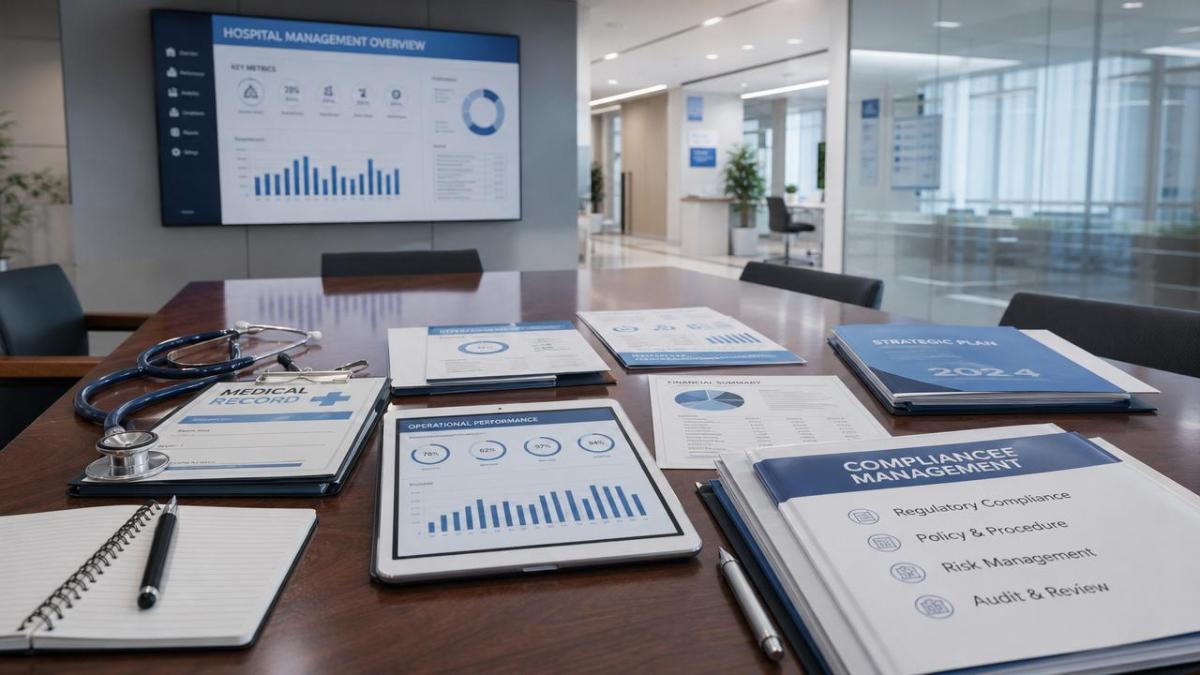
Healthcare management consulting is most effective when the cost of delay is already visible. If a provider network is losing 3% to 8% of revenue through coding gaps, claim denials, scheduling inefficiencies, or underused capacity, waiting for internal alignment may cost more than hiring outside support.
External advisors tend to pay off in situations where the organization needs a structured diagnostic, a practical roadmap, and disciplined execution support over 6 to 24 weeks. That is especially true when leaders are balancing compliance, operations, workforce constraints, and financial pressure at the same time.
Five common situations where outside expertise outperforms internal effort
- Post-merger integration where duplicate systems, workflows, and governance slow decision-making for more than 100 days.
- Revenue cycle underperformance, including denial rates above normal internal tolerance or cash collection cycles stretching beyond target.
- Regulatory readiness projects with fixed deadlines, such as audit preparation, policy redesign, or compliance remediation.
- Growth initiatives such as entering a new geography, launching a specialty line, or scaling telehealth across 3 or more sites.
- Technology transformations where EHR optimization, analytics adoption, or workflow automation has failed to achieve expected utilization.
Why internal teams alone often struggle
Most healthcare executives do not lack intelligence or commitment. They lack spare capacity, cross-functional alignment, and benchmarking visibility. A chief operating officer may know where bottlenecks exist, yet still struggle to move physicians, finance, IT, compliance, and operations toward one timeline.
Healthcare management consulting adds value because consultants can isolate root causes in 2 to 4 weeks, compare performance against peer operating models, and convert strategic intent into milestones, owners, and measurable KPIs. That reduces organizational drift, which is often the hidden cost behind missed targets.
A practical decision screen
If the issue is worth more than a single department, affects patient access or margin, and requires action across 3 or more functions, the business case for consulting becomes stronger. If the challenge can be solved by one manager in under 30 days, outside help is usually unnecessary.
The table below helps leaders distinguish between problems that need internal management and those where healthcare management consulting is more likely to create measurable return.
The main pattern is clear: healthcare management consulting pays off when complexity crosses departments, timelines tighten, and the downside of misexecution becomes material. The greater the coordination burden, the more valuable structured external guidance becomes.
Warning Signs That Your Organization Is Losing Time and Money
Many executive teams wait too long to seek help because problems first appear as isolated friction rather than systemic failure. By the time the issue shows up in EBITDA, access delays, staff turnover, or board escalations, 6 to 12 months may already have been lost.
The earlier leadership recognizes the signal pattern, the higher the probability that healthcare management consulting will create a positive return rather than serve as late-stage damage control.
Operational and financial indicators to watch
- Strategic projects miss 2 or more milestone dates in a row.
- Leadership meetings revisit the same issue for 60 to 90 days without a decision owner.
- Denials, rework, labor overtime, or vacancy rates remain elevated despite local interventions.
- Service-line growth stalls even though demand appears strong.
- Compliance concerns require manual workarounds that consume management attention weekly.
- Technology investments are live, but adoption remains low or workflow benefit is unclear.
Hidden costs executives often underestimate
The visible consulting fee is only one side of the equation. The larger cost is usually internal distraction. When senior leaders spend 4 to 6 hours per week resolving issues that a specialized advisory team could structure faster, the organization absorbs both direct and opportunity cost.
Another hidden cost is decision fatigue. Healthcare organizations often delay difficult changes because no one wants to own the cross-functional trade-offs. A good consulting team creates objective sequencing, clarifies scenarios, and forces decisions into a 30-, 60-, and 90-day operating cadence.
Typical impact areas
In many engagements, value comes from 4 areas at once: cost takeout, throughput improvement, revenue capture, and risk reduction. Even if only 2 of the 4 improve materially, the engagement can still justify itself.
How to Evaluate Whether Healthcare Management Consulting Will Pay Off
The most disciplined buyers do not start by choosing a consulting brand. They start by defining the business case. Before approving any project, leaders should identify the baseline, the target, the time frame, and the internal owner who will remain accountable after the consultants leave.
A practical evaluation model should cover at least 4 dimensions: problem size, urgency, implementation complexity, and value capture potential. If all 4 score high, healthcare management consulting is usually justified.
Four questions every executive team should ask
- Is the expected gain measurable within 3 to 12 months?
- Does the issue require external benchmarking or specialized healthcare operating knowledge?
- Will success depend on change management across multiple stakeholders?
- Can internal leaders realistically deliver this without slowing other priorities?
The table below can be used as a boardroom-level screening tool before issuing an RFP or entering vendor discussions.
If 3 or 4 of these factors point to high priority, the likelihood of positive ROI rises significantly. In that case, the question shifts from whether to buy consulting support to how to scope it correctly and capture value faster.
Build the business case before you buy
Strong buyers ask consultants to tie recommendations to quantified outcomes such as reduced denial rework, faster throughput, better labor productivity, lower audit exposure, or improved site-level profitability. Even when exact outcomes cannot be guaranteed, a credible engagement should define baseline metrics and review checkpoints every 2 to 4 weeks.
For enterprise buyers, this discipline also improves procurement quality. It filters out generic advisory proposals and highlights firms that can translate analysis into implementation support, governance, and sustained operating improvement.
What Good Consulting Engagements Look Like in Practice
Not all healthcare management consulting engagements succeed. The best ones are tightly scoped, operationally grounded, and linked to a decision calendar. They do not stop at PowerPoint. They move from diagnosis to implementation with clear owners, realistic timelines, and agreed performance indicators.
A typical engagement structure
- Diagnostic phase lasting 2 to 4 weeks to assess process, data, governance, and risk.
- Design phase lasting 2 to 6 weeks to prioritize initiatives and assign targets.
- Implementation support lasting 6 to 16 weeks to embed changes and review progress.
What to require from consulting partners
Executives should look for healthcare-specific operating knowledge, not just broad strategy language. The consulting team should understand payer dynamics, care delivery workflows, compliance realities, and frontline adoption barriers. In healthcare, elegant strategy without operational practicality usually fails by month 3.
Ask for a workplan with 5 or more concrete deliverables, decision gates, stakeholder cadence, and data requirements. Also ask what the client team must contribute. If that answer is vague, implementation risk is high.
Red flags in proposal review
- Outcomes described only in broad terms such as transformation or optimization.
- No mention of change management, governance, or adoption tracking.
- Heavy analysis phase with limited implementation detail.
- Little evidence of healthcare workflow understanding across finance, operations, and compliance.
In a B2B environment where health systems, service providers, and medical business operators need dependable execution, partner selection should focus on practical impact. Buyers should assess not only expertise, but also cadence, accountability, and the ability to work with internal leadership rather than around it.
How Decision-Makers Can Maximize Return After Hiring Consultants
Even strong healthcare management consulting fails when the client side is unprepared. ROI depends on sponsorship, data access, and disciplined follow-through. The client organization must designate an executive sponsor, an operational owner, and a weekly review rhythm from day 1.
The highest-performing organizations also define value capture early. Instead of asking whether the consultants were helpful, they ask whether specific metrics moved by the agreed checkpoints at 30, 60, and 90 days.
Execution habits that improve results
- Assign one accountable sponsor with authority to remove barriers.
- Provide clean baseline data within the first 7 to 10 days.
- Limit strategic priorities to a manageable set, often 3 to 5 initiatives at one time.
- Run weekly steering meetings with decision logs and unresolved issue tracking.
- Build internal capability so gains remain after the engagement ends.
From one project to long-term performance
For many healthcare organizations, the first engagement is not the value story by itself. The larger payoff comes when leadership uses that project to improve governance, standardize dashboards, and strengthen cross-functional execution discipline. In that sense, consulting can be both a problem-solving tool and a management capability accelerator.
For global business readers tracking healthcare market opportunities, the lesson is similar across sectors: outside expertise pays off when information is converted into action, and when action is linked to measurable outcomes. That is the same logic behind strong B2B intelligence, strategic planning, and data-led growth decisions.
Healthcare management consulting actually pays off when the challenge is important enough, urgent enough, and complex enough that internal teams cannot solve it efficiently without losing time, margin, or strategic momentum. The strongest returns usually appear in revenue cycle improvement, operational redesign, regulatory readiness, technology adoption, and post-merger execution.
For enterprise decision-makers, the smart move is to define the business case, test the urgency, and select partners based on implementation strength rather than presentation polish. If your organization is facing a high-impact healthcare decision and needs a clearer path to execution, now is the right time to get a tailored plan, discuss your priorities, and explore the right consulting approach for measurable results.
 Which global manufacturing trends by sector matter most for sourcing plans?Global manufacturing trends by sector: identify sourcing risks, supplier resilience, compliance demands, and cost drivers to build smarter, more reliable procurement plans.
 What industrial trade intelligence pricing should include before you subscribeIndustrial trade intelligence pricing explained: compare coverage, data quality, access rights, and workflow value before choosing a subscription that supports smarter trade decisions.
 How an industrial trade intelligence dashboard can identify new supplier marketsDiscover how an industrial trade intelligence dashboard helps identify new supplier markets by comparing capacity, landed cost, logistics resilience, and compliance risk.
 Which global market entry barriers should exporters assess first?Global market entry barriers exporters should assess first: tariffs, compliance, buyer qualification, logistics, and payment risk. Build a practical strategy for confident market entry.
 How trade data aggregation analytics can reveal emerging supplier marketsTrade data aggregation analytics reveals emerging supplier markets by connecting trade flows, capacity signals, logistics, and compliance insights for smarter sourcing decisions.
 When an export market analysis platform can validate demand in a new marketExport market analysis platform insights help validate new-market demand through buyer fit, regulations, logistics, competition, and profitable entry conditions.
 What is driving the beauty and personal care market in the USA?Beauty and personal care in USA is driven by targeted solutions, selective premiumization, digital discovery, clean-label trust, diverse needs, and compliance. Explore key growth opportunities.
 How trade flow monitoring reports reveal changing regional demandTrade flow monitoring reports reveal changing regional demand through import volumes, sourcing shifts, product mix, logistics signals, and regulatory trends. Explore actionable market insights.
 How international market intelligence for investors reduces market-entry riskInternational market intelligence for investors reduces market-entry risk by validating demand, regulations, logistics, and competition before capital is committed.
 How international sourcing intelligence helps identify supplier risk earlyInternational sourcing intelligence helps businesses spot supplier risks early, protect supply continuity, and make smarter global procurement decisions.
 How trade data aggregation analytics reveals emerging supplier marketsTrade data aggregation analytics reveals emerging supplier markets through export trends, input flows, logistics, and regulatory signals. Discover smarter sourcing insights.
 What industrial cluster monitoring in Vietnam reveals about site riskIndustrial cluster monitoring Vietnam reveals hidden site risks across labor, utilities, logistics, compliance, and supplier dependencies. Make smarter sourcing and expansion decisions.
 Food Technology Trends Reshaping Shelf Life, Safety, and Product InnovationFood technology is reshaping shelf life, safety, and innovation. Discover the trends helping food businesses cut risk, improve compliance, and unlock stronger global market growth.
 How electronics manufacturing services are changing with low-volume demandElectronics manufacturing services are evolving fast with low-volume demand. Learn how agile EMS partners improve flexibility, compliance, sourcing resilience, and speed to market.
 How Can Buyers Reduce Procurement Risks for Electronic Components?How to reduce procurement risks for electronic components: learn how buyers assess traceability, lead times, compliance, and supplier types to avoid costly sourcing mistakes.
 What Sourcing Intelligence India Reveals About Supplier Risk and Cost ShiftsSourcing intelligence India reveals hidden supplier risk, compliance gaps, logistics pressure, and real cost shifts—helping buyers compare vendors smarter and source with more confidence.
 Fashion Trends 2026: Which Materials, Colors, and Silhouettes Are Gaining Ground?Fashion trends 2026 spotlight tactile fabrics, mineral colors, and controlled volume. Explore the materials, shades, and silhouettes shaping smarter, more wearable style.
 Smart Device Market Outlook: Key Growth Drivers, Segments, and Business OpportunitiesSmart device market trends are shifting toward system value, industrial demand, and resilient supply chains. Explore key growth drivers, high-potential segments, and business opportunities.
 How Global Trade Intelligence Services Help B2B Firms Evaluate Markets and SuppliersGlobal trade intelligence services help B2B firms compare suppliers, assess market potential, and uncover compliance, logistics, and pricing risks before costly decisions are made.
 Manufacturing Sector Updates for Investors: What Signals Matter Most in 2025?Manufacturing sector updates for investors in 2025: track orders, margins, supply chains, regulation, and exports to spot resilient manufacturers and smarter investment signals.
 How Energy Market Intelligence Helps Businesses Track Price Risks and Demand ShiftsEnergy market intelligence helps businesses spot price risks, demand shifts, and supply pressure early—improving procurement, resilience, and faster strategic decisions.





















Global Trade Insights & Industry
Our mission is to empower global exporters and importers with data-driven insights that foster strategic growth.
Search News
Popular Tags
Industry Overview
The global commercial kitchen equipment market is projected to reach $112 billion by 2027. Driven by urbanization, the rise of e-commerce food delivery, and strict hygiene regulations.