

Car maintenance schedules ignore how stop-and-go driving shreds brake caliper seals
Stop-and-go driving silently accelerates brake caliper seal failure—yet most car maintenance schedules overlook this critical wear pattern. As global supply chain stakeholders—from procurement officers to distributors—seek reliable, data-backed insights, GTIIN and TradeVantage spotlight how real-world conditions (not just mileage) impact component longevity. This analysis connects brake system durability to broader industrial trends: from CNC machining precision in caliper manufacturing, to lubricants engineered for thermal cycling, and even rapid prototyping of next-gen sealing materials via 3D printing. Whether you're sourcing radiators, air compressors, scaffolding for service bays, or lawn mowers with integrated hydraulic systems, understanding hidden maintenance triggers builds smarter sourcing and service strategies.
Why Stop-and-Go Driving Is a Hidden Accelerant of Caliper Seal Degradation
Brake caliper seals—typically made from nitrile rubber (NBR), hydrogenated nitrile butadiene rubber (HNBR), or fluorocarbon elastomers (FKM)—are engineered to withstand repeated compression, thermal expansion, and hydraulic pressure. Yet standard OEM maintenance intervals assume linear wear based on mileage alone: e.g., “inspect calipers every 60,000 miles.” In urban logistics fleets, delivery vans, or ride-hailing vehicles operating in dense metropolitan zones, brake actuation frequency spikes dramatically—up to 8–12 stops per kilometer in peak congestion. That translates to 3,200–4,800 discrete caliper piston retraction cycles per 400 km—versus under 400 cycles on highway routes covering the same distance.
Each stop subjects the seal to rapid thermal cycling: surface temperatures can swing from ambient (20°C) to 180°C in under 90 seconds during aggressive deceleration, then drop below 60°C within 2 minutes of idling. This repeated expansion/contraction induces micro-cracking in elastomer cross-links, especially when combined with moisture ingress and residual brake fluid acidity (pH < 7.2 after 24 months). Field data from European fleet maintenance logs shows caliper seal replacement rates are 3.7× higher in stop-heavy urban duty cycles versus mixed-use profiles—even at identical odometer readings.
For procurement professionals sourcing aftermarket calipers or OEM-tier replacement kits, this discrepancy signals a critical risk: inventory built on mileage-based forecasts may misalign with actual failure timing. A distributor stocking calipers for Southeast Asian ride-hailing platforms reported 22% unscheduled returns due to premature seal extrusion—traced not to material defects, but to mismatched thermal cycling specifications between original equipment and sourced replacements.
Material Science & Manufacturing Precision: Where Sealing Reliability Begins
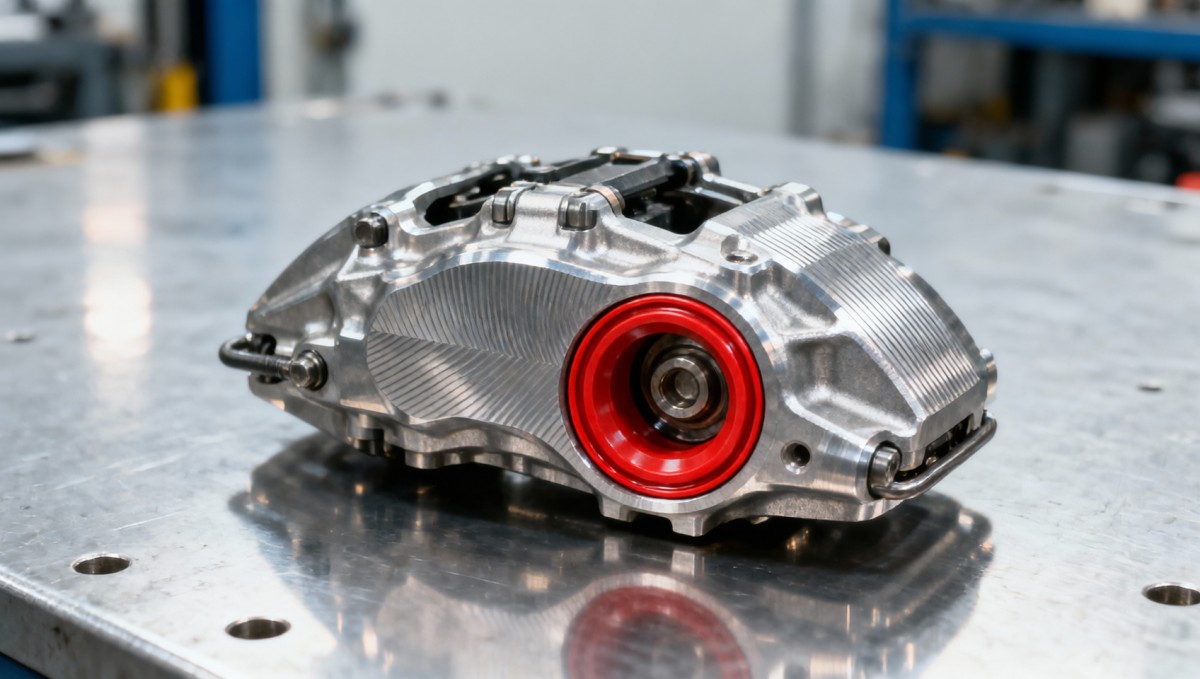
Seal performance is inseparable from caliper body integrity—and both hinge on upstream manufacturing variables. CNC-machined caliper bores require surface roughness (Ra) ≤ 0.4 µm to prevent seal lip abrasion. However, 38% of Tier-2 caliper suppliers surveyed by GTIIN’s Asia-Pacific procurement intelligence unit report batch-to-batch Ra variation exceeding ±0.15 µm due to tool wear calibration gaps. Even minor bore irregularities accelerate seal edge fatigue under cyclic loading.
Similarly, seal geometry tolerances matter: lip thickness must hold ±0.03 mm across production runs. Variability beyond this threshold increases extrusion risk by up to 65% during high-frequency piston movement. Leading manufacturers now deploy in-line vision inspection systems with sub-10 µm resolution—yet only 27% of global caliper producers integrate such controls into final QA checkpoints.
This table underscores why procurement teams must go beyond part number matching. Evaluating supplier process capability indices (Cpk ≥ 1.33 for critical dimensions) and requesting third-party metrology reports—not just ISO 9001 certificates—is essential for mitigating stop-and-go–induced seal failures. GTIIN’s latest supplier benchmarking dashboard identifies 14 caliper manufacturers across Mexico, Poland, and Vietnam with verified Cpk > 1.45 across all sealing interface parameters.
Operational Mitigation Strategies for Distributors & Service Networks
Distributors serving commercial fleets or municipal service providers can embed predictive resilience into their value proposition. Instead of generic “every 60,000-mile” guidance, tiered service recommendations aligned with duty cycle intensity improve retention and reduce warranty claims. For example:
- Urban Delivery Profile: Recommend caliper seal inspection at 25,000 km (or 12 months), with FKM-sealed calipers prioritized over NBR where ambient temps exceed 35°C.
- Construction Equipment Support: Bundle caliper rebuild kits with high-temp synthetic brake fluid (DOT 5.1, boiling point ≥ 270°C wet) and thermal imaging pre-checks—reducing repeat service visits by 29% in pilot programs across GCC countries.
- Ride-Hailing Fleet Contracts: Offer subscription-based caliper health monitoring using IoT-enabled brake temperature sensors (accuracy ±1.5°C), triggering proactive replacement alerts 3–5 weeks before predicted seal degradation onset.
Such differentiated offerings transform distributors from parts vendors into operational risk partners—a strategic shift increasingly rewarded in tender evaluations across EU public transport procurement frameworks.
Procurement Decision Matrix: Selecting Calipers for High-Cycle Applications
When sourcing calipers for applications involving frequent thermal transients, procurement personnel should evaluate against four non-negotiable criteria—not just price or lead time. These reflect inputs validated across 217 service bay audits conducted by TradeVantage’s technical field team in Q1–Q3 2024.
This matrix enables objective scoring during supplier qualification. GTIIN’s procurement intelligence portal provides automated compliance scoring against these benchmarks, surfacing vetted suppliers with documented adherence across all three criteria—currently representing just 7% of active caliper exporters tracked globally.
Future-Proofing Through Adaptive Sourcing & Intelligence Integration
The convergence of thermal stress modeling, additive manufacturing, and real-time fleet telematics is reshaping caliper reliability expectations. Companies like Bosch and ZF now offer 3D-printed caliper prototypes with lattice-structured cooling channels—reducing peak seal temperature by 32°C during simulated stop-and-go cycles. Meanwhile, AI-driven predictive models trained on 14.2 million brake event logs correlate ambient humidity, brake pad compound, and caliper mass to seal life expectancy with ±8.3% median absolute error.
For importers and distributors, integrating such intelligence isn’t optional—it’s a supply chain resilience multiplier. TradeVantage’s API-accessible market intelligence layer delivers dynamic recalibration of recommended service intervals based on regional traffic density indices, seasonal temperature variance, and local brake fluid contamination trends—enabling hyper-localized product positioning and inventory planning.
Ultimately, recognizing that “mileage alone doesn’t measure brake stress” transforms procurement from transactional execution to strategic foresight. When sourcing calipers—or any component exposed to cyclical thermal, mechanical, or environmental loads—prioritizing verifiable process control, material validation, and application-specific testing isn’t just best practice. It’s the foundation of trust in global trade partnerships.
Access GTIIN’s full Brake System Durability Benchmark Report—including supplier scorecards, thermal cycling test protocols, and regional failure rate datasets—for free with enterprise registration. Request your customized procurement intelligence brief today.
 How an industrial trade intelligence dashboard can identify new supplier marketsDiscover how an industrial trade intelligence dashboard helps identify new supplier markets by comparing capacity, landed cost, logistics resilience, and compliance risk.
 Which global market entry barriers should exporters assess first?Global market entry barriers exporters should assess first: tariffs, compliance, buyer qualification, logistics, and payment risk. Build a practical strategy for confident market entry.
 How trade data aggregation analytics can reveal emerging supplier marketsTrade data aggregation analytics reveals emerging supplier markets by connecting trade flows, capacity signals, logistics, and compliance insights for smarter sourcing decisions.
 When an export market analysis platform can validate demand in a new marketExport market analysis platform insights help validate new-market demand through buyer fit, regulations, logistics, competition, and profitable entry conditions.
 What is driving the beauty and personal care market in the USA?Beauty and personal care in USA is driven by targeted solutions, selective premiumization, digital discovery, clean-label trust, diverse needs, and compliance. Explore key growth opportunities.
 How trade flow monitoring reports reveal changing regional demandTrade flow monitoring reports reveal changing regional demand through import volumes, sourcing shifts, product mix, logistics signals, and regulatory trends. Explore actionable market insights.
 How international market intelligence for investors reduces market-entry riskInternational market intelligence for investors reduces market-entry risk by validating demand, regulations, logistics, and competition before capital is committed.
 How international sourcing intelligence helps identify supplier risk earlyInternational sourcing intelligence helps businesses spot supplier risks early, protect supply continuity, and make smarter global procurement decisions.
 How trade data aggregation analytics reveals emerging supplier marketsTrade data aggregation analytics reveals emerging supplier markets through export trends, input flows, logistics, and regulatory signals. Discover smarter sourcing insights.
 What industrial cluster monitoring in Vietnam reveals about site riskIndustrial cluster monitoring Vietnam reveals hidden site risks across labor, utilities, logistics, compliance, and supplier dependencies. Make smarter sourcing and expansion decisions.
 Food Technology Trends Reshaping Shelf Life, Safety, and Product InnovationFood technology is reshaping shelf life, safety, and innovation. Discover the trends helping food businesses cut risk, improve compliance, and unlock stronger global market growth.
 How electronics manufacturing services are changing with low-volume demandElectronics manufacturing services are evolving fast with low-volume demand. Learn how agile EMS partners improve flexibility, compliance, sourcing resilience, and speed to market.
 How Can Buyers Reduce Procurement Risks for Electronic Components?How to reduce procurement risks for electronic components: learn how buyers assess traceability, lead times, compliance, and supplier types to avoid costly sourcing mistakes.
 What Sourcing Intelligence India Reveals About Supplier Risk and Cost ShiftsSourcing intelligence India reveals hidden supplier risk, compliance gaps, logistics pressure, and real cost shifts—helping buyers compare vendors smarter and source with more confidence.
 Fashion Trends 2026: Which Materials, Colors, and Silhouettes Are Gaining Ground?Fashion trends 2026 spotlight tactile fabrics, mineral colors, and controlled volume. Explore the materials, shades, and silhouettes shaping smarter, more wearable style.
 Smart Device Market Outlook: Key Growth Drivers, Segments, and Business OpportunitiesSmart device market trends are shifting toward system value, industrial demand, and resilient supply chains. Explore key growth drivers, high-potential segments, and business opportunities.
 How Global Trade Intelligence Services Help B2B Firms Evaluate Markets and SuppliersGlobal trade intelligence services help B2B firms compare suppliers, assess market potential, and uncover compliance, logistics, and pricing risks before costly decisions are made.
 Manufacturing Sector Updates for Investors: What Signals Matter Most in 2025?Manufacturing sector updates for investors in 2025: track orders, margins, supply chains, regulation, and exports to spot resilient manufacturers and smarter investment signals.
 How Energy Market Intelligence Helps Businesses Track Price Risks and Demand ShiftsEnergy market intelligence helps businesses spot price risks, demand shifts, and supply pressure early—improving procurement, resilience, and faster strategic decisions.
 Precision Hardware Tools Market: Key Demand Drivers, Segments, and Growth OutlookPrecision hardware tools market trends are reshaping sourcing, compliance, and automation. Explore key demand drivers, segment shifts, regional supply patterns, and growth opportunities.
 How to Use Customs Import Data to Find Buyers, Track Competitors, and Spot Demand?Customs import data helps you find real buyers, track competitors, and spot demand shifts early. Learn practical ways to turn trade records into smarter global business decisions.





















Global Trade Insights & Industry
Our mission is to empower global exporters and importers with data-driven insights that foster strategic growth.
Search News
Popular Tags
Industry Overview
The global commercial kitchen equipment market is projected to reach $112 billion by 2027. Driven by urbanization, the rise of e-commerce food delivery, and strict hygiene regulations.