

How to Choose a Radiator for International Trucks by Duty Cycle
Choosing a radiator for an International truck is no longer a simple matter of matching dimensions and hose connections. Fleets, owner-operators, maintenance teams, and procurement departments are under pressure to keep vehicles available for longer hours, manage rising operating costs, and reduce the risk of roadside failures. In that environment, duty cycle becomes one of the most practical ways to evaluate radiator requirements. A truck that spends most of its time on regional paved routes faces very different thermal demands from one hauling heavy loads in construction zones, operating in hot climates, or idling for extended periods.
For technical evaluators and project managers, the key issue is that cooling performance is tied directly to real-world use. A radiator that appears acceptable on paper may still underperform if the vehicle regularly sees high engine loads, repeated stop-and-go operation, dust exposure, or challenging ambient temperatures. For procurement teams, choosing only by initial price can increase lifecycle cost through more frequent replacements, labor time, and downtime. For operators and service teams, the wrong fit can show up as overheating events, unstable temperature control, and reduced confidence in vehicle reliability.
Why Duty Cycle Matters in Radiator Selection
Duty cycle describes how hard and how often a truck works over time. In practical terms, it reflects engine load, driving pattern, road condition, idle time, terrain, payload, and environmental exposure. This matters because the cooling system does not operate in a laboratory setting. It responds continuously to heat generated by the engine and, in many applications, to additional thermal stress from charge air cooling, hydraulic systems, and underhood airflow restrictions.
International trucks are often used across a broad range of vocational and transport environments. Some units operate in predictable line-haul conditions with stable speeds and moderate loads. Others are assigned to municipal work, regional delivery, construction support, agriculture, or heavy-duty hauling. These different applications place very different demands on the radiator core, tank structure, fin durability, and overall cooling package performance.
A duty-cycle-based approach helps decision-makers avoid two common errors: under-specifying the radiator for a demanding job, or over-specifying it for a lighter application where cost efficiency matters. The goal is not simply to buy the largest possible unit. It is to balance cooling capacity, durability, airflow compatibility, serviceability, and total cost of ownership.
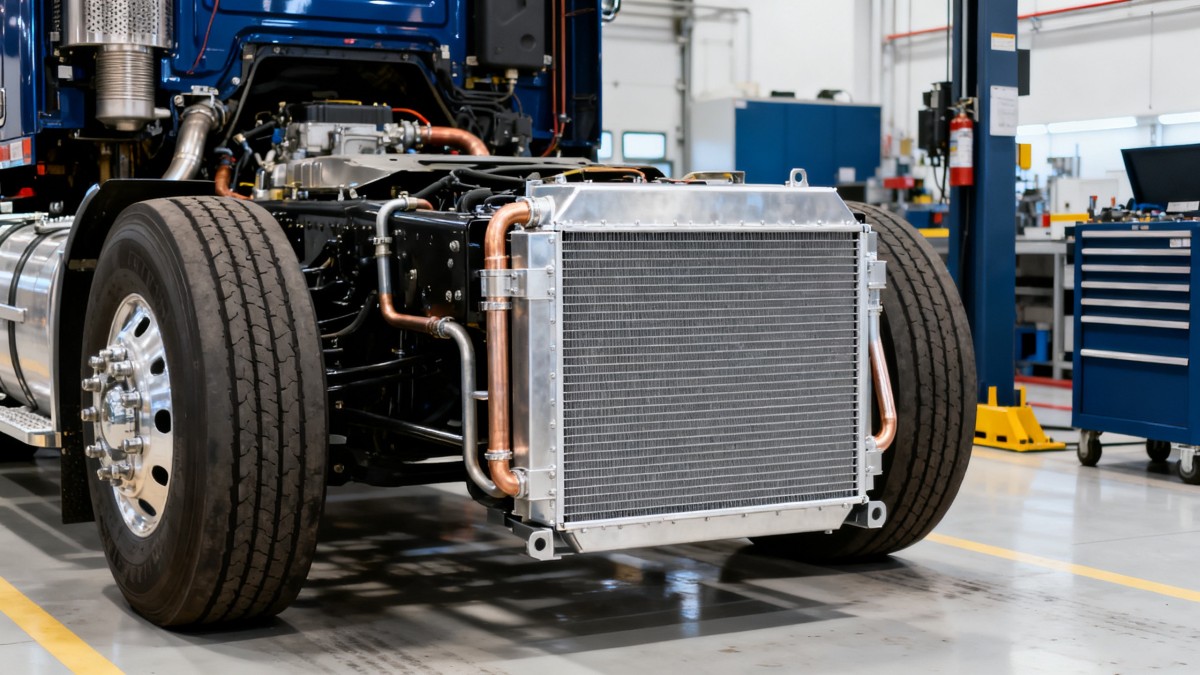
Key Duty Cycles and Their Cooling Implications
Light to Moderate Highway Duty
Trucks used mainly for long highway runs often benefit from steady airflow and relatively stable operating temperatures. In these scenarios, radiator performance is still important, but the thermal load may be more predictable than in severe service. Buyers in this category usually focus on dependable heat rejection, good material quality, and compatibility with the existing cooling system layout. Efficiency and long-term corrosion resistance are often more relevant than extreme-duty reinforcement.
Regional and Stop-and-Go Duty
Distribution trucks, municipal units, and vocational vehicles often face frequent acceleration, braking, traffic delays, and extended idle time. Even if top speeds are lower, these vehicles may experience greater thermal stress because airflow is inconsistent and engine load changes frequently. In such cases, radiator selection should consider not only core capacity but also how the unit performs when natural airflow is limited and fan-driven cooling plays a larger role.
Heavy Load, Construction, and Harsh Environments
Severe-duty use typically combines high payload, rough terrain, airborne debris, vibration, and elevated ambient temperatures. These operating conditions can accelerate wear and expose weaknesses in radiator construction. For these applications, core strength, tank durability, fin protection, and resistance to clogging become critical. Maintenance teams may also value designs that make cleaning and inspection easier, especially where mud, dust, and debris accumulation can reduce cooling performance.
Core Criteria When Evaluating a Radiator
1. Thermal Capacity in Actual Operating Conditions
A radiator should be assessed in relation to expected heat load, not just vehicle model reference. Ambient temperature, altitude, idle profile, route severity, and auxiliary equipment can all influence cooling demand. Technical evaluators usually look for a radiator that can maintain stable engine temperatures during peak operating periods rather than only during average daily use.
2. Material and Structural Durability
For fleets operating on rough roads or in vibration-heavy conditions, build quality matters as much as thermal performance. Weak joints, poor tank construction, or insufficiently durable cores may shorten service life. Procurement teams often evaluate the expected maintenance interval, resistance to fatigue, and suitability for repeated high-load cycles.
3. Airflow and System Compatibility
A radiator does not work alone. Fan performance, shroud design, intercooler layout, engine bay space, and airflow path all influence results. Replacing the radiator without considering the rest of the cooling package may solve little. This is especially important for technical teams comparing aftermarket options, upgrades, or replacement units for older vehicles still in active service.
4. Maintenance Practicality
Serviceability is often overlooked during purchasing discussions. Yet in many fleet environments, easy cleaning, inspection access, and dependable replacement support can reduce downtime more effectively than a small difference in unit price. In dusty or debris-heavy operations, the ability to maintain cooling efficiency through routine service is a meaningful operational advantage.
Common Selection Mistakes
One frequent mistake is assuming that all International truck applications have similar cooling needs. In reality, the same base platform may perform very different work depending on customer configuration and route profile. Another mistake is focusing only on physical fit. A radiator may install correctly while still being unsuited to the truck’s thermal demands.
Some buyers also treat overheating as a one-part problem. While the radiator is central to heat dissipation, cooling problems may be linked to fan operation, coolant condition, blockage, pressure issues, or broader system wear. Even so, specifying the right radiator remains a critical step because it sets the foundation for stable system performance. A further risk is buying to the lowest bid without evaluating expected service conditions. For high-utilization fleets, that approach may increase replacement frequency and operational disruption.
Where the Keyword Product Fits in Real Decisions
When teams begin comparing options for a radiator for international, they are usually not just looking for a replacement part number. They are trying to match a cooling component to a working environment. That means checking whether the radiator is intended for long-haul, mixed-duty, or severe-duty operation; whether it is built to handle vibration and contamination; and whether its overall design aligns with the cooling package used by the truck.
This is also where manufacturer capability becomes relevant in a practical, non-promotional sense. Buyers often prefer suppliers with experience in heavy-duty truck cooling systems, intercoolers, and related radiator modules because application knowledge can affect consistency, design suitability, and communication during technical review. In many sourcing projects, engineering support and production stability are nearly as important as the part itself, especially for fleet programs or repeat purchasing.
Selection Guidance for Different Stakeholders
For Operators and End Users
Pay attention to how the truck actually behaves in service. Frequent high-temperature readings, reduced cooling margin in summer, or recurring contamination around the core may indicate that the current radiator setup is marginal for the application. Reporting these patterns clearly helps maintenance and procurement teams make better replacement decisions.
For Maintenance and After-Sales Teams
Document recurring failure modes before changing specification. Cracking, leaking, clogging, or repeated fouling each point to different selection priorities. A stronger design may be needed in one case, while in another the focus may be airflow, cleanability, or resistance to external contamination.
For Procurement Professionals
Compare bids on lifecycle value, not unit cost alone. Ask how well the radiator aligns with the intended duty cycle, what material and construction features support durability, and whether the supplier can support consistent quality over time. This is particularly important for fleets standardizing parts across multiple service locations.
For Engineers and Project Managers
Use application mapping rather than broad assumptions. Define route profile, load level, idle ratio, ambient temperature range, and contamination exposure before finalizing the radiator specification. This approach usually improves both technical fit and procurement clarity.
A Practical Framework for Better Choices
A useful decision path often starts with five questions: What load does the truck carry most of the time? How much stop-and-go or idle operation is involved? What environmental conditions affect airflow and cleanliness? How costly is unplanned downtime for this vehicle? And what failure history exists in the current cooling system? These questions move the discussion away from generic replacement and toward application-based selection.
In many fleet and industrial settings, the best radiator choice is the one that provides an appropriate safety margin for actual duty, remains serviceable in harsh conditions, and supports predictable maintenance intervals. That may or may not be the most expensive option. The right answer depends on how the truck works, how often it works, and what the operating environment demands.
Conclusion
Choosing a radiator for International trucks by duty cycle is a practical way to reduce risk and improve operating efficiency. It helps fleets avoid underperformance in severe applications and overspending in lighter ones. For users, technicians, buyers, and project leaders, the core lesson is straightforward: radiator selection should be based on thermal reality, not just part matching. As truck applications become more demanding and uptime expectations remain high, duty-cycle-based cooling decisions are likely to become even more important across the heavy-duty vehicle sector.
 Which global manufacturing trends by sector matter most for sourcing plans?Global manufacturing trends by sector: identify sourcing risks, supplier resilience, compliance demands, and cost drivers to build smarter, more reliable procurement plans.
 What industrial trade intelligence pricing should include before you subscribeIndustrial trade intelligence pricing explained: compare coverage, data quality, access rights, and workflow value before choosing a subscription that supports smarter trade decisions.
 How an industrial trade intelligence dashboard can identify new supplier marketsDiscover how an industrial trade intelligence dashboard helps identify new supplier markets by comparing capacity, landed cost, logistics resilience, and compliance risk.
 Which global market entry barriers should exporters assess first?Global market entry barriers exporters should assess first: tariffs, compliance, buyer qualification, logistics, and payment risk. Build a practical strategy for confident market entry.
 How trade data aggregation analytics can reveal emerging supplier marketsTrade data aggregation analytics reveals emerging supplier markets by connecting trade flows, capacity signals, logistics, and compliance insights for smarter sourcing decisions.
 When an export market analysis platform can validate demand in a new marketExport market analysis platform insights help validate new-market demand through buyer fit, regulations, logistics, competition, and profitable entry conditions.
 What is driving the beauty and personal care market in the USA?Beauty and personal care in USA is driven by targeted solutions, selective premiumization, digital discovery, clean-label trust, diverse needs, and compliance. Explore key growth opportunities.
 How trade flow monitoring reports reveal changing regional demandTrade flow monitoring reports reveal changing regional demand through import volumes, sourcing shifts, product mix, logistics signals, and regulatory trends. Explore actionable market insights.
 How international market intelligence for investors reduces market-entry riskInternational market intelligence for investors reduces market-entry risk by validating demand, regulations, logistics, and competition before capital is committed.
 How international sourcing intelligence helps identify supplier risk earlyInternational sourcing intelligence helps businesses spot supplier risks early, protect supply continuity, and make smarter global procurement decisions.
 How trade data aggregation analytics reveals emerging supplier marketsTrade data aggregation analytics reveals emerging supplier markets through export trends, input flows, logistics, and regulatory signals. Discover smarter sourcing insights.
 What industrial cluster monitoring in Vietnam reveals about site riskIndustrial cluster monitoring Vietnam reveals hidden site risks across labor, utilities, logistics, compliance, and supplier dependencies. Make smarter sourcing and expansion decisions.
 Food Technology Trends Reshaping Shelf Life, Safety, and Product InnovationFood technology is reshaping shelf life, safety, and innovation. Discover the trends helping food businesses cut risk, improve compliance, and unlock stronger global market growth.
 How electronics manufacturing services are changing with low-volume demandElectronics manufacturing services are evolving fast with low-volume demand. Learn how agile EMS partners improve flexibility, compliance, sourcing resilience, and speed to market.
 How Can Buyers Reduce Procurement Risks for Electronic Components?How to reduce procurement risks for electronic components: learn how buyers assess traceability, lead times, compliance, and supplier types to avoid costly sourcing mistakes.
 What Sourcing Intelligence India Reveals About Supplier Risk and Cost ShiftsSourcing intelligence India reveals hidden supplier risk, compliance gaps, logistics pressure, and real cost shifts—helping buyers compare vendors smarter and source with more confidence.
 Fashion Trends 2026: Which Materials, Colors, and Silhouettes Are Gaining Ground?Fashion trends 2026 spotlight tactile fabrics, mineral colors, and controlled volume. Explore the materials, shades, and silhouettes shaping smarter, more wearable style.
 Smart Device Market Outlook: Key Growth Drivers, Segments, and Business OpportunitiesSmart device market trends are shifting toward system value, industrial demand, and resilient supply chains. Explore key growth drivers, high-potential segments, and business opportunities.
 How Global Trade Intelligence Services Help B2B Firms Evaluate Markets and SuppliersGlobal trade intelligence services help B2B firms compare suppliers, assess market potential, and uncover compliance, logistics, and pricing risks before costly decisions are made.
 Manufacturing Sector Updates for Investors: What Signals Matter Most in 2025?Manufacturing sector updates for investors in 2025: track orders, margins, supply chains, regulation, and exports to spot resilient manufacturers and smarter investment signals.
 How Energy Market Intelligence Helps Businesses Track Price Risks and Demand ShiftsEnergy market intelligence helps businesses spot price risks, demand shifts, and supply pressure early—improving procurement, resilience, and faster strategic decisions.





















Global Trade Insights & Industry
Our mission is to empower global exporters and importers with data-driven insights that foster strategic growth.
Search News
Popular Tags
Industry Overview
The global commercial kitchen equipment market is projected to reach $112 billion by 2027. Driven by urbanization, the rise of e-commerce food delivery, and strict hygiene regulations.