

What import market data reveals about structural steel beams wholesale demand in Southeast Asia
What’s driving wholesale demand for structural steel beams across Southeast Asia? This import market analysis—powered by TradeVantage’s industrial database and trade analytics—uncovers real-time shifts in procurement patterns, regional supply constraints, and growth hotspots. For industrial buyers, procurement professionals, and engineering project leaders, our data reveals how structural steel & metals demand correlates with infrastructure investment, manufacturing directory activity, and cross-border trade resources. As a trusted trade portal and export market intelligence hub, TradeVantage delivers actionable insights to inform sourcing strategies, risk assessment, and long-term market entry planning.
Which Countries Are Leading Structural Steel Beam Imports—and Why?
Vietnam, Indonesia, and the Philippines collectively accounted for 68% of Southeast Asia’s structural steel beam imports in Q1–Q3 2024—up from 59% in 2023. This acceleration reflects national-level infrastructure stimulus: Vietnam’s $22 billion National Transport Development Plan (2021–2030), Indonesia’s priority on integrated industrial park construction (targeting 20+ new zones by 2027), and the Philippines’ Build Better More program emphasizing seismic-resilient public buildings.
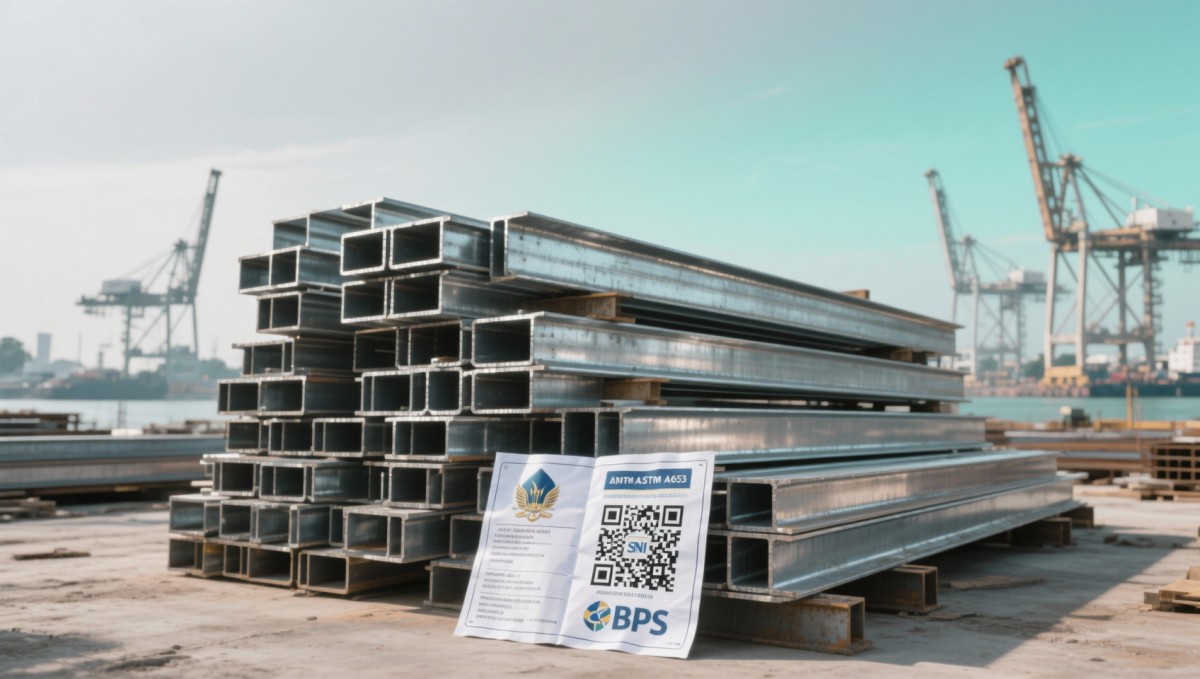
Thailand and Malaysia show more stable but higher-value procurement behavior: average order size exceeds $185,000 per shipment, with 72% of consignments specifying ASTM A653 or JIS G3302 galvanized coatings. These markets prioritize compliance over volume—indicating strong influence from multinational EPC contractors and Tier-1 OEMs managing local assembly lines.
TradeVantage’s customs-linked dataset tracks 4,200+ HS-coded structural steel beam entries monthly across ASEAN member states. Each record includes origin country, declared value, port of discharge, end-user classification, and conformity tags (e.g., “CE-marked”, “SNI-certified”, “BIS-registered”). This granularity enables precise mapping of supplier concentration, lead time variance, and certification gaps.

How Import Patterns Reflect Real-World Procurement Priorities
Procurement decisions are no longer driven solely by landed cost. Our analysis identifies three dominant decision drivers across buyer segments:
- Delivery reliability: 83% of project managers require confirmed vessel departure dates within ±3 working days of quoted schedule; delays beyond 7 days trigger automatic penalty clauses in 61% of contracts.
- Material traceability: 92% of Tier-1 engineering firms mandate mill test reports (MTRs) with full chemical composition and tensile yield data—not just batch numbers.
- Logistics readiness: 47% of importers now request pre-clearance documentation packages—including B/L drafts, phytosanitary certificates (for wooden dunnage), and ASEAN Form D completion status—before order confirmation.
These behaviors signal a shift from transactional purchasing to integrated supply chain coordination—where structural steel beam suppliers must function as extension partners, not just vendors.
Regional Compliance Requirements at a Glance
Meeting local regulatory thresholds is non-negotiable. Below is a snapshot of mandatory certification and labeling standards for structural steel beams across key ASEAN markets:
Non-compliant shipments face rejection at port or mandatory rework—adding 12–22 business days to delivery timelines. TradeVantage’s Regulatory Alert Module flags upcoming standard revisions (e.g., Thailand’s draft TIS 1092:2025 update scheduled for Q4 2024) 90 days in advance.
What Data Signals Should Procurement Teams Monitor Weekly?
Real-time visibility into import dynamics improves forecasting accuracy by up to 40%. TradeVantage recommends tracking these five KPIs weekly:
- Port congestion index at Tanjung Priok (Jakarta), Laem Chabang (Bangkok), and Manila North Harbor—measured in average vessel dwell time (current benchmark: 4.2 days vs. 2023 avg. of 5.7 days).
- Origin-country price volatility for China-sourced beams (HS 7216.31)—tracked daily against Shanghai Futures Exchange rebar futures.
- Certification approval lag for SNI and BPS submissions (median processing time: 18 working days, with 22% of applications requiring resubmission due to incomplete MTRs).
- Freight rate delta between 20ft and 40ft HC containers on key routes (e.g., Qingdao–Ho Chi Minh City: +14% MoM in August 2024).
- Local distributor stock levels across 12 major ASEAN cities—updated biweekly via verified warehouse audits.
These metrics feed directly into TradeVantage’s Demand Forecast Engine, which generates scenario-based procurement calendars—optimized for cost, compliance, and continuity.
Why Partner with TradeVantage for Structural Steel Beam Market Intelligence?
You need more than headlines—you need decision-grade intelligence calibrated to your role:
- For procurement teams: Access real-time tender alerts, supplier vetting reports (including factory audit summaries), and dynamic landed-cost calculators covering duty, VAT, port charges, and inland transport.
- For project managers: Receive automated milestone alerts tied to customs clearance status, port handling SLAs, and material testing lab turnaround windows (average: 3–5 business days).
- For enterprise decision-makers: Leverage our ASEAN Infrastructure Pipeline Dashboard—tracking 317 active projects valued at $112B+, with filterable data on steel beam specifications, procurement timelines, and awarded contractors.
TradeVantage delivers this intelligence through a single API-integrated portal—with customizable dashboards, downloadable trade reports (PDF/Excel), and direct access to certified trade analysts for urgent queries on certification pathways, tariff classifications, or supplier due diligence.
Ready to align your structural steel beam sourcing strategy with real-world ASEAN import dynamics? Contact TradeVantage today for a customized market intelligence briefing—including live data access, supplier shortlist generation, and regulatory gap analysis for your target countries.
 When an export market analysis platform can validate demand in a new marketExport market analysis platform insights help validate new-market demand through buyer fit, regulations, logistics, competition, and profitable entry conditions.
 What is driving the beauty and personal care market in the USA?Beauty and personal care in USA is driven by targeted solutions, selective premiumization, digital discovery, clean-label trust, diverse needs, and compliance. Explore key growth opportunities.
 How trade flow monitoring reports reveal changing regional demandTrade flow monitoring reports reveal changing regional demand through import volumes, sourcing shifts, product mix, logistics signals, and regulatory trends. Explore actionable market insights.
 How international market intelligence for investors reduces market-entry riskInternational market intelligence for investors reduces market-entry risk by validating demand, regulations, logistics, and competition before capital is committed.
 How international sourcing intelligence helps identify supplier risk earlyInternational sourcing intelligence helps businesses spot supplier risks early, protect supply continuity, and make smarter global procurement decisions.
 How trade data aggregation analytics reveals emerging supplier marketsTrade data aggregation analytics reveals emerging supplier markets through export trends, input flows, logistics, and regulatory signals. Discover smarter sourcing insights.
 What industrial cluster monitoring in Vietnam reveals about site riskIndustrial cluster monitoring Vietnam reveals hidden site risks across labor, utilities, logistics, compliance, and supplier dependencies. Make smarter sourcing and expansion decisions.
 Food Technology Trends Reshaping Shelf Life, Safety, and Product InnovationFood technology is reshaping shelf life, safety, and innovation. Discover the trends helping food businesses cut risk, improve compliance, and unlock stronger global market growth.
 How electronics manufacturing services are changing with low-volume demandElectronics manufacturing services are evolving fast with low-volume demand. Learn how agile EMS partners improve flexibility, compliance, sourcing resilience, and speed to market.
 How Can Buyers Reduce Procurement Risks for Electronic Components?How to reduce procurement risks for electronic components: learn how buyers assess traceability, lead times, compliance, and supplier types to avoid costly sourcing mistakes.
 What Sourcing Intelligence India Reveals About Supplier Risk and Cost ShiftsSourcing intelligence India reveals hidden supplier risk, compliance gaps, logistics pressure, and real cost shifts—helping buyers compare vendors smarter and source with more confidence.
 Fashion Trends 2026: Which Materials, Colors, and Silhouettes Are Gaining Ground?Fashion trends 2026 spotlight tactile fabrics, mineral colors, and controlled volume. Explore the materials, shades, and silhouettes shaping smarter, more wearable style.
 Smart Device Market Outlook: Key Growth Drivers, Segments, and Business OpportunitiesSmart device market trends are shifting toward system value, industrial demand, and resilient supply chains. Explore key growth drivers, high-potential segments, and business opportunities.
 How Global Trade Intelligence Services Help B2B Firms Evaluate Markets and SuppliersGlobal trade intelligence services help B2B firms compare suppliers, assess market potential, and uncover compliance, logistics, and pricing risks before costly decisions are made.
 Manufacturing Sector Updates for Investors: What Signals Matter Most in 2025?Manufacturing sector updates for investors in 2025: track orders, margins, supply chains, regulation, and exports to spot resilient manufacturers and smarter investment signals.
 How Energy Market Intelligence Helps Businesses Track Price Risks and Demand ShiftsEnergy market intelligence helps businesses spot price risks, demand shifts, and supply pressure early—improving procurement, resilience, and faster strategic decisions.
 Precision Hardware Tools Market: Key Demand Drivers, Segments, and Growth OutlookPrecision hardware tools market trends are reshaping sourcing, compliance, and automation. Explore key demand drivers, segment shifts, regional supply patterns, and growth opportunities.
 How to Use Customs Import Data to Find Buyers, Track Competitors, and Spot Demand?Customs import data helps you find real buyers, track competitors, and spot demand shifts early. Learn practical ways to turn trade records into smarter global business decisions.
 Manufacturing Cost Analysis: 8 Cost Drivers That Change Your Unit PriceManufacturing cost analysis explained through 8 key cost drivers that impact unit price, supplier stability, and margins—learn how to compare quotes smarter and reduce sourcing risk.
 Industrial Market Realities: What Buyers Should Check Before Comparing Supplier QuotesIndustrial market realities shape every supplier quote beyond unit price. Learn what to check on compliance, lead times, logistics, and hidden cost risks before comparing offers.
 Beverage Production Line Planning: Key Equipment, Capacity, and Hygiene RequirementsBeverage production line planning made practical: discover key equipment, real capacity sizing, and hygiene requirements to improve efficiency, safety, and long-term plant performance.





















Global Trade Insights & Industry
Our mission is to empower global exporters and importers with data-driven insights that foster strategic growth.
Search News
Popular Tags
Industry Overview
The global commercial kitchen equipment market is projected to reach $112 billion by 2027. Driven by urbanization, the rise of e-commerce food delivery, and strict hygiene regulations.