

How to Compare Building Facade Lighting Systems by Lifespan and Maintenance
[Technical Procurement Intelligence Summary]: When evaluating building facade lighting systems, procurement teams should not compare offers on purchase price alone. The more reliable approach is to assess service life, maintenance burden, component quality, and access requirements together.
In practice, the best-value system is often not the cheapest fixture package. It is the solution that delivers stable performance for years, reduces service interventions, and limits disruption, safety risk, and replacement costs.
For buyers, the core question is simple: which system will remain dependable on the facade for the longest time with the lowest lifecycle cost? That answer depends on technical details many quotations do not clearly explain.
This guide focuses on the real decision points procurement teams care about. It explains how to compare building facade lighting systems by lifespan and maintenance, what data to request, and which commercial claims need verification before purchase.
What procurement teams should compare first
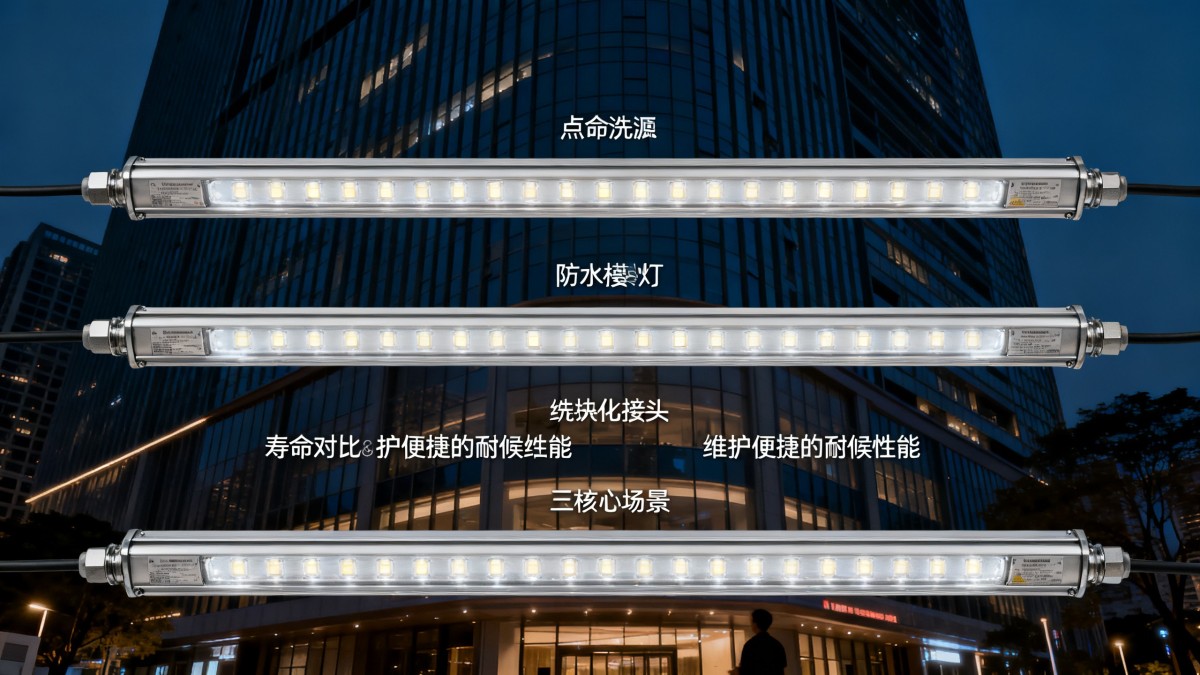
When suppliers present facade lighting proposals, start with the factors that most directly affect ownership cost: rated lifetime, lumen maintenance, driver durability, ingress protection, corrosion resistance, warranty scope, and maintenance access complexity.
These criteria matter more than headline wattage or visual renderings. A facade system may look impressive in design software, yet still become expensive if drivers fail early, seals degrade, or replacement requires lifts and nighttime labor.
For procurement teams, the ideal comparison framework combines technical performance with service practicality. A fixture that lasts longer on paper but is difficult to repair can create higher lifetime cost than a slightly lower-spec alternative.
That is why buyers should evaluate the complete operating model. Consider not only how long the luminaire may survive, but also how often the system will need inspections, cleaning, part swaps, recalibration, and weather-related protection checks.
Understand lifespan claims beyond the advertised number
One of the most common procurement mistakes is treating all lifespan claims as equal. In building facade lighting systems, a quoted lifetime such as 50,000 or 100,000 hours may refer to LEDs only, not the complete fixture assembly.
Buyers should ask whether the stated figure applies to the LED package, the luminaire, or the full system including driver, controls, seals, connectors, and mounting hardware. Weak secondary components often determine real field life.
Lumen maintenance is especially important. Many suppliers cite L70, meaning the point when light output falls to 70 percent of original levels. Others may use L80 or L90, which represent stricter and more useful performance thresholds.
A system rated at L70 100,000 hours is not automatically superior to one rated at L90 60,000 hours. For architectural facades, visual consistency is critical, so brightness depreciation and color shift can matter as much as survival time.
Temperature assumptions also need review. Lifetime data is usually modeled under defined ambient and junction temperatures. If the installation site faces high solar gain, coastal humidity, or enclosed mounting conditions, actual life may shorten.
Procurement teams should request LM-80 and TM-21 related evidence where relevant, together with full luminaire thermal design information. If a supplier cannot explain how heat is managed on the installed facade, the lifespan estimate is weaker.
Why drivers and control gear often decide real maintenance frequency
In many outdoor lighting projects, LED chips do not fail first. Drivers, surge protection devices, connectors, and control modules are more common maintenance points. That makes power supply quality a central procurement concern.
Ask each supplier for the driver brand, driver rated life at expected operating temperature, surge protection level, and replacement process. Generic descriptions such as “high-quality driver” are not enough for a serious purchasing decision.
Driver lifetime can vary significantly depending on capacitor quality, heat dissipation, and load conditions. A fixture with premium LEDs but a lower-grade driver may still generate frequent service calls and inconsistent lighting performance.
If the facade lighting system uses DMX, DALI, or smart control nodes, compare the reliability of those communication components too. More advanced control can improve flexibility, but it also introduces more possible failure points.
For mission-critical or high-visibility buildings, modular driver replacement can be a major advantage. If service technicians can replace a failed driver without removing the full luminaire, maintenance time, labor risk, and downtime can all drop.
Environmental resistance is a lifespan issue, not just a specification line
Outdoor facade applications expose luminaires to rain, dust, ultraviolet radiation, wind-driven particles, salt mist, thermal cycling, and pollution. These conditions directly affect lifespan and maintenance requirements over time.
Ingress protection ratings such as IP65, IP66, or IP67 are useful starting points, but buyers should not stop there. Ask how the rating was achieved and whether it remains reliable after years of temperature change and gasket aging.
Material quality also matters. Marine-grade aluminum, stainless steel fasteners, UV-resistant lenses, and anti-corrosion coatings are especially important in coastal, industrial, or high-humidity environments where cheap housings deteriorate quickly.
In facade projects, corrosion does more than affect appearance. It can weaken brackets, seize fasteners, damage seals, and complicate future servicing. That means poor environmental resistance can raise maintenance cost even before fixtures fully fail.
Procurement teams should match protection requirements to site reality. A city-center office tower, a coastal hotel, and a chemical plant facade may all need different levels of housing durability, coating treatment, and connector protection.
Maintenance access often has a bigger cost impact than fixture price
For buyers comparing building facade lighting systems, maintenance access is one of the most underestimated cost drivers. A failed fixture mounted near roof edges or at high vertical spans can require lifts, scaffolding, traffic control, or rope access.
Because of this, a lower-cost luminaire may become the more expensive option if it fails more often or is difficult to service. Labor, equipment rental, and site disruption can quickly exceed the difference in initial product pricing.
Ask suppliers how replacement is performed in real conditions. Can the optical module, driver, or connector be serviced from the front? Does maintenance require full fixture removal? Are special tools or proprietary parts required?
Also compare mounting architecture. Systems designed for easier alignment and faster swap-out can reduce future service time. For long linear facade runs, modular sections are often easier to maintain than fully integrated custom assemblies.
Procurement teams should estimate not only product replacement cost, but intervention cost per event. This includes labor hours, lifting equipment, technician safety measures, building access coordination, and possible business interruption for occupants.
How to calculate total cost of ownership more accurately
To make sound purchasing decisions, compare total cost of ownership across the expected project life, not just fixture purchase value. A practical TCO model should include acquisition, energy use, routine maintenance, failures, and replacement cycles.
Start with fixture and control system cost, then add installation complexity. After that, estimate annual operating hours, electricity consumption, cleaning frequency, expected component replacement rates, and average service visit costs.
Include realistic assumptions for driver failures, seal degradation, color inconsistency, and water ingress events if the environment is harsh. Even small differences in annual service frequency can become large budget differences over ten years.
Warranty terms should be built into the calculation carefully. A five-year warranty may cover replacement parts but not labor, access equipment, or shipping. From a procurement perspective, those uncovered expenses can still be substantial.
It is also helpful to model best-case, expected-case, and risk-case scenarios. This gives procurement teams a clearer picture of supplier claims under different operating conditions rather than relying on a single optimistic assumption.
Questions buyers should ask every supplier before shortlisting
A disciplined supplier questionnaire improves comparability and reduces hidden risk. Ask for complete system lifetime definitions, not just LED hours, and require supporting test documentation for thermal management, ingress protection, and corrosion resistance.
Request the bill of major components, including LED brand, driver manufacturer, lens material, housing alloy, gasket material, surge protection specification, and control protocol details. Transparency here usually signals stronger engineering discipline.
Ask what percentage of failures in past projects came from LEDs, drivers, controls, connectors, or installation issues. Suppliers with field history should be able to discuss common maintenance patterns rather than only laboratory ratings.
Clarify spare parts availability and continuity. Can matching drivers, lenses, and modules still be supplied after five years? Architectural facade projects often need visual consistency, so phased replacements with non-matching parts can be problematic.
Finally, review service support structure. Determine response times, technical assistance scope, training availability, remote diagnostics capability, and whether the supplier has regional support for export markets where the project will operate.
Common red flags when comparing facade lighting proposals
Several warning signs suggest a proposal may look competitive but carry higher long-term risk. One is an impressive lifetime claim without clear reference conditions or without explanation of complete system durability.
Another red flag is incomplete warranty language. If the offer highlights a long warranty period but excludes drivers, color shift, corrosion, or water ingress consequences, the real protection may be much weaker than expected.
Be cautious when quotations omit maintenance planning entirely. Professional suppliers should be able to discuss cleaning intervals, inspection recommendations, replacement procedures, and expected wear points based on installation environment.
Large price gaps also deserve investigation. A significantly cheaper bid may reflect lower-grade drivers, thinner housings, weaker coatings, non-serviceable design, or limited testing. Procurement teams should verify where those savings come from.
Finally, watch for non-standard documentation or vague technical statements copied across product lines. Reliable facade lighting vendors usually provide project-specific data, installation details, and structured answers that support procurement review.
How to make the final selection with lower long-term risk
The best procurement decision balances verified lifespan, practical maintainability, visual requirements, and supplier support. In most cases, buyers should prefer proven system reliability over the lowest acquisition cost.
Use a weighted comparison matrix to rank suppliers across lifetime evidence, environmental durability, maintenance accessibility, component transparency, warranty strength, and total cost of ownership. This creates a more defensible decision process internally.
It also helps to involve facilities teams, installers, or maintenance contractors before final award. They can identify service access issues or replacement difficulties that may not be obvious in product brochures or design-stage presentations.
For large or high-profile projects, consider pilot installations or mock-up testing. A smaller on-site evaluation can reveal thermal behavior, finish durability, control stability, and maintenance practicality before the full procurement commitment is made.
In short, comparing building facade lighting systems by lifespan and maintenance is really about reducing uncertainty. Buyers who ask for complete evidence and model real service conditions are more likely to secure durable value.
Conclusion
For procurement teams, the smartest way to compare building facade lighting systems is to move beyond fixture price and examine what will happen after installation. Real value comes from long service life, fewer interventions, easier access, and lower risk.
The most effective evaluations look at the entire system: LEDs, drivers, controls, housing materials, sealing, mounting design, and supplier support. When these elements are assessed together, lifespan claims become more meaningful and comparable.
If buyers focus on total operating cost, maintenance practicality, and verified durability data, they can select facade lighting solutions that protect budgets, reduce service disruption, and deliver stronger long-term project performance.
 When dual sourcing makes sense in a sourcing strategy for manufacturersSourcing strategy for manufacturers: learn when dual sourcing strengthens supply continuity, reduces disruption risk, and protects production without adding unnecessary complexity.
 How bulk commodities pricing affects long-term supply contractsBulk commodities pricing shapes long-term supply contracts through index rules, freight, quality, volume, and currency risk. Explore strategies for resilient costs and supply security.
 Which global manufacturing trends by sector matter most for sourcing plans?Global manufacturing trends by sector: identify sourcing risks, supplier resilience, compliance demands, and cost drivers to build smarter, more reliable procurement plans.
 What industrial trade intelligence pricing should include before you subscribeIndustrial trade intelligence pricing explained: compare coverage, data quality, access rights, and workflow value before choosing a subscription that supports smarter trade decisions.
 How an industrial trade intelligence dashboard can identify new supplier marketsDiscover how an industrial trade intelligence dashboard helps identify new supplier markets by comparing capacity, landed cost, logistics resilience, and compliance risk.
 Which global market entry barriers should exporters assess first?Global market entry barriers exporters should assess first: tariffs, compliance, buyer qualification, logistics, and payment risk. Build a practical strategy for confident market entry.
 How trade data aggregation analytics can reveal emerging supplier marketsTrade data aggregation analytics reveals emerging supplier markets by connecting trade flows, capacity signals, logistics, and compliance insights for smarter sourcing decisions.
 When an export market analysis platform can validate demand in a new marketExport market analysis platform insights help validate new-market demand through buyer fit, regulations, logistics, competition, and profitable entry conditions.
 What is driving the beauty and personal care market in the USA?Beauty and personal care in USA is driven by targeted solutions, selective premiumization, digital discovery, clean-label trust, diverse needs, and compliance. Explore key growth opportunities.
 How trade flow monitoring reports reveal changing regional demandTrade flow monitoring reports reveal changing regional demand through import volumes, sourcing shifts, product mix, logistics signals, and regulatory trends. Explore actionable market insights.
 How international market intelligence for investors reduces market-entry riskInternational market intelligence for investors reduces market-entry risk by validating demand, regulations, logistics, and competition before capital is committed.
 How international sourcing intelligence helps identify supplier risk earlyInternational sourcing intelligence helps businesses spot supplier risks early, protect supply continuity, and make smarter global procurement decisions.
 How trade data aggregation analytics reveals emerging supplier marketsTrade data aggregation analytics reveals emerging supplier markets through export trends, input flows, logistics, and regulatory signals. Discover smarter sourcing insights.
 What industrial cluster monitoring in Vietnam reveals about site riskIndustrial cluster monitoring Vietnam reveals hidden site risks across labor, utilities, logistics, compliance, and supplier dependencies. Make smarter sourcing and expansion decisions.
 Food Technology Trends Reshaping Shelf Life, Safety, and Product InnovationFood technology is reshaping shelf life, safety, and innovation. Discover the trends helping food businesses cut risk, improve compliance, and unlock stronger global market growth.
 How electronics manufacturing services are changing with low-volume demandElectronics manufacturing services are evolving fast with low-volume demand. Learn how agile EMS partners improve flexibility, compliance, sourcing resilience, and speed to market.
 How Can Buyers Reduce Procurement Risks for Electronic Components?How to reduce procurement risks for electronic components: learn how buyers assess traceability, lead times, compliance, and supplier types to avoid costly sourcing mistakes.
 What Sourcing Intelligence India Reveals About Supplier Risk and Cost ShiftsSourcing intelligence India reveals hidden supplier risk, compliance gaps, logistics pressure, and real cost shifts—helping buyers compare vendors smarter and source with more confidence.
 Fashion Trends 2026: Which Materials, Colors, and Silhouettes Are Gaining Ground?Fashion trends 2026 spotlight tactile fabrics, mineral colors, and controlled volume. Explore the materials, shades, and silhouettes shaping smarter, more wearable style.
 Smart Device Market Outlook: Key Growth Drivers, Segments, and Business OpportunitiesSmart device market trends are shifting toward system value, industrial demand, and resilient supply chains. Explore key growth drivers, high-potential segments, and business opportunities.
 How Global Trade Intelligence Services Help B2B Firms Evaluate Markets and SuppliersGlobal trade intelligence services help B2B firms compare suppliers, assess market potential, and uncover compliance, logistics, and pricing risks before costly decisions are made.





















Global Trade Insights & Industry
Our mission is to empower global exporters and importers with data-driven insights that foster strategic growth.
Search News
Popular Tags
Industry Overview
The global commercial kitchen equipment market is projected to reach $112 billion by 2027. Driven by urbanization, the rise of e-commerce food delivery, and strict hygiene regulations.