

Building Facade Lighting Systems: Key Safety and Performance Checks
[Technical Procurement Intelligence Summary]: For quality control and safety managers, building facade lighting systems require more than dramatic night visuals. They must withstand electrical stress, structural vibration, moisture exposure, and long operating cycles.
As urban projects become smarter and more design-driven, verification standards are rising. Reliable checks now determine whether a facade installation remains safe, compliant, efficient, and maintainable over time.
This article examines the current shift in expectations, the forces behind it, and the practical inspection priorities that shape dependable building facade lighting systems in real operating environments.
Why building facade lighting systems now face tighter scrutiny
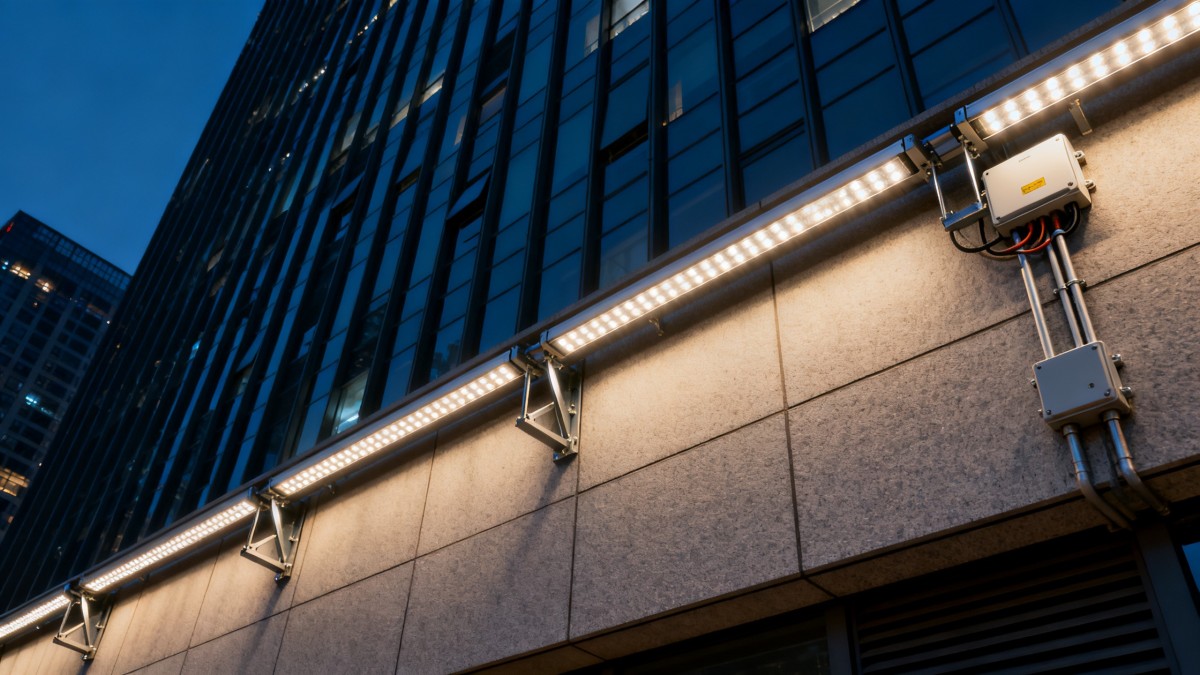
The market no longer accepts facade lighting as a purely decorative layer. It is now treated as a building-integrated system with direct implications for safety, energy performance, and asset value.
Several trend signals support this change. Projects increasingly combine dynamic controls, low-voltage distribution, networked drivers, and exposed outdoor mounting points on complex exterior materials.
At the same time, weather volatility has intensified. Heat, heavy rain, airborne dust, coastal corrosion, and freeze-thaw cycles reveal weak points much faster than older design assumptions expected.
As a result, building facade lighting systems are being judged not only by brightness and aesthetics, but by failure resistance, serviceability, and verified field performance.
The strongest drivers behind higher safety and performance requirements
The pressure on facade systems comes from overlapping technical, regulatory, and commercial forces. Each one changes how specifications should be reviewed before installation and handover.
These drivers explain why modern inspection of building facade lighting systems must cover both immediate compliance and long-term operational stability.
Electrical safety checks are becoming the first decision gate
Electrical review should begin before visual aiming or programming starts. If power distribution is unstable or poorly protected, all later performance claims become unreliable.
Core electrical points that should be verified
- Correct voltage matching between supply, driver, and luminaire load
- Protective grounding continuity across all metallic accessible parts
- Insulation resistance and absence of damaged cable jackets
- Surge protection adequacy for exposed exterior circuits
- Proper segregation of power and control wiring
- Secure termination torque and sealed junction enclosures
Exterior lighting often fails at connections rather than at the LED source itself. Water ingress, thermal movement, and loose terminations create intermittent faults that are difficult to trace later.
For that reason, robust building facade lighting systems need documented testing of circuits, polarity, grounding, and protective devices before final energization.
Structural stability has become as important as photometric output
A lighting fixture can deliver excellent beam quality and still be unsafe. Exterior mounting hardware is continuously challenged by wind load, vibration, expansion, and facade movement.
Inspection should confirm bracket strength, anchor suitability, and compatibility with cladding materials. Stone, metal panel, curtain wall, and composite facades behave differently under stress.
Key structural checks
- Verify load paths from luminaire to substrate.
- Check anchor type against facade material data.
- Confirm anti-corrosion coatings and fastener grade.
- Review vibration resistance in high-rise or transport-adjacent sites.
- Ensure maintenance access does not weaken support integrity.
Poor structural detailing can cause misalignment, water pathways, or falling-object hazards. In high-visibility projects, these failures quickly become safety and reputational issues.
Weather resistance now defines real-world durability
Many outdoor products pass laboratory ratings yet struggle on exposed facades. Performance depends on installation quality, site orientation, and cumulative environmental stress.
The most common weak points are gasket compression, cable entries, drain design, and material mismatch between fixture bodies and mounting accessories.
Weather-related risks that deserve close attention
- Ingress from poorly tightened glands or compromised seals
- Condensation buildup inside enclosed luminaires
- Coastal salt corrosion on exposed metal surfaces
- UV embrittlement of plastics and cable insulation
- Thermal cycling that loosens hardware over time
For building facade lighting systems, an appropriate IP rating is necessary but not sufficient. Teams should also review drainage paths, seal compression quality, and local climate severity.
Performance checks are shifting from brightness to system reliability
The definition of good lighting performance has expanded. Uniformity, color consistency, dimming stability, and control response now matter as much as initial luminous output.
A facade may look impressive on commissioning night yet degrade quickly if drivers overheat, optics discolor, or control channels drift out of synchronization.
This broader view reflects the new reality: successful building facade lighting systems must perform consistently, not just impress initially.
These checks affect multiple business functions across the project lifecycle
Safety and performance verification influences more than installation quality. It shapes budget certainty, warranty exposure, maintenance planning, and long-term energy control.
When critical checks are skipped, hidden defects often surface only after access equipment is removed. Corrective work then becomes slower, riskier, and significantly more expensive.
- Design coordination improves when mounting and wiring constraints are identified early.
- Commissioning becomes faster when electrical and control documentation is complete.
- Maintenance planning benefits from serviceable fixture locations and standardized parts.
- Operational budgeting improves when failure hotspots are addressed before handover.
In broader industry terms, better review of building facade lighting systems supports safer infrastructure, lower lifecycle waste, and more predictable building operations.
What deserves the closest attention before approval and handover
Several items repeatedly determine whether a project remains dependable after turnover. They should be checked with evidence, not assumption.
- Documented electrical test records: continuity, insulation, polarity, and protection verification
- Mounting validation: anchor selection, torque confirmation, and substrate compatibility
- Environmental sealing review: glands, gaskets, drain paths, and enclosure integrity
- Functional control testing: scene recall, dimming behavior, outage recovery, and addressing logic
- Maintenance readiness: spare strategy, access planning, and replacement procedures
These focus areas help convert technical specifications into practical resilience for building facade lighting systems operating in demanding commercial environments.
A practical response plan can reduce risk before failures emerge
The most effective approach is staged verification. Each phase should close known risks before the next activity begins.
- Review drawings, loads, exposure conditions, and applicable standards.
- Inspect delivered products for labeling, finish quality, and sealing condition.
- Validate mounting points and cable routing before fixture installation.
- Run electrical and control tests before full programming.
- Perform night aiming and daytime physical reinspection.
- Compile a final defect list, records package, and maintenance baseline.
This method creates a measurable quality path for building facade lighting systems, reducing surprises after the project enters routine operation.
The next step is to treat facade lighting as critical infrastructure
Facade lighting is no longer a secondary finishing element. It sits at the intersection of electrical safety, structural reliability, environmental exposure, and digital control.
Projects that apply disciplined verification are better positioned to achieve compliance, visual consistency, and lower lifetime disruption. That is the real benchmark for modern building facade lighting systems.
For organizations tracking infrastructure quality and cross-border industrial standards, GTIIN supports better decisions with verified market intelligence, technical context, and structured insight across lighting, construction, and electrical supply chains.
 When dual sourcing makes sense in a sourcing strategy for manufacturersSourcing strategy for manufacturers: learn when dual sourcing strengthens supply continuity, reduces disruption risk, and protects production without adding unnecessary complexity.
 How bulk commodities pricing affects long-term supply contractsBulk commodities pricing shapes long-term supply contracts through index rules, freight, quality, volume, and currency risk. Explore strategies for resilient costs and supply security.
 Which global manufacturing trends by sector matter most for sourcing plans?Global manufacturing trends by sector: identify sourcing risks, supplier resilience, compliance demands, and cost drivers to build smarter, more reliable procurement plans.
 What industrial trade intelligence pricing should include before you subscribeIndustrial trade intelligence pricing explained: compare coverage, data quality, access rights, and workflow value before choosing a subscription that supports smarter trade decisions.
 How an industrial trade intelligence dashboard can identify new supplier marketsDiscover how an industrial trade intelligence dashboard helps identify new supplier markets by comparing capacity, landed cost, logistics resilience, and compliance risk.
 Which global market entry barriers should exporters assess first?Global market entry barriers exporters should assess first: tariffs, compliance, buyer qualification, logistics, and payment risk. Build a practical strategy for confident market entry.
 How trade data aggregation analytics can reveal emerging supplier marketsTrade data aggregation analytics reveals emerging supplier markets by connecting trade flows, capacity signals, logistics, and compliance insights for smarter sourcing decisions.
 When an export market analysis platform can validate demand in a new marketExport market analysis platform insights help validate new-market demand through buyer fit, regulations, logistics, competition, and profitable entry conditions.
 What is driving the beauty and personal care market in the USA?Beauty and personal care in USA is driven by targeted solutions, selective premiumization, digital discovery, clean-label trust, diverse needs, and compliance. Explore key growth opportunities.
 How trade flow monitoring reports reveal changing regional demandTrade flow monitoring reports reveal changing regional demand through import volumes, sourcing shifts, product mix, logistics signals, and regulatory trends. Explore actionable market insights.
 How international market intelligence for investors reduces market-entry riskInternational market intelligence for investors reduces market-entry risk by validating demand, regulations, logistics, and competition before capital is committed.
 How international sourcing intelligence helps identify supplier risk earlyInternational sourcing intelligence helps businesses spot supplier risks early, protect supply continuity, and make smarter global procurement decisions.
 How trade data aggregation analytics reveals emerging supplier marketsTrade data aggregation analytics reveals emerging supplier markets through export trends, input flows, logistics, and regulatory signals. Discover smarter sourcing insights.
 What industrial cluster monitoring in Vietnam reveals about site riskIndustrial cluster monitoring Vietnam reveals hidden site risks across labor, utilities, logistics, compliance, and supplier dependencies. Make smarter sourcing and expansion decisions.
 Food Technology Trends Reshaping Shelf Life, Safety, and Product InnovationFood technology is reshaping shelf life, safety, and innovation. Discover the trends helping food businesses cut risk, improve compliance, and unlock stronger global market growth.
 How electronics manufacturing services are changing with low-volume demandElectronics manufacturing services are evolving fast with low-volume demand. Learn how agile EMS partners improve flexibility, compliance, sourcing resilience, and speed to market.
 How Can Buyers Reduce Procurement Risks for Electronic Components?How to reduce procurement risks for electronic components: learn how buyers assess traceability, lead times, compliance, and supplier types to avoid costly sourcing mistakes.
 What Sourcing Intelligence India Reveals About Supplier Risk and Cost ShiftsSourcing intelligence India reveals hidden supplier risk, compliance gaps, logistics pressure, and real cost shifts—helping buyers compare vendors smarter and source with more confidence.
 Fashion Trends 2026: Which Materials, Colors, and Silhouettes Are Gaining Ground?Fashion trends 2026 spotlight tactile fabrics, mineral colors, and controlled volume. Explore the materials, shades, and silhouettes shaping smarter, more wearable style.
 Smart Device Market Outlook: Key Growth Drivers, Segments, and Business OpportunitiesSmart device market trends are shifting toward system value, industrial demand, and resilient supply chains. Explore key growth drivers, high-potential segments, and business opportunities.
 How Global Trade Intelligence Services Help B2B Firms Evaluate Markets and SuppliersGlobal trade intelligence services help B2B firms compare suppliers, assess market potential, and uncover compliance, logistics, and pricing risks before costly decisions are made.





















Global Trade Insights & Industry
Our mission is to empower global exporters and importers with data-driven insights that foster strategic growth.
Search News
Popular Tags
Industry Overview
The global commercial kitchen equipment market is projected to reach $112 billion by 2027. Driven by urbanization, the rise of e-commerce food delivery, and strict hygiene regulations.