

When does a bentonite waterproofing blanket work best
A bentonite waterproofing blanket works best when below-grade structures need durable protection against groundwater, wet soil, and long-term moisture exposure.
It is especially effective before backfilling, when substrate access is open and detailing can be controlled with precision.
In complex construction programs, selecting a bentonite waterproofing blanket at the right stage can reduce leakage risk, rework, and future maintenance costs.
The best results come from matching the material to the site condition, structural type, and water pressure profile.
When site conditions make a bentonite waterproofing blanket the strongest choice
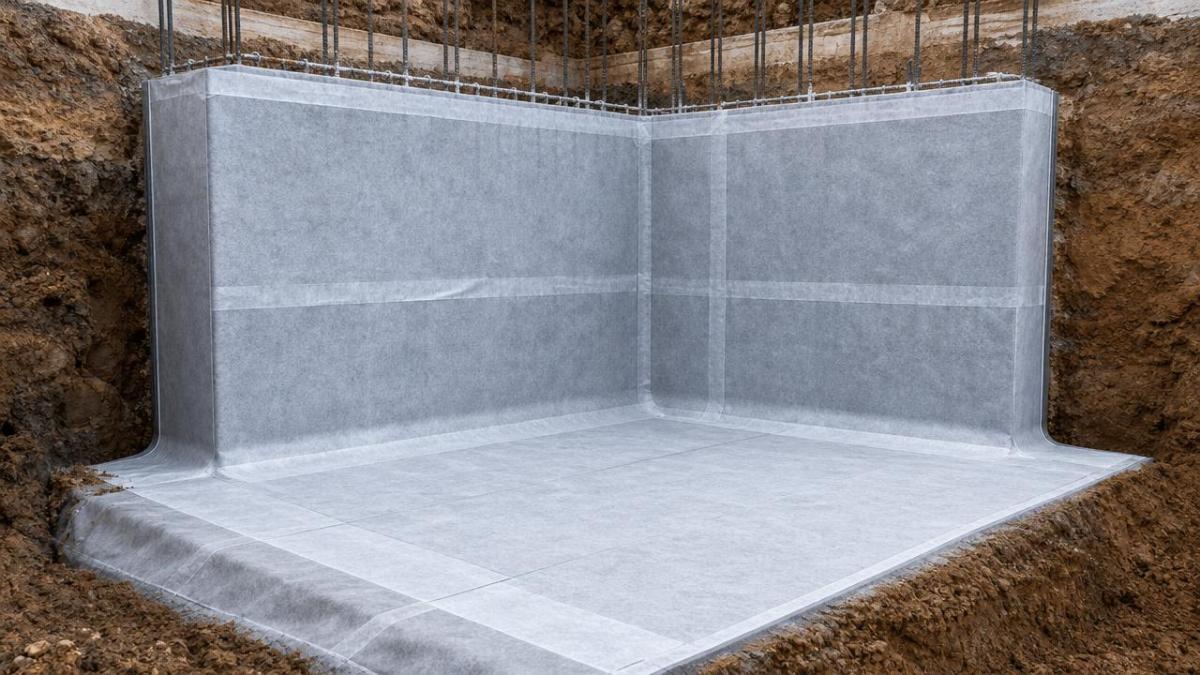
Not every waterproofing system performs equally across all foundation environments.
A bentonite waterproofing blanket is most valuable where structures remain in contact with soil for decades.
Its performance depends on confinement, hydration behavior, and proper overlap at joints and penetrations.
This makes early-stage evaluation essential in civil works, commercial basements, tunnels, utility vaults, and foundation slabs.
The material usually works best in these conditions:
- Continuous below-grade contact with moist soil
- Moderate to high hydrostatic pressure
- Projects needing self-sealing capability around minor damage
- Blindside applications where exterior access later becomes impossible
- Sites requiring fast installation over large areas
In these scenarios, the swelling clay core can create an effective barrier once confined between the structure and surrounding soil.
That is why the bentonite waterproofing blanket remains common across integrated infrastructure and building programs worldwide.
Which construction scenarios benefit most from bentonite waterproofing blanket performance
Blindside foundation walls and property-line construction
Blindside work is one of the best use cases for a bentonite waterproofing blanket.
Here, the membrane is installed against soldier piles, lagging, shotcrete, or earth-retention systems before concrete placement.
This matters where exterior repairs would be extremely difficult after structure completion.
The key judgment point is surface stability.
Large voids, moving substrates, or poor detailing at tie-backs can weaken system continuity.
Basement slabs and retaining walls in wet ground
A bentonite waterproofing blanket also works well under concrete slabs and behind retaining walls exposed to persistent groundwater.
In these cases, confinement is usually reliable after concrete placement and backfilling.
The system is particularly useful when schedules require straightforward installation without extensive curing delays.
Performance improves when subgrades are smooth, penetrations are sealed carefully, and overlaps follow manufacturer guidance.
Tunnels, utility structures, and buried infrastructure
Linear infrastructure often faces complex moisture patterns rather than simple vertical water migration.
A bentonite waterproofing blanket can be a strong fit where buried concrete elements need continuous envelope protection.
Examples include culverts, utility vaults, transport structures, and service corridors.
The deciding factor is whether the project can ensure full confinement and protect the blanket before covering operations.
How different site demands change bentonite waterproofing blanket suitability
Project conditions vary widely across sectors, even when the same waterproofing target appears on paper.
The table below shows how a bentonite waterproofing blanket aligns with common field requirements.
This comparison shows that the bentonite waterproofing blanket is not simply a material decision.
It is a fit-for-condition decision shaped by construction sequence, exposure risk, and detailing discipline.
What to check before specifying a bentonite waterproofing blanket
Before selection, teams should evaluate site chemistry, water behavior, and substrate condition.
Some groundwater environments contain contaminants or dissolved salts that may affect bentonite swelling performance.
Testing local soil and water can prevent a costly mismatch.
The following checklist helps determine whether a bentonite waterproofing blanket will work best:
- Is the application permanently below grade?
- Will the system be fully confined after installation?
- Can the substrate be made smooth and stable?
- Are penetrations, piles, and joints clearly detailed?
- Will installation avoid premature hydration from rain or standing water?
- Has groundwater chemistry been reviewed?
If several answers are uncertain, another waterproofing approach may be more dependable for that specific condition.
Where bentonite waterproofing blanket decisions are often misjudged
One common mistake is assuming all wet sites automatically favor a bentonite waterproofing blanket.
In reality, exposed applications without confinement can limit the system’s effectiveness.
Another misjudgment is overlooking substrate preparation.
Sharp protrusions, debris, honeycombing, and unsealed transitions can create vulnerable paths for water migration.
Timing errors also matter.
If the bentonite waterproofing blanket becomes hydrated before confinement, swelling may occur too early and reduce design performance.
Projects sometimes underestimate detailing around penetrations, pile caps, and terminations.
These areas demand the most attention because leaks often start at transitions, not open field sections.
How to choose the right next step for a bentonite waterproofing blanket application
The best next step is to review the structure by zone rather than by project name alone.
A basement wall, slab edge, and service penetration may require different detailing priorities under one waterproofing strategy.
Create a decision sheet covering groundwater level, soil chemistry, confinement, repair access, and installation sequence.
That process makes bentonite waterproofing blanket selection more evidence-based and easier to coordinate across design and construction teams.
For organizations tracking cross-border building materials, infrastructure trends, and technical sourcing intelligence, reliable evaluation matters beyond one project.
Platforms such as GTIIN and TradeVantage support this broader view through industry analysis, market visibility, and trusted information signals across global supply chains.
When the site is below grade, confinement is assured, and detailing is disciplined, a bentonite waterproofing blanket often delivers its best long-term value.
 Which global manufacturing trends by sector matter most for sourcing plans?Global manufacturing trends by sector: identify sourcing risks, supplier resilience, compliance demands, and cost drivers to build smarter, more reliable procurement plans.
 What industrial trade intelligence pricing should include before you subscribeIndustrial trade intelligence pricing explained: compare coverage, data quality, access rights, and workflow value before choosing a subscription that supports smarter trade decisions.
 How an industrial trade intelligence dashboard can identify new supplier marketsDiscover how an industrial trade intelligence dashboard helps identify new supplier markets by comparing capacity, landed cost, logistics resilience, and compliance risk.
 Which global market entry barriers should exporters assess first?Global market entry barriers exporters should assess first: tariffs, compliance, buyer qualification, logistics, and payment risk. Build a practical strategy for confident market entry.
 How trade data aggregation analytics can reveal emerging supplier marketsTrade data aggregation analytics reveals emerging supplier markets by connecting trade flows, capacity signals, logistics, and compliance insights for smarter sourcing decisions.
 When an export market analysis platform can validate demand in a new marketExport market analysis platform insights help validate new-market demand through buyer fit, regulations, logistics, competition, and profitable entry conditions.
 What is driving the beauty and personal care market in the USA?Beauty and personal care in USA is driven by targeted solutions, selective premiumization, digital discovery, clean-label trust, diverse needs, and compliance. Explore key growth opportunities.
 How trade flow monitoring reports reveal changing regional demandTrade flow monitoring reports reveal changing regional demand through import volumes, sourcing shifts, product mix, logistics signals, and regulatory trends. Explore actionable market insights.
 How international market intelligence for investors reduces market-entry riskInternational market intelligence for investors reduces market-entry risk by validating demand, regulations, logistics, and competition before capital is committed.
 How international sourcing intelligence helps identify supplier risk earlyInternational sourcing intelligence helps businesses spot supplier risks early, protect supply continuity, and make smarter global procurement decisions.
 How trade data aggregation analytics reveals emerging supplier marketsTrade data aggregation analytics reveals emerging supplier markets through export trends, input flows, logistics, and regulatory signals. Discover smarter sourcing insights.
 What industrial cluster monitoring in Vietnam reveals about site riskIndustrial cluster monitoring Vietnam reveals hidden site risks across labor, utilities, logistics, compliance, and supplier dependencies. Make smarter sourcing and expansion decisions.
 Food Technology Trends Reshaping Shelf Life, Safety, and Product InnovationFood technology is reshaping shelf life, safety, and innovation. Discover the trends helping food businesses cut risk, improve compliance, and unlock stronger global market growth.
 How electronics manufacturing services are changing with low-volume demandElectronics manufacturing services are evolving fast with low-volume demand. Learn how agile EMS partners improve flexibility, compliance, sourcing resilience, and speed to market.
 How Can Buyers Reduce Procurement Risks for Electronic Components?How to reduce procurement risks for electronic components: learn how buyers assess traceability, lead times, compliance, and supplier types to avoid costly sourcing mistakes.
 What Sourcing Intelligence India Reveals About Supplier Risk and Cost ShiftsSourcing intelligence India reveals hidden supplier risk, compliance gaps, logistics pressure, and real cost shifts—helping buyers compare vendors smarter and source with more confidence.
 Fashion Trends 2026: Which Materials, Colors, and Silhouettes Are Gaining Ground?Fashion trends 2026 spotlight tactile fabrics, mineral colors, and controlled volume. Explore the materials, shades, and silhouettes shaping smarter, more wearable style.
 Smart Device Market Outlook: Key Growth Drivers, Segments, and Business OpportunitiesSmart device market trends are shifting toward system value, industrial demand, and resilient supply chains. Explore key growth drivers, high-potential segments, and business opportunities.
 How Global Trade Intelligence Services Help B2B Firms Evaluate Markets and SuppliersGlobal trade intelligence services help B2B firms compare suppliers, assess market potential, and uncover compliance, logistics, and pricing risks before costly decisions are made.
 Manufacturing Sector Updates for Investors: What Signals Matter Most in 2025?Manufacturing sector updates for investors in 2025: track orders, margins, supply chains, regulation, and exports to spot resilient manufacturers and smarter investment signals.
 How Energy Market Intelligence Helps Businesses Track Price Risks and Demand ShiftsEnergy market intelligence helps businesses spot price risks, demand shifts, and supply pressure early—improving procurement, resilience, and faster strategic decisions.





















Global Trade Insights & Industry
Our mission is to empower global exporters and importers with data-driven insights that foster strategic growth.
Search News
Popular Tags
Industry Overview
The global commercial kitchen equipment market is projected to reach $112 billion by 2027. Driven by urbanization, the rise of e-commerce food delivery, and strict hygiene regulations.