

Should Construction Companies Rent or Buy Scaffolding?
Should Construction Companies Rent or Buy Scaffolding?
Whether researching how to choose a projector for conference rooms or sourcing equipment for a construction site, procurement teams must balance upfront costs with long-term value. With scaffolding, however, the decision reaches beyond purchasing: it affects site access, cash flow, transport, maintenance, and responsibility for safe use.
Renting usually suits short-term, specialized, or unpredictable work. Buying becomes more attractive when a contractor repeatedly uses compatible equipment and has the people and facilities to manage it. Neither option wins on price alone. A low rental rate can become expensive when a project slips, while purchased scaffolding can sit idle despite a healthy order book.
The useful question is not simply “How often do we need scaffolding?” It is “How often can we redeploy this particular scaffold system, in this quantity, without creating operational problems?”
When is renting scaffolding the better choice?
Renting makes sense when access requirements change substantially between jobs. A straightforward facade repair, a confined industrial maintenance shutdown, and a building with irregular elevations may need different configurations. Owning equipment for one does not necessarily prepare a contractor for the others.
It is also useful when project timing is uncertain. A contractor entering a new region may have no local storage yard, no established transport arrangements, and only one confirmed contract. Hiring locally can avoid moving a fleet into a market before the follow-on workload is clear.
There is an important distinction between equipment-only rental and a managed scaffolding package. Equipment hire may leave design coordination, erection, inspection, alterations, and dismantling with the contractor. A specialist package may include several of those services, but the scope must be confirmed in writing. Do not compare its total price directly with a bare equipment quote.
Renting is less convenient when a project has repeated extensions or frequent alterations. In those situations, check equipment availability, modification charges, and billing terms before assuming hire will remain flexible.
When does buying scaffolding make business sense?
Ownership is strongest where work is repetitive. A contractor regularly handling similar low-rise masonry projects, for example, may be able to move a standardized inventory between sites with relatively little adaptation. That is a planning scenario, not a guarantee: dimensions, loading requirements, and access arrangements still need checking for each job.
Buying also gives the company more control over scheduling. It can reduce dependence on a rental supplier during busy periods, provided the owned stock is complete, serviceable, and available. Missing platforms, braces, access components, or base equipment can prevent deployment just as effectively as having no scaffold at all.
Before purchasing, look for three conditions:
- Confirmed or reasonably dependable demand for the same system across multiple projects.
- Storage, transport, inventory control, and inspection arrangements that already exist or are realistically budgeted.
- Enough financial capacity to buy equipment without weakening payroll, materials purchasing, or other essential project spending.
A purchase justified only by optimistic future tenders deserves caution. Equipment costs are committed immediately; projected utilization is not.
How should rental and purchase costs be compared?
Compare both options over the same planning period and for the same access scope. The inventory, working configuration, service responsibilities, and expected deployment schedule should match. Otherwise, the cheaper quotation may simply exclude necessary work.
A practical ownership calculation is: purchase price plus financing, logistics, storage, upkeep, and management costs, less a conservative expected resale value. Compare that with total rental and associated service costs over the same period. Account for services common to both options consistently rather than treating erection or inspection as free under ownership.
Run a second calculation with project delays and lower-than-expected demand. If buying works only when every planned job starts on time, the business case is fragile. Keep cash-flow analysis separate, too: a lower long-term cost does not remove the immediate funding burden.
Is there a reliable break-even utilization rate?
There is no universal percentage. Rental pricing, fleet size, transport distances, financing, and residual value differ too much. Measure productive deployment of the inventory you would actually buy, not merely the number of days the company has construction work.
Concurrency matters. Two overlapping projects may require twice the stock, while two sequential projects may reuse one fleet. Long scaffold occupation on a single site can also block redeployment elsewhere. Map quantities against the project calendar before calculating savings.
Does renting transfer safety responsibility to the supplier?
No. Rental does not automatically transfer every safety obligation. The supplier’s responsibilities depend on the contract and applicable law; employers and other site duty holders may retain responsibilities for use, supervision, inspection, and coordination.
For example, U.S. OSHA construction scaffold rules in 29 CFR 1926 Subpart L require inspection for visible defects by a competent person before each work shift and after an occurrence that could affect structural integrity. Other jurisdictions have their own requirements. A supplier’s initial handover does not replace ongoing checks required for the site.
Before equipment arrives, establish who verifies the configuration, who performs required inspections, who authorizes alterations, and how damaged components are isolated. Loading, foundations, ties, access, weather exposure, and sheeting or netting need attention regardless of ownership. Changes to enclosure or loading should not be treated as minor purchasing decisions.
If internal capability is limited, obtaining appropriate specialist support may matter more than whether the scaffold is rented or purchased.
How much should scaffold type influence the decision?
Enough to settle the system choice before the financial comparison. Frame scaffolding, modular systems, and tube-and-fitting arrangements have different configuration possibilities and handling requirements. An attractive unit price means little if the inventory cannot accommodate the intended work.
Review the required working heights, platform widths, loading, facade geometry, access routes, and ground conditions with an appropriate specialist. Also distinguish access scaffolding from shoring or falsework: equipment suitable for worker access is not automatically suitable for supporting structural loads.
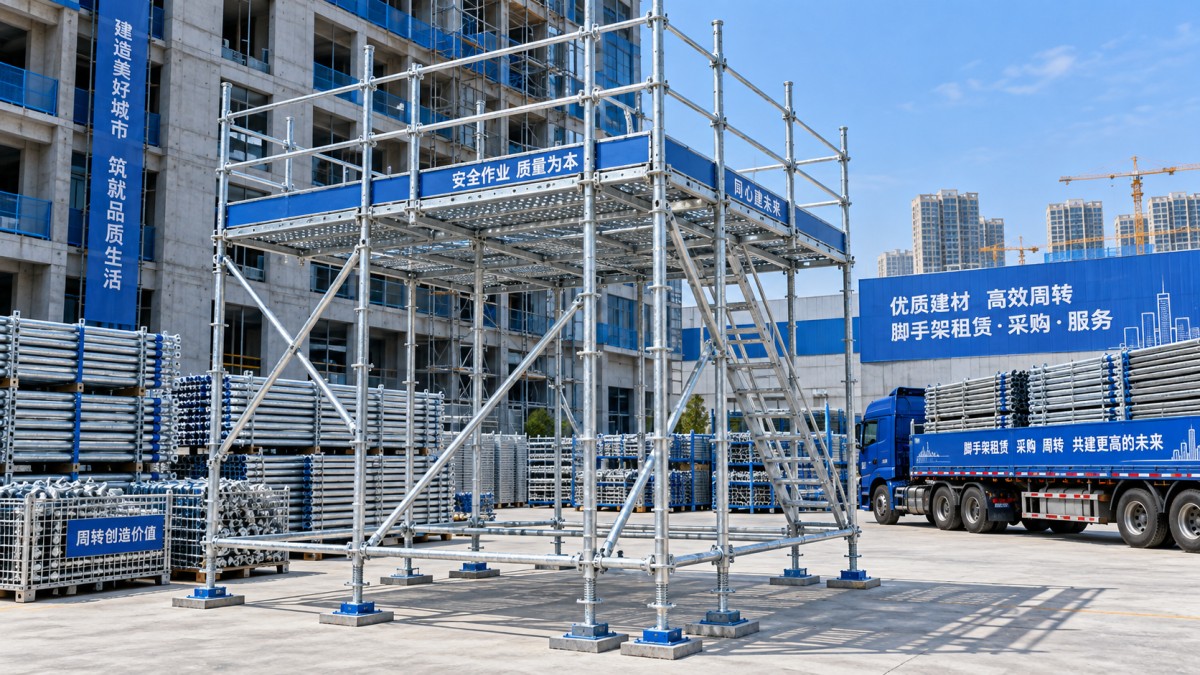
Component compatibility is particularly important for owners expanding an existing fleet. Similar-looking parts are not evidence of interchangeability. Check manufacturer guidance and any required technical verification before combining systems. A discounted purchase that creates a separate, incompatible inventory can increase sorting, storage, and site-control problems.
What should contractors check when buying internationally?
Compare landed cost, not factory price. Freight, duties where applicable, customs handling, inland delivery, currency exposure, and lead time can change the result. Confirm the documentation and technical requirements for the destination market rather than assuming acceptance in one country establishes acceptance elsewhere.
Ask for documentation tied to the actual system offered: component identification, material specifications, relevant test information, configuration guidance, and traceability arrangements. A generic certificate or brochure is not enough to demonstrate suitability for a particular project.
Replacement supply deserves equal attention. Find out whether essential components are available locally, how future batches are identified, and how damaged or disputed deliveries are handled. A low-cost fleet can become awkward to operate if replacement parts require another international shipment.
This reflects the procurement perspective used by Global Trade Insights & Industry Network (GTIIN): price should be considered alongside delivery stability, regulatory readiness, logistics exposure, and after-sales support. Trade intelligence can inform supplier-region comparisons, but it does not replace project-specific technical review.
Can a company buy core equipment and rent the rest?
Yes. A mixed approach can fit contractors with a stable base workload and occasional peaks. They may own equipment for recurring configurations and rent additional compatible stock or complete specialist arrangements when needed.
The limitation is coordination. Track owned and hired components separately, confirm compatibility, and assign responsibility for the complete assembled scaffold. Also check availability before promising a project start date. An owned core fleet does not guarantee that the required rental additions will be available at short notice.
What rental terms cause the most avoidable surprises?
Pay close attention to when hire begins and ends. Contracts may distinguish between an off-hire notice, collection, and receipt at the supplier’s depot. Confirm how each event affects billing, particularly when site access delays collection.
Check minimum hire periods, partial returns, shortages, cleaning, damage assessment, and replacement charges. Record quantities and condition at delivery and return using an agreed process. Where erection services are included, clarify how revised drawings, restricted access, waiting time, and extra visits are priced.
A useful quote lets the site team predict the cost of a delay or alteration. If it cannot, request clarification before awarding the work.
What should the company do before making the final decision?
Take the upcoming project pipeline and mark required configurations, quantities, likely occupation periods, overlaps, and transport routes. Obtain comparable rental and purchase proposals against that schedule, then test what happens if a major project is postponed.
Buy where repeat demand and operational capability support ownership. Rent where uncertainty, specialist configurations, or limited management capacity make flexibility more valuable. If the calculation favors buying but nobody can clearly explain where the fleet will be stored, how it will be inspected, and who will control its movement, the purchase is not ready.
 How to assess Singapore suppliers with global supply chain intelligenceExplore international supply chain intelligence Singapore buyers can use to verify suppliers, assess capabilities and delivery risks, and make confident sourcing decisions.
 Which macroeconomic indicators help forecast U.S. industrial demand?Explore industrial macro analysis USA decision-makers can use to forecast demand. Track new orders, inventories, and credit signals to sharpen procurement and capacity decisions.
 Can a food processing manufacturer meet your small-batch needs?Can a food processing manufacturer meet your small-batch needs? Discover how to assess minimum orders, costs, packaging, and safety to choose the right partner for your launch.
 How to verify sourcing intelligence data before selecting suppliersVerify sourcing intelligence data before choosing suppliers. Learn how to check company records, certifications, and capacity to reduce procurement risk and build a reliable shortlist.
 How to use supplier risk analysis to spot financial warning signsUse supplier risk analysis to spot cash flow pressure, debt risks, and delivery warning signs. Learn practical steps to reduce exposure and protect supply continuity.
 When dual sourcing makes sense in a sourcing strategy for manufacturersSourcing strategy for manufacturers: learn when dual sourcing strengthens supply continuity, reduces disruption risk, and protects production without adding unnecessary complexity.
 How bulk commodities pricing affects long-term supply contractsBulk commodities pricing shapes long-term supply contracts through index rules, freight, quality, volume, and currency risk. Explore strategies for resilient costs and supply security.
 Which global manufacturing trends by sector matter most for sourcing plans?Global manufacturing trends by sector: identify sourcing risks, supplier resilience, compliance demands, and cost drivers to build smarter, more reliable procurement plans.
 What industrial trade intelligence pricing should include before you subscribeIndustrial trade intelligence pricing explained: compare coverage, data quality, access rights, and workflow value before choosing a subscription that supports smarter trade decisions.
 How an industrial trade intelligence dashboard can identify new supplier marketsDiscover how an industrial trade intelligence dashboard helps identify new supplier markets by comparing capacity, landed cost, logistics resilience, and compliance risk.
 Which global market entry barriers should exporters assess first?Global market entry barriers exporters should assess first: tariffs, compliance, buyer qualification, logistics, and payment risk. Build a practical strategy for confident market entry.
 How trade data aggregation analytics can reveal emerging supplier marketsTrade data aggregation analytics reveals emerging supplier markets by connecting trade flows, capacity signals, logistics, and compliance insights for smarter sourcing decisions.
 When an export market analysis platform can validate demand in a new marketExport market analysis platform insights help validate new-market demand through buyer fit, regulations, logistics, competition, and profitable entry conditions.
 What is driving the beauty and personal care market in the USA?Beauty and personal care in USA is driven by targeted solutions, selective premiumization, digital discovery, clean-label trust, diverse needs, and compliance. Explore key growth opportunities.
 How trade flow monitoring reports reveal changing regional demandTrade flow monitoring reports reveal changing regional demand through import volumes, sourcing shifts, product mix, logistics signals, and regulatory trends. Explore actionable market insights.
 How international market intelligence for investors reduces market-entry riskInternational market intelligence for investors reduces market-entry risk by validating demand, regulations, logistics, and competition before capital is committed.
 How international sourcing intelligence helps identify supplier risk earlyInternational sourcing intelligence helps businesses spot supplier risks early, protect supply continuity, and make smarter global procurement decisions.
 How trade data aggregation analytics reveals emerging supplier marketsTrade data aggregation analytics reveals emerging supplier markets through export trends, input flows, logistics, and regulatory signals. Discover smarter sourcing insights.
 What industrial cluster monitoring in Vietnam reveals about site riskIndustrial cluster monitoring Vietnam reveals hidden site risks across labor, utilities, logistics, compliance, and supplier dependencies. Make smarter sourcing and expansion decisions.
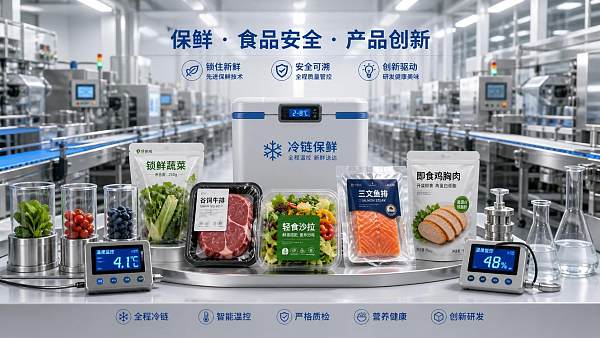
 Food Technology Trends Reshaping Shelf Life, Safety, and Product InnovationFood technology is reshaping shelf life, safety, and innovation. Discover the trends helping food businesses cut risk, improve compliance, and unlock stronger global market growth.
 How electronics manufacturing services are changing with low-volume demandElectronics manufacturing services are evolving fast with low-volume demand. Learn how agile EMS partners improve flexibility, compliance, sourcing resilience, and speed to market.

















Global Trade Insights & Industry
Our mission is to empower global exporters and importers with data-driven insights that foster strategic growth.
Search News
Popular Tags
Industry Overview
The global commercial kitchen equipment market is projected to reach $112 billion by 2027. Driven by urbanization, the rise of e-commerce food delivery, and strict hygiene regulations.