

India's BIS Updates IS 2062:2026, Adds Mandatory Hydrogen-Induced Cracking Test for Construction Fasteners
On 8 May 2026, the Bureau of Indian Standards (BIS) released IS 2062:2026 — the revised standard for hot-rolled structural steel — introducing a new mandatory requirement for hydrogen-induced cracking (HIC) testing on steel used in construction hardware. This change directly affects exporters, manufacturers, and supply chain actors engaged in the India-bound construction fastener market, particularly where mechanical integrity under corrosive or cathodically protected conditions is critical.
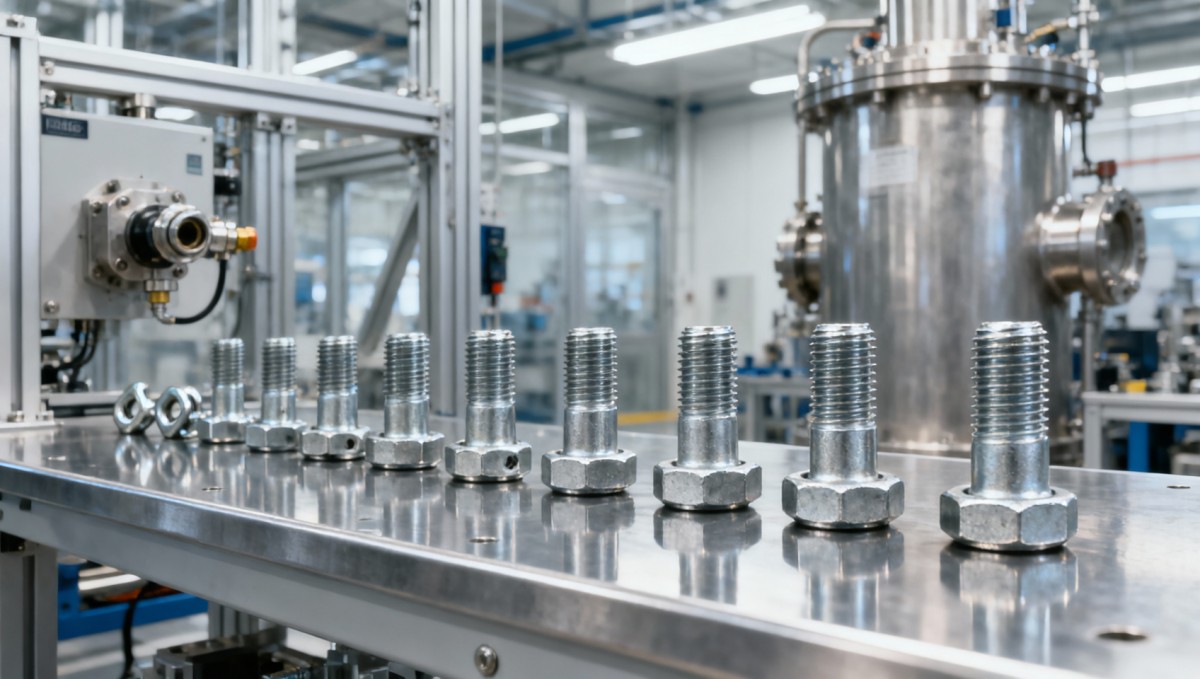
Event Overview
The Bureau of Indian Standards (BIS) issued IS 2062:2026 on 8 May 2026, replacing IS 2062:2011. The updated standard explicitly mandates hydrogen-induced cracking (HIC) sensitivity testing for structural steel grades intended for bolts, connectors, scaffolding fittings, and other load-bearing construction hardware. Compliance requires third-party HIC test reports certified by BIS-recognized laboratories. The requirement applies to all imported steel products falling under the scope of Clause 5.3.2 of IS 2062:2026, effective upon the standard’s enforcement date (to be notified separately by BIS).
Industries Affected
Direct Trading Enterprises
Exporters — especially Chinese trading companies supplying construction fasteners to Indian infrastructure projects — now face stricter pre-shipment documentation requirements. They must procure valid HIC reports from upstream mills or independent labs, adding verification layers and delaying customs clearance. For firms without existing BIS-aligned quality protocols, this introduces both compliance risk and commercial friction with Indian buyers demanding immediate proof of conformity.
Raw Material Procurement Entities
Steel procurement departments at international EPC contractors or Indian fabricators sourcing billets or wire rods from overseas suppliers must now verify HIC performance at the raw material stage — not just at finished-product level. This shifts technical due diligence upstream, increasing reliance on mill test reports and chemical composition traceability. Suppliers lacking documented HIC data (e.g., many small-to-midsize Chinese steel producers) may be excluded from tender eligibility lists.
Manufacturing & Fabrication Firms
Domestic and export-oriented manufacturers of bolts, anchor channels, and scaffolding couplers must reassess their material sourcing and heat treatment processes. HIC susceptibility correlates strongly with sulfur content, inclusion morphology, and post-forging cooling rates. Firms using non-HIC-optimized billets — even if tensile-strength compliant — risk rejection during BIS surveillance testing. Some SMEs report limited access to qualified HIC-capable labs, creating bottlenecks in production scheduling.
Supply Chain Service Providers
Testing and certification agencies, freight forwarders offering compliance support, and customs brokers handling BIS-related clearances are experiencing increased demand for integrated HIC verification services. Notably, lead times for third-party HIC testing have extended by 2–3 weeks, compressing overall shipment windows. Logistics providers now need to factor in lab turnaround time when quoting delivery commitments — a shift from prior practice where mechanical and dimensional checks dominated pre-shipment audits.
Key Considerations and Recommended Actions
Verify HIC Reporting Capacity Early
Exporters and manufacturers should confirm whether their current steel suppliers or contracted labs hold BIS-recognized accreditation for NACE TM0284 or ISO 17025-compliant HIC testing. Absence of such capacity warrants initiating lab qualification well ahead of first shipment.
Review Material Specifications Against Clause 5.3.2
Procurement teams must cross-check incoming mill certificates against IS 2062:2026’s revised Annex D (informative) and mandatory Table 4, which links steel grade, thickness, and application class to required HIC acceptance criteria (CR, CLR, CTR limits). Assumptions based on prior editions are no longer sufficient.
Factor in Extended Lead Times Across the Value Chain
With HIC testing adding 2–3 weeks to typical certification cycles, sales and operations planning must adjust forecast-to-delivery timelines. Contractual terms involving penalties for delayed delivery should be revisited to reflect this newly institutionalized testing step.
Editorial Perspective / Industry Observation
Observably, this revision reflects BIS’s strategic pivot toward performance-based standards — moving beyond minimum mechanical properties to address long-term service reliability in aggressive environments (e.g., coastal infrastructure, underground utilities, or galvanically protected systems). Analysis shows that while HIC testing is routine in oil & gas sectors globally, its formalization in general construction steel signals India’s tightening focus on lifecycle safety — especially following recent high-profile scaffolding failures in urban redevelopment zones. From an industry standpoint, this is less about technical novelty and more about regulatory synchronization: Indian construction codes (e.g., IS 800, IS 1367) are increasingly referencing metallurgical durability metrics previously confined to niche applications. Current developments are better understood as alignment with global best practices than as a protectionist measure — though implementation gaps among smaller suppliers may temporarily reshape competitive dynamics.
Conclusion
The introduction of mandatory HIC testing in IS 2062:2026 marks a meaningful evolution in India’s structural steel regulation — one that prioritizes field performance over laboratory compliance alone. While transitional challenges exist, particularly for cost-sensitive suppliers, the update strengthens the technical foundation for durable infrastructure development. A rational interpretation is that this represents India’s gradual convergence with internationally recognized metallurgical risk management frameworks — not a sudden barrier, but a calibrated step toward higher assurance.
Source Attribution
Official source: Bureau of Indian Standards (BIS), IS 2062:2026 ‘Hot Rolled Structural Steel’ — Published 8 May 2026; available via www.bis.gov.in. Enforcement timeline, recognition list of HIC testing laboratories, and clarifications on transition arrangements remain pending official notification. These items are under active monitoring and subject to update.
 How an industrial trade intelligence dashboard can identify new supplier marketsDiscover how an industrial trade intelligence dashboard helps identify new supplier markets by comparing capacity, landed cost, logistics resilience, and compliance risk.
 Which global market entry barriers should exporters assess first?Global market entry barriers exporters should assess first: tariffs, compliance, buyer qualification, logistics, and payment risk. Build a practical strategy for confident market entry.
 How trade data aggregation analytics can reveal emerging supplier marketsTrade data aggregation analytics reveals emerging supplier markets by connecting trade flows, capacity signals, logistics, and compliance insights for smarter sourcing decisions.
 When an export market analysis platform can validate demand in a new marketExport market analysis platform insights help validate new-market demand through buyer fit, regulations, logistics, competition, and profitable entry conditions.
 What is driving the beauty and personal care market in the USA?Beauty and personal care in USA is driven by targeted solutions, selective premiumization, digital discovery, clean-label trust, diverse needs, and compliance. Explore key growth opportunities.
 How trade flow monitoring reports reveal changing regional demandTrade flow monitoring reports reveal changing regional demand through import volumes, sourcing shifts, product mix, logistics signals, and regulatory trends. Explore actionable market insights.
 How international market intelligence for investors reduces market-entry riskInternational market intelligence for investors reduces market-entry risk by validating demand, regulations, logistics, and competition before capital is committed.
 How international sourcing intelligence helps identify supplier risk earlyInternational sourcing intelligence helps businesses spot supplier risks early, protect supply continuity, and make smarter global procurement decisions.
 How trade data aggregation analytics reveals emerging supplier marketsTrade data aggregation analytics reveals emerging supplier markets through export trends, input flows, logistics, and regulatory signals. Discover smarter sourcing insights.
 What industrial cluster monitoring in Vietnam reveals about site riskIndustrial cluster monitoring Vietnam reveals hidden site risks across labor, utilities, logistics, compliance, and supplier dependencies. Make smarter sourcing and expansion decisions.
 Food Technology Trends Reshaping Shelf Life, Safety, and Product InnovationFood technology is reshaping shelf life, safety, and innovation. Discover the trends helping food businesses cut risk, improve compliance, and unlock stronger global market growth.
 How electronics manufacturing services are changing with low-volume demandElectronics manufacturing services are evolving fast with low-volume demand. Learn how agile EMS partners improve flexibility, compliance, sourcing resilience, and speed to market.
 How Can Buyers Reduce Procurement Risks for Electronic Components?How to reduce procurement risks for electronic components: learn how buyers assess traceability, lead times, compliance, and supplier types to avoid costly sourcing mistakes.
 What Sourcing Intelligence India Reveals About Supplier Risk and Cost ShiftsSourcing intelligence India reveals hidden supplier risk, compliance gaps, logistics pressure, and real cost shifts—helping buyers compare vendors smarter and source with more confidence.
 Fashion Trends 2026: Which Materials, Colors, and Silhouettes Are Gaining Ground?Fashion trends 2026 spotlight tactile fabrics, mineral colors, and controlled volume. Explore the materials, shades, and silhouettes shaping smarter, more wearable style.
 Smart Device Market Outlook: Key Growth Drivers, Segments, and Business OpportunitiesSmart device market trends are shifting toward system value, industrial demand, and resilient supply chains. Explore key growth drivers, high-potential segments, and business opportunities.
 How Global Trade Intelligence Services Help B2B Firms Evaluate Markets and SuppliersGlobal trade intelligence services help B2B firms compare suppliers, assess market potential, and uncover compliance, logistics, and pricing risks before costly decisions are made.
 Manufacturing Sector Updates for Investors: What Signals Matter Most in 2025?Manufacturing sector updates for investors in 2025: track orders, margins, supply chains, regulation, and exports to spot resilient manufacturers and smarter investment signals.
 How Energy Market Intelligence Helps Businesses Track Price Risks and Demand ShiftsEnergy market intelligence helps businesses spot price risks, demand shifts, and supply pressure early—improving procurement, resilience, and faster strategic decisions.
 Precision Hardware Tools Market: Key Demand Drivers, Segments, and Growth OutlookPrecision hardware tools market trends are reshaping sourcing, compliance, and automation. Explore key demand drivers, segment shifts, regional supply patterns, and growth opportunities.
 How to Use Customs Import Data to Find Buyers, Track Competitors, and Spot Demand?Customs import data helps you find real buyers, track competitors, and spot demand shifts early. Learn practical ways to turn trade records into smarter global business decisions.





















Global Trade Insights & Industry
Our mission is to empower global exporters and importers with data-driven insights that foster strategic growth.
Search News
Popular Tags
Industry Overview
The global commercial kitchen equipment market is projected to reach $112 billion by 2027. Driven by urbanization, the rise of e-commerce food delivery, and strict hygiene regulations.