

Brazil INMETRO Tightens EMF Limits for Body Care Devices by 30%
On May 10, 2026, Brazil’s National Institute of Metrology, Standardization and Industrial Quality (INMETRO) updated standard NR 1059:2026, tightening electromagnetic field (EMF) radiation limits by 30% for body care aesthetic devices—including radiofrequency (RF), microcurrent, and LED face masks—and mandating multilingual safety warnings, including Portuguese. This regulatory update directly affects manufacturers, exporters, and distributors of personal care electronics targeting the Brazilian market, and signals heightened compliance requirements for EMF safety in consumer wellness technology.
Event Overview
On May 10, 2026, INMETRO published revision NR 1059:2026, which reduces the permissible EMF emission thresholds by 30% for body care aesthetic instruments such as RF devices, microcurrent units, and LED facial masks. The update also introduces a mandatory requirement for safety warnings in multiple languages, with Portuguese explicitly required. Products not certified under the revised standard will be denied customs clearance in Brazil starting July 1, 2026. Existing orders may face delivery delays if retesting or documentation updates are pending.
Industries Affected
Direct Exporters and Brand Owners
Exporters shipping body care devices to Brazil must now ensure all applicable models undergo new EMF testing against the stricter NR 1059:2026 limits. Non-compliant units risk rejection at Brazilian ports from July 1 onward, potentially disrupting revenue recognition and contractual delivery timelines.
Contract Manufacturers and OEM/ODM Suppliers
OEM and ODM facilities producing body care devices for global brands may face revised technical specifications from clients requiring design or component-level adjustments—especially in power supply, shielding, and control circuitry—to meet the lower EMF thresholds. Revalidation cycles may delay production schedules and increase unit-level compliance costs.
Distribution and Import Agents
Local importers and authorized representatives in Brazil bear legal responsibility for conformity assessment and labeling compliance. The new multilingual warning requirement means existing product packaging, user manuals, and digital assets must be updated to include Portuguese-language safety statements—beyond prior INMET certification scope.
Key Actions for Relevant Enterprises and Practitioners
Monitor official INMET communications and implementation guidance
While NR 1059:2026 is effective as of May 10, 2026, INMET may issue clarifications on transition periods, grandfathering clauses, or test method harmonization (e.g., alignment with IEC 62493:2018). Stakeholders should track updates via INMET’s official portal and accredited certification bodies.
Prioritize retesting for high-volume and high-risk body care categories
RF and microcurrent devices typically generate higher EMF emissions than passive LED masks. Analysis shows these categories are most likely to exceed the tightened thresholds without hardware or firmware modifications. Enterprises should prioritize retesting for products already in active export pipelines to Brazil.
Update technical documentation and labeling ahead of the July 1 deadline
The requirement for Portuguese-language safety warnings applies to printed manuals, on-device labels, and e-manuals. From industry perspective, this is not merely a translation task—it requires verification that warnings align precisely with the new hazard classifications and exposure scenarios defined in NR 1059:2026.
Engage accredited laboratories early to secure testing capacity
Observably, demand for INMET-recognized EMF testing has increased since the announcement. Laboratories accredited under INMET’s OCP (Organismo de Certificação de Produto) scheme report lead times extending beyond six weeks. Enterprises should initiate test requests no later than mid-June to avoid clearance delays.
Editorial Perspective / Industry Observation
This update is better understood as a regulatory signal—not yet a fully operationalized enforcement milestone. While the July 1, 2026, enforcement date is firm, current evidence suggests limited real-time inspection infrastructure for EMF at Brazilian ports; initial non-compliance may trigger documentation holds rather than automatic seizure. However, analysis shows that INMET’s tightening trend reflects broader Latin American convergence toward EU-level EMF safeguards for consumer wellness electronics. It is more indicative of long-term standardization pressure than a one-off compliance hurdle.
From industry angle, the 30% reduction is significant but not unprecedented—similar adjustments occurred in South Korea’s KC Mark updates for low-power RF devices in 2023. What distinguishes this change is its explicit linkage to end-user safety communication (i.e., multilingual warnings), signaling a shift toward human-factor accountability alongside technical compliance.
Current more appropriate interpretation is that NR 1059:2026 establishes a new baseline for market access—not just for Brazil, but potentially as a reference for neighboring Mercosur markets evaluating similar revisions.
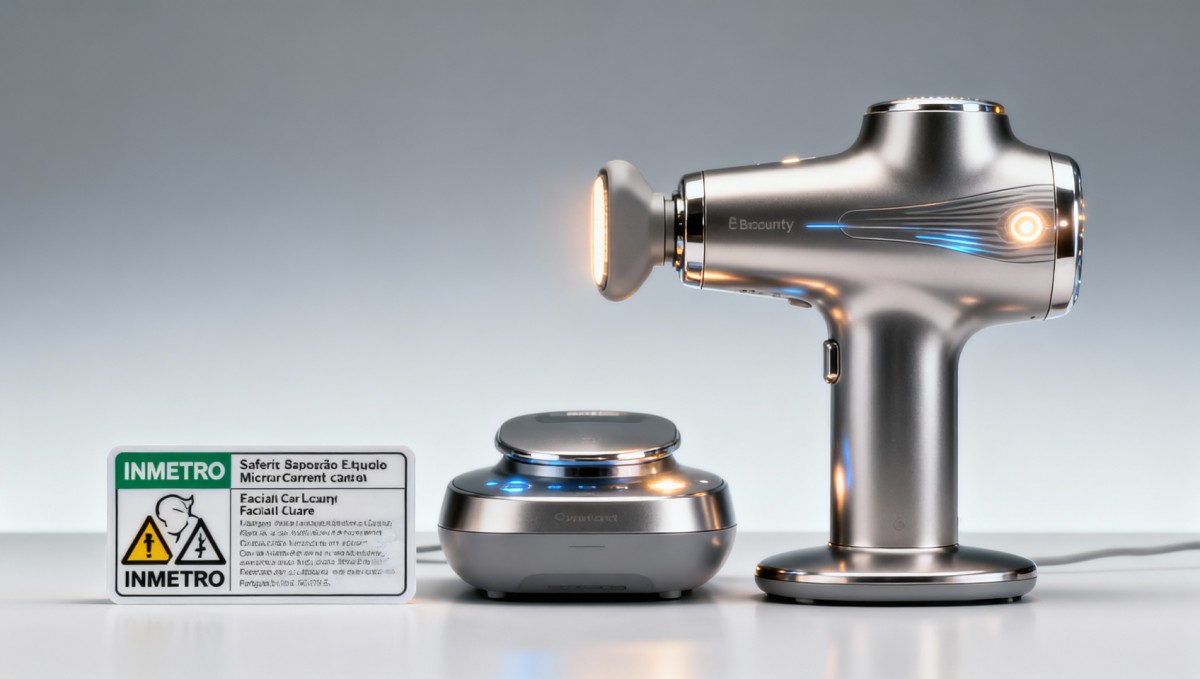
Conclusion: This regulatory update marks a material escalation in technical and linguistic compliance expectations for body care device exporters targeting Brazil. It does not represent a broad-based market barrier, but rather a targeted recalibration affecting product design, certification workflows, and post-sale documentation. Enterprises are advised to treat it as a defined, time-bound compliance checkpoint—not an open-ended strategic pivot—with emphasis on timely retesting, precise labeling updates, and close coordination with INMET-accredited partners.
Source: Official INMETRO publication NR 1059:2026, dated May 10, 2026. Note: Implementation guidance, test method interpretations, and potential transitional provisions remain subject to ongoing official clarification and are being monitored.
 How an industrial trade intelligence dashboard can identify new supplier marketsDiscover how an industrial trade intelligence dashboard helps identify new supplier markets by comparing capacity, landed cost, logistics resilience, and compliance risk.
 Which global market entry barriers should exporters assess first?Global market entry barriers exporters should assess first: tariffs, compliance, buyer qualification, logistics, and payment risk. Build a practical strategy for confident market entry.
 How trade data aggregation analytics can reveal emerging supplier marketsTrade data aggregation analytics reveals emerging supplier markets by connecting trade flows, capacity signals, logistics, and compliance insights for smarter sourcing decisions.
 When an export market analysis platform can validate demand in a new marketExport market analysis platform insights help validate new-market demand through buyer fit, regulations, logistics, competition, and profitable entry conditions.
 What is driving the beauty and personal care market in the USA?Beauty and personal care in USA is driven by targeted solutions, selective premiumization, digital discovery, clean-label trust, diverse needs, and compliance. Explore key growth opportunities.
 How trade flow monitoring reports reveal changing regional demandTrade flow monitoring reports reveal changing regional demand through import volumes, sourcing shifts, product mix, logistics signals, and regulatory trends. Explore actionable market insights.
 How international market intelligence for investors reduces market-entry riskInternational market intelligence for investors reduces market-entry risk by validating demand, regulations, logistics, and competition before capital is committed.
 How international sourcing intelligence helps identify supplier risk earlyInternational sourcing intelligence helps businesses spot supplier risks early, protect supply continuity, and make smarter global procurement decisions.
 How trade data aggregation analytics reveals emerging supplier marketsTrade data aggregation analytics reveals emerging supplier markets through export trends, input flows, logistics, and regulatory signals. Discover smarter sourcing insights.
 What industrial cluster monitoring in Vietnam reveals about site riskIndustrial cluster monitoring Vietnam reveals hidden site risks across labor, utilities, logistics, compliance, and supplier dependencies. Make smarter sourcing and expansion decisions.
 Food Technology Trends Reshaping Shelf Life, Safety, and Product InnovationFood technology is reshaping shelf life, safety, and innovation. Discover the trends helping food businesses cut risk, improve compliance, and unlock stronger global market growth.
 How electronics manufacturing services are changing with low-volume demandElectronics manufacturing services are evolving fast with low-volume demand. Learn how agile EMS partners improve flexibility, compliance, sourcing resilience, and speed to market.
 How Can Buyers Reduce Procurement Risks for Electronic Components?How to reduce procurement risks for electronic components: learn how buyers assess traceability, lead times, compliance, and supplier types to avoid costly sourcing mistakes.
 What Sourcing Intelligence India Reveals About Supplier Risk and Cost ShiftsSourcing intelligence India reveals hidden supplier risk, compliance gaps, logistics pressure, and real cost shifts—helping buyers compare vendors smarter and source with more confidence.
 Fashion Trends 2026: Which Materials, Colors, and Silhouettes Are Gaining Ground?Fashion trends 2026 spotlight tactile fabrics, mineral colors, and controlled volume. Explore the materials, shades, and silhouettes shaping smarter, more wearable style.
 Smart Device Market Outlook: Key Growth Drivers, Segments, and Business OpportunitiesSmart device market trends are shifting toward system value, industrial demand, and resilient supply chains. Explore key growth drivers, high-potential segments, and business opportunities.
 How Global Trade Intelligence Services Help B2B Firms Evaluate Markets and SuppliersGlobal trade intelligence services help B2B firms compare suppliers, assess market potential, and uncover compliance, logistics, and pricing risks before costly decisions are made.
 Manufacturing Sector Updates for Investors: What Signals Matter Most in 2025?Manufacturing sector updates for investors in 2025: track orders, margins, supply chains, regulation, and exports to spot resilient manufacturers and smarter investment signals.
 How Energy Market Intelligence Helps Businesses Track Price Risks and Demand ShiftsEnergy market intelligence helps businesses spot price risks, demand shifts, and supply pressure early—improving procurement, resilience, and faster strategic decisions.
 Precision Hardware Tools Market: Key Demand Drivers, Segments, and Growth OutlookPrecision hardware tools market trends are reshaping sourcing, compliance, and automation. Explore key demand drivers, segment shifts, regional supply patterns, and growth opportunities.
 How to Use Customs Import Data to Find Buyers, Track Competitors, and Spot Demand?Customs import data helps you find real buyers, track competitors, and spot demand shifts early. Learn practical ways to turn trade records into smarter global business decisions.





















Global Trade Insights & Industry
Our mission is to empower global exporters and importers with data-driven insights that foster strategic growth.
Search News
Popular Tags
Industry Overview
The global commercial kitchen equipment market is projected to reach $112 billion by 2027. Driven by urbanization, the rise of e-commerce food delivery, and strict hygiene regulations.