

India BIS Enforces IS 2062:2026 with New HIC Testing for Structural Steel
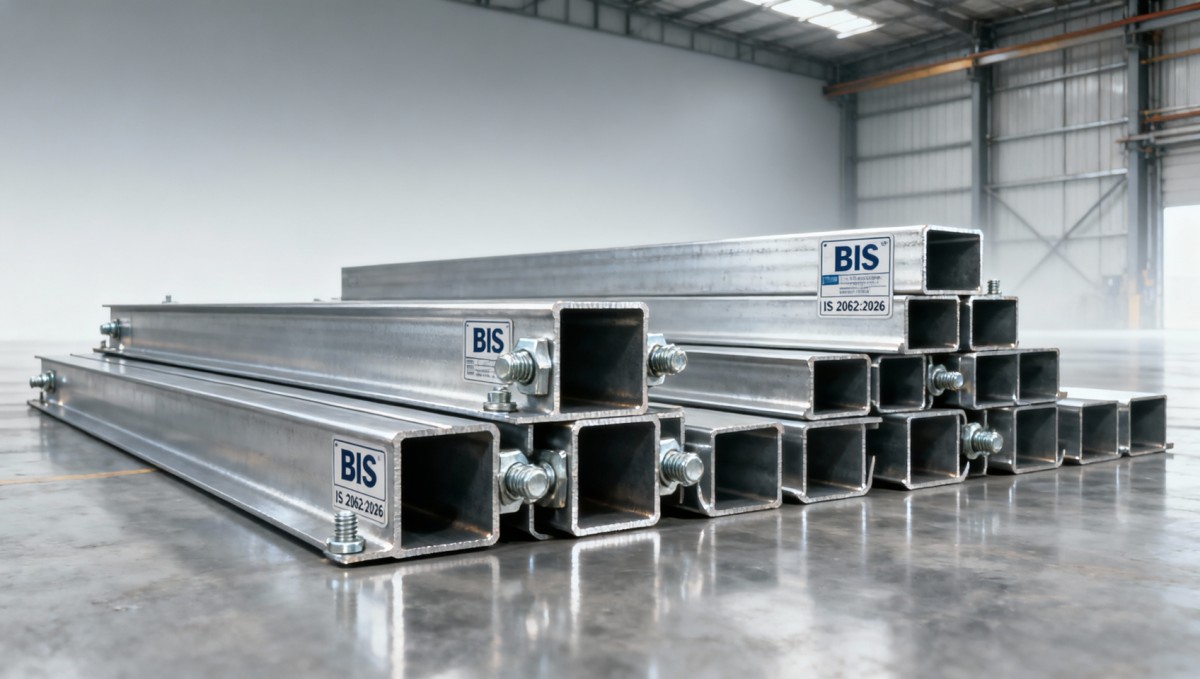
On May 11, 2026, the Bureau of Indian Standards (BIS) enforced the revised IS 2062:2026 standard for hot-rolled carbon structural steel, introducing mandatory hydrogen-induced cracking (HIC) testing for construction hardware such as bolts, angle bars, and channel sections. This change directly affects Chinese exporters of steel profiles and building materials supplying to India’s infrastructure sector — particularly those engaged in cross-border trade, procurement, and supply chain coordination.
Event Overview
The Bureau of Indian Standards (BIS) implemented IS 2062:2026 on May 11, 2026. The updated standard mandates hydrogen-induced cracking (HIC) testing for structural steel products used in construction hardware, including bolts, angle steel, and channel steel. Third-party testing capacity is reported to be fully booked through mid-June 2026, resulting in an average delivery delay of 2–3 weeks for certified shipments from Chinese manufacturers. Exporters confirm that Indian general contractors are now prioritizing suppliers with pre-verified BIS-HIC compliance.
Impact on Specific Industry Segments
Direct Exporters (Steel Profiles & Building Materials)
Chinese firms exporting structural steel products to India face extended lead times due to mandatory HIC testing and constrained third-party lab capacity. The requirement applies specifically to construction-grade hardware — not all steel categories — meaning product-level classification and documentation must be verified prior to shipment.
Procurement & Sourcing Teams (Indian Infrastructure Contractors)
General contractors managing public or private infrastructure projects in India report adjustments to procurement timelines and inventory planning. With certification delays affecting material availability, some buyers are shifting toward early purchase commitments and requesting pre-certification evidence from suppliers — even before formal order placement.
Steel Mill Producers (China-based, BIS-registered)
Manufacturers holding BIS licenses must now revalidate test protocols and coordinate with accredited labs for HIC assessments. Since IS 2062:2026 does not grandfather existing certifications, previously compliant batches may require retesting if supplied after May 11, 2026 — impacting production scheduling and stock release decisions.
Supply Chain & Logistics Service Providers
Firms offering export documentation support, customs clearance, or lab coordination services are seeing increased demand for HIC-related verification assistance. Delays in test reporting affect shipping windows, container booking, and inland transport planning — especially where just-in-time delivery models were previously applied.
What Relevant Enterprises Should Monitor and Act On
Track official BIS clarifications on scope and transition provisions
While IS 2062:2026 entered force on May 11, 2026, BIS has not yet published detailed guidance on exemptions, transitional arrangements, or acceptable test methods beyond the standard’s clause references. Exporters should monitor BIS circulars and authorized lab announcements for updates.
Prioritize verification for high-volume construction hardware SKUs
Not all steel products under IS 2062 fall under the new HIC mandate — only those designated for structural use in buildings and civil works. Companies should cross-check their exported SKUs against the standard’s Annex A and product classification tables before initiating testing.
Distinguish between regulatory signal and operational readiness
Although HIC testing is now mandatory, enforcement at Indian ports appears focused initially on documentation completeness rather than physical retesting upon arrival. Still, importers are advised to treat lab reports as non-negotiable prerequisites for customs clearance — not optional add-ons.
Adjust procurement and communication timelines proactively
Given current lab backlogs extending into mid-June 2026, companies should revise internal lead time buffers by +15–21 days for new orders. Concurrently, technical sales teams should update customer-facing documentation (e.g., spec sheets, certificates of conformity) to reflect HIC compliance status — avoiding assumptions about automatic carryover from prior versions.
Editorial Perspective / Industry Observation
Observably, this update signals a tightening of technical compliance expectations within India’s construction materials import regime — not merely a procedural revision. Analysis shows the HIC requirement targets long-term durability concerns in humid, coastal, or chemically aggressive environments common across Indian infrastructure sites. From an industry perspective, it reflects a broader trend where downstream project risk mitigation is increasingly being shifted upstream to material suppliers via standardized testing mandates. Current implementation remains in its early enforcement phase; therefore, the full impact on pricing, market access, and certification fragmentation will depend on how consistently labs apply test parameters and how rigorously customs authorities verify documentation. It is more appropriately understood as an evolving compliance checkpoint — not yet a systemic barrier, but one requiring structured response.
In summary, IS 2062:2026’s HIC mandate represents a targeted technical adjustment with cascading implications across steel export operations, procurement planning, and supply chain execution — particularly for China-to-India construction materials trade. Its significance lies less in novelty and more in enforceability: unlike earlier advisory clauses, this requirement carries immediate operational consequences for shipment timing and documentation integrity. For now, it is best interpreted as a procedural escalation demanding disciplined alignment between manufacturing, testing, and logistics functions — not a fundamental shift in market access conditions.
Source: Official BIS notification dated May 11, 2026; verified feedback from Chinese steel exporters and Indian infrastructure contractors (as of May 2026).
Note: Ongoing observation is recommended regarding BIS-issued FAQs, lab accreditation updates, and port-level enforcement patterns.
 How an industrial trade intelligence dashboard can identify new supplier marketsDiscover how an industrial trade intelligence dashboard helps identify new supplier markets by comparing capacity, landed cost, logistics resilience, and compliance risk.
 Which global market entry barriers should exporters assess first?Global market entry barriers exporters should assess first: tariffs, compliance, buyer qualification, logistics, and payment risk. Build a practical strategy for confident market entry.
 How trade data aggregation analytics can reveal emerging supplier marketsTrade data aggregation analytics reveals emerging supplier markets by connecting trade flows, capacity signals, logistics, and compliance insights for smarter sourcing decisions.
 When an export market analysis platform can validate demand in a new marketExport market analysis platform insights help validate new-market demand through buyer fit, regulations, logistics, competition, and profitable entry conditions.
 What is driving the beauty and personal care market in the USA?Beauty and personal care in USA is driven by targeted solutions, selective premiumization, digital discovery, clean-label trust, diverse needs, and compliance. Explore key growth opportunities.
 How trade flow monitoring reports reveal changing regional demandTrade flow monitoring reports reveal changing regional demand through import volumes, sourcing shifts, product mix, logistics signals, and regulatory trends. Explore actionable market insights.
 How international market intelligence for investors reduces market-entry riskInternational market intelligence for investors reduces market-entry risk by validating demand, regulations, logistics, and competition before capital is committed.
 How international sourcing intelligence helps identify supplier risk earlyInternational sourcing intelligence helps businesses spot supplier risks early, protect supply continuity, and make smarter global procurement decisions.
 How trade data aggregation analytics reveals emerging supplier marketsTrade data aggregation analytics reveals emerging supplier markets through export trends, input flows, logistics, and regulatory signals. Discover smarter sourcing insights.
 What industrial cluster monitoring in Vietnam reveals about site riskIndustrial cluster monitoring Vietnam reveals hidden site risks across labor, utilities, logistics, compliance, and supplier dependencies. Make smarter sourcing and expansion decisions.
 Food Technology Trends Reshaping Shelf Life, Safety, and Product InnovationFood technology is reshaping shelf life, safety, and innovation. Discover the trends helping food businesses cut risk, improve compliance, and unlock stronger global market growth.
 How electronics manufacturing services are changing with low-volume demandElectronics manufacturing services are evolving fast with low-volume demand. Learn how agile EMS partners improve flexibility, compliance, sourcing resilience, and speed to market.
 How Can Buyers Reduce Procurement Risks for Electronic Components?How to reduce procurement risks for electronic components: learn how buyers assess traceability, lead times, compliance, and supplier types to avoid costly sourcing mistakes.
 What Sourcing Intelligence India Reveals About Supplier Risk and Cost ShiftsSourcing intelligence India reveals hidden supplier risk, compliance gaps, logistics pressure, and real cost shifts—helping buyers compare vendors smarter and source with more confidence.
 Fashion Trends 2026: Which Materials, Colors, and Silhouettes Are Gaining Ground?Fashion trends 2026 spotlight tactile fabrics, mineral colors, and controlled volume. Explore the materials, shades, and silhouettes shaping smarter, more wearable style.
 Smart Device Market Outlook: Key Growth Drivers, Segments, and Business OpportunitiesSmart device market trends are shifting toward system value, industrial demand, and resilient supply chains. Explore key growth drivers, high-potential segments, and business opportunities.
 How Global Trade Intelligence Services Help B2B Firms Evaluate Markets and SuppliersGlobal trade intelligence services help B2B firms compare suppliers, assess market potential, and uncover compliance, logistics, and pricing risks before costly decisions are made.
 Manufacturing Sector Updates for Investors: What Signals Matter Most in 2025?Manufacturing sector updates for investors in 2025: track orders, margins, supply chains, regulation, and exports to spot resilient manufacturers and smarter investment signals.
 How Energy Market Intelligence Helps Businesses Track Price Risks and Demand ShiftsEnergy market intelligence helps businesses spot price risks, demand shifts, and supply pressure early—improving procurement, resilience, and faster strategic decisions.
 Precision Hardware Tools Market: Key Demand Drivers, Segments, and Growth OutlookPrecision hardware tools market trends are reshaping sourcing, compliance, and automation. Explore key demand drivers, segment shifts, regional supply patterns, and growth opportunities.
 How to Use Customs Import Data to Find Buyers, Track Competitors, and Spot Demand?Customs import data helps you find real buyers, track competitors, and spot demand shifts early. Learn practical ways to turn trade records into smarter global business decisions.





















Global Trade Insights & Industry
Our mission is to empower global exporters and importers with data-driven insights that foster strategic growth.
Search News
Popular Tags
Industry Overview
The global commercial kitchen equipment market is projected to reach $112 billion by 2027. Driven by urbanization, the rise of e-commerce food delivery, and strict hygiene regulations.