

New GS-EN IEC 62493:2026 Mandates EMF Retesting for Smart Lighting Exports
On May 11, 2026, TÜV Rheinland Germany issued the updated mandatory GS certification standard GS-EN IEC 62493:2026, significantly tightening low-frequency electromagnetic field (EMF) emission limits for smart home and energy-saving lighting products—including LED drivers, smart bulbs, and dimming modules. The revision triggers mandatory per-batch EMF test reporting and renders all legacy GS certificates invalid as of November 2026, directly impacting exporters targeting the EU market.
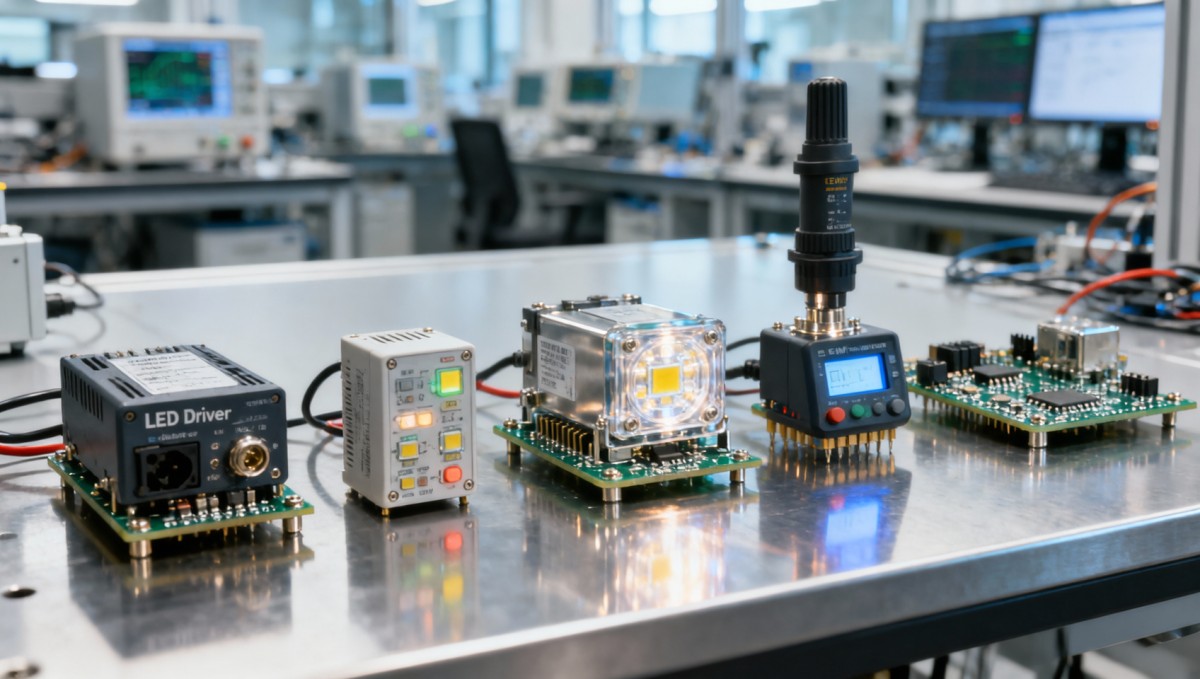
Event Overview
TÜV Rheinland Germany published GS-EN IEC 62493:2026 on May 11, 2026. This revision upgrades the GS safety certification requirement for electromagnetic field (EMF) exposure assessment under the GS Mark scheme. It explicitly applies to smart lighting and energy-efficient lighting devices, including LED drivers, smart bulbs, and dimming modules. The standard mandates full-model, per-production-batch EMF test reports—no sampling or family-based waivers are permitted. All previously issued GS certificates referencing earlier versions of EN IEC 62493 will expire on November 1, 2026, with no grace period for continued sales of non-compliant stock.
Industries Affected
Direct Trading Enterprises: Exporters placing smart lighting products into the EU under the GS Mark must now requalify every SKU and maintain batch-level EMF documentation. This increases lead time, certification cost, and administrative burden—especially for SMEs managing hundreds of SKUs across multiple distributors. Failure to submit valid post-2026 EMF reports risks customs rejection or post-market withdrawal.
Raw Material Procurement Enterprises: Suppliers of critical components—such as integrated ICs for dimming control, magnetic cores for inductors, or EMI-filtering capacitors—face heightened scrutiny. Buyers increasingly demand pre-validated EMF contribution data from component datasheets or third-party test summaries. Procurement teams must now assess not only electrical specs but also sub-system-level EMF behavior, affecting sourcing timelines and supplier qualification protocols.
Manufacturing Enterprises: OEM/ODM factories producing smart lighting must revise production line testing procedures to embed EMF verification at final assembly stage—not just during type approval. This requires calibrated low-frequency EMF probes, trained technicians, and traceable batch logging systems. Factories lacking in-house EMF labs face extended reliance on external test labs, potentially creating bottlenecks ahead of the November deadline.
Supply Chain Service Providers: Certification consultants, logistics firms offering compliance documentation support, and lab coordination platforms must update their service offerings to include batch-specific EMF report generation, GS certificate migration tracking, and EU Notified Body liaison for transitional submissions. Their value proposition now hinges on speed, audit-readiness, and cross-border documentation interoperability—not just initial certification support.
Key Focus Areas and Recommended Actions
Conduct immediate SKU-level impact mapping
Identify all GS-certified smart lighting models currently in production or distribution. Prioritize those with high EU shipment volume and short remaining certificate validity. Cross-reference model numbers against TÜV Rheinland’s official transition list (if published) or initiate direct inquiry with the issuing body.
Secure access to accredited low-frequency EMF testing capacity
Confirm availability at certified labs (e.g., TÜV Rheinland, SGS, Bureau Veritas) for frequencies ≤ 30 kHz, per Annex A of GS-EN IEC 62493:2026. Note that standard EMC labs may lack required probe calibration or measurement setup—verify scope of accreditation before scheduling.
Revise technical documentation and internal quality records
Update product manuals, DoC templates, and factory QA checklists to reflect mandatory batch-level EMF reporting. Integrate EMF test result fields into ERP or PLM systems to ensure traceability from production lot to GS certificate submission.
Engage early with EU importers and distributors
Proactively share revised GS timelines and expected documentation changes. Clarify responsibility for retaining batch reports—some EU distributors now require digital access to real-time EMF logs as part of their own due diligence under the EU Product Compliance Regulation (EU) 2023/988.
Editorial Perspective / Industry Observation
Observably, this revision signals a broader regulatory shift: EMF is transitioning from a secondary safety consideration to a primary conformity gate for digitally controllable consumer electronics. Unlike prior iterations—which focused on occupational exposure—the 2026 version adopts stricter public-exposure thresholds aligned with ICNIRP 2020 guidelines. Analysis shows that the tightened limits particularly affect phase-cut dimming circuits and wireless-enabled drivers operating near 50/60 Hz harmonics. From an industry perspective, this is less about ‘new risk’ and more about formalized accountability: manufacturers can no longer rely on design assumptions or generic test waivers. Current more critical concern is not technical feasibility—but scalability of batch-level verification across fragmented global supply chains.
Conclusion
The GS-EN IEC 62493:2026 update represents a structural recalibration of compliance expectations for smart lighting exporters—not merely an incremental revision. Its enforcement timeline, combined with the granularity of batch-level requirements, underscores a maturing regulatory environment where electromagnetic hygiene is treated with the same rigor as electrical safety or RoHS compliance. A rational interpretation is that this standard sets a precedent likely to influence upcoming revisions of CE/RED and even IEC 62368-1 annexes—making proactive adaptation strategically preferable to reactive compliance.
Source Attribution
Official announcement: TÜV Rheinland Germany, GS-EN IEC 62493:2026 Transition Notice, published May 11, 2026 (Reference No. GS-INFO-2026-05-EN). Full standard text available via TÜV Rheinland’s GS Portal (access restricted to certified clients). Ongoing updates—including recognized test labs, accepted measurement methodologies, and potential extensions for small-volume producers—are pending and warrant continuous monitoring through official TÜV Rheinland communications and EU NANDO database entries under 2008/68/EC framework.
 How an industrial trade intelligence dashboard can identify new supplier marketsDiscover how an industrial trade intelligence dashboard helps identify new supplier markets by comparing capacity, landed cost, logistics resilience, and compliance risk.
 Which global market entry barriers should exporters assess first?Global market entry barriers exporters should assess first: tariffs, compliance, buyer qualification, logistics, and payment risk. Build a practical strategy for confident market entry.
 How trade data aggregation analytics can reveal emerging supplier marketsTrade data aggregation analytics reveals emerging supplier markets by connecting trade flows, capacity signals, logistics, and compliance insights for smarter sourcing decisions.
 When an export market analysis platform can validate demand in a new marketExport market analysis platform insights help validate new-market demand through buyer fit, regulations, logistics, competition, and profitable entry conditions.
 What is driving the beauty and personal care market in the USA?Beauty and personal care in USA is driven by targeted solutions, selective premiumization, digital discovery, clean-label trust, diverse needs, and compliance. Explore key growth opportunities.
 How trade flow monitoring reports reveal changing regional demandTrade flow monitoring reports reveal changing regional demand through import volumes, sourcing shifts, product mix, logistics signals, and regulatory trends. Explore actionable market insights.
 How international market intelligence for investors reduces market-entry riskInternational market intelligence for investors reduces market-entry risk by validating demand, regulations, logistics, and competition before capital is committed.
 How international sourcing intelligence helps identify supplier risk earlyInternational sourcing intelligence helps businesses spot supplier risks early, protect supply continuity, and make smarter global procurement decisions.
 How trade data aggregation analytics reveals emerging supplier marketsTrade data aggregation analytics reveals emerging supplier markets through export trends, input flows, logistics, and regulatory signals. Discover smarter sourcing insights.
 What industrial cluster monitoring in Vietnam reveals about site riskIndustrial cluster monitoring Vietnam reveals hidden site risks across labor, utilities, logistics, compliance, and supplier dependencies. Make smarter sourcing and expansion decisions.
 Food Technology Trends Reshaping Shelf Life, Safety, and Product InnovationFood technology is reshaping shelf life, safety, and innovation. Discover the trends helping food businesses cut risk, improve compliance, and unlock stronger global market growth.
 How electronics manufacturing services are changing with low-volume demandElectronics manufacturing services are evolving fast with low-volume demand. Learn how agile EMS partners improve flexibility, compliance, sourcing resilience, and speed to market.
 How Can Buyers Reduce Procurement Risks for Electronic Components?How to reduce procurement risks for electronic components: learn how buyers assess traceability, lead times, compliance, and supplier types to avoid costly sourcing mistakes.
 What Sourcing Intelligence India Reveals About Supplier Risk and Cost ShiftsSourcing intelligence India reveals hidden supplier risk, compliance gaps, logistics pressure, and real cost shifts—helping buyers compare vendors smarter and source with more confidence.
 Fashion Trends 2026: Which Materials, Colors, and Silhouettes Are Gaining Ground?Fashion trends 2026 spotlight tactile fabrics, mineral colors, and controlled volume. Explore the materials, shades, and silhouettes shaping smarter, more wearable style.
 Smart Device Market Outlook: Key Growth Drivers, Segments, and Business OpportunitiesSmart device market trends are shifting toward system value, industrial demand, and resilient supply chains. Explore key growth drivers, high-potential segments, and business opportunities.
 How Global Trade Intelligence Services Help B2B Firms Evaluate Markets and SuppliersGlobal trade intelligence services help B2B firms compare suppliers, assess market potential, and uncover compliance, logistics, and pricing risks before costly decisions are made.
 Manufacturing Sector Updates for Investors: What Signals Matter Most in 2025?Manufacturing sector updates for investors in 2025: track orders, margins, supply chains, regulation, and exports to spot resilient manufacturers and smarter investment signals.
 How Energy Market Intelligence Helps Businesses Track Price Risks and Demand ShiftsEnergy market intelligence helps businesses spot price risks, demand shifts, and supply pressure early—improving procurement, resilience, and faster strategic decisions.
 Precision Hardware Tools Market: Key Demand Drivers, Segments, and Growth OutlookPrecision hardware tools market trends are reshaping sourcing, compliance, and automation. Explore key demand drivers, segment shifts, regional supply patterns, and growth opportunities.
 How to Use Customs Import Data to Find Buyers, Track Competitors, and Spot Demand?Customs import data helps you find real buyers, track competitors, and spot demand shifts early. Learn practical ways to turn trade records into smarter global business decisions.





















Global Trade Insights & Industry
Our mission is to empower global exporters and importers with data-driven insights that foster strategic growth.
Search News
Popular Tags
Industry Overview
The global commercial kitchen equipment market is projected to reach $112 billion by 2027. Driven by urbanization, the rise of e-commerce food delivery, and strict hygiene regulations.