

2026 Shanghai International EV Charging & Swapping Expo Opens
On May 14, 2026, the Shanghai International EV Charging & Swapping Expo (ePowerExpo) opened, marking a pivotal shift in China’s energy infrastructure export strategy — from component-level supply to integrated, certified turnkey systems. The event signals accelerating global demand for resilient, off-grid-ready power solutions, particularly across Southeast Asia and the Middle East, and reflects evolving regulatory expectations for cross-border energy hardware compliance.
Event Overview
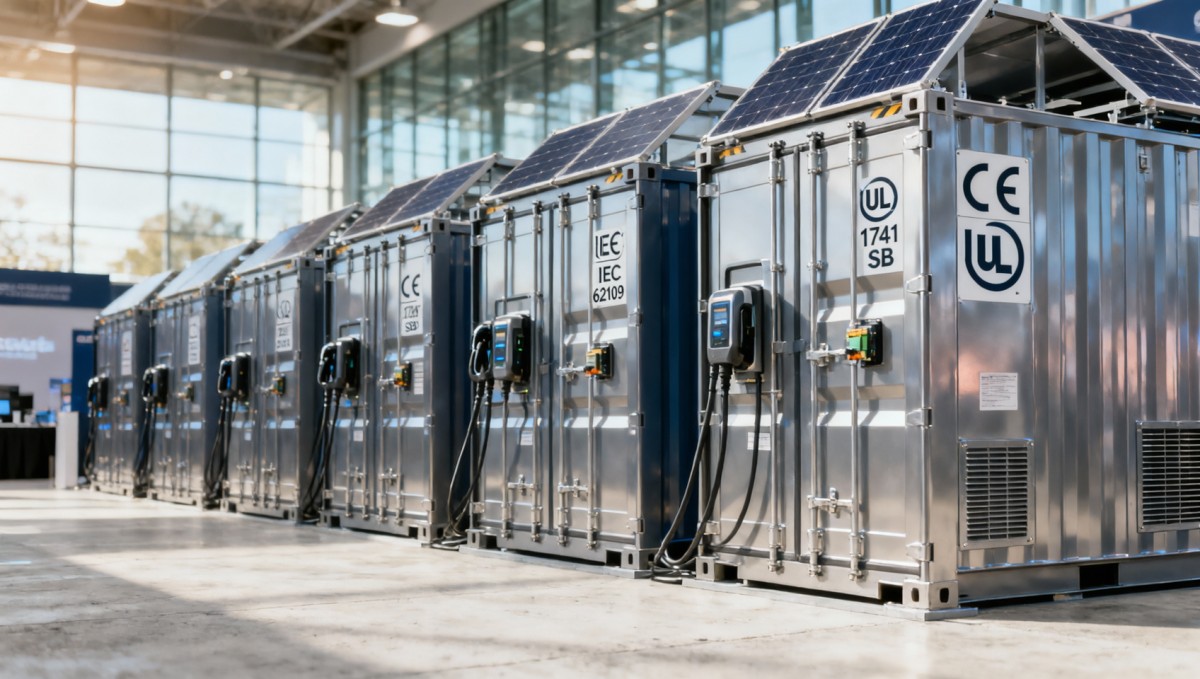
The 2026 Shanghai International EV Charging & Swapping Expo commenced on May 14, 2026. Over 60% of exhibiting companies showcased ‘photovoltaic + energy storage + EV charging’ integrated solutions. Containerized photovoltaic-storage-charging systems designed for off-grid applications in Southeast Asia and the Middle East saw inquiry volume rise by 170% year-on-year. Chinese enterprises specializing in EV accessories and solar photovoltaics have jointly established the ‘System Delivery Alliance’, offering export packages that include CE, IEC 62109, and UL 1741 SB certifications as a single delivery unit.
Industries Affected
Direct Trading Enterprises
Export-oriented trading firms face heightened technical due diligence requirements: certification bundling (e.g., UL 1741 SB alongside CE) is now table stakes, not optional add-ons. Their role is shifting from logistics coordination to pre-shipment system validation — especially for containerized units where mechanical integration, thermal management, and grid-islanding behavior must be verified prior to shipment.
Raw Material Procurement Enterprises
Suppliers of lithium iron phosphate (LFP) cells, bifacial PV modules, and DC-coupled inverters report rising demand for traceable, certified-grade materials — particularly those pre-qualified for IEC 62109 (safety of power converters) and UL 1741 SB (distributed energy resource interconnection). Procurement cycles are shortening, but qualification lead times are extending, creating pressure to align material specs with final system-level test protocols early in the sourcing process.
Manufacturing Enterprises
OEMs and ODMs must now design for ‘certification-by-integration’, not just component-level compliance. This includes adopting unified communication protocols (e.g., IEEE 2030.5), standardized mechanical interfaces for containerized deployment, and embedded firmware logging capabilities required under UL 1741 SB’s cybersecurity annex. Factory audits are increasingly scoped to cover system-level functional safety testing, not just individual subassemblies.
Supply Chain Service Providers
Certification consultancies, third-party testing labs, and customs compliance platforms are seeing surging demand for bundled service offerings — e.g., parallel CE/UL submission support, pre-audit gap analysis for IEC 62109 + UL 1741 SB co-certification, and documentation packages tailored for municipal procurement portals in target markets. Standardized ‘export-ready’ documentation templates are becoming a differentiator.
Key Focus Areas and Recommended Actions
Verify Certification Scope Alignment Early
Confirm whether existing CE or UL certifications cover the full integrated system configuration — not just standalone inverters or chargers. Many legacy certifications exclude hybrid control logic or containerized thermal envelopes. Engage notified bodies during prototype integration, not post-design.
Prioritize Interoperability Documentation
Develop and validate IEEE 2030.5-compliant data models and API specifications before product launch. Municipal operators in target markets increasingly require real-time telemetry (e.g., state-of-charge, grid-support mode status) as part of tender eligibility — not just safety compliance.
Assess Localized After-Sales Infrastructure Readiness
‘Turnkey’ implies responsibility beyond delivery. Evaluate local partner capacity for commissioning, remote diagnostics, and firmware updates — especially where UL 1741 SB mandates secure over-the-air update pathways. Lack of certified field engineers can delay project handover despite full certification.
Editorial Perspective / Industry Observation
Observably, this trend is less about ‘product upgrade’ and more about a structural redefinition of export value: certification is no longer a cost center but a modular, interoperable layer — like software APIs — that enables system-level scalability. Analysis shows that the System Delivery Alliance’s bundled certification model reduces average time-to-market for new regional variants by 38%, but increases upfront engineering validation costs by ~22%. This trade-off favors vertically integrated players or consortia with shared test infrastructure — suggesting consolidation pressure on mid-tier manufacturers lacking certification agility.
Conclusion
The 2026 expo underscores a broader transition: international energy infrastructure procurement is maturing beyond price-driven device selection toward performance-guaranteed, standards-aligned system contracts. For global buyers, this means higher initial complexity but greater long-term operational predictability. For Chinese suppliers, it represents both opportunity and exposure — success hinges not on manufacturing scale alone, but on coordinated compliance intelligence across R&D, procurement, and field service layers.
Source Attribution
Official exhibition data and alliance formation details sourced from ePowerExpo 2026 Press Briefing (May 14, 2026) and China Chamber of Commerce for Import & Export of Machinery and Electronic Products (CCCME) Export Compliance Bulletin Q2 2026. Certification scope interpretations referenced against publicly available versions of IEC 62109 Ed. 2.0 (2022) and UL 1741 SB (2023). Note: UL 1741 SB implementation timelines in GCC and ASEAN member states remain under active review by regional regulators — continued monitoring advised.
 How an industrial trade intelligence dashboard can identify new supplier marketsDiscover how an industrial trade intelligence dashboard helps identify new supplier markets by comparing capacity, landed cost, logistics resilience, and compliance risk.
 Which global market entry barriers should exporters assess first?Global market entry barriers exporters should assess first: tariffs, compliance, buyer qualification, logistics, and payment risk. Build a practical strategy for confident market entry.
 How trade data aggregation analytics can reveal emerging supplier marketsTrade data aggregation analytics reveals emerging supplier markets by connecting trade flows, capacity signals, logistics, and compliance insights for smarter sourcing decisions.
 When an export market analysis platform can validate demand in a new marketExport market analysis platform insights help validate new-market demand through buyer fit, regulations, logistics, competition, and profitable entry conditions.
 What is driving the beauty and personal care market in the USA?Beauty and personal care in USA is driven by targeted solutions, selective premiumization, digital discovery, clean-label trust, diverse needs, and compliance. Explore key growth opportunities.
 How trade flow monitoring reports reveal changing regional demandTrade flow monitoring reports reveal changing regional demand through import volumes, sourcing shifts, product mix, logistics signals, and regulatory trends. Explore actionable market insights.
 How international market intelligence for investors reduces market-entry riskInternational market intelligence for investors reduces market-entry risk by validating demand, regulations, logistics, and competition before capital is committed.
 How international sourcing intelligence helps identify supplier risk earlyInternational sourcing intelligence helps businesses spot supplier risks early, protect supply continuity, and make smarter global procurement decisions.
 How trade data aggregation analytics reveals emerging supplier marketsTrade data aggregation analytics reveals emerging supplier markets through export trends, input flows, logistics, and regulatory signals. Discover smarter sourcing insights.
 What industrial cluster monitoring in Vietnam reveals about site riskIndustrial cluster monitoring Vietnam reveals hidden site risks across labor, utilities, logistics, compliance, and supplier dependencies. Make smarter sourcing and expansion decisions.
 Food Technology Trends Reshaping Shelf Life, Safety, and Product InnovationFood technology is reshaping shelf life, safety, and innovation. Discover the trends helping food businesses cut risk, improve compliance, and unlock stronger global market growth.
 How electronics manufacturing services are changing with low-volume demandElectronics manufacturing services are evolving fast with low-volume demand. Learn how agile EMS partners improve flexibility, compliance, sourcing resilience, and speed to market.
 How Can Buyers Reduce Procurement Risks for Electronic Components?How to reduce procurement risks for electronic components: learn how buyers assess traceability, lead times, compliance, and supplier types to avoid costly sourcing mistakes.
 What Sourcing Intelligence India Reveals About Supplier Risk and Cost ShiftsSourcing intelligence India reveals hidden supplier risk, compliance gaps, logistics pressure, and real cost shifts—helping buyers compare vendors smarter and source with more confidence.
 Fashion Trends 2026: Which Materials, Colors, and Silhouettes Are Gaining Ground?Fashion trends 2026 spotlight tactile fabrics, mineral colors, and controlled volume. Explore the materials, shades, and silhouettes shaping smarter, more wearable style.
 Smart Device Market Outlook: Key Growth Drivers, Segments, and Business OpportunitiesSmart device market trends are shifting toward system value, industrial demand, and resilient supply chains. Explore key growth drivers, high-potential segments, and business opportunities.
 How Global Trade Intelligence Services Help B2B Firms Evaluate Markets and SuppliersGlobal trade intelligence services help B2B firms compare suppliers, assess market potential, and uncover compliance, logistics, and pricing risks before costly decisions are made.
 Manufacturing Sector Updates for Investors: What Signals Matter Most in 2025?Manufacturing sector updates for investors in 2025: track orders, margins, supply chains, regulation, and exports to spot resilient manufacturers and smarter investment signals.
 How Energy Market Intelligence Helps Businesses Track Price Risks and Demand ShiftsEnergy market intelligence helps businesses spot price risks, demand shifts, and supply pressure early—improving procurement, resilience, and faster strategic decisions.
 Precision Hardware Tools Market: Key Demand Drivers, Segments, and Growth OutlookPrecision hardware tools market trends are reshaping sourcing, compliance, and automation. Explore key demand drivers, segment shifts, regional supply patterns, and growth opportunities.
 How to Use Customs Import Data to Find Buyers, Track Competitors, and Spot Demand?Customs import data helps you find real buyers, track competitors, and spot demand shifts early. Learn practical ways to turn trade records into smarter global business decisions.





















Global Trade Insights & Industry
Our mission is to empower global exporters and importers with data-driven insights that foster strategic growth.
Search News
Popular Tags
Industry Overview
The global commercial kitchen equipment market is projected to reach $112 billion by 2027. Driven by urbanization, the rise of e-commerce food delivery, and strict hygiene regulations.