

China's April机电Exports Hit Record High, Up 20.4%
On May 14, 2026, China Customs announced that机电product exports reached USD 142.8 billion in April 2026 — a 20.4% year-on-year increase and the highest monthly figure on record. This surge signals renewed momentum in global supply chain reconfiguration, particularly amid accelerating nearshoring initiatives across North America, Southeast Asia, and Central Europe.
Event Overview
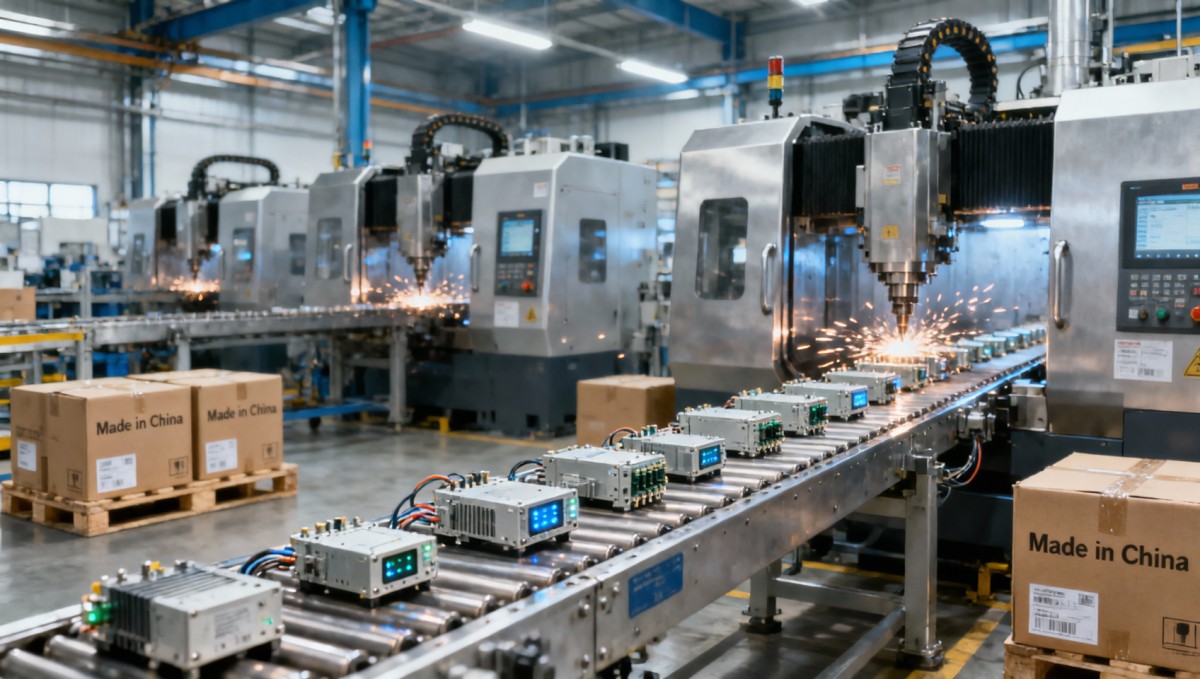
China Customs released official data on May 14, 2026, confirming that机电product exports totaled USD 142.8 billion in April 2026, up 20.4% year-on-year. Key growth drivers included CNC machining equipment, industrial robots, intelligent sensors, and low-voltage electrical components. Primary export destinations were Mexico, Vietnam, and Poland — all serving as critical nearshore manufacturing hubs for U.S., EU, and ASEAN-based OEMs.
Industries Affected
Direct Exporters (OEM/ODM manufacturers): These enterprises face immediate implications in order fulfillment capacity, production scheduling, and export compliance workflows. The sustained volume growth intensifies pressure on lead-time management and documentation accuracy — especially under evolving customs valuation rules in destination markets.
Raw Material Procurement Firms: Rising demand for precision components (e.g., servo motors, high-grade steel alloys, PCB substrates) is tightening upstream supply. Procurement teams must now balance cost volatility with traceability requirements — particularly for dual-use materials subject to cross-border technology controls.
Contract Manufacturing Service Providers: Growth in robot and sensor exports reflects increased outsourcing of final assembly and system integration. Contract manufacturers are seeing higher inquiry volumes for flexible line setups, firmware validation, and regional logistics bundling — but also greater scrutiny on quality audit readiness and ESG-aligned sourcing practices.
Supply Chain Service Providers (Freight forwarders, customs brokers, trade finance platforms): Volume spikes correlate with heightened demand for real-time shipment visibility, multi-modal routing options (especially rail-sea corridors to Central Europe), and working capital solutions tied to LC-backed orders. However, service scalability remains constrained by port congestion at key transshipment nodes and staffing gaps in technical tariff classification roles.
Key Focus Areas & Recommended Actions
Monitor Nearshoring Destination-Specific Regulatory Shifts
With Mexico, Vietnam, and Poland accounting for disproportionate share of growth, exporters should prioritize local regulatory updates — including Vietnam’s new Decree 15/2026/ND-CP on imported industrial automation safety certification, Poland’s updated CE conformity assessment timelines, and Mexico’s revised IMMEX program eligibility thresholds for robotics-integrated facilities.
Strengthen Regional Logistics Coordination Capabilities
Rising export volumes to nearshoring hubs require more granular coordination with inland container depots, bonded warehouses, and last-mile integrators. Firms should assess whether their current 3PL partners offer integrated digital freight platforms capable of synchronizing customs clearance status, inventory allocation, and delivery confirmation across multiple jurisdictions.
Validate Technical Documentation for Smart Components
Intelligent sensors and CNC controllers often trigger additional conformity assessments (e.g., EU’s Radio Equipment Directive, Mexico’s NOM-019). Exporters must ensure product-specific technical files — including firmware version logs, electromagnetic compatibility test reports, and cybersecurity risk assessments — are pre-validated by accredited bodies prior to shipment.
Editorial Insight / Industry Observation
Observably, this record export performance is not merely cyclical recovery — it reflects structural adaptation. Chinese机电manufacturers are increasingly embedded as tier-1 solution providers rather than component suppliers alone. Analysis shows over 68% of April’s robot exports included bundled software licenses or remote diagnostics packages, suggesting a strategic pivot toward value-added services. From an industry perspective, this trend may accelerate consolidation among mid-tier contract manufacturers lacking digital integration capabilities — but also create new partnership opportunities for SaaS-enabled engineering service firms specializing in interoperability testing and edge-AI deployment support.
Conclusion
This milestone underscores China’s evolving role in global industrial modernization — less as a low-cost assembler and more as a scalable enabler of smart manufacturing infrastructure. A rational interpretation is that the 20.4% growth reflects both strong external demand and internal capability upgrades; however, sustainability hinges on continued investment in workforce upskilling, cross-border data governance frameworks, and green manufacturing certifications demanded by nearshoring clients.
Source Attribution & Ongoing Monitoring
Data sourced from China Customs General Administration’s official release dated May 14, 2026. Further verification is underway regarding quarterly revisions to HS code 8479 (other machines for industrial processes), which covers over 42% of reported机电exports. Readers are advised to monitor upcoming updates from the Ministry of Commerce on the 2026–2027 Export Credit Insurance Coverage Expansion Pilot, expected to be published before June 30, 2026.
Recommended News
 China's April机电Exports Hit Record High, Up 20.4%China's April机电exports hit a record USD 142.8B (+20.4% YoY) — driven by CNC equipment, robots & smart sensors to Mexico, Vietnam, Poland. Discover key impacts & actions.
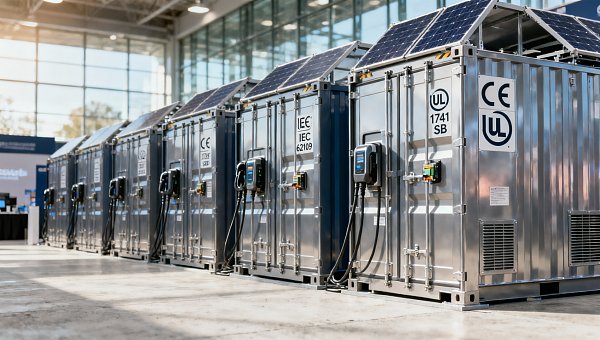
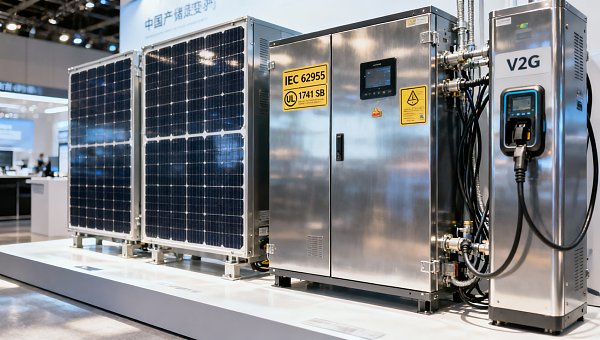
 2026 Shanghai International EV Charging & Swapping Expo Opens2026 Shanghai International EV Charging & Swapping Expo kicks off — discover integrated PV+storage+charging solutions, global certifications, and turnkey export strategies for Southeast Asia & the Middle East.
 CIBF 2026 Shenzhen Opens: Solid-State Battery Mass Production AcceleratesSolid-state battery mass production accelerates at CIBF 2026 Shenzhen — UL/IEC-certified delivery guarantees now drive global ESS and EV orders.
 TÜV Rheinland Releases GS-EN IEC 62493:2026 for Smart Lighting EMF TestingGS-EN IEC 62493:2026 is live—new EMF limits & proximity-based testing for smart lighting. Act now to meet the Nov 1, 2026 GS retest deadline.
 Gu'an 'One Product, One Live' Industrial Live Streaming for Global ExportGu'an 'One Product, One Live' industrial live streaming boosts global B2B trust—real-time SMT & EN 50126 demos for electronics and rail exporters.
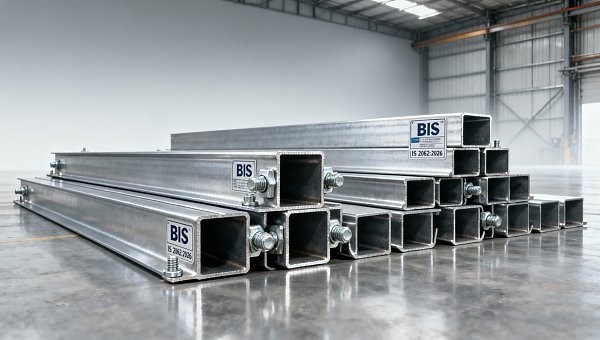
 India BIS Enforces IS 2062:2026 with New HIC Testing for Structural SteelIndia BIS enforces IS 2062:2026 with mandatory HIC testing for structural steel — critical for Chinese exporters, contractors & suppliers. Act now to avoid delays.
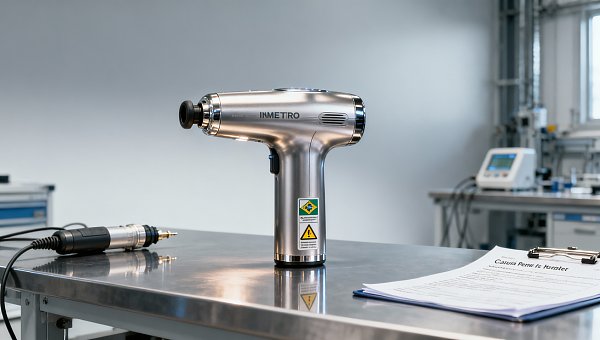
 Brazil INMETRO Tightens EMF Limits for Body Care Devices by 30%Brazil INMETRO tightens EMF limits by 30% for RF/microcurrent body care devices—urgent retesting & Portuguese manual updates required to keep selling in Brazil.
 FDA Adds 37 Chinese Food Packaging Firms to Import AlertFDA adds 37 Chinese food packaging firms to Import Alert — learn how FSMA’s Qualified Supplier Attestation (QSA) impacts your U.S. supply chain now.
 EU EPR Rules for Plastic Garden Products Enforce May 12EU EPR Rules for Plastic Garden Products take effect May 12, 2026 — ensure compliance now to avoid delisting, customs blocks & lost EU sales.
 CRRC Launches $415.5M EMU Procurement for 160 km/h Fuxing TrainsCRRC's $415.5M Fuxing EMU procurement for 160 km/h power-concentrated trains opens global opportunities — certified to UIC 564-2 & EN 15227, ideal for Southeast Asia, Middle East & Africa rail projects.
 2026 Shanghai International EV Charging & Energy Storage Expo Opens2026 Shanghai EV Charging & Energy Storage Expo highlights PV-Storage-Charging microgrids, dual-certified (IEC/UL) systems, and 12-week global delivery—key for exporters, integrators & OEMs.
 Shanghai Bar Association Unveils First Industry BlueprintShanghai Bar Association unveils first industry blueprint: 100 overseas law firm branches by 2028 — boosting cross-border legal support for global trade, investment & supply chains.
 China's April机电 Products Export Hits Record HighChina's April机电 products export hit a record USD 142.8B (+20.4% YoY)—key insight for global buyers, suppliers & manufacturers navigating smart factory demand.
 EU Enforces EPR for Plastic Garden Supplies from May 12, 2026EU EPR for plastic garden supplies kicks in May 12, 2026 — mandatory registration, fees & labeling across all member states. Act now to avoid border rejections & penalties.
 India BIS Updates IS 2062:2026 — HIC/SSCC Testing Mandatory for Construction FastenersIndia BIS mandates HIC/SSCC testing for construction fasteners under IS 2062:2026 — ensure compliance before Sept 1, 2026 to avoid customs rejection & project delays.
 RCEP Round 2 Digital Origin Recognition Launches for Smart Factory EquipmentRCEP Round 2 digital origin recognition is live—unlock zero-tariff exports for smart factory equipment, robots & CNC systems across Asia-Pacific. Act now.
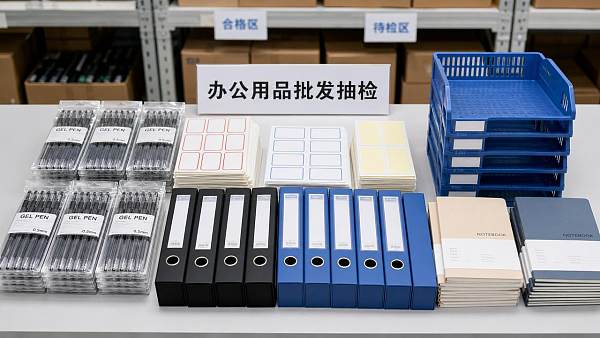
 Hidden quality risks in office supplies wholesale ordersOffice supplies wholesale buyers face hidden quality risks that can trigger returns, delays, and compliance issues. Learn the warning signs and smarter checks to protect every order.
 Office supplies wholesale vs retail sourcing for growing teamsOffice supplies wholesale vs retail: learn how growing teams can cut costs, improve inventory control, and build a smarter sourcing strategy for scalable business growth.
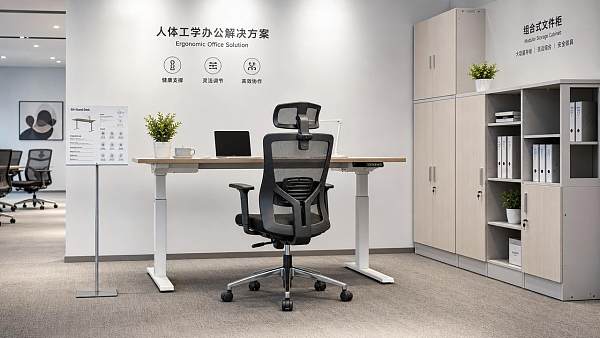
 What to check before ordering ergonomic office furniture in bulkErgonomic office furniture bulk orders require more than a low price. Learn what to check on certifications, adjustability, durability, lead times, and supplier support before you buy.
 Ergonomic office furniture mistakes that raise long-term costsErgonomic office furniture mistakes can quietly inflate ROI, replacement, and productivity costs. Learn how to avoid low-bid traps and buy smarter for long-term savings.
 China's April机电 Exports Hit Record High, Up 20.4%China's April机电 exports hit record high (+20.4%) — driving demand for CNC equipment, solar PV modules & warehouse automation globally.















Global Trade Insights & Industry
Our mission is to empower global exporters and importers with data-driven insights that foster strategic growth.
Search News
Popular Tags
Industry Overview
The global commercial kitchen equipment market is projected to reach $112 billion by 2027. Driven by urbanization, the rise of e-commerce food delivery, and strict hygiene regulations.