

Brazil INMETRO Tightens EMF Limits for Body Care Devices by 30%
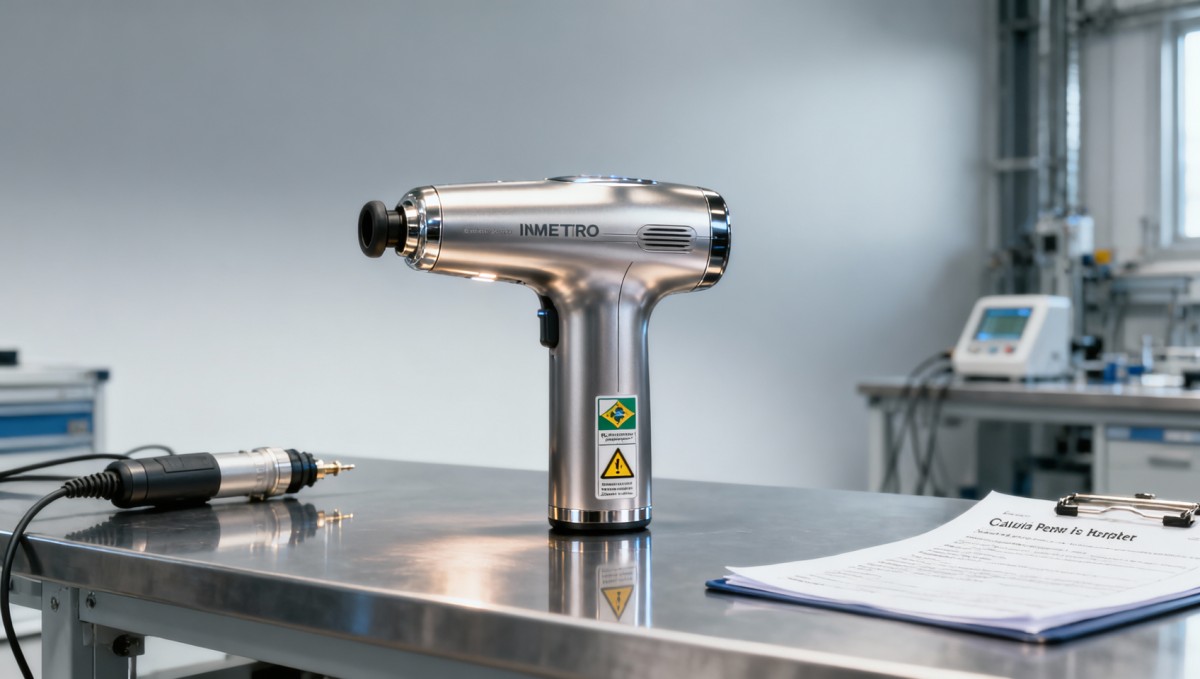
On May 13, 2026, Brazil’s National Institute of Metrology, Standardization and Industrial Quality (INMETRO) implemented Portaria No. 187/2026, reducing electromagnetic field (EMF) exposure limits by 30% for radiofrequency-based beauty devices—including microcurrent and RF skin-tightening instruments—and mandating updated Portuguese-language safety warnings and usage distance instructions in product manuals. This update directly affects manufacturers and exporters of beauty devices from China and other countries supplying the Brazilian market, requiring urgent retesting and documentation revision to maintain INMETRO certification and market access.
Event Overview
Effective May 13, 2026, INMETRO issued Portaria 187/2026, which lowers the permissible EMF exposure threshold for body care devices utilizing radiofrequency energy. The regulation applies to all new INMETRO certifications and to existing certified products undergoing annual renewal. It requires that user manuals include Portuguese-language safety icons and explicit guidance on minimum safe operating distance. Non-compliant products—those not retested and updated within 90 days—will lose authorization to bear the INMETRO conformity mark, resulting in distribution suspension across Brazilian retail and e-commerce channels.
Industries Affected by Segment
Direct Exporters (China-based Beauty Device Manufacturers)
These companies are directly responsible for product compliance with INMETRO requirements. Failure to complete EMF retesting and manual updates within the 90-day window will result in immediate loss of certification validity, halting shipments and triggering contractual penalties with Brazilian importers or distributors.
OEM/ODM Manufacturing Service Providers
Contract manufacturers producing beauty devices for global brands face revised technical specifications and testing obligations. Their clients may request immediate engineering changes to meet the new EMF thresholds—potentially affecting bill-of-materials, PCB layout, shielding design, and firmware control logic for output modulation.
Regulatory Compliance & Certification Service Providers
Third-party labs and certification consultants supporting Chinese exporters must now align testing protocols with the revised EMF limits under Portaria 187/2026. Demand is expected to rise for INMETRO-recognized EMF testing, particularly for RF and microcurrent device categories, increasing lead times and service costs.
Distribution & E-commerce Channel Operators (Brazil-based)
Importers, distributors, and online platforms selling beauty devices in Brazil must verify INMETRO certificate validity and confirm inclusion of compliant Portuguese-language manuals prior to inventory replenishment. Stockouts may occur if suppliers delay submission of updated documentation or test reports.
Key Points for Enterprises and Practitioners to Monitor and Act On
Confirm applicability to specific device types and emission profiles
Not all body care devices fall under the scope of Portaria 187/2026. Enterprises should verify whether their products generate RF fields above defined frequency and power thresholds—and whether they operate in close-proximity mode—as these determine mandatory retesting requirements.
Initiate EMF retesting with INMETRO-recognized laboratories without delay
Given the 90-day deadline from May 13, 2026, testing capacity at accredited labs is likely constrained. Companies should prioritize scheduling tests now, especially for high-volume SKUs, and confirm lab accreditation status for the updated limits before submission.
Update multilingual manuals with verified Portuguese safety content
The regulation explicitly mandates Portuguese-language safety icons and usage distance statements—not just translations. Enterprises must engage qualified technical translators and regulatory reviewers to ensure icon placement, warning hierarchy, and phrasing meet local consumer protection standards and avoid misinterpretation.
Review supply chain contracts for compliance liability clauses
Exporters and OEMs should audit existing agreements with Brazilian partners to clarify responsibilities for certification maintenance, cost allocation for retesting, and consequences of non-compliance—including potential liability for channel-level recalls or sales suspension.
Editorial Perspective / Industry Observation
Observably, this regulatory update signals a broader trend among emerging markets toward harmonizing EMF safety standards with IEC/IEEE frameworks—though applied with localized enforcement timelines and language requirements. Analysis shows that INMETRO’s 30% tightening is not an isolated adjustment but part of a multi-year effort to strengthen post-market surveillance of consumer electronics with biophysical interaction claims. From an industry perspective, it is better understood not as a one-off compliance hurdle, but as an indicator of accelerating regulatory scrutiny on aesthetic technology—particularly where devices make physiological effect claims without medical device classification. Current attention should focus less on whether the rule is ‘strict’ and more on how consistently it will be enforced during annual renewals and random market surveillance checks.
Conclusion
This update underscores that regulatory alignment for beauty technology is no longer limited to electrical safety or EMC—but extends to human exposure metrics previously associated mainly with telecom or industrial equipment. For exporters and service providers, it reinforces the need for proactive, product-specific regulatory roadmaps rather than reactive, certificate-by-certificate responses. Currently, this development is best interpreted as an operational inflection point: not yet a market-wide disruption, but a clear threshold beyond which continued access to Brazil depends on disciplined, timely, and technically precise compliance execution.
Information Source
Main source: Official INMETRO Portaria No. 187/2026, published and effective May 13, 2026.
Note: Ongoing monitoring is recommended for official INMETRO guidance documents clarifying test methodologies, transitional provisions, and enforcement interpretation—none have been publicly released as of the effective date.
 How an industrial trade intelligence dashboard can identify new supplier marketsDiscover how an industrial trade intelligence dashboard helps identify new supplier markets by comparing capacity, landed cost, logistics resilience, and compliance risk.
 Which global market entry barriers should exporters assess first?Global market entry barriers exporters should assess first: tariffs, compliance, buyer qualification, logistics, and payment risk. Build a practical strategy for confident market entry.
 How trade data aggregation analytics can reveal emerging supplier marketsTrade data aggregation analytics reveals emerging supplier markets by connecting trade flows, capacity signals, logistics, and compliance insights for smarter sourcing decisions.
 When an export market analysis platform can validate demand in a new marketExport market analysis platform insights help validate new-market demand through buyer fit, regulations, logistics, competition, and profitable entry conditions.
 What is driving the beauty and personal care market in the USA?Beauty and personal care in USA is driven by targeted solutions, selective premiumization, digital discovery, clean-label trust, diverse needs, and compliance. Explore key growth opportunities.
 How trade flow monitoring reports reveal changing regional demandTrade flow monitoring reports reveal changing regional demand through import volumes, sourcing shifts, product mix, logistics signals, and regulatory trends. Explore actionable market insights.
 How international market intelligence for investors reduces market-entry riskInternational market intelligence for investors reduces market-entry risk by validating demand, regulations, logistics, and competition before capital is committed.
 How international sourcing intelligence helps identify supplier risk earlyInternational sourcing intelligence helps businesses spot supplier risks early, protect supply continuity, and make smarter global procurement decisions.
 How trade data aggregation analytics reveals emerging supplier marketsTrade data aggregation analytics reveals emerging supplier markets through export trends, input flows, logistics, and regulatory signals. Discover smarter sourcing insights.
 What industrial cluster monitoring in Vietnam reveals about site riskIndustrial cluster monitoring Vietnam reveals hidden site risks across labor, utilities, logistics, compliance, and supplier dependencies. Make smarter sourcing and expansion decisions.
 Food Technology Trends Reshaping Shelf Life, Safety, and Product InnovationFood technology is reshaping shelf life, safety, and innovation. Discover the trends helping food businesses cut risk, improve compliance, and unlock stronger global market growth.
 How electronics manufacturing services are changing with low-volume demandElectronics manufacturing services are evolving fast with low-volume demand. Learn how agile EMS partners improve flexibility, compliance, sourcing resilience, and speed to market.
 How Can Buyers Reduce Procurement Risks for Electronic Components?How to reduce procurement risks for electronic components: learn how buyers assess traceability, lead times, compliance, and supplier types to avoid costly sourcing mistakes.
 What Sourcing Intelligence India Reveals About Supplier Risk and Cost ShiftsSourcing intelligence India reveals hidden supplier risk, compliance gaps, logistics pressure, and real cost shifts—helping buyers compare vendors smarter and source with more confidence.
 Fashion Trends 2026: Which Materials, Colors, and Silhouettes Are Gaining Ground?Fashion trends 2026 spotlight tactile fabrics, mineral colors, and controlled volume. Explore the materials, shades, and silhouettes shaping smarter, more wearable style.
 Smart Device Market Outlook: Key Growth Drivers, Segments, and Business OpportunitiesSmart device market trends are shifting toward system value, industrial demand, and resilient supply chains. Explore key growth drivers, high-potential segments, and business opportunities.
 How Global Trade Intelligence Services Help B2B Firms Evaluate Markets and SuppliersGlobal trade intelligence services help B2B firms compare suppliers, assess market potential, and uncover compliance, logistics, and pricing risks before costly decisions are made.
 Manufacturing Sector Updates for Investors: What Signals Matter Most in 2025?Manufacturing sector updates for investors in 2025: track orders, margins, supply chains, regulation, and exports to spot resilient manufacturers and smarter investment signals.
 How Energy Market Intelligence Helps Businesses Track Price Risks and Demand ShiftsEnergy market intelligence helps businesses spot price risks, demand shifts, and supply pressure early—improving procurement, resilience, and faster strategic decisions.
 Precision Hardware Tools Market: Key Demand Drivers, Segments, and Growth OutlookPrecision hardware tools market trends are reshaping sourcing, compliance, and automation. Explore key demand drivers, segment shifts, regional supply patterns, and growth opportunities.
 How to Use Customs Import Data to Find Buyers, Track Competitors, and Spot Demand?Customs import data helps you find real buyers, track competitors, and spot demand shifts early. Learn practical ways to turn trade records into smarter global business decisions.





















Global Trade Insights & Industry
Our mission is to empower global exporters and importers with data-driven insights that foster strategic growth.
Search News
Popular Tags
Industry Overview
The global commercial kitchen equipment market is projected to reach $112 billion by 2027. Driven by urbanization, the rise of e-commerce food delivery, and strict hygiene regulations.