

FDA Adds 37 Chinese Food Packaging Firms to Import Alert
On May 14, 2026, the U.S. Food and Drug Administration (FDA) updated Import Alert 99-08, adding 37 Chinese manufacturers of food contact materials and packaging to its automatic detention list. The action stems from noncompliance with the Federal Food, Drug, and Cosmetic Act as amended by the Food Safety Modernization Act (FSMA), specifically Section 117’s requirement for a Qualified Supplier Attestation (QSA). This development directly affects exporters, importers, brand owners, and logistics providers engaged in U.S.-bound food packaging supply chains.
Event Overview
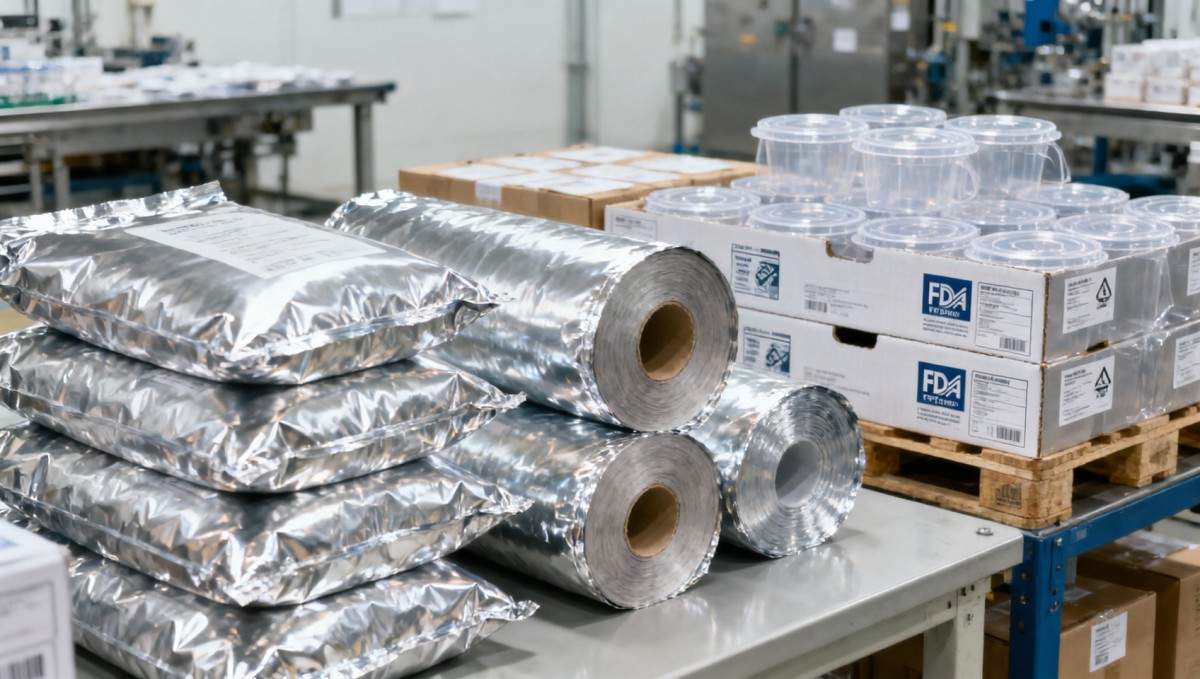
On May 14, 2026, the FDA issued an update to Import Alert 99-08 (“Detention Without Physical Examination of Food Contact Substances Due to Lack of FSMA Compliance”). Thirty-seven Chinese enterprises producing aluminum foil laminated bags, vacuum-metallized paper, and PET-based heat-seal lidding materials were added to the alert. The stated basis is failure to submit or maintain a valid Qualified Supplier Attestation under FSMA Rule 117. Under this rule, foreign suppliers must affirm their compliance with preventive controls for food contact substances — a declaration that must be submitted via the FDA’s Supplier Verification Program portal and kept current. No enforcement discretion or grace period applies to firms newly listed.
Industries Affected
Direct trading enterprises: U.S.-based importers and distributors sourcing finished food packaging from China now face heightened risk of shipment rejection. Automatic detention triggers mandatory reconditioning, re-export, or destruction unless the supplier provides verifiable QSA documentation within 10 working days — a timeline often incompatible with standard air/ocean transit windows. Financial exposure includes demurrage, storage fees, and contractual penalties with downstream food brand clients.
Raw material procurement enterprises: Companies procuring base substrates (e.g., PET film, metallized paper rolls, aluminum foil) from Chinese converters are indirectly exposed. While raw material producers themselves may not require QSA, their downstream converters — who transform those inputs into regulated food contact articles — do. Procurement teams must now map tier-two supplier compliance status, not just first-tier contracts, to avoid cascading liability.
Processing and manufacturing enterprises: Chinese packaging converters exporting to U.S. food brands must now treat QSA submission as a prerequisite for order acceptance — not a post-shipment administrative step. Failure to do so disrupts production scheduling, increases lead times, and undermines competitiveness against ASEAN or Mexican suppliers already integrated into FDA’s Voluntary Qualified Importer Program (VQIP).
Supply chain service enterprises: Third-party logistics providers, customs brokers, and regulatory consultants handling FDA entry filings must now validate QSA status before release authorization. A growing number of brokers report increased pre-clearance verification requests from U.S. Customs and Border Protection (CBP), citing alignment with FDA’s updated Import Alert guidance. Service-level agreements increasingly include clauses assigning liability for FSMA-related detention costs to the importer of record.
Key Focus Areas and Recommended Actions
Verify supplier eligibility on FDA’s public ‘Green List’
As of May 14, 2026, FDA maintains a publicly accessible list of firms with active, validated QSAs — distinct from the Import Alert database. Enterprises should cross-check all Chinese packaging suppliers against this list before placing orders or filing Prior Notice. Relying solely on supplier-provided attestations carries verification risk.
Update supplier qualification protocols beyond GMP audits
Traditional Good Manufacturing Practice (GMP) assessments no longer suffice. Procurement and quality departments must integrate FSMA-specific criteria — including documented hazard analysis for migration risks, preventive control monitoring records, and evidence of qualified individual oversight — into supplier onboarding and annual requalification.
Reassess dual-sourcing strategies with regulatory agility in mind
Given the operational lag between QSA submission and FDA validation (typically 5–8 business days), enterprises should prioritize suppliers with proven track records of timely FDA engagement. Firms with prior VQIP participation or previous successful QSA submissions demonstrate higher regulatory responsiveness — a factor now critical to supply continuity.
Editorial Perspective / Industry Observation
Analysis shows this action reflects a structural shift: FDA is moving from reactive import surveillance to proactive upstream gatekeeping. Unlike earlier FSMA implementation phases focused on U.S. domestic facilities, the 2026 update explicitly targets foreign suppliers of food contact articles — a category previously subject to lower scrutiny. Observably, the timing coincides with FDA’s new “One Health” alignment initiative, which treats packaging migration risks (e.g., aluminum leaching, photoinitiator residues) as integral to foodborne illness prevention. From an industry perspective, this is less about punitive enforcement and more about recalibrating global supply chain accountability — where packaging is no longer viewed as inert infrastructure but as an active component of the food safety system. Current data suggest over 60% of newly listed firms had zero prior FDA inspection history, indicating a compliance gap rooted in awareness rather than intent.
Conclusion
This update signals that regulatory due diligence for food packaging is now inseparable from commercial viability in the U.S. market. It does not represent a temporary compliance hurdle, but rather the institutionalization of FSMA’s preventive paradigm across global supply tiers. For stakeholders, the implication is clear: supplier verification must evolve from a transactional checklist to a continuous, data-anchored process — one that treats regulatory standing as a core performance metric alongside cost and lead time.
Source Attribution
U.S. FDA Import Alert 99-08 (updated May 14, 2026); FDA Guidance for Industry: Qualified Supplier Attestation for Food Contact Substances (Final Version, March 2025); FSMA Rule 21 CFR Part 117, Subpart G. Note: FDA has indicated it will publish quarterly updates to the QSA-validated supplier list; further revisions to Import Alert 99-08 are anticipated following the agency’s 2026 Global Supplier Verification Pilot results (expected August 2026).
 How an industrial trade intelligence dashboard can identify new supplier marketsDiscover how an industrial trade intelligence dashboard helps identify new supplier markets by comparing capacity, landed cost, logistics resilience, and compliance risk.
 Which global market entry barriers should exporters assess first?Global market entry barriers exporters should assess first: tariffs, compliance, buyer qualification, logistics, and payment risk. Build a practical strategy for confident market entry.
 How trade data aggregation analytics can reveal emerging supplier marketsTrade data aggregation analytics reveals emerging supplier markets by connecting trade flows, capacity signals, logistics, and compliance insights for smarter sourcing decisions.
 When an export market analysis platform can validate demand in a new marketExport market analysis platform insights help validate new-market demand through buyer fit, regulations, logistics, competition, and profitable entry conditions.
 What is driving the beauty and personal care market in the USA?Beauty and personal care in USA is driven by targeted solutions, selective premiumization, digital discovery, clean-label trust, diverse needs, and compliance. Explore key growth opportunities.
 How trade flow monitoring reports reveal changing regional demandTrade flow monitoring reports reveal changing regional demand through import volumes, sourcing shifts, product mix, logistics signals, and regulatory trends. Explore actionable market insights.
 How international market intelligence for investors reduces market-entry riskInternational market intelligence for investors reduces market-entry risk by validating demand, regulations, logistics, and competition before capital is committed.
 How international sourcing intelligence helps identify supplier risk earlyInternational sourcing intelligence helps businesses spot supplier risks early, protect supply continuity, and make smarter global procurement decisions.
 How trade data aggregation analytics reveals emerging supplier marketsTrade data aggregation analytics reveals emerging supplier markets through export trends, input flows, logistics, and regulatory signals. Discover smarter sourcing insights.
 What industrial cluster monitoring in Vietnam reveals about site riskIndustrial cluster monitoring Vietnam reveals hidden site risks across labor, utilities, logistics, compliance, and supplier dependencies. Make smarter sourcing and expansion decisions.
 Food Technology Trends Reshaping Shelf Life, Safety, and Product InnovationFood technology is reshaping shelf life, safety, and innovation. Discover the trends helping food businesses cut risk, improve compliance, and unlock stronger global market growth.
 How electronics manufacturing services are changing with low-volume demandElectronics manufacturing services are evolving fast with low-volume demand. Learn how agile EMS partners improve flexibility, compliance, sourcing resilience, and speed to market.
 How Can Buyers Reduce Procurement Risks for Electronic Components?How to reduce procurement risks for electronic components: learn how buyers assess traceability, lead times, compliance, and supplier types to avoid costly sourcing mistakes.
 What Sourcing Intelligence India Reveals About Supplier Risk and Cost ShiftsSourcing intelligence India reveals hidden supplier risk, compliance gaps, logistics pressure, and real cost shifts—helping buyers compare vendors smarter and source with more confidence.
 Fashion Trends 2026: Which Materials, Colors, and Silhouettes Are Gaining Ground?Fashion trends 2026 spotlight tactile fabrics, mineral colors, and controlled volume. Explore the materials, shades, and silhouettes shaping smarter, more wearable style.
 Smart Device Market Outlook: Key Growth Drivers, Segments, and Business OpportunitiesSmart device market trends are shifting toward system value, industrial demand, and resilient supply chains. Explore key growth drivers, high-potential segments, and business opportunities.
 How Global Trade Intelligence Services Help B2B Firms Evaluate Markets and SuppliersGlobal trade intelligence services help B2B firms compare suppliers, assess market potential, and uncover compliance, logistics, and pricing risks before costly decisions are made.
 Manufacturing Sector Updates for Investors: What Signals Matter Most in 2025?Manufacturing sector updates for investors in 2025: track orders, margins, supply chains, regulation, and exports to spot resilient manufacturers and smarter investment signals.
 How Energy Market Intelligence Helps Businesses Track Price Risks and Demand ShiftsEnergy market intelligence helps businesses spot price risks, demand shifts, and supply pressure early—improving procurement, resilience, and faster strategic decisions.
 Precision Hardware Tools Market: Key Demand Drivers, Segments, and Growth OutlookPrecision hardware tools market trends are reshaping sourcing, compliance, and automation. Explore key demand drivers, segment shifts, regional supply patterns, and growth opportunities.
 How to Use Customs Import Data to Find Buyers, Track Competitors, and Spot Demand?Customs import data helps you find real buyers, track competitors, and spot demand shifts early. Learn practical ways to turn trade records into smarter global business decisions.





















Global Trade Insights & Industry
Our mission is to empower global exporters and importers with data-driven insights that foster strategic growth.
Search News
Popular Tags
Industry Overview
The global commercial kitchen equipment market is projected to reach $112 billion by 2027. Driven by urbanization, the rise of e-commerce food delivery, and strict hygiene regulations.