

BYD Plans Acquisition of Idle European EV Factories
Multiple international financial media outlets confirmed on May 15, 2026, that BYD is in active negotiations with Stellantis and Renault to acquire underutilized automotive manufacturing facilities in Spain and Poland. While the exact timing of final agreements remains unconfirmed, this move signals a strategic shift toward localized production of EV accessories and car electronics in Europe — aiming to compress delivery lead times to 4–6 weeks and mitigate exposure to the EU’s 25% anti-subsidy duties.
Event Overview
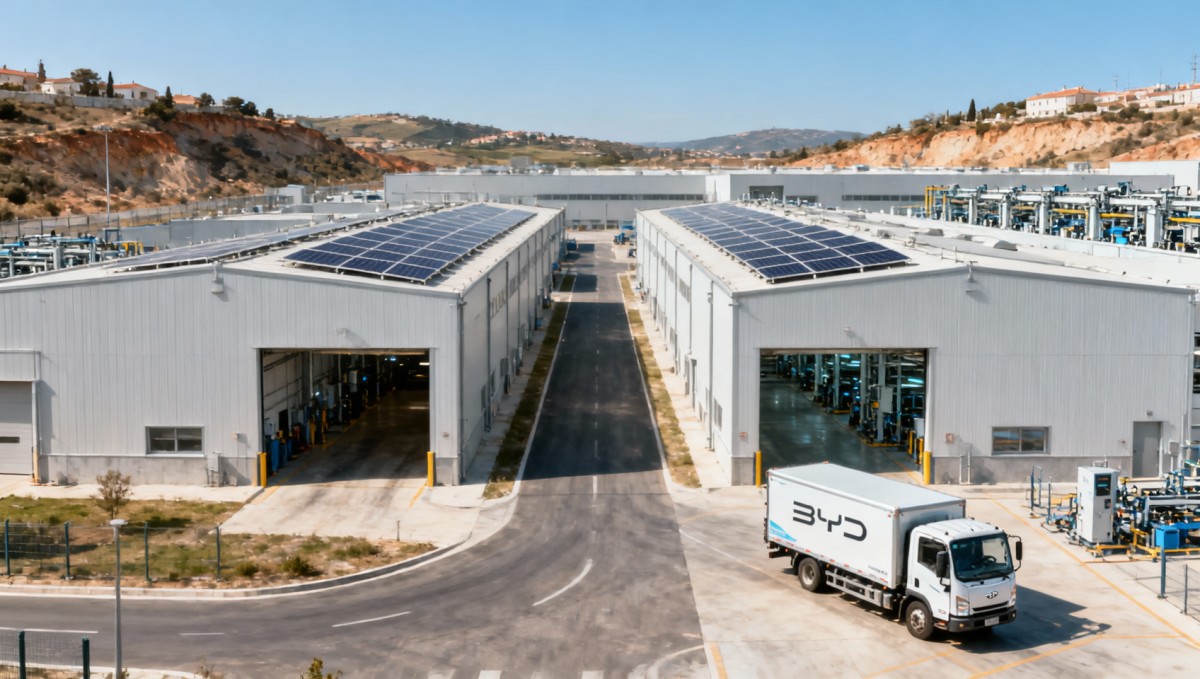
On May 15, 2026, several authoritative international financial media reported that BYD has entered formal negotiation stages with Stellantis and Renault regarding the potential acquisition of idle整车 and powertrain (battery, motor, e-control) manufacturing plants in Spain and Poland. The stated objective is to establish local capacity for EV accessories and automotive electronics. First production lines are scheduled to commence operations in Q1 2027. No official confirmation from BYD, Stellantis, or Renault has been issued as of publication.
Industries Affected
Direct Trade Enterprises: Export-oriented distributors and OEM-integrated trading firms supplying EV components to European markets face immediate recalibration. With BYD shifting from FOB/EU-port delivery to local assembly, demand for air- or sea-freighted finished modules (e.g., infotainment units, ADAS sensors, battery management systems) may decline by 15–25% in affected regions. Lead-time compression also reduces buffer-stock requirements, pressuring working capital models.
Raw Material Procurement Firms: Suppliers of printed circuit board substrates, rare-earth magnets, and high-purity copper foil — particularly those serving Tier-2/Tier-3 electronics suppliers — may see regional demand fragmentation. Localized production implies increased sourcing of EU-compliant materials (e.g., conflict-mineral-certified cobalt, REACH-compliant adhesives), raising compliance overhead and potentially lowering order volumes from Asia-based procurement hubs.
Contract Manufacturing & Electronics Assembly Firms: EMS providers currently handling BYD’s European-bound electronics subassemblies face dual pressure: reduced volume from relocated production, but new opportunity windows if selected as local JV partners or Tier-1 subcontractors. Their ability to meet IATF 16949 certification, EU Type Approval documentation standards, and just-in-sequence logistics integration will determine competitiveness.
Supply Chain Service Providers: Third-party logistics (3PL) firms specializing in cross-border customs brokerage, bonded warehousing, and last-mile EV component distribution may experience declining revenue per shipment due to shorter inland transit distances and simplified import declarations. Conversely, demand for intra-EU multimodal coordination (rail + road), technical staffing support, and regulatory advisory services (e.g., CE marking, UNECE R100/R155 compliance) is expected to rise.
Key Focus Areas and Recommended Actions
Evaluate Local Partnership Pathways
Suppliers and contract manufacturers should proactively assess feasibility of co-location or joint venture structures near targeted sites (e.g., Zaragoza, Kragujevac). Priority criteria include proximity to existing BYD engineering teams, availability of bilingual technical labor, and regional incentives for green manufacturing certifications.
Reassess Compliance Readiness for EU Automotive Standards
Firms exporting electronics or accessories into EU vehicle supply chains must verify alignment with ISO/IEC 17025 lab accreditation, EN 60730 safety standards for control systems, and upcoming UN ECE R156 software update management requirements — not merely CE marking. Gaps identified now may preclude qualification as local tier-2 suppliers post-2027.
Model Shifts in Inventory and Logistics Cost Structures
Trade enterprises should simulate inventory turnover changes under 4–6 week delivery cycles versus current 12–16 week ocean+customs timelines. This includes reassessing safety stock levels, warehouse footprint in Rotterdam/Hamburg, and renegotiating Incoterms with European buyers to reflect reduced risk transfer points.
Editorial Perspective / Industry Observation
Observably, BYD’s move reflects less a pure cost-arbitrage play and more a deliberate effort to embed within EU automotive governance ecosystems — gaining influence over standard-setting bodies like CEN/CENELEC and shaping future EV cybersecurity and data sovereignty frameworks. Analysis shows that acquiring brownfield sites (vs. greenfield builds) accelerates time-to-market but introduces legacy tooling and workforce retraining challenges. From an industry perspective, this signals growing strategic weight of ‘regulatory adjacency’ — where physical presence enables faster adaptation to evolving trade, environmental, and digital policy regimes.
Conclusion
This development marks a structural inflection point: EV supply chain localization is no longer solely driven by tariff avoidance, but increasingly by regulatory resilience and market responsiveness. For stakeholders across the value chain, success hinges not on reacting to one acquisition, but on institutionalizing agile compliance, modular manufacturing design, and cross-border operational fluency.
Source Attribution
Confirmed reporting from Financial Times (May 15, 2026), Bloomberg (May 15, 2026), and Reuters (May 15, 2026). Neither BYD nor Stellantis has issued official statements. Ongoing developments — including final site selection, financing structure, and labor agreement terms — remain subject to verification and are flagged for continuous monitoring.
 How an industrial trade intelligence dashboard can identify new supplier marketsDiscover how an industrial trade intelligence dashboard helps identify new supplier markets by comparing capacity, landed cost, logistics resilience, and compliance risk.
 Which global market entry barriers should exporters assess first?Global market entry barriers exporters should assess first: tariffs, compliance, buyer qualification, logistics, and payment risk. Build a practical strategy for confident market entry.
 How trade data aggregation analytics can reveal emerging supplier marketsTrade data aggregation analytics reveals emerging supplier markets by connecting trade flows, capacity signals, logistics, and compliance insights for smarter sourcing decisions.
 When an export market analysis platform can validate demand in a new marketExport market analysis platform insights help validate new-market demand through buyer fit, regulations, logistics, competition, and profitable entry conditions.
 What is driving the beauty and personal care market in the USA?Beauty and personal care in USA is driven by targeted solutions, selective premiumization, digital discovery, clean-label trust, diverse needs, and compliance. Explore key growth opportunities.
 How trade flow monitoring reports reveal changing regional demandTrade flow monitoring reports reveal changing regional demand through import volumes, sourcing shifts, product mix, logistics signals, and regulatory trends. Explore actionable market insights.
 How international market intelligence for investors reduces market-entry riskInternational market intelligence for investors reduces market-entry risk by validating demand, regulations, logistics, and competition before capital is committed.
 How international sourcing intelligence helps identify supplier risk earlyInternational sourcing intelligence helps businesses spot supplier risks early, protect supply continuity, and make smarter global procurement decisions.
 How trade data aggregation analytics reveals emerging supplier marketsTrade data aggregation analytics reveals emerging supplier markets through export trends, input flows, logistics, and regulatory signals. Discover smarter sourcing insights.
 What industrial cluster monitoring in Vietnam reveals about site riskIndustrial cluster monitoring Vietnam reveals hidden site risks across labor, utilities, logistics, compliance, and supplier dependencies. Make smarter sourcing and expansion decisions.
 Food Technology Trends Reshaping Shelf Life, Safety, and Product InnovationFood technology is reshaping shelf life, safety, and innovation. Discover the trends helping food businesses cut risk, improve compliance, and unlock stronger global market growth.
 How electronics manufacturing services are changing with low-volume demandElectronics manufacturing services are evolving fast with low-volume demand. Learn how agile EMS partners improve flexibility, compliance, sourcing resilience, and speed to market.
 How Can Buyers Reduce Procurement Risks for Electronic Components?How to reduce procurement risks for electronic components: learn how buyers assess traceability, lead times, compliance, and supplier types to avoid costly sourcing mistakes.
 What Sourcing Intelligence India Reveals About Supplier Risk and Cost ShiftsSourcing intelligence India reveals hidden supplier risk, compliance gaps, logistics pressure, and real cost shifts—helping buyers compare vendors smarter and source with more confidence.
 Fashion Trends 2026: Which Materials, Colors, and Silhouettes Are Gaining Ground?Fashion trends 2026 spotlight tactile fabrics, mineral colors, and controlled volume. Explore the materials, shades, and silhouettes shaping smarter, more wearable style.
 Smart Device Market Outlook: Key Growth Drivers, Segments, and Business OpportunitiesSmart device market trends are shifting toward system value, industrial demand, and resilient supply chains. Explore key growth drivers, high-potential segments, and business opportunities.
 How Global Trade Intelligence Services Help B2B Firms Evaluate Markets and SuppliersGlobal trade intelligence services help B2B firms compare suppliers, assess market potential, and uncover compliance, logistics, and pricing risks before costly decisions are made.
 Manufacturing Sector Updates for Investors: What Signals Matter Most in 2025?Manufacturing sector updates for investors in 2025: track orders, margins, supply chains, regulation, and exports to spot resilient manufacturers and smarter investment signals.
 How Energy Market Intelligence Helps Businesses Track Price Risks and Demand ShiftsEnergy market intelligence helps businesses spot price risks, demand shifts, and supply pressure early—improving procurement, resilience, and faster strategic decisions.
 Precision Hardware Tools Market: Key Demand Drivers, Segments, and Growth OutlookPrecision hardware tools market trends are reshaping sourcing, compliance, and automation. Explore key demand drivers, segment shifts, regional supply patterns, and growth opportunities.
 How to Use Customs Import Data to Find Buyers, Track Competitors, and Spot Demand?Customs import data helps you find real buyers, track competitors, and spot demand shifts early. Learn practical ways to turn trade records into smarter global business decisions.





















Global Trade Insights & Industry
Our mission is to empower global exporters and importers with data-driven insights that foster strategic growth.
Search News
Popular Tags
Industry Overview
The global commercial kitchen equipment market is projected to reach $112 billion by 2027. Driven by urbanization, the rise of e-commerce food delivery, and strict hygiene regulations.