

Which Quality Certifications Should an EMS Provider Have?
Which Quality Certifications Should an EMS Provider Have?
Choosing an electronics manufacturing services (EMS) provider requires more than comparing assembly costs—especially when evaluating BMS pricing for EV battery packs 2026. Procurement teams must also assess whether a supplier’s quality certifications match the product, manufacturing scope, and target market. ISO 9001 provides a foundational quality management framework, while automotive, medical, and aerospace projects may call for sector-specific certifications such as IATF 16949, ISO 13485, or AS9100.
The practical answer is not “choose the supplier with the most certificates.” Choose one whose certified systems cover the work you are buying, then check whether those systems function on the production floor. A certificate can establish a useful qualification baseline. It cannot establish that a particular board design is reliable, that a test fixture detects every critical fault, or that production capacity will be available when needed.
Start with ISO 9001, but read beyond the logo
For general industrial electronics, instrumentation, communications equipment, and many commercial products, ISO 9001 is a sensible starting point. It addresses quality management: controlled processes, customer requirements, supplier oversight, nonconformity handling, corrective action, and continual improvement. It is not an electronics workmanship standard or a product safety approval.
An EMS provider should be able to connect those requirements to everyday manufacturing decisions. How are engineering changes released? Who approves substitute components? What happens when solder inspection identifies a recurring defect? How does the team prevent rejected material from returning to usable inventory?
Scope matters as much as the standard name. A certificate covering component distribution does not establish certified PCB assembly capability. Likewise, certification for one factory should not be assumed to cover another factory operated by the same group. If the order includes SMT assembly, programming, conformal coating, and final box build, confirm how those activities and their locations fit within the certified scope.
The end market determines the additional requirements
Automotive electronics: IATF 16949
For eligible automotive production suppliers, IATF 16949 adds automotive-specific quality management requirements to the ISO 9001 foundation. It is particularly relevant when an EMS provider manufactures electronics entering an automotive production supply chain. Whether certification is required depends on the customer, supply-chain position, contractual requirements, and certification eligibility.
For an EV battery management system, ask about advanced product quality planning, production part approval, process failure mode and effects analysis, control plans, measurement system analysis, and statistical process control. The required submissions and acceptance criteria should be agreed with the customer; mentioning these tools in a presentation is not evidence that they are applied effectively.
IATF 16949 does not demonstrate functional safety compliance by itself. Where ISO 26262 applies, clarify who owns safety requirements, design verification, software controls, and production-related safety measures. An EMS provider assembling a customer-designed board has different responsibilities from a supplier developing the complete BMS.
Medical electronics: ISO 13485
ISO 13485 is relevant to medical-device quality management and associated services. For an EMS provider manufacturing medical electronics, it offers a framework for documented controls, traceability where required, risk-related processes, and activities supporting applicable regulatory requirements.
It does not authorize a finished device for sale in every market. The device manufacturer must still establish the applicable regulatory pathway and allocate responsibilities to suppliers. Check whether the EMS scope includes manufacturing only or also design and development, and whether outsourced processes require validation. A purchasing agreement should define record retention, change notification, complaint support, and access to relevant manufacturing records.
Aerospace electronics: AS9100
AS9100 builds on ISO 9001 with aerospace requirements, including stronger attention to configuration management, operational risk, product safety, and counterfeit-part prevention. It is relevant when the customer or aerospace supply chain requires it, rather than being a universal requirement for every high-reliability electronic assembly.
Examine component sourcing, lot documentation, configuration control, and the handling of obsolete parts. A broker-sourced replacement may require customer approval and additional verification. Certification should make that decision controlled and traceable—not automatically acceptable.
Do not confuse system certification with assembly acceptance
Electronics quotations often place ISO, IPC, CE, and environmental claims together under “certifications.” These represent different kinds of evidence. Separating them prevents purchasing teams from treating unrelated credentials as interchangeable.
- IPC-A-610 provides acceptance criteria for electronic assemblies. Specify the agreed revision and product class in the contract.
- IPC J-STD-001 addresses requirements for soldered electrical and electronic assemblies. Ask how relevant requirements are incorporated into process instructions and training.
- IPC personnel credentials demonstrate qualifications within a defined training or certification program. They do not automatically certify every production line or assembly.
- CE marking and applicable UL approvals concern product conformity or certification arrangements, not a substitute for the EMS provider’s quality management system.
- RoHS and REACH documentation supports substance-compliance assessment where applicable. A general supplier declaration may not establish compliance for every component and finished configuration.
Similarly, ISO 14001 addresses environmental management, while ISO 45001 addresses occupational health and safety management. Both can support responsible supplier selection, but neither proves solder-joint reliability. Electrostatic discharge controls aligned with ANSI/ESD S20.20 or IEC 61340-5-1 deserve separate review where sensitive devices are handled.
Verify the certificate before auditing the factory
Request the complete certificate rather than a cropped website badge. Check the legal entity, site address, standard, scope, certificate number, issuing body, and validity dates. For multisite organizations, review any accompanying site schedule. Also establish whether the certificate remains active; an expiry date alone does not reveal suspension or withdrawal.
Use the issuing certification body’s verification channel and relevant accreditation or scheme records where available. IATF certification should come through an IATF-recognized certification body. Aerospace certification information can be checked through the IAQG OASIS system, subject to access arrangements. ISO itself does not issue supplier certificates.
Then map the order’s actual route: component receipt, storage, assembly, inspection, programming, testing, coating, and shipment. Identify outsourced operations and any planned production transfer. An otherwise valid certificate may be insufficient if a critical activity happens at an unassessed subcontractor.
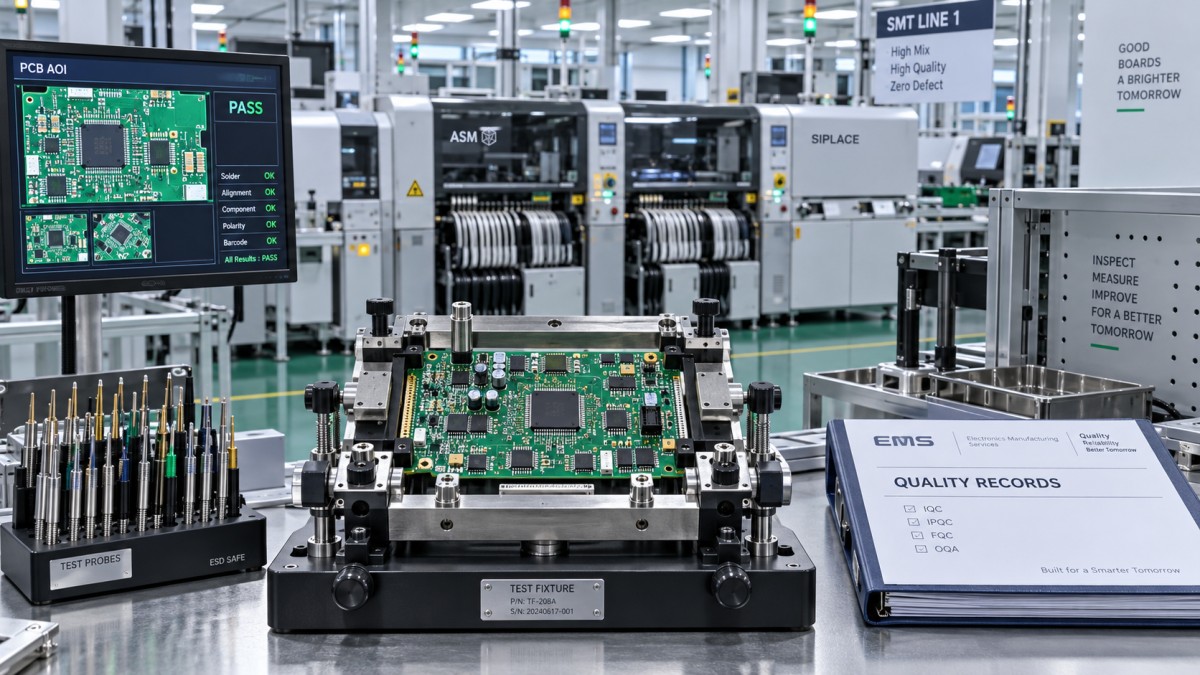
A useful audit follows one assembly through that route. Ask the supplier to retrieve its component lots, production revision, inspection results, firmware version, test outcome, and rework history. This reveals more about traceability than a tour focused only on equipment brands.
For EV battery packs, qualification changes the meaning of price
When researching BMS pricing for EV battery packs 2026, separate the cost of manufacturing a supplied design from the cost of developing and qualifying a complete system. A board assembly quote may exclude firmware development, calibration, safety engineering, environmental validation, enclosure integration, and customer approval activities.
Comparisons also need the same technical baseline: cell-channel count, pack voltage architecture, isolation requirements, current measurement method, balancing approach, communication interfaces, and operating environment. Certification does not normalize these differences. Two automotive-qualified suppliers can quote substantially different scopes without either quotation being misleading.
For production evaluation, ask how the supplier verifies voltage and temperature measurement channels, communication behavior, programmed firmware, and relevant fault responses. Where applicable, agree insulation-related tests and safe handling requirements. The test plan must reflect the actual design; not every BMS board requires the same tests.
Request separate quotation lines for nonrecurring engineering, fixtures, recurring testing, traceability, approval documentation, and change management. Confirm whether records are retained by serial number or production lot, and for how long. These obligations consume resources. Comparing only assembly price can hide exclusions that become expensive during qualification or a field investigation.
Use production evidence to make the final decision
A certified supplier can still be a poor match for a particular project. Its lines may suit large, stable batches rather than frequent engineering changes. Its testing expertise may focus on simple continuity checks rather than calibrated measurement electronics. Its available capacity may depend on a second site that has not been approved.
Review examples of corrective actions and ask how effectiveness was verified. Examine calibration records, test-fixture maintenance, approved supplier controls, and material segregation. For pilot builds, agree acceptance criteria and a route for resolving defects before authorizing volume production. First-pass yield and delivery records can inform the assessment, but compare their definitions and reporting periods before treating them as equivalent.
Cross-border sourcing adds another layer: local regulatory obligations, component availability, customs exposure, and logistics continuity can affect an otherwise capable factory. Global Trade Insights & Industry Network (GTIIN) places supplier certification within this wider trade and manufacturing context, helping businesses connect technical qualification with market requirements and supply-chain risk rather than evaluating credentials in isolation.
Before awarding an EMS contract, create a project-specific qualification sheet identifying mandatory certifications, approved sites, workmanship criteria, test coverage, traceability obligations, and change-approval rules. Resolve any gaps with named owners and agreed deadlines. The right certificate opens the qualification process; verified manufacturing controls and a clear quality agreement are what make the supplier suitable for the order.
 Can a food processing manufacturer meet your small-batch needs?Can a food processing manufacturer meet your small-batch needs? Discover how to assess minimum orders, costs, packaging, and safety to choose the right partner for your launch.
 How to verify sourcing intelligence data before selecting suppliersVerify sourcing intelligence data before choosing suppliers. Learn how to check company records, certifications, and capacity to reduce procurement risk and build a reliable shortlist.
 How to use supplier risk analysis to spot financial warning signsUse supplier risk analysis to spot cash flow pressure, debt risks, and delivery warning signs. Learn practical steps to reduce exposure and protect supply continuity.
 When dual sourcing makes sense in a sourcing strategy for manufacturersSourcing strategy for manufacturers: learn when dual sourcing strengthens supply continuity, reduces disruption risk, and protects production without adding unnecessary complexity.
 How bulk commodities pricing affects long-term supply contractsBulk commodities pricing shapes long-term supply contracts through index rules, freight, quality, volume, and currency risk. Explore strategies for resilient costs and supply security.
 Which global manufacturing trends by sector matter most for sourcing plans?Global manufacturing trends by sector: identify sourcing risks, supplier resilience, compliance demands, and cost drivers to build smarter, more reliable procurement plans.
 What industrial trade intelligence pricing should include before you subscribeIndustrial trade intelligence pricing explained: compare coverage, data quality, access rights, and workflow value before choosing a subscription that supports smarter trade decisions.
 How an industrial trade intelligence dashboard can identify new supplier marketsDiscover how an industrial trade intelligence dashboard helps identify new supplier markets by comparing capacity, landed cost, logistics resilience, and compliance risk.
 Which global market entry barriers should exporters assess first?Global market entry barriers exporters should assess first: tariffs, compliance, buyer qualification, logistics, and payment risk. Build a practical strategy for confident market entry.
 How trade data aggregation analytics can reveal emerging supplier marketsTrade data aggregation analytics reveals emerging supplier markets by connecting trade flows, capacity signals, logistics, and compliance insights for smarter sourcing decisions.
 When an export market analysis platform can validate demand in a new marketExport market analysis platform insights help validate new-market demand through buyer fit, regulations, logistics, competition, and profitable entry conditions.
 What is driving the beauty and personal care market in the USA?Beauty and personal care in USA is driven by targeted solutions, selective premiumization, digital discovery, clean-label trust, diverse needs, and compliance. Explore key growth opportunities.
 How trade flow monitoring reports reveal changing regional demandTrade flow monitoring reports reveal changing regional demand through import volumes, sourcing shifts, product mix, logistics signals, and regulatory trends. Explore actionable market insights.
 How international market intelligence for investors reduces market-entry riskInternational market intelligence for investors reduces market-entry risk by validating demand, regulations, logistics, and competition before capital is committed.
 How international sourcing intelligence helps identify supplier risk earlyInternational sourcing intelligence helps businesses spot supplier risks early, protect supply continuity, and make smarter global procurement decisions.
 How trade data aggregation analytics reveals emerging supplier marketsTrade data aggregation analytics reveals emerging supplier markets through export trends, input flows, logistics, and regulatory signals. Discover smarter sourcing insights.
 What industrial cluster monitoring in Vietnam reveals about site riskIndustrial cluster monitoring Vietnam reveals hidden site risks across labor, utilities, logistics, compliance, and supplier dependencies. Make smarter sourcing and expansion decisions.
 Food Technology Trends Reshaping Shelf Life, Safety, and Product InnovationFood technology is reshaping shelf life, safety, and innovation. Discover the trends helping food businesses cut risk, improve compliance, and unlock stronger global market growth.
 How electronics manufacturing services are changing with low-volume demandElectronics manufacturing services are evolving fast with low-volume demand. Learn how agile EMS partners improve flexibility, compliance, sourcing resilience, and speed to market.
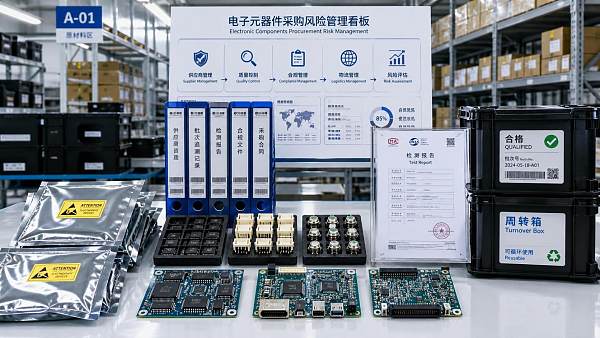
 How Can Buyers Reduce Procurement Risks for Electronic Components?How to reduce procurement risks for electronic components: learn how buyers assess traceability, lead times, compliance, and supplier types to avoid costly sourcing mistakes.
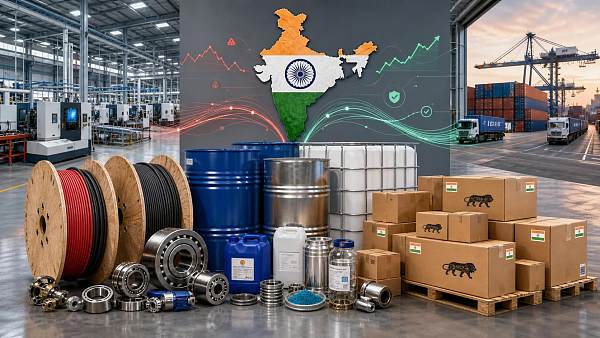
 What Sourcing Intelligence India Reveals About Supplier Risk and Cost ShiftsSourcing intelligence India reveals hidden supplier risk, compliance gaps, logistics pressure, and real cost shifts—helping buyers compare vendors smarter and source with more confidence.












Global Trade Insights & Industry
Our mission is to empower global exporters and importers with data-driven insights that foster strategic growth.
Search News
Popular Tags
Industry Overview
The global commercial kitchen equipment market is projected to reach $112 billion by 2027. Driven by urbanization, the rise of e-commerce food delivery, and strict hygiene regulations.