

NZ Introduces New Border Tax for Low-Value Imports
New Zealand’s implementation of a new border tax mechanism for low-value imported parcels — effective 22 May 2026 — marks a significant regulatory shift for cross-border e-commerce, particularly impacting exporters and logistics providers from China and other major supply countries. The change introduces mandatory, automated collection of fees on all parcels valued at NZD 1,000 or less, directly affecting cost structures, pricing strategies, and market access for small- and medium-sized sellers.
Event Overview
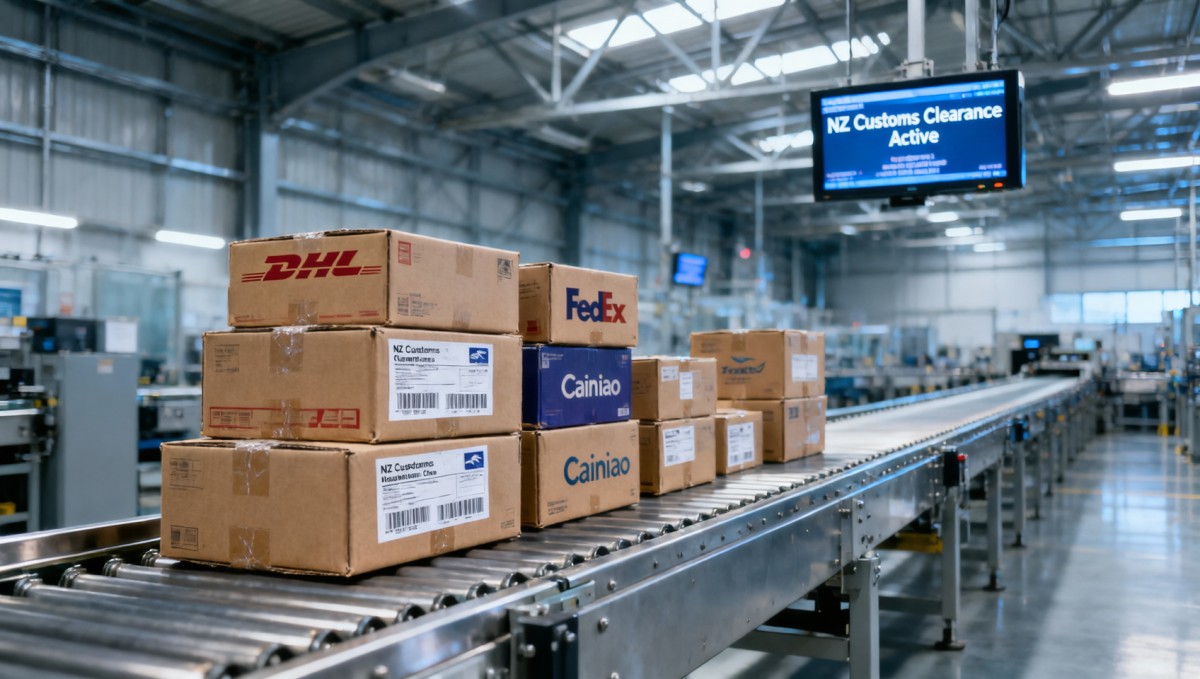
Effective 22 May 2026, New Zealand Customs requires the automatic deduction of two new charges — the Border Services Fee (BSF) and a GST prepayment service fee — from the accounts of e-commerce platforms or logistics service providers for every low-value import parcel (≤ NZD 1,000). The mechanism applies regardless of origin country or seller size. Charges are levied at point of entry and integrated into customs clearance workflows via the New Zealand Trade Single Window system. No manual exemption or threshold-based waiver is available under the new rules.
Industries Affected
Direct Trading Enterprises
Small- and medium-sized Chinese exporters selling directly to New Zealand consumers via platforms such as AliExpress, Temu, or independent Shopify stores face immediate margin pressure. Because the BSF and GST prepayment are deducted upstream — before delivery — sellers lose control over timing and visibility of fee allocation. For sellers operating on razor-thin margins (e.g., sub-NZD 30 SKUs), the 12%–18% rise in total landed cost may render certain items commercially unviable, especially where local competition offers GST-inclusive pricing with domestic fulfillment.
Raw Material Procurement Enterprises
Companies sourcing components (e.g., PCBs, lithium batteries, display modules) for assembled finished goods destined for NZ face indirect exposure: while raw material imports themselves typically exceed NZD 1,000 and thus fall outside the new regime, procurement teams must now reassess landed cost models for consignment-based or drop-ship-style fulfillment where final assembly occurs offshore and parcel-level shipment triggers BSF. This adds complexity to landed-cost forecasting and may incentivise regional consolidation hubs — e.g., in Australia or Singapore — to avoid parcel-level taxation.
Manufacturing Enterprises
OEM/ODM manufacturers producing consumer electronics accessories, smart wearables, and compact home appliances for NZ-bound brands must adjust quotation frameworks. Previously, ex-works or FOB pricing excluded NZ-specific compliance overhead; now, they may need to offer ‘NZ-compliant landed cost’ options — incorporating estimated BSF/GST prepayment — to remain competitive in RFPs. Failure to do so risks misalignment with brand partners’ financial planning cycles and inventory budgeting.
Supply Chain Service Providers
Third-party logistics (3PL) firms, freight forwarders, and customs brokers servicing cross-border e-commerce clients must upgrade integration with New Zealand’s Trade Single Window API and implement real-time fee calculation engines. Those relying on manual or batch-based customs filing will face delays and non-compliance penalties. Additionally, reconciliation of BSF deductions across multiple client accounts introduces new operational reporting requirements — particularly for platforms managing pooled merchant funds.
Key Considerations and Recommended Actions
Re-evaluate SKU-Level Profitability by NZD Threshold
Sellers should model gross margin erosion per SKU using the 12%–18% uplift range against current landed cost benchmarks. Prioritise analysis for items priced between NZD 45 and NZD 350 — the segment most likely to absorb the full fee impact without viable price pass-through.
Assess Platform-Level vs. Direct Carrier Integration
Confirm whether your platform (e.g., Shopify Plus, BigCommerce) or carrier (e.g., DHL E-commerce, Cainiao) has completed end-to-end BSF/GST prepayment integration with New Zealand Customs. Delayed integration may result in parcels held at border or subject to manual surcharges — increasing transit time variability and customer service load.
Explore Consolidated Fulfilment Options
For sellers with sufficient NZ demand volume, consider establishing bonded warehousing or partnering with NZ-based fulfilment providers. While upfront costs increase, this shifts liability away from parcel-level taxation and enables true GST registration and input tax credit recovery — a structural advantage not available to low-value importers.
Editorial Perspective / Industry Observation
Observably, New Zealand’s move reflects a broader OECD-aligned trend toward closing the ‘low-value consignment relief’ (LVCR) gap — previously exploited to bypass VAT/GST collection on digital commerce. However, unlike the EU’s IOSS or UK’s Post-Brexit LVCR repeal — which preserved thresholds for micro-businesses — NZ’s flat application down to NZD 0 suggests prioritisation of administrative simplicity over SME support. Analysis shows this may accelerate market consolidation: mid-tier sellers with diversified channel strategies (e.g., Amazon AU + NZ marketplace + local distributors) are better positioned to absorb cost shocks than single-channel specialists. Current more relevant question is not whether costs will rise — but which players can reconfigure their go-to-market architecture fast enough to retain share.
Conclusion
This policy shift does not signal retreat from cross-border e-commerce, but rather its maturation into a regulated, tax-transparent domain. For global suppliers, it underscores that ‘borderless’ trade increasingly means ‘border-aware’ operations. Sustainable NZ market participation will hinge less on lowest landed cost — and more on compliance resilience, data interoperability, and adaptive fulfilment design.
Source Attribution
Official sources: New Zealand Customs Service customs.govt.nz, Inland Revenue Department (IRD) Notice IR1278 (issued 15 March 2026); Implementation confirmed via NZ Government Gazette No. 42, 2026. Ongoing monitoring required for: (i) potential tiered BSF rates post-2027 review, (ii) alignment of GST prepayment rules with upcoming OECD Digital Services Tax consultations, and (iii) enforcement patterns for parcels routed via third-country transit points (e.g., Malaysia or Vietnam).
 Which global manufacturing trends by sector matter most for sourcing plans?Global manufacturing trends by sector: identify sourcing risks, supplier resilience, compliance demands, and cost drivers to build smarter, more reliable procurement plans.
 What industrial trade intelligence pricing should include before you subscribeIndustrial trade intelligence pricing explained: compare coverage, data quality, access rights, and workflow value before choosing a subscription that supports smarter trade decisions.
 How an industrial trade intelligence dashboard can identify new supplier marketsDiscover how an industrial trade intelligence dashboard helps identify new supplier markets by comparing capacity, landed cost, logistics resilience, and compliance risk.
 Which global market entry barriers should exporters assess first?Global market entry barriers exporters should assess first: tariffs, compliance, buyer qualification, logistics, and payment risk. Build a practical strategy for confident market entry.
 How trade data aggregation analytics can reveal emerging supplier marketsTrade data aggregation analytics reveals emerging supplier markets by connecting trade flows, capacity signals, logistics, and compliance insights for smarter sourcing decisions.
 When an export market analysis platform can validate demand in a new marketExport market analysis platform insights help validate new-market demand through buyer fit, regulations, logistics, competition, and profitable entry conditions.
 What is driving the beauty and personal care market in the USA?Beauty and personal care in USA is driven by targeted solutions, selective premiumization, digital discovery, clean-label trust, diverse needs, and compliance. Explore key growth opportunities.
 How trade flow monitoring reports reveal changing regional demandTrade flow monitoring reports reveal changing regional demand through import volumes, sourcing shifts, product mix, logistics signals, and regulatory trends. Explore actionable market insights.
 How international market intelligence for investors reduces market-entry riskInternational market intelligence for investors reduces market-entry risk by validating demand, regulations, logistics, and competition before capital is committed.
 How international sourcing intelligence helps identify supplier risk earlyInternational sourcing intelligence helps businesses spot supplier risks early, protect supply continuity, and make smarter global procurement decisions.
 How trade data aggregation analytics reveals emerging supplier marketsTrade data aggregation analytics reveals emerging supplier markets through export trends, input flows, logistics, and regulatory signals. Discover smarter sourcing insights.
 What industrial cluster monitoring in Vietnam reveals about site riskIndustrial cluster monitoring Vietnam reveals hidden site risks across labor, utilities, logistics, compliance, and supplier dependencies. Make smarter sourcing and expansion decisions.
 Food Technology Trends Reshaping Shelf Life, Safety, and Product InnovationFood technology is reshaping shelf life, safety, and innovation. Discover the trends helping food businesses cut risk, improve compliance, and unlock stronger global market growth.
 How electronics manufacturing services are changing with low-volume demandElectronics manufacturing services are evolving fast with low-volume demand. Learn how agile EMS partners improve flexibility, compliance, sourcing resilience, and speed to market.
 How Can Buyers Reduce Procurement Risks for Electronic Components?How to reduce procurement risks for electronic components: learn how buyers assess traceability, lead times, compliance, and supplier types to avoid costly sourcing mistakes.
 What Sourcing Intelligence India Reveals About Supplier Risk and Cost ShiftsSourcing intelligence India reveals hidden supplier risk, compliance gaps, logistics pressure, and real cost shifts—helping buyers compare vendors smarter and source with more confidence.
 Fashion Trends 2026: Which Materials, Colors, and Silhouettes Are Gaining Ground?Fashion trends 2026 spotlight tactile fabrics, mineral colors, and controlled volume. Explore the materials, shades, and silhouettes shaping smarter, more wearable style.
 Smart Device Market Outlook: Key Growth Drivers, Segments, and Business OpportunitiesSmart device market trends are shifting toward system value, industrial demand, and resilient supply chains. Explore key growth drivers, high-potential segments, and business opportunities.
 How Global Trade Intelligence Services Help B2B Firms Evaluate Markets and SuppliersGlobal trade intelligence services help B2B firms compare suppliers, assess market potential, and uncover compliance, logistics, and pricing risks before costly decisions are made.
 Manufacturing Sector Updates for Investors: What Signals Matter Most in 2025?Manufacturing sector updates for investors in 2025: track orders, margins, supply chains, regulation, and exports to spot resilient manufacturers and smarter investment signals.
 How Energy Market Intelligence Helps Businesses Track Price Risks and Demand ShiftsEnergy market intelligence helps businesses spot price risks, demand shifts, and supply pressure early—improving procurement, resilience, and faster strategic decisions.





















Global Trade Insights & Industry
Our mission is to empower global exporters and importers with data-driven insights that foster strategic growth.
Search News
Popular Tags
Industry Overview
The global commercial kitchen equipment market is projected to reach $112 billion by 2027. Driven by urbanization, the rise of e-commerce food delivery, and strict hygiene regulations.