

TWS Earbuds: How to Compare Battery Life and Call Quality
When comparing TWS earbuds, battery life and call quality are often the two features that matter most to informed buyers and market researchers.
From playback time and charging efficiency to microphone performance and noise reduction in real-world use, these factors reveal true product value.
This guide explains how to evaluate TWS earbuds with practical benchmarks, useful test methods, and decision points that support better comparisons.
What should you check first when comparing TWS earbuds?
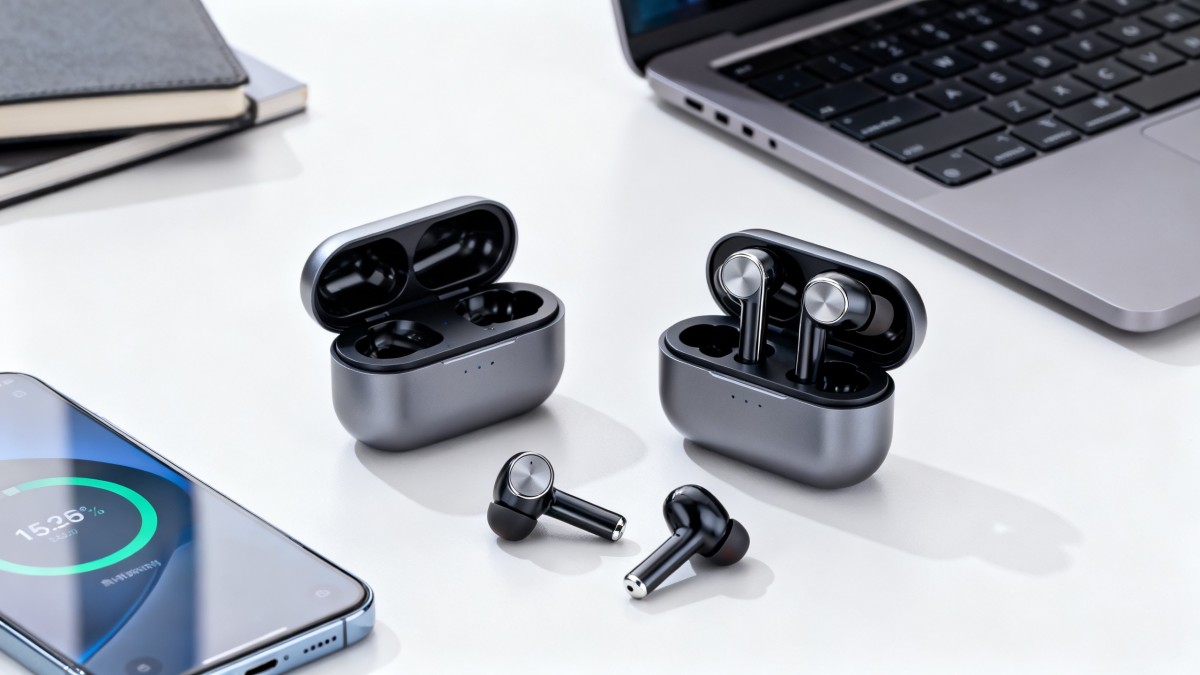
Start with the published specifications, but do not stop there.
Many TWS earbuds look similar on paper, yet perform very differently in daily use.
Two models may both claim eight hours of use, but codec settings, volume level, and active noise cancellation can change actual endurance.
The same applies to call quality.
A product may advertise AI microphones, but real clarity depends on wind handling, voice isolation, and signal stability.
Use these first-check criteria:
- Single-charge playback time
- Total battery with charging case
- Fast-charging capability
- Microphone count and placement
- ENC or noise reduction for calls
- Bluetooth version and connection consistency
This simple filter makes TWS earbuds easier to compare before deeper testing begins.
How do you compare battery life in a realistic way?
Battery claims often reflect controlled laboratory conditions.
Real-life use is more demanding, especially for TWS earbuds used for calls, commuting, and video meetings.
To compare battery life fairly, focus on four variables.
1. Playback time per charge
Check whether the stated figure is measured with ANC on or off.
ANC can reduce battery life by a noticeable margin.
Volume also matters.
Testing at 50% volume often produces better numbers than normal listening at 70% or above.
2. Total endurance with the case
A pair of TWS earbuds may last six hours alone but offer 24 to 30 hours with the case.
This matters for travel, trade shows, and long workdays.
3. Charging speed
Fast charging can outweigh slightly lower total battery.
If 10 minutes gives two hours of use, that can be more useful than an extra hour on paper.
4. Battery aging
Battery life on day one is not the whole story.
Frequent charging cycles gradually reduce performance.
Well-designed TWS earbuds should maintain stable use time after months of regular charging.
For a more accurate comparison, test TWS earbuds under the same volume, codec, and ANC settings.
Without that consistency, battery comparisons become unreliable.
How can call quality be judged beyond marketing claims?
Call quality is one of the most misunderstood features in TWS earbuds.
Strong audio playback does not guarantee clear voice transmission.
A useful comparison should examine voice pickup, background suppression, and consistency across locations.
Voice clarity
The first question is simple: does speech sound natural and understandable?
Good TWS earbuds keep the voice forward, full, and stable.
Weak models produce thin, distant, or compressed speech.
Noise suppression
Environmental noise cancellation for calls is critical.
Test TWS earbuds in a quiet room, near traffic, and in a windy outdoor area.
Some earbuds reduce steady noise well but fail with sudden sounds.
Microphone tuning
More microphones do not automatically mean better calls.
Tuning quality, beamforming, and software processing matter more than microphone count alone.
Connection stability during calls
Even good microphones fail if Bluetooth is unstable.
Dropouts, lag, and switching delays can damage the call experience.
Reliable TWS earbuds should maintain stable call quality while walking, turning, or using crowded wireless environments.
Which usage scenarios change the comparison results most?
TWS earbuds should be judged in context.
The best option for indoor calls may not be best for travel or outdoor mobility.
Scenario-based evaluation often reveals the most meaningful differences.
- Office use: prioritize balanced battery life, stable multipoint pairing, and clear voice in quiet spaces.
- Commuting: check ANC impact on battery and performance against train, bus, or street noise.
- Outdoor calling: test wind resistance and microphone isolation.
- Long sessions: focus on single-charge life, comfort, and fast recharging.
- Cross-device use: compare how quickly TWS earbuds switch between phone, tablet, and laptop.
In broad market analysis, scenario fit can matter more than premium positioning.
That is why practical use cases should guide every comparison of TWS earbuds.
What common mistakes lead to poor TWS earbuds comparisons?
Several errors can distort results and lead to weak conclusions.
Avoiding them improves both product evaluation and content quality.
Mistake 1: trusting headline specs only
Advertised figures are useful, but they are rarely enough.
Always compare measured use under matching conditions.
Mistake 2: ignoring call environment
Quiet-room testing alone creates an incomplete picture.
TWS earbuds must also be checked in noisy and moving environments.
Mistake 3: overlooking software influence
Firmware updates can improve or reduce performance.
The same TWS earbuds may behave differently after tuning changes.
Mistake 4: separating battery and call testing
Calls consume power differently from music playback.
If call time matters, do not rely only on playback figures.
How can you create a simple decision framework for TWS earbuds?
A structured framework helps compare TWS earbuds quickly and consistently.
The table below summarizes key checks and what they really indicate.
This framework keeps TWS earbuds comparisons focused on performance, not just branding.
What is the best final approach for comparing TWS earbuds?
The best comparison method combines specifications, controlled tests, and real-world scenarios.
Battery life should be checked by single-charge use, total case support, charging speed, and long-term consistency.
Call quality should be judged by clarity, noise suppression, wind resistance, and connection stability.
When these factors are reviewed together, TWS earbuds become much easier to rank objectively.
For broader market intelligence, consistent comparison standards also improve reporting accuracy and content trust.
TradeVantage supports global visibility with industry-focused content that helps businesses strengthen digital trust, discover trends, and build stronger search presence.
Use this checklist as your next-step reference when reviewing TWS earbuds, updating product pages, or developing more credible comparison content.
 Which global manufacturing trends by sector matter most for sourcing plans?Global manufacturing trends by sector: identify sourcing risks, supplier resilience, compliance demands, and cost drivers to build smarter, more reliable procurement plans.
 What industrial trade intelligence pricing should include before you subscribeIndustrial trade intelligence pricing explained: compare coverage, data quality, access rights, and workflow value before choosing a subscription that supports smarter trade decisions.
 How an industrial trade intelligence dashboard can identify new supplier marketsDiscover how an industrial trade intelligence dashboard helps identify new supplier markets by comparing capacity, landed cost, logistics resilience, and compliance risk.
 Which global market entry barriers should exporters assess first?Global market entry barriers exporters should assess first: tariffs, compliance, buyer qualification, logistics, and payment risk. Build a practical strategy for confident market entry.
 How trade data aggregation analytics can reveal emerging supplier marketsTrade data aggregation analytics reveals emerging supplier markets by connecting trade flows, capacity signals, logistics, and compliance insights for smarter sourcing decisions.
 When an export market analysis platform can validate demand in a new marketExport market analysis platform insights help validate new-market demand through buyer fit, regulations, logistics, competition, and profitable entry conditions.
 What is driving the beauty and personal care market in the USA?Beauty and personal care in USA is driven by targeted solutions, selective premiumization, digital discovery, clean-label trust, diverse needs, and compliance. Explore key growth opportunities.
 How trade flow monitoring reports reveal changing regional demandTrade flow monitoring reports reveal changing regional demand through import volumes, sourcing shifts, product mix, logistics signals, and regulatory trends. Explore actionable market insights.
 How international market intelligence for investors reduces market-entry riskInternational market intelligence for investors reduces market-entry risk by validating demand, regulations, logistics, and competition before capital is committed.
 How international sourcing intelligence helps identify supplier risk earlyInternational sourcing intelligence helps businesses spot supplier risks early, protect supply continuity, and make smarter global procurement decisions.
 How trade data aggregation analytics reveals emerging supplier marketsTrade data aggregation analytics reveals emerging supplier markets through export trends, input flows, logistics, and regulatory signals. Discover smarter sourcing insights.
 What industrial cluster monitoring in Vietnam reveals about site riskIndustrial cluster monitoring Vietnam reveals hidden site risks across labor, utilities, logistics, compliance, and supplier dependencies. Make smarter sourcing and expansion decisions.
 Food Technology Trends Reshaping Shelf Life, Safety, and Product InnovationFood technology is reshaping shelf life, safety, and innovation. Discover the trends helping food businesses cut risk, improve compliance, and unlock stronger global market growth.
 How electronics manufacturing services are changing with low-volume demandElectronics manufacturing services are evolving fast with low-volume demand. Learn how agile EMS partners improve flexibility, compliance, sourcing resilience, and speed to market.
 How Can Buyers Reduce Procurement Risks for Electronic Components?How to reduce procurement risks for electronic components: learn how buyers assess traceability, lead times, compliance, and supplier types to avoid costly sourcing mistakes.
 What Sourcing Intelligence India Reveals About Supplier Risk and Cost ShiftsSourcing intelligence India reveals hidden supplier risk, compliance gaps, logistics pressure, and real cost shifts—helping buyers compare vendors smarter and source with more confidence.
 Fashion Trends 2026: Which Materials, Colors, and Silhouettes Are Gaining Ground?Fashion trends 2026 spotlight tactile fabrics, mineral colors, and controlled volume. Explore the materials, shades, and silhouettes shaping smarter, more wearable style.
 Smart Device Market Outlook: Key Growth Drivers, Segments, and Business OpportunitiesSmart device market trends are shifting toward system value, industrial demand, and resilient supply chains. Explore key growth drivers, high-potential segments, and business opportunities.
 How Global Trade Intelligence Services Help B2B Firms Evaluate Markets and SuppliersGlobal trade intelligence services help B2B firms compare suppliers, assess market potential, and uncover compliance, logistics, and pricing risks before costly decisions are made.
 Manufacturing Sector Updates for Investors: What Signals Matter Most in 2025?Manufacturing sector updates for investors in 2025: track orders, margins, supply chains, regulation, and exports to spot resilient manufacturers and smarter investment signals.
 How Energy Market Intelligence Helps Businesses Track Price Risks and Demand ShiftsEnergy market intelligence helps businesses spot price risks, demand shifts, and supply pressure early—improving procurement, resilience, and faster strategic decisions.





















Global Trade Insights & Industry
Our mission is to empower global exporters and importers with data-driven insights that foster strategic growth.
Search News
Popular Tags
Industry Overview
The global commercial kitchen equipment market is projected to reach $112 billion by 2027. Driven by urbanization, the rise of e-commerce food delivery, and strict hygiene regulations.