

Can solid-state battery breakthroughs raise energy density?
Can Solid-State Battery Breakthroughs Raise Energy Density?
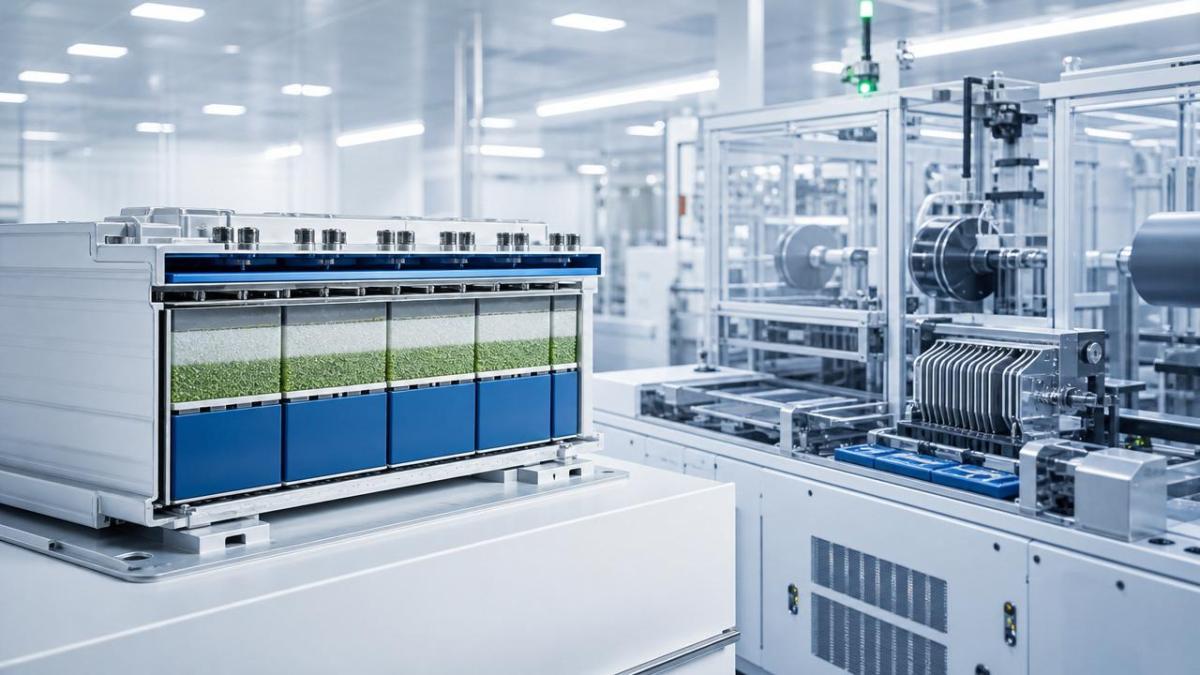
Solid-state battery breakthroughs high energy density ambitions are reshaping how industries evaluate the next generation of energy storage.
The shift matters because safer, lighter, and longer-lasting batteries influence electric mobility, robotics, renewable integration, consumer electronics, logistics, and industrial backup systems.
For GTIIN’s cross-sector intelligence framework, the question is not only technical. It is also commercial, regulatory, and supply-chain driven.
Energy Density Is Becoming a Strategic Battery Benchmark
Energy density measures how much energy a battery stores relative to weight or volume.
Higher density can extend vehicle range, reduce device size, improve payload capacity, and lower system-level material demand.
Solid-state battery breakthroughs high energy density targets are attracting attention because conventional lithium-ion designs are approaching practical performance limits.
Liquid electrolytes have enabled enormous progress, yet they introduce flammability risk, packaging constraints, and dendrite-related safety concerns.
Solid-state batteries replace liquid electrolyte with solid electrolyte materials, potentially allowing lithium-metal anodes and tighter cell architecture.
That design change is the foundation behind many claims of improved battery density and safer storage performance.
Current Trend Signals Point Toward Commercial Evaluation
Recent activity shows that solid-state technology has moved beyond isolated laboratory demonstrations.
Pilot lines, automotive validation programs, material partnerships, and prototype announcements are becoming more frequent across Asia, Europe, and North America.
Solid-state battery breakthroughs high energy density expectations are strongest where battery weight directly affects product value.
Electric vehicles, aviation-adjacent systems, premium electronics, medical devices, defense equipment, and automated mobile platforms show early relevance.
However, commercial readiness remains uneven. Some technologies show excellent cell-level results but face manufacturing, cost, and durability barriers.
The transition is therefore better viewed as staged adoption, not an immediate replacement of lithium-ion supply chains.
What Is Driving Solid-State Battery Breakthroughs High Energy Density Progress?
Several factors are converging to support stronger development momentum.
These drivers do not guarantee rapid market conversion.
They do indicate that solid-state battery breakthroughs high energy density pathways are becoming more structured and measurable.
Material Innovation Is the Core Battleground
The largest technical challenge is not the solid electrolyte alone.
Performance depends on the interface between electrolyte, anode, cathode, current collector, and protective layers.
Sulfide electrolytes offer strong ionic conductivity, but they can be moisture sensitive and require careful processing control.
Oxide electrolytes can provide stability, yet they often need high-temperature treatment or pressure-assisted contact.
Polymer and hybrid approaches may simplify manufacturing, but performance at lower temperatures can be limiting.
Solid-state battery breakthroughs high energy density results will depend on balancing conductivity, mechanical strength, manufacturability, and cost.
A headline cell result is useful, but cycle life, yield, and safety validation determine practical industrial value.
Why Manufacturing Determines the Real Density Gain
Energy density is often discussed at cell level, but commercial systems must include packaging, thermal management, electronics, and safety structures.
If solid-state cells reduce thermal protection needs, pack-level density could improve beyond cell chemistry gains.
If production requires heavy compression hardware, expensive humidity control, or low yields, system benefits may shrink.
This is why solid-state battery breakthroughs high energy density claims should be assessed against production evidence.
- Can the process scale from coin cells to large-format cells?
- Does the design maintain performance under fast charging?
- Are cycle life and calendar life independently validated?
- Can the material supply chain support repeatable quality?
- Does pack-level energy density improve after safety hardware is included?
These questions separate durable innovation from promotional milestones.
Cross-Industry Impact Will Be Uneven but Significant
Solid-state batteries may influence different sectors at different speeds.
High-value applications can absorb early costs more easily than mass-market products.
Electric mobility may benefit from longer range, faster charging potential, and improved safety perception.
Industrial robotics could gain longer operating time without larger chassis or heavier battery modules.
Medical and measurement devices may value stable performance, compact format, and reduced leakage concerns.
Renewable energy storage may adopt solid-state solutions later, because stationary systems are more cost-sensitive.
Solid-state battery breakthroughs high energy density trends may therefore begin in premium segments before broader infrastructure adoption.
Supply Chains Must Adapt Before Scale Arrives
Commercialization will require new material qualifications, equipment standards, and quality-control systems.
Electrolyte precursors, lithium metal foils, ceramic powders, binders, coatings, and precision separators may face rising demand.
Production environments may require tighter moisture control, advanced lamination, dry-room expansion, and non-destructive inspection.
The global trade implications are important.
Material localization, export controls, certification requirements, and regional industrial policies can reshape sourcing strategies.
GTIIN tracks these dynamics because battery innovation is not isolated from logistics, compliance, or industrial capacity.
Solid-state battery breakthroughs high energy density opportunities must be evaluated together with resilient supply access.
Key Signals Worth Monitoring Closely
The most reliable indicators are practical, verified, and comparable over time.
- Pilot-line yield improvements, not only laboratory energy density records.
- Third-party cycle-life testing under realistic temperatures and charge rates.
- Pack-level safety results, including puncture, pressure, vibration, and thermal stress.
- Material availability, especially lithium metal and high-purity electrolyte inputs.
- Automotive and industrial validation timelines moving from prototype to limited deployment.
- Cost curves compared with lithium iron phosphate and high-nickel lithium-ion systems.
Solid-state battery breakthroughs high energy density progress should be judged through these operational signals.
This approach reduces exposure to exaggerated claims and supports better long-term planning.
Practical Response Framework for the Next Phase
The near-term priority is structured observation rather than speculative overcommitment.
This framework helps convert solid-state battery breakthroughs high energy density news into practical decision intelligence.
It also supports comparison across competing technologies, including sodium-ion, advanced lithium-ion, and lithium-sulfur development.
Can Breakthroughs Truly Raise Energy Density?
Yes, solid-state technologies can raise energy density, especially if lithium-metal anodes become commercially stable.
The strongest potential appears where safety improvements also reduce pack-level protective structures.
Still, the answer is conditional.
Breakthroughs must survive scale-up, repeated cycling, temperature variation, mechanical stress, and cost pressure.
Solid-state battery breakthroughs high energy density success will depend on complete systems, not single laboratory metrics.
The most credible outlook is phased progress, with early adoption in premium and performance-critical markets.
Broader adoption will follow when production reliability, supply security, and lifecycle economics become convincing.
Actionable Next Step for Market Evaluation
The practical next step is to build a comparison matrix covering chemistry, density, safety, cost, validation status, and supply readiness.
Each claim should be linked to verified testing conditions and production-stage evidence.
GTIIN’s intelligence approach emphasizes cross-checking technical claims with trade data, capacity signals, and industrial compliance movement.
That discipline is essential as solid-state battery breakthroughs high energy density narratives accelerate across global markets.
Organizations tracking battery innovation should monitor validated progress, not only announcements.
The winners will be those who connect technology readiness with sourcing resilience, regulatory awareness, and application-specific performance needs.
 When dual sourcing makes sense in a sourcing strategy for manufacturersSourcing strategy for manufacturers: learn when dual sourcing strengthens supply continuity, reduces disruption risk, and protects production without adding unnecessary complexity.
 How bulk commodities pricing affects long-term supply contractsBulk commodities pricing shapes long-term supply contracts through index rules, freight, quality, volume, and currency risk. Explore strategies for resilient costs and supply security.
 Which global manufacturing trends by sector matter most for sourcing plans?Global manufacturing trends by sector: identify sourcing risks, supplier resilience, compliance demands, and cost drivers to build smarter, more reliable procurement plans.
 What industrial trade intelligence pricing should include before you subscribeIndustrial trade intelligence pricing explained: compare coverage, data quality, access rights, and workflow value before choosing a subscription that supports smarter trade decisions.
 How an industrial trade intelligence dashboard can identify new supplier marketsDiscover how an industrial trade intelligence dashboard helps identify new supplier markets by comparing capacity, landed cost, logistics resilience, and compliance risk.
 Which global market entry barriers should exporters assess first?Global market entry barriers exporters should assess first: tariffs, compliance, buyer qualification, logistics, and payment risk. Build a practical strategy for confident market entry.
 How trade data aggregation analytics can reveal emerging supplier marketsTrade data aggregation analytics reveals emerging supplier markets by connecting trade flows, capacity signals, logistics, and compliance insights for smarter sourcing decisions.
 When an export market analysis platform can validate demand in a new marketExport market analysis platform insights help validate new-market demand through buyer fit, regulations, logistics, competition, and profitable entry conditions.
 What is driving the beauty and personal care market in the USA?Beauty and personal care in USA is driven by targeted solutions, selective premiumization, digital discovery, clean-label trust, diverse needs, and compliance. Explore key growth opportunities.
 How trade flow monitoring reports reveal changing regional demandTrade flow monitoring reports reveal changing regional demand through import volumes, sourcing shifts, product mix, logistics signals, and regulatory trends. Explore actionable market insights.
 How international market intelligence for investors reduces market-entry riskInternational market intelligence for investors reduces market-entry risk by validating demand, regulations, logistics, and competition before capital is committed.
 How international sourcing intelligence helps identify supplier risk earlyInternational sourcing intelligence helps businesses spot supplier risks early, protect supply continuity, and make smarter global procurement decisions.
 How trade data aggregation analytics reveals emerging supplier marketsTrade data aggregation analytics reveals emerging supplier markets through export trends, input flows, logistics, and regulatory signals. Discover smarter sourcing insights.
 What industrial cluster monitoring in Vietnam reveals about site riskIndustrial cluster monitoring Vietnam reveals hidden site risks across labor, utilities, logistics, compliance, and supplier dependencies. Make smarter sourcing and expansion decisions.
 Food Technology Trends Reshaping Shelf Life, Safety, and Product InnovationFood technology is reshaping shelf life, safety, and innovation. Discover the trends helping food businesses cut risk, improve compliance, and unlock stronger global market growth.
 How electronics manufacturing services are changing with low-volume demandElectronics manufacturing services are evolving fast with low-volume demand. Learn how agile EMS partners improve flexibility, compliance, sourcing resilience, and speed to market.
 How Can Buyers Reduce Procurement Risks for Electronic Components?How to reduce procurement risks for electronic components: learn how buyers assess traceability, lead times, compliance, and supplier types to avoid costly sourcing mistakes.
 What Sourcing Intelligence India Reveals About Supplier Risk and Cost ShiftsSourcing intelligence India reveals hidden supplier risk, compliance gaps, logistics pressure, and real cost shifts—helping buyers compare vendors smarter and source with more confidence.
 Fashion Trends 2026: Which Materials, Colors, and Silhouettes Are Gaining Ground?Fashion trends 2026 spotlight tactile fabrics, mineral colors, and controlled volume. Explore the materials, shades, and silhouettes shaping smarter, more wearable style.
 Smart Device Market Outlook: Key Growth Drivers, Segments, and Business OpportunitiesSmart device market trends are shifting toward system value, industrial demand, and resilient supply chains. Explore key growth drivers, high-potential segments, and business opportunities.
 How Global Trade Intelligence Services Help B2B Firms Evaluate Markets and SuppliersGlobal trade intelligence services help B2B firms compare suppliers, assess market potential, and uncover compliance, logistics, and pricing risks before costly decisions are made.




















Global Trade Insights & Industry
Our mission is to empower global exporters and importers with data-driven insights that foster strategic growth.
Search News
Popular Tags
Industry Overview
The global commercial kitchen equipment market is projected to reach $112 billion by 2027. Driven by urbanization, the rise of e-commerce food delivery, and strict hygiene regulations.