

CIES2026 Energy Storage Conference to Set New Export Standards in Hangzhou
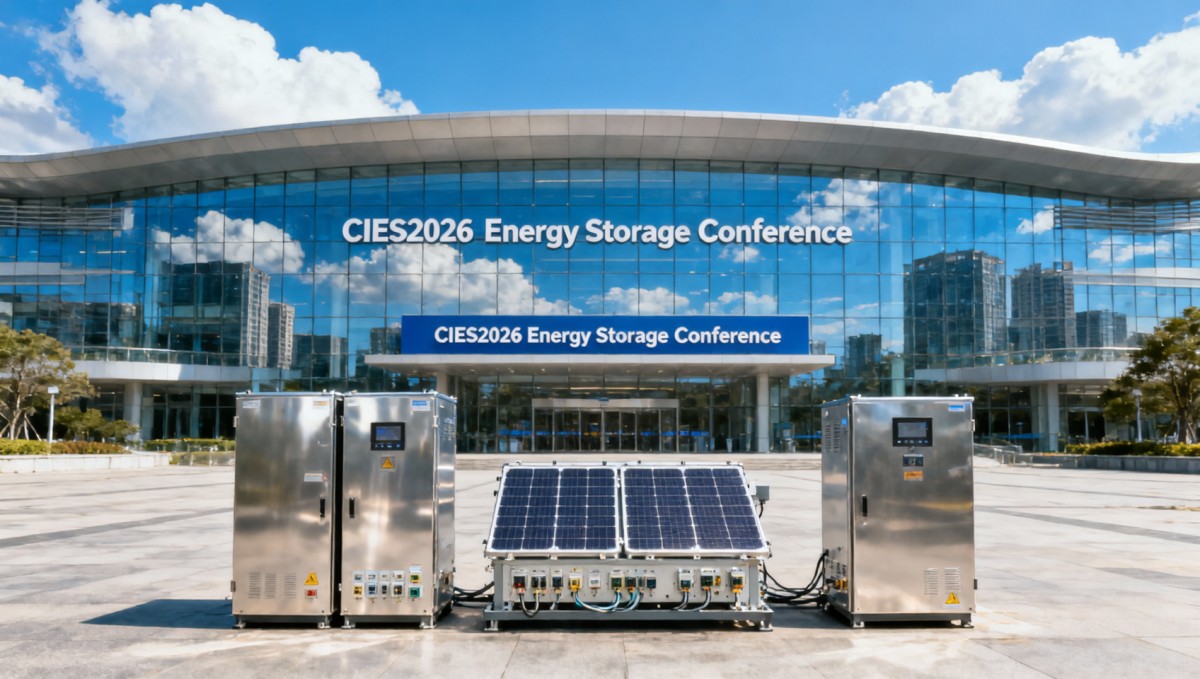
The 16th China International Energy Storage Conference (CIES2026) will take place in Hangzhou from August 9–11, 2026, under the theme ‘Source-Grid-Load-Storage and Computing-Electricity Coordination’. This event signals a pivotal shift for Chinese manufacturers exporting lithium battery cabinets, PV-storage integrated units, and EMS controllers — particularly to Europe, North America, the Middle East, and Southeast Asia — as new interoperability requirements for grid connection enter formal implementation planning.
Event Overview
The 16th China International Energy Storage Conference (CIES2026) is scheduled for August 9–11, 2026, in Hangzhou. Organized jointly by over 300 domestic and international stakeholders — including grid operators, EPC contractors, and certification bodies — the conference will launch the English-language White Paper on Interoperability of Commercial & Industrial Energy Storage Systems. The document specifies mandatory technical alignment requirements for communication protocols, safety-driven disconnection responses, and cloud-based data interface standards for export-bound systems.
Industries Affected
Direct Exporters of Energy Storage Products
Manufacturers exporting lithium battery cabinets, PV-storage integrated units, and EMS controllers face immediate implications. The White Paper introduces de facto technical gateways for market access — especially in jurisdictions where certification bodies or grid operators reference CIES-aligned specifications. Non-compliance may delay type approval, increase third-party testing costs, or trigger re-engineering of firmware and communication stacks.
EMS and Control System Developers
Companies developing energy management software and hardware controllers must adapt to standardized data models and real-time command structures defined in the White Paper. Deviations from prescribed response timing (e.g., for emergency grid disconnection) or unsupported protocol versions (e.g., IEC 61850-7-42 extensions) could render systems non-certifiable in target markets.
System Integrators and EPC Contractors
EPC firms delivering turnkey storage projects overseas may encounter revised contractual obligations. As international clients increasingly cite CIES-aligned interoperability as a tender requirement, integrators will need to verify vendor compliance earlier in procurement cycles — affecting bill-of-materials selection, commissioning timelines, and liability clauses.
Certification and Testing Service Providers
Laboratories and conformity assessment bodies serving Chinese exporters will likely expand test scope to cover the White Paper’s interoperability benchmarks. Demand may rise for protocol conformance testing, cybersecurity-aware functional safety validation, and cloud API verification — especially for projects targeting EU EN 50549-1 or UAE DGAM grid codes.
What Enterprises and Practitioners Should Monitor and Act On
Track official publication status and jurisdictional adoption pathways
The White Paper is slated for release at CIES2026, but its normative weight depends on subsequent endorsement by national grid authorities (e.g., State Grid Corporation of China), regional certification schemes (e.g., TÜV Rheinland’s PV-Storage Interop Program), or international standards bodies. Enterprises should monitor whether it evolves into a referenced annex in national technical regulations or voluntary industry guidelines.
Focus validation efforts on three technical layers: communication, safety logic, and cloud integration
Export-ready products must demonstrate compliance across: (1) message structure and semantics per specified protocols (e.g., Modbus TCP vs. IEEE 2030.5); (2) deterministic response latency under fault conditions (e.g., ≤200 ms disconnect upon frequency deviation >±0.2 Hz); and (3) secure, authenticated data publishing to cloud platforms via defined RESTful or MQTT endpoints. Prioritize testing on these before finalizing firmware releases.
Distinguish between policy signaling and operational enforcement
While the White Paper sets clear technical expectations, no binding regulatory deadline has been announced. Analysis shows this is currently a coordination framework — not a legal mandate. However, leading European DSOs and Middle Eastern regulators have already begun incorporating similar interoperability clauses into RFPs. Treat early adoption as risk mitigation, not premature compliance.
Initiate cross-functional alignment now — especially between R&D, certification, and export sales teams
Engineering roadmaps should reflect updated interface definitions; certification departments need to map test plans against the White Paper’s annexes; and sales contracts should include interoperability warranties aligned with the document’s scope. Delaying internal alignment risks misaligned product launches or contractual exposure post-CIES2026.
Editorial Perspective / Industry Observation
Observably, CIES2026 marks a structural inflection point: interoperability is shifting from a competitive differentiator to a baseline eligibility criterion for global energy storage trade. The coordinated involvement of 300+ grid and certification entities suggests institutional momentum — not just industry advocacy. However, this remains a signal phase: the White Paper itself carries no legal force, and its influence hinges on uptake by downstream actors (e.g., utilities issuing technical tenders, insurers requiring certified interoperability). From an industry perspective, this is less about imminent regulation and more about anticipatory standardization — where early alignment reduces friction in high-potential but technically stringent markets like Germany, Saudi Arabia, and Singapore.
Conclusion: CIES2026 does not introduce new laws, but it crystallizes a converging expectation across key export markets — that storage systems must operate as coordinated nodes within intelligent grids, not standalone assets. For affected enterprises, the most rational interpretation is not urgency, but strategic preparation: treat the White Paper as a forward-looking technical reference, not a compliance deadline — and prioritize actions that yield tangible readiness without overcommitting resources ahead of confirmed enforcement pathways.
Source Attribution:
Primary source: Official announcement of the 16th China International Energy Storage Conference (CIES2026), including confirmed dates (August 9–11, 2026), location (Hangzhou), theme, participating organizations (300+ grid companies, EPCs, certification bodies), and planned release of the English-language White Paper on Interoperability of Commercial & Industrial Energy Storage Systems.
Points requiring ongoing observation: Formal adoption status of the White Paper by national grid regulators or international standards development organizations; explicit referencing of its provisions in public procurement documents or certification scheme requirements outside China.
 Which global manufacturing trends by sector matter most for sourcing plans?Global manufacturing trends by sector: identify sourcing risks, supplier resilience, compliance demands, and cost drivers to build smarter, more reliable procurement plans.
 What industrial trade intelligence pricing should include before you subscribeIndustrial trade intelligence pricing explained: compare coverage, data quality, access rights, and workflow value before choosing a subscription that supports smarter trade decisions.
 How an industrial trade intelligence dashboard can identify new supplier marketsDiscover how an industrial trade intelligence dashboard helps identify new supplier markets by comparing capacity, landed cost, logistics resilience, and compliance risk.
 Which global market entry barriers should exporters assess first?Global market entry barriers exporters should assess first: tariffs, compliance, buyer qualification, logistics, and payment risk. Build a practical strategy for confident market entry.
 How trade data aggregation analytics can reveal emerging supplier marketsTrade data aggregation analytics reveals emerging supplier markets by connecting trade flows, capacity signals, logistics, and compliance insights for smarter sourcing decisions.
 When an export market analysis platform can validate demand in a new marketExport market analysis platform insights help validate new-market demand through buyer fit, regulations, logistics, competition, and profitable entry conditions.
 What is driving the beauty and personal care market in the USA?Beauty and personal care in USA is driven by targeted solutions, selective premiumization, digital discovery, clean-label trust, diverse needs, and compliance. Explore key growth opportunities.
 How trade flow monitoring reports reveal changing regional demandTrade flow monitoring reports reveal changing regional demand through import volumes, sourcing shifts, product mix, logistics signals, and regulatory trends. Explore actionable market insights.
 How international market intelligence for investors reduces market-entry riskInternational market intelligence for investors reduces market-entry risk by validating demand, regulations, logistics, and competition before capital is committed.
 How international sourcing intelligence helps identify supplier risk earlyInternational sourcing intelligence helps businesses spot supplier risks early, protect supply continuity, and make smarter global procurement decisions.
 How trade data aggregation analytics reveals emerging supplier marketsTrade data aggregation analytics reveals emerging supplier markets through export trends, input flows, logistics, and regulatory signals. Discover smarter sourcing insights.
 What industrial cluster monitoring in Vietnam reveals about site riskIndustrial cluster monitoring Vietnam reveals hidden site risks across labor, utilities, logistics, compliance, and supplier dependencies. Make smarter sourcing and expansion decisions.
 Food Technology Trends Reshaping Shelf Life, Safety, and Product InnovationFood technology is reshaping shelf life, safety, and innovation. Discover the trends helping food businesses cut risk, improve compliance, and unlock stronger global market growth.
 How electronics manufacturing services are changing with low-volume demandElectronics manufacturing services are evolving fast with low-volume demand. Learn how agile EMS partners improve flexibility, compliance, sourcing resilience, and speed to market.
 How Can Buyers Reduce Procurement Risks for Electronic Components?How to reduce procurement risks for electronic components: learn how buyers assess traceability, lead times, compliance, and supplier types to avoid costly sourcing mistakes.
 What Sourcing Intelligence India Reveals About Supplier Risk and Cost ShiftsSourcing intelligence India reveals hidden supplier risk, compliance gaps, logistics pressure, and real cost shifts—helping buyers compare vendors smarter and source with more confidence.
 Fashion Trends 2026: Which Materials, Colors, and Silhouettes Are Gaining Ground?Fashion trends 2026 spotlight tactile fabrics, mineral colors, and controlled volume. Explore the materials, shades, and silhouettes shaping smarter, more wearable style.
 Smart Device Market Outlook: Key Growth Drivers, Segments, and Business OpportunitiesSmart device market trends are shifting toward system value, industrial demand, and resilient supply chains. Explore key growth drivers, high-potential segments, and business opportunities.
 How Global Trade Intelligence Services Help B2B Firms Evaluate Markets and SuppliersGlobal trade intelligence services help B2B firms compare suppliers, assess market potential, and uncover compliance, logistics, and pricing risks before costly decisions are made.
 Manufacturing Sector Updates for Investors: What Signals Matter Most in 2025?Manufacturing sector updates for investors in 2025: track orders, margins, supply chains, regulation, and exports to spot resilient manufacturers and smarter investment signals.
 How Energy Market Intelligence Helps Businesses Track Price Risks and Demand ShiftsEnergy market intelligence helps businesses spot price risks, demand shifts, and supply pressure early—improving procurement, resilience, and faster strategic decisions.





















Global Trade Insights & Industry
Our mission is to empower global exporters and importers with data-driven insights that foster strategic growth.
Search News
Popular Tags
Industry Overview
The global commercial kitchen equipment market is projected to reach $112 billion by 2027. Driven by urbanization, the rise of e-commerce food delivery, and strict hygiene regulations.