

Performance Outdoor Clothing: Which Fabric Claims Matter Most?
When evaluating performance outdoor clothing, not all fabric claims deserve equal weight. For technical assessors, the real challenge is separating marketing language from measurable functionality—such as moisture management, thermal efficiency, abrasion resistance, and long-term durability. This article examines which claims matter most, how to verify them, and what they reveal about product performance in demanding outdoor environments.
Which performance outdoor clothing claims deserve the closest scrutiny?
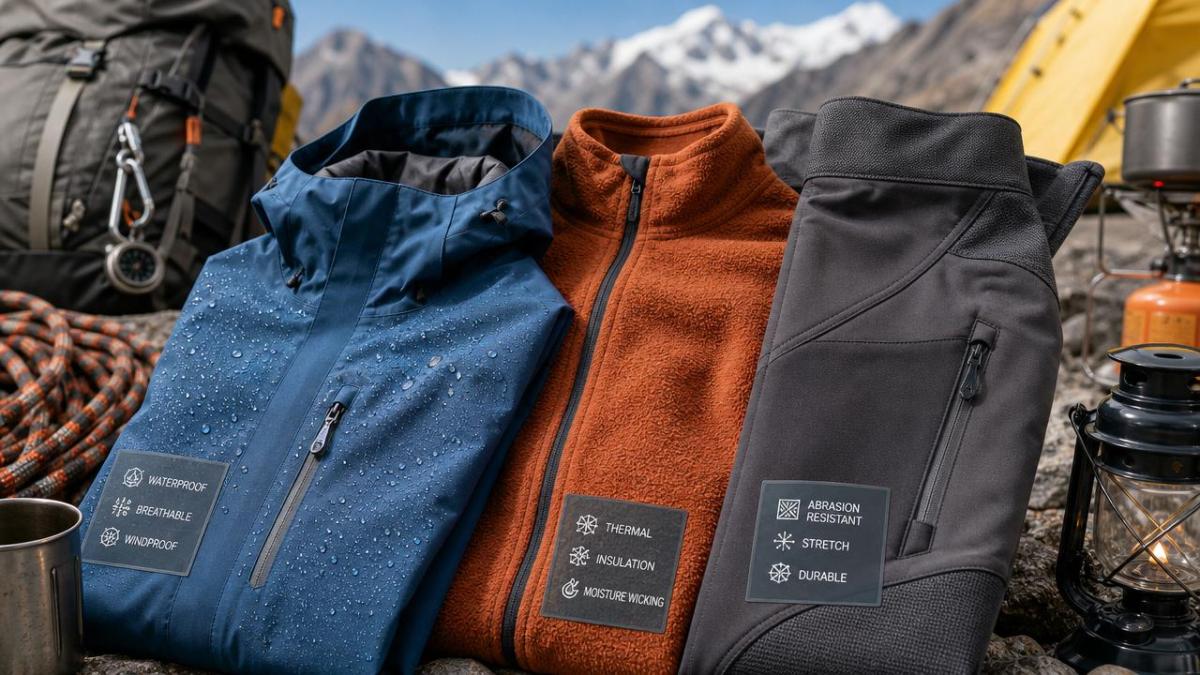
In the outdoor sports equipment sector, technical assessors are often asked to validate whether performance outdoor clothing can support real use conditions rather than showroom expectations. The problem is not a shortage of claims. It is a surplus of vague ones.
Terms such as breathable, weatherproof, thermal, and durable appear on nearly every product brief. Yet from a procurement and risk-control perspective, these words only matter when they connect to test methods, use scenarios, and fabric construction details.
For technical evaluation teams, the highest-value claims usually fall into four decision areas:
- Moisture management, including sweat transport, drying speed, and next-to-skin comfort during variable activity levels.
- Thermal efficiency, including insulation retention in damp conditions and temperature regulation under stop-start exertion.
- Abrasion and tear resistance, especially for garments used with packs, harnesses, rough rock, or repeated industrial handling.
- Long-term durability, which includes wash stability, coating lifespan, seam performance, and loss of function over time.
These are the claims that most directly affect returns, warranty exposure, user safety, and lifecycle cost. In other words, they matter more than trend-led descriptions that sound technical but lack measurable performance relevance.
Why assessors should focus on claim hierarchy
Not every claim should carry equal weight in supplier comparison. A jacket promoted for mountain use should not be judged by softness first. A trail layer built for high-output movement should not be selected on water resistance alone.
The best evaluation framework starts with end use, then maps fabric claims to actual risk points. This helps assessors avoid overpaying for features that add marketing appeal but little operational value.
How should technical teams rank fabric claims by use scenario?
Performance outdoor clothing should be assessed against activity pattern, climate exposure, and wear intensity. A static cold-weather layer, a fast-hiking shell, and a climbing softshell require very different fabric priorities.
The table below helps technical assessors rank which claims matter most across common outdoor applications.
This comparison shows why performance outdoor clothing cannot be assessed with one universal scorecard. The same fabric claim may be essential in one category and secondary in another. Technical teams that rank claims by scenario usually make faster and more defensible decisions.
A practical ranking method
- Define the primary use case and failure consequence.
- Separate must-have performance from nice-to-have comfort features.
- Request test references tied to the specific claims presented by the supplier.
- Compare expected lifespan, not just initial performance.
What evidence should support performance outdoor clothing claims?
A claim has procurement value only when it can be checked. Technical assessors should ask suppliers to move beyond adjectives and provide verifiable evidence linked to fabric composition, structure, finish, and relevant test standards.
For performance outdoor clothing, evidence generally falls into three layers: laboratory data, construction details, and field relevance. Laboratory data alone is not enough if it does not reflect real wearing conditions.
Claims that should trigger deeper verification
- “Breathable” should lead to questions about air permeability or moisture vapor transfer, plus whether the value changes after lamination or durable water-repellent treatment.
- “Warm” should prompt review of insulation type, loft retention, garment construction, and damp-condition performance.
- “Durable” should be broken into abrasion resistance, seam strength, pilling, tear propagation, and wash-cycle stability.
- “Water resistant” should not be confused with waterproof. Assessors need to understand coating level, face fabric behavior, seam construction, and intended exposure duration.
This is where GTIIN and TradeVantage add value for cross-border sourcing teams. By tracking manufacturing updates, material trends, and supplier-side market signals across regions, we help buyers contextualize whether a fabric claim reflects current industry capability or recycled sales language.
Which technical parameters are most useful during supplier comparison?
When multiple suppliers offer similar performance outdoor clothing, parameter discipline becomes critical. Technical assessors need a practical comparison grid that reduces ambiguity and highlights trade-offs early in the selection process.
The following table summarizes useful evaluation dimensions for performance outdoor clothing fabrics and explains how each parameter affects buying decisions.
A table like this helps assessors build apples-to-apples comparisons. It also exposes when two suppliers use the same headline claim but rely on very different fabric engineering approaches.
Where teams often misjudge performance
A common mistake is treating higher specification as automatically better. In performance outdoor clothing, more protection can mean lower breathability, higher weight, stiffer hand feel, or increased cost. The right fabric is usually the best-balanced one for the target use case.
How can technical assessors avoid common fabric-claim mistakes?
The biggest evaluation risks often come from language shortcuts. Technical assessors working under deadline pressure may accept broad claims that appear familiar. That speeds early screening but can create downstream problems in wear performance, line positioning, or warranty handling.
Frequent misconceptions in performance outdoor clothing
- Assuming waterproof and breathable always coexist at high levels. In practice, there is often a trade-off shaped by membrane type, face fabric, and garment design.
- Equating lightweight with advanced. Some lightweight fabrics perform well for speed-oriented use but fail faster in abrasive environments.
- Judging warmth by fabric thickness alone. Loft, fiber type, moisture response, and construction all influence real thermal performance.
- Ignoring care burden. A technically strong material may be commercially weak if it requires handling that end users rarely follow.
These mistakes matter in B2B sourcing because they affect not only user experience but also inventory segmentation, retailer training, and product claim consistency across export markets.
What should a procurement guide for performance outdoor clothing include?
For technical assessors, a procurement guide should reduce uncertainty before purchase orders are placed. It should align product use, testing expectations, and commercial constraints such as lead time, budget, and certification needs.
Evaluation checklist before shortlisting suppliers
- Confirm the intended environment: cold, wet, windy, high-output, abrasive, or mixed.
- Ask which fabric claims are supported by internal tests, third-party reports, or documented material specifications.
- Check whether the fabric performance survives washing, repeated flexing, and long storage periods.
- Review construction factors beyond fabric, including seam placement, reinforcement zones, and trim compatibility.
- Assess supply continuity, minimum order expectations, and substitution risk if the original fabric source changes.
This process is especially useful when comparing suppliers from different regions. Market intelligence from GTIIN and TradeVantage can support this stage by identifying material availability shifts, production trends, and region-specific sourcing signals that may affect consistency or lead time.
Standards and compliance questions worth asking
Assessors may also need to review whether suppliers can respond to common compliance expectations related to fiber content labeling, restricted substances, care labeling, and applicable performance test references. The exact requirement depends on destination market and product category, so it should be clarified early.
FAQ: what do buyers ask most about performance outdoor clothing?
How do I compare two fabrics that both claim to be breathable?
Do not compare the word alone. Ask how the claim is supported, what construction is used, and whether breathability remains acceptable after water-repellent treatments, lamination, or repeated wear. Then match the result to the target activity level.
Is abrasion resistance more important than low weight?
It depends on use. For climbing, pack-heavy trekking, and rugged field activity, abrasion resistance often has greater lifecycle value. For speed hiking or warm-weather running layers, low weight and fast moisture handling may deserve higher priority.
What is the most overlooked issue in performance outdoor clothing sourcing?
Durability after care is often overlooked. A garment may test well when new but lose repellency, shape, loft, or hand feel after laundering. Technical assessors should ask how claims hold up across repeated use and maintenance cycles.
Can one fabric platform cover multiple outdoor categories?
Sometimes, but there are limits. A balanced fabric can serve general trekking and travel lines, yet specialist alpine, climbing, or insulated products usually require more targeted engineering. Overgeneralization can weaken product-market fit.
Why choose us for market intelligence and sourcing insight?
For teams evaluating performance outdoor clothing, the challenge is rarely just fabric science. It is also about supplier visibility, market timing, claim validation context, and understanding how technical positioning changes across regions and channels.
GTIIN and TradeVantage support that decision process by connecting product-level assessment with broader industry intelligence. Our coverage helps exporters, importers, and sourcing teams track manufacturing developments, material shifts, and competitive signals across the outdoor sports equipment supply chain.
- If you need help comparing performance outdoor clothing claims, we can support parameter review and supplier information screening.
- If your team is refining a sourcing brief, we can help frame product selection priorities by use scenario and market direction.
- If delivery timing, certification expectations, or sample planning are concerns, we can help identify the right discussion points before formal quotation stages.
- If brand exposure and international digital trust matter to your business, TradeVantage also provides a high-authority platform for visibility, industry positioning, and backlink value.
Contact us to discuss fabric parameter confirmation, performance outdoor clothing selection logic, supplier evaluation questions, certification-related concerns, sample support, lead-time planning, or quotation communication needs. Clearer inputs at the start usually mean fewer sourcing errors later.
 How an industrial trade intelligence dashboard can identify new supplier marketsDiscover how an industrial trade intelligence dashboard helps identify new supplier markets by comparing capacity, landed cost, logistics resilience, and compliance risk.
 Which global market entry barriers should exporters assess first?Global market entry barriers exporters should assess first: tariffs, compliance, buyer qualification, logistics, and payment risk. Build a practical strategy for confident market entry.
 How trade data aggregation analytics can reveal emerging supplier marketsTrade data aggregation analytics reveals emerging supplier markets by connecting trade flows, capacity signals, logistics, and compliance insights for smarter sourcing decisions.
 When an export market analysis platform can validate demand in a new marketExport market analysis platform insights help validate new-market demand through buyer fit, regulations, logistics, competition, and profitable entry conditions.
 What is driving the beauty and personal care market in the USA?Beauty and personal care in USA is driven by targeted solutions, selective premiumization, digital discovery, clean-label trust, diverse needs, and compliance. Explore key growth opportunities.
 How trade flow monitoring reports reveal changing regional demandTrade flow monitoring reports reveal changing regional demand through import volumes, sourcing shifts, product mix, logistics signals, and regulatory trends. Explore actionable market insights.
 How international market intelligence for investors reduces market-entry riskInternational market intelligence for investors reduces market-entry risk by validating demand, regulations, logistics, and competition before capital is committed.
 How international sourcing intelligence helps identify supplier risk earlyInternational sourcing intelligence helps businesses spot supplier risks early, protect supply continuity, and make smarter global procurement decisions.
 How trade data aggregation analytics reveals emerging supplier marketsTrade data aggregation analytics reveals emerging supplier markets through export trends, input flows, logistics, and regulatory signals. Discover smarter sourcing insights.
 What industrial cluster monitoring in Vietnam reveals about site riskIndustrial cluster monitoring Vietnam reveals hidden site risks across labor, utilities, logistics, compliance, and supplier dependencies. Make smarter sourcing and expansion decisions.
 Food Technology Trends Reshaping Shelf Life, Safety, and Product InnovationFood technology is reshaping shelf life, safety, and innovation. Discover the trends helping food businesses cut risk, improve compliance, and unlock stronger global market growth.
 How electronics manufacturing services are changing with low-volume demandElectronics manufacturing services are evolving fast with low-volume demand. Learn how agile EMS partners improve flexibility, compliance, sourcing resilience, and speed to market.
 How Can Buyers Reduce Procurement Risks for Electronic Components?How to reduce procurement risks for electronic components: learn how buyers assess traceability, lead times, compliance, and supplier types to avoid costly sourcing mistakes.
 What Sourcing Intelligence India Reveals About Supplier Risk and Cost ShiftsSourcing intelligence India reveals hidden supplier risk, compliance gaps, logistics pressure, and real cost shifts—helping buyers compare vendors smarter and source with more confidence.
 Fashion Trends 2026: Which Materials, Colors, and Silhouettes Are Gaining Ground?Fashion trends 2026 spotlight tactile fabrics, mineral colors, and controlled volume. Explore the materials, shades, and silhouettes shaping smarter, more wearable style.
 Smart Device Market Outlook: Key Growth Drivers, Segments, and Business OpportunitiesSmart device market trends are shifting toward system value, industrial demand, and resilient supply chains. Explore key growth drivers, high-potential segments, and business opportunities.
 How Global Trade Intelligence Services Help B2B Firms Evaluate Markets and SuppliersGlobal trade intelligence services help B2B firms compare suppliers, assess market potential, and uncover compliance, logistics, and pricing risks before costly decisions are made.
 Manufacturing Sector Updates for Investors: What Signals Matter Most in 2025?Manufacturing sector updates for investors in 2025: track orders, margins, supply chains, regulation, and exports to spot resilient manufacturers and smarter investment signals.
 How Energy Market Intelligence Helps Businesses Track Price Risks and Demand ShiftsEnergy market intelligence helps businesses spot price risks, demand shifts, and supply pressure early—improving procurement, resilience, and faster strategic decisions.
 Precision Hardware Tools Market: Key Demand Drivers, Segments, and Growth OutlookPrecision hardware tools market trends are reshaping sourcing, compliance, and automation. Explore key demand drivers, segment shifts, regional supply patterns, and growth opportunities.
 How to Use Customs Import Data to Find Buyers, Track Competitors, and Spot Demand?Customs import data helps you find real buyers, track competitors, and spot demand shifts early. Learn practical ways to turn trade records into smarter global business decisions.





















Global Trade Insights & Industry
Our mission is to empower global exporters and importers with data-driven insights that foster strategic growth.
Search News
Popular Tags
Industry Overview
The global commercial kitchen equipment market is projected to reach $112 billion by 2027. Driven by urbanization, the rise of e-commerce food delivery, and strict hygiene regulations.