

How to size hotel laundry equipment for peak occupancy
Sizing hotel laundry equipment for peak occupancy is critical to maintaining linen turnaround, labor efficiency, and guest satisfaction. For project managers and engineering leads, the right capacity planning can prevent operational bottlenecks, reduce utility waste, and support long-term cost control. This guide explains how to evaluate hotel laundry equipment based on room count, occupancy peaks, laundry volume, and workflow demands.
In hotels and serviced accommodation, under-sizing creates delayed room release, emergency outsourcing, and linen shortages during high-demand periods. Over-sizing can be just as costly, tying up capital, floor space, steam, gas, water, and electrical capacity that the property rarely uses.
For project teams involved in new builds, renovations, or central laundry upgrades, the sizing decision should be based on peak-day throughput rather than average occupancy alone. A realistic plan considers room mix, food and beverage linen, spa demand, shift patterns, turnaround targets, and the actual hours the laundry operates each day.
Start with Peak Occupancy and Daily Linen Volume
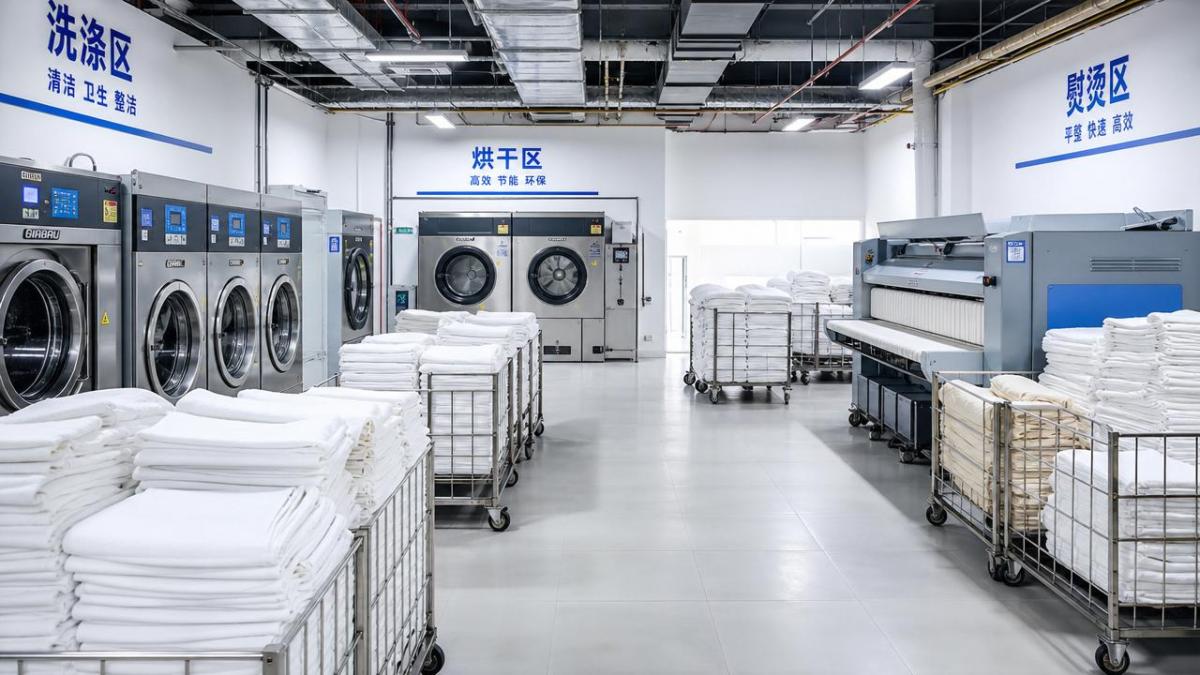
The first step in sizing hotel laundry equipment is to define the highest realistic operating load. For many properties, this is not 100% annual occupancy but a peak window of 85% to 98% occupancy combined with high check-out density, banquet activity, and faster room turnover.
A 150-room business hotel running at 92% occupancy on a typical peak day may process very differently from a 150-room resort with triple-sheeted beds, pool towels, and spa robes. That is why room count is only the starting point, not the final sizing metric.
Calculate kilograms or pounds per occupied room
Many project managers use a working range of 4 kg to 8 kg of laundry per occupied room per day, depending on service level and property type. Limited-service hotels may fall near the lower end, while luxury, resort, or wellness properties often exceed the upper end when towels, robes, and specialty linen are included.
A practical formula is: occupied rooms × average laundry weight per occupied room + non-room linen. Non-room linen often includes restaurant napkins, tablecloths, kitchen uniforms, housekeeping mops, spa linen, and event textiles. In some full-service hotels, these categories add 15% to 35% beyond guest-room linen volume.
Key inputs to collect before selecting equipment
- Number of rooms by type, such as standard, suite, villa, or dormitory
- Peak occupancy rate over the busiest 30 to 90 days of the year
- Average check-out percentage on peak days
- Linen change policy, including daily, on-request, or eco-program frequency
- Non-room linen sources such as restaurants, spa, gym, and banquet operations
- Planned laundry operating hours per day, usually 8, 12, 16, or 24 hours
The table below gives a planning framework that engineering teams can use during concept design. These are typical ranges rather than fixed rules, and they should always be adjusted to the actual service model of the property.
This range helps establish total daily throughput. For example, a 200-room full-service hotel at 90% occupancy and 6 kg per occupied room generates about 1,080 kg per day before adding banquet and spa linen. If non-room linen adds 20%, the total daily volume rises to roughly 1,296 kg.
Convert Daily Volume into Washer, Dryer, and Finishing Capacity
Once daily volume is known, the next step is translating that number into machine capacity. This is where many hotel laundry equipment projects go wrong. Teams often buy based on total kilograms per day without checking cycle time, extraction speed, dryer bottlenecks, or finishing line capacity.
A laundry that must process 1,300 kg per day in a single 8-hour shift needs very different equipment from one handling the same volume across 16 hours. The shorter the operating window, the higher the required hourly throughput and the less tolerance there is for downtime or rewash.
Estimate hourly throughput
Use a simple planning formula: total daily volume ÷ effective operating hours. Effective hours should exclude meal breaks, loading delays, preventive maintenance, and linen transport time. In many hotels, an 8-hour shift provides only 6.5 to 7 productive laundry hours.
If the property must wash 1,296 kg per day and has 7 effective hours, the target throughput is about 185 kg per hour. That figure should be matched against real machine cycles, not only the nominal rated capacity printed in brochures.
Balance the line, not just the washers
A common mistake is installing enough washer capacity but too few dryers or flatwork finishing units. In hotel operations, bed sheets, duvet covers, pillowcases, bath towels, table linen, and uniforms do not move through the same path at the same speed. Towels may dry longer, while sheets may wait for ironing or folding.
For planning purposes, project teams usually review at least 4 linked capacity points: washing, drying, ironing, and folding. If one stage lags by 15% to 25%, the entire laundry room can stall during peak occupancy.
Typical sizing checkpoints
- Match washer extract capacity to hourly volume requirement.
- Confirm dryer count and cycle time for towel-heavy days.
- Check flatwork ironer speed for sheet and table linen output.
- Add a contingency buffer of 10% to 20% for breakdowns, rewash, and seasonal spikes.
The table below shows a simplified planning view for equipment balancing. Actual machine selection should be validated with utility availability, linen mix, and manufacturer cycle data.
The key point is that hotel laundry equipment should be sized as a system. A well-balanced line often performs better than simply buying larger washers, especially where labor, space, or energy infrastructure is constrained.
Consider Workflow, Space Planning, and Utility Constraints
Laundry sizing decisions should never be isolated from building services. A machine that fits the throughput target may still fail the project if the room lacks drainage slope, make-up air, steam pressure, gas supply, electrical load, or safe circulation routes for linen carts and operators.
For hotel projects, engineers should review at least 5 infrastructure zones: soiled linen receiving, wash area, drying and finishing, clean linen storage, and dispatch back to floors. Poor adjacency can add 10 to 20 extra handling minutes per batch, which directly reduces usable throughput.
Space efficiency affects capacity in practice
On paper, two 50 kg washers may equal one 100 kg washer in total capacity. In practice, multiple smaller units may offer better load separation, lower rewash risk, and improved continuity when one machine is down. They can also support mixed loads such as towels, sheets, and uniforms at the same time.
However, smaller machines can require more doors, more loading movements, and more operator touch points. In a compact hotel laundry with limited staffing, fewer but strategically sized units may simplify workflow and reduce peak-hour congestion.
Questions for the engineering review
- Can the utility room support simultaneous operation at peak thermal and electrical load?
- Is there enough aisle clearance for carts, maintenance access, and safe unloading?
- Will the drainage, ventilation, and lint extraction systems match the machine count?
- Is future expansion possible if room inventory grows by 10% to 15%?
These factors matter because actual operating capacity is often 10% to 30% below theoretical capacity when layout and utilities are poorly coordinated. For project managers, early coordination between laundry planners, MEP teams, operators, and procurement can prevent expensive redesign later in the build.
Build in Resilience for Seasonality, Maintenance, and Outsourcing Risk
Peak occupancy is not the only stress test. Hotel laundry equipment should also be sized for maintenance windows, operator absence, late-night turnover surges, and occasional spikes from events or weather-driven occupancy changes. A system with no reserve margin may perform well for 10 months and fail during the 2 months that matter most.
A practical approach is to maintain a 10% to 20% capacity buffer above calculated peak demand. This does not always mean larger machines. It can mean additional shift flexibility, a backup dryer, contract overflow arrangements, or modular finishing equipment that can scale with occupancy.
When outsourcing should be part of the plan
Some hotels deliberately size on-premise hotel laundry equipment for 70% to 85% of annual high-load volume and use external laundry partners during festivals, major conferences, or renovations. This strategy can reduce capital investment, but only if transport time, quality control, and emergency turnaround are clearly defined.
For properties promising same-day linen recovery or rapid room reset, heavy reliance on outsourcing can create service risk. Transit time of even 4 to 6 hours may disrupt inventory planning if the par level is too lean.
Common sizing mistakes to avoid
- Basing decisions on average occupancy instead of peak check-out and event load.
- Ignoring F&B, spa, pool, and banquet linen in daily volume calculations.
- Assuming brochure capacity equals real hourly output.
- Underestimating dryer and finishing bottlenecks.
- Leaving no redundancy for maintenance or machine downtime.
For B2B buyers and project leads, the best procurement outcome usually comes from comparing at least 3 solution scenarios: compact on-premise, full in-house processing, and hybrid in-house plus outsourced overflow. This creates a more realistic basis for CAPEX, OPEX, labor planning, and service resilience.
A Practical Procurement Checklist for Project Managers
When evaluating suppliers, the conversation should go beyond machine price. The right hotel laundry equipment package must align with throughput, utilities, staffing, preventive maintenance access, and the service promise of the hotel. A lower bid may become more expensive if it causes higher energy use, rewash, or linen backlog.
Before final approval, project teams should confirm 6 decision areas: daily volume assumptions, hourly throughput, utility compatibility, floor layout, spare parts support, and commissioning requirements. This reduces the risk of buying equipment that looks efficient in specification sheets but performs poorly in hotel operations.
Recommended review points before purchase order
- Validate peak-day laundry volume with operations, housekeeping, and F&B teams.
- Request cycle-time assumptions for sheets, towels, and mixed loads separately.
- Review utility consumption by machine under realistic load conditions.
- Check maintenance access clearances and replacement part lead times.
- Confirm commissioning, operator training, and preventive service intervals.
- Plan linen par levels to match production capacity and room release targets.
For international buyers and engineering teams managing multi-country sourcing, a structured information platform can also speed up supplier comparison, market scanning, and procurement benchmarking. Access to reliable industrial updates and sector-specific insights helps decision-makers evaluate not only equipment specifications but also supply-chain stability and service readiness.
Selecting the right hotel laundry equipment for peak occupancy requires more than a simple room-count formula. The most reliable sizing method combines occupancy peaks, kilograms per occupied room, non-room linen volume, effective operating hours, utility readiness, and a built-in resilience margin. For project managers and engineering leads, this approach supports smoother operations, better cost control, and fewer service failures during the busiest periods.
If you are planning a hotel, resort, or hospitality laundry project and need market intelligence, supplier visibility, or a more structured sourcing view, TradeVantage can help you assess options with stronger commercial context. Contact us to get a tailored solution, discuss equipment selection factors, or explore more hospitality-focused sourcing insights.
 How an industrial trade intelligence dashboard can identify new supplier marketsDiscover how an industrial trade intelligence dashboard helps identify new supplier markets by comparing capacity, landed cost, logistics resilience, and compliance risk.
 Which global market entry barriers should exporters assess first?Global market entry barriers exporters should assess first: tariffs, compliance, buyer qualification, logistics, and payment risk. Build a practical strategy for confident market entry.
 How trade data aggregation analytics can reveal emerging supplier marketsTrade data aggregation analytics reveals emerging supplier markets by connecting trade flows, capacity signals, logistics, and compliance insights for smarter sourcing decisions.
 When an export market analysis platform can validate demand in a new marketExport market analysis platform insights help validate new-market demand through buyer fit, regulations, logistics, competition, and profitable entry conditions.
 What is driving the beauty and personal care market in the USA?Beauty and personal care in USA is driven by targeted solutions, selective premiumization, digital discovery, clean-label trust, diverse needs, and compliance. Explore key growth opportunities.
 How trade flow monitoring reports reveal changing regional demandTrade flow monitoring reports reveal changing regional demand through import volumes, sourcing shifts, product mix, logistics signals, and regulatory trends. Explore actionable market insights.
 How international market intelligence for investors reduces market-entry riskInternational market intelligence for investors reduces market-entry risk by validating demand, regulations, logistics, and competition before capital is committed.
 How international sourcing intelligence helps identify supplier risk earlyInternational sourcing intelligence helps businesses spot supplier risks early, protect supply continuity, and make smarter global procurement decisions.
 How trade data aggregation analytics reveals emerging supplier marketsTrade data aggregation analytics reveals emerging supplier markets through export trends, input flows, logistics, and regulatory signals. Discover smarter sourcing insights.
 What industrial cluster monitoring in Vietnam reveals about site riskIndustrial cluster monitoring Vietnam reveals hidden site risks across labor, utilities, logistics, compliance, and supplier dependencies. Make smarter sourcing and expansion decisions.
 Food Technology Trends Reshaping Shelf Life, Safety, and Product InnovationFood technology is reshaping shelf life, safety, and innovation. Discover the trends helping food businesses cut risk, improve compliance, and unlock stronger global market growth.
 How electronics manufacturing services are changing with low-volume demandElectronics manufacturing services are evolving fast with low-volume demand. Learn how agile EMS partners improve flexibility, compliance, sourcing resilience, and speed to market.
 How Can Buyers Reduce Procurement Risks for Electronic Components?How to reduce procurement risks for electronic components: learn how buyers assess traceability, lead times, compliance, and supplier types to avoid costly sourcing mistakes.
 What Sourcing Intelligence India Reveals About Supplier Risk and Cost ShiftsSourcing intelligence India reveals hidden supplier risk, compliance gaps, logistics pressure, and real cost shifts—helping buyers compare vendors smarter and source with more confidence.
 Fashion Trends 2026: Which Materials, Colors, and Silhouettes Are Gaining Ground?Fashion trends 2026 spotlight tactile fabrics, mineral colors, and controlled volume. Explore the materials, shades, and silhouettes shaping smarter, more wearable style.
 Smart Device Market Outlook: Key Growth Drivers, Segments, and Business OpportunitiesSmart device market trends are shifting toward system value, industrial demand, and resilient supply chains. Explore key growth drivers, high-potential segments, and business opportunities.
 How Global Trade Intelligence Services Help B2B Firms Evaluate Markets and SuppliersGlobal trade intelligence services help B2B firms compare suppliers, assess market potential, and uncover compliance, logistics, and pricing risks before costly decisions are made.
 Manufacturing Sector Updates for Investors: What Signals Matter Most in 2025?Manufacturing sector updates for investors in 2025: track orders, margins, supply chains, regulation, and exports to spot resilient manufacturers and smarter investment signals.
 How Energy Market Intelligence Helps Businesses Track Price Risks and Demand ShiftsEnergy market intelligence helps businesses spot price risks, demand shifts, and supply pressure early—improving procurement, resilience, and faster strategic decisions.
 Precision Hardware Tools Market: Key Demand Drivers, Segments, and Growth OutlookPrecision hardware tools market trends are reshaping sourcing, compliance, and automation. Explore key demand drivers, segment shifts, regional supply patterns, and growth opportunities.
 How to Use Customs Import Data to Find Buyers, Track Competitors, and Spot Demand?Customs import data helps you find real buyers, track competitors, and spot demand shifts early. Learn practical ways to turn trade records into smarter global business decisions.





















Global Trade Insights & Industry
Our mission is to empower global exporters and importers with data-driven insights that foster strategic growth.
Search News
Popular Tags
Industry Overview
The global commercial kitchen equipment market is projected to reach $112 billion by 2027. Driven by urbanization, the rise of e-commerce food delivery, and strict hygiene regulations.