

Is robotic deburring worth the cost for precision parts?
For procurement teams sourcing high-precision components, robotic deburring is no longer just an automation upgrade—it is a cost, quality, and scalability decision. When tolerances are tight and consistency matters, understanding whether robotic deburring truly delivers long-term value can directly affect supplier performance, production efficiency, and total cost of ownership.
When is robotic deburring actually worth the cost?
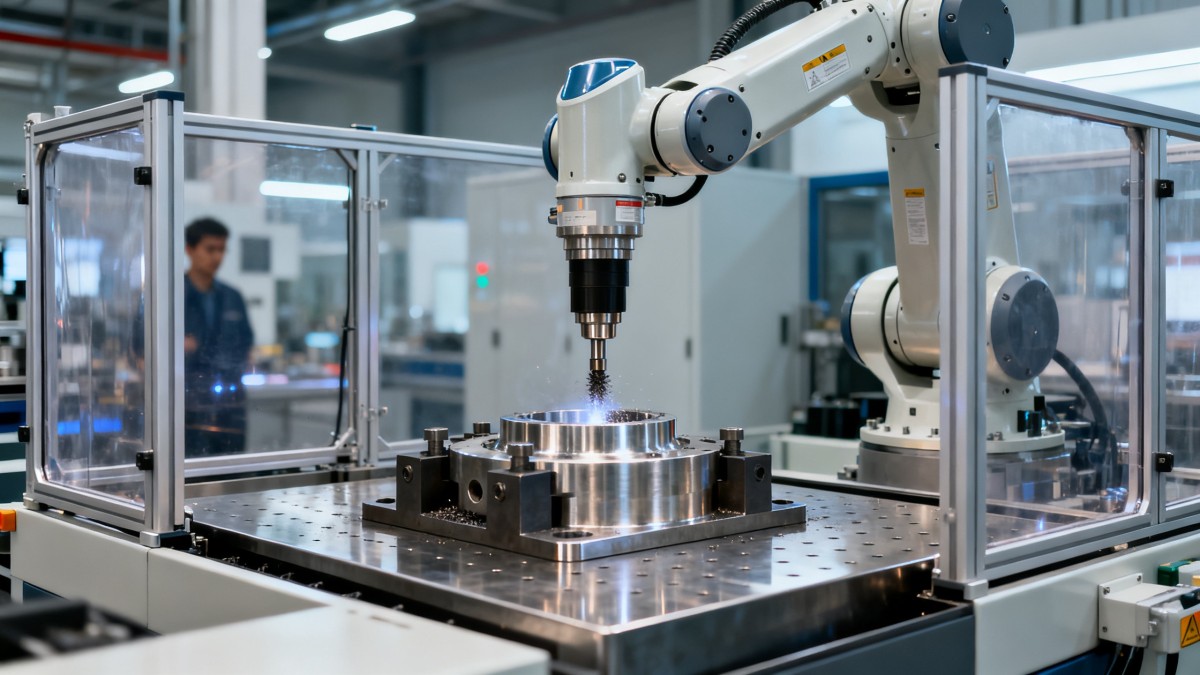
For buyers in the industrial robotics sector, the answer depends less on headline equipment price and more on part mix, burr tolerance, labor variability, and downstream quality risk. Robotic deburring often looks expensive at the quotation stage, yet it can become cost-competitive when precision parts require repeatable edge finishing across medium or high volumes.
In procurement terms, the key question is not simply whether a robotic cell costs more than manual deburring. The real question is whether it reduces scrap, shortens cycle instability, supports traceable quality, and lowers hidden costs linked to rework, operator fatigue, and inconsistent surface finish.
This matters especially for machined metal components, aerospace fittings, medical device parts, automotive precision pieces, and tight-tolerance castings. In these categories, burr removal is not cosmetic. It affects assembly fit, sealing, safety, coating quality, and inspection pass rates.
- Robotic deburring is usually easier to justify when burr geometry is consistent and annual volume is predictable.
- It delivers stronger value when labor availability is unstable or skilled finishing operators are difficult to retain.
- It becomes strategically important when buyers need supplier scalability across multiple programs or regions.
Why buyers are re-evaluating manual deburring for precision parts
Manual deburring remains common because it has a low entry cost and can adapt quickly to irregular geometry. However, buyers often underestimate its variability. Two operators may process the same part differently, creating differences in edge radius, micro-burr removal, or surface finish that later affect inspection or assembly.
For procurement teams managing supplier performance, this variability creates risk. A low piece price can be offset by late deliveries, sorting costs, field failures, or customer complaints. In high-spec environments, a deburring process that cannot be measured or repeated with confidence is difficult to scale.
Common cost drivers buyers should compare
- Direct labor hours per part, including setup and inspection handling.
- Scrap and rework caused by inconsistent burr removal or over-processing.
- Tool wear, abrasive consumption, and frequency of process interruptions.
- Ergonomic and safety exposure in repetitive manual finishing operations.
- Supplier capacity limits when volumes increase or lead times compress.
A disciplined sourcing review should compare process capability, not just hourly rates. Robotic deburring can improve consistency enough to change total landed cost, especially when one rejected batch can disrupt an entire production schedule.
Robotic deburring vs manual deburring: what does the cost comparison really show?
The table below helps procurement teams compare robotic deburring with manual finishing across practical sourcing dimensions. It is not a universal rule, but it shows where automation tends to create measurable value in industrial robotics applications.
The comparison shows why robotic deburring should be assessed as a process investment rather than a standalone machine purchase. If your parts require documented repeatability and supplier scale, the higher upfront spend may be justified faster than expected.
Which precision part scenarios favor robotic deburring?
Not every part is a good candidate. Buyers should focus on where robotic deburring aligns with geometry, production rhythm, and quality risk. In many sourcing projects, the strongest business case appears when the same part family runs repeatedly and burr locations are predictable.
Typical good-fit applications
- CNC-machined aluminum or steel parts with repeatable edge features and moderate to high annual volume.
- Die-cast or investment-cast parts where burr location is known and fixture repeatability is achievable.
- Components requiring stable pre-coating, pre-welding, or pre-assembly edge conditions.
- Programs where quality documentation and repeatability matter across multiple supplier sites.
Cases where caution is needed
- Very low-volume custom parts with frequent geometry changes and no recurring production pattern.
- Extremely delicate features where fixture clamping or tool access becomes difficult.
- Parts with highly inconsistent incoming burr size due to unstable upstream machining.
In practice, robotic deburring performs best when upstream machining and downstream inspection are also under control. Automation cannot fully compensate for unstable process inputs.
What technical factors should procurement teams verify before buying?
A reliable sourcing decision needs more than a robot brand and a cycle-time claim. Buyers should ask how the cell handles contact force, tool wear, fixture repeatability, dust extraction, and part variation. These variables strongly influence the true effectiveness of robotic deburring.
The table below provides a practical checklist for technical and commercial evaluation during supplier comparison.
This checklist is especially useful for buyers comparing multiple integrators. A lower quotation may hide higher abrasive costs, weaker support, or limited process validation. In industrial robotics procurement, technical clarity protects budget far better than headline discounts.
How to calculate total cost of ownership for robotic deburring
A realistic TCO model should include capex, consumables, programming, maintenance, downtime risk, and quality savings. Procurement teams often miss the fact that robotic deburring can shift costs from labor to engineering and preventive maintenance, which changes budgeting logic but not necessarily total value.
Core cost elements to include
- Cell acquisition cost, including robot arm, end-of-arm tooling, guarding, and integration.
- Programming and commissioning time, especially for multi-part applications.
- Tool replacement, spindle maintenance, and extraction system upkeep.
- Operator loading or tending labor if the process is not fully automated.
- Quality gains such as fewer rejected parts, lower inspection burden, and reduced customer returns.
For many precision parts, the strongest payback comes from reducing variation rather than cutting seconds from the cycle. A process that prevents one expensive nonconformance event may justify automation more convincingly than a narrow labor-saving model.
Buyers should also ask whether robotic deburring supports future programs. If a cell can be reused across similar parts, the investment should be evaluated over a part family or platform lifecycle instead of a single SKU.
What standards, compliance, and process controls matter?
While deburring itself is often a process step rather than a standalone certified product, buyers should still review general automation safety, traceability expectations, and quality management compatibility. This is especially relevant when robotic deburring is used in regulated or export-oriented manufacturing environments.
- Ask whether the cell design aligns with common industrial robot safety practices and risk assessment methods.
- Confirm how process parameters, maintenance records, and change history are documented for quality audits.
- Review dust, chip, and abrasive management, especially for metals that require careful housekeeping.
- Check whether the supplier can support factory acceptance testing and repeatable trial criteria.
For procurement teams dealing with cross-border sourcing, reliable process documentation often matters as much as machine specification. GTIIN and TradeVantage help buyers monitor industrial robotics developments, supplier positioning, and market signals that improve vendor due diligence before commercial commitment.
What mistakes do buyers make when evaluating robotic deburring?
Mistake 1: comparing only purchase price
A cheaper cell may require more manual intervention, more frequent tool changes, or more engineering support. Procurement should compare total process economics, not just hardware quotations.
Mistake 2: ignoring upstream variation
If incoming burr size varies too much, even a strong robotic deburring setup may struggle. Evaluate the machining or casting source at the same time as the deburring proposal.
Mistake 3: assuming all part families can share one program
Some suppliers overstate flexibility. Buyers should request clarity on fixture changes, programming effort, and validation steps for each part variant.
Mistake 4: underestimating service response needs
A technically capable robotic deburring cell still needs uptime support. Spare parts availability, remote troubleshooting, and operator training are commercial issues, not just engineering details.
FAQ: procurement questions about robotic deburring
How do I know whether robotic deburring fits my volume?
Start with annual part count, shift pattern, and current labor content per part. Robotic deburring is often more attractive when the same geometry repeats regularly, labor cost is rising, or quality escapes are expensive. For low-volume prototypes, manual methods may still be more practical.
Can robotic deburring handle complex part geometry?
Yes, but complexity alone does not guarantee success. Access angle, fixture repeatability, tool compliance, and burr consistency all matter. Buyers should request sample trials on real parts rather than rely only on simulation or generic claims.
What should I request in a supplier quotation?
Ask for cycle time assumptions, tooling consumption estimates, fixture scope, programming scope, training content, acceptance criteria, and recommended spare parts. A useful quotation should also define what part variation the robotic deburring process is designed to tolerate.
Is robotic deburring only for large factories?
No. Smaller manufacturers can justify it when they serve demanding sectors, struggle to hire skilled finishers, or need stable quality for export customers. The right question is not plant size, but whether process repeatability and growth potential outweigh manual flexibility.
Why informed sourcing matters in industrial robotics
Robotic deburring decisions are increasingly tied to supplier resilience, not just shop-floor automation. Buyers need to know which regions are investing in finishing automation, how integrator capabilities differ, and where supply chain bottlenecks may affect lead time or service support.
That is where GTIIN and TradeVantage create practical value. By aggregating global B2B intelligence, industrial trend analysis, and cross-market updates, the platform helps procurement teams identify credible manufacturing signals, compare sourcing environments, and reduce blind spots before RFQ and supplier nomination stages.
Why choose us for sourcing insight and next-step support?
If your team is evaluating robotic deburring for precision parts, we can support the decision with market intelligence and sourcing context that goes beyond a single vendor pitch. GTIIN and TradeVantage help procurement professionals connect technical evaluation with global supplier visibility, trade dynamics, and industrial trend tracking.
- Clarify key parameters for robotic deburring projects, including volume assumptions, part family suitability, and process risk points.
- Support vendor screening by highlighting market activity, industrial capability signals, and regional supply chain developments.
- Help structure discussions around delivery timelines, customization scope, quality expectations, and documentation requirements.
- Enable more informed quotation reviews by identifying hidden cost factors and comparing solution pathways across suppliers.
If you are preparing RFQs, validating supplier options, or narrowing a robotic deburring investment case, contact us to discuss parameter confirmation, solution selection, delivery lead time, custom process scope, documentation expectations, and quotation alignment. For buyers managing precision parts globally, better information is often the first cost saving.
 Which global manufacturing trends by sector matter most for sourcing plans?Global manufacturing trends by sector: identify sourcing risks, supplier resilience, compliance demands, and cost drivers to build smarter, more reliable procurement plans.
 What industrial trade intelligence pricing should include before you subscribeIndustrial trade intelligence pricing explained: compare coverage, data quality, access rights, and workflow value before choosing a subscription that supports smarter trade decisions.
 How an industrial trade intelligence dashboard can identify new supplier marketsDiscover how an industrial trade intelligence dashboard helps identify new supplier markets by comparing capacity, landed cost, logistics resilience, and compliance risk.
 Which global market entry barriers should exporters assess first?Global market entry barriers exporters should assess first: tariffs, compliance, buyer qualification, logistics, and payment risk. Build a practical strategy for confident market entry.
 How trade data aggregation analytics can reveal emerging supplier marketsTrade data aggregation analytics reveals emerging supplier markets by connecting trade flows, capacity signals, logistics, and compliance insights for smarter sourcing decisions.
 When an export market analysis platform can validate demand in a new marketExport market analysis platform insights help validate new-market demand through buyer fit, regulations, logistics, competition, and profitable entry conditions.
 What is driving the beauty and personal care market in the USA?Beauty and personal care in USA is driven by targeted solutions, selective premiumization, digital discovery, clean-label trust, diverse needs, and compliance. Explore key growth opportunities.
 How trade flow monitoring reports reveal changing regional demandTrade flow monitoring reports reveal changing regional demand through import volumes, sourcing shifts, product mix, logistics signals, and regulatory trends. Explore actionable market insights.
 How international market intelligence for investors reduces market-entry riskInternational market intelligence for investors reduces market-entry risk by validating demand, regulations, logistics, and competition before capital is committed.
 How international sourcing intelligence helps identify supplier risk earlyInternational sourcing intelligence helps businesses spot supplier risks early, protect supply continuity, and make smarter global procurement decisions.
 How trade data aggregation analytics reveals emerging supplier marketsTrade data aggregation analytics reveals emerging supplier markets through export trends, input flows, logistics, and regulatory signals. Discover smarter sourcing insights.
 What industrial cluster monitoring in Vietnam reveals about site riskIndustrial cluster monitoring Vietnam reveals hidden site risks across labor, utilities, logistics, compliance, and supplier dependencies. Make smarter sourcing and expansion decisions.
 Food Technology Trends Reshaping Shelf Life, Safety, and Product InnovationFood technology is reshaping shelf life, safety, and innovation. Discover the trends helping food businesses cut risk, improve compliance, and unlock stronger global market growth.
 How electronics manufacturing services are changing with low-volume demandElectronics manufacturing services are evolving fast with low-volume demand. Learn how agile EMS partners improve flexibility, compliance, sourcing resilience, and speed to market.
 How Can Buyers Reduce Procurement Risks for Electronic Components?How to reduce procurement risks for electronic components: learn how buyers assess traceability, lead times, compliance, and supplier types to avoid costly sourcing mistakes.
 What Sourcing Intelligence India Reveals About Supplier Risk and Cost ShiftsSourcing intelligence India reveals hidden supplier risk, compliance gaps, logistics pressure, and real cost shifts—helping buyers compare vendors smarter and source with more confidence.
 Fashion Trends 2026: Which Materials, Colors, and Silhouettes Are Gaining Ground?Fashion trends 2026 spotlight tactile fabrics, mineral colors, and controlled volume. Explore the materials, shades, and silhouettes shaping smarter, more wearable style.
 Smart Device Market Outlook: Key Growth Drivers, Segments, and Business OpportunitiesSmart device market trends are shifting toward system value, industrial demand, and resilient supply chains. Explore key growth drivers, high-potential segments, and business opportunities.
 How Global Trade Intelligence Services Help B2B Firms Evaluate Markets and SuppliersGlobal trade intelligence services help B2B firms compare suppliers, assess market potential, and uncover compliance, logistics, and pricing risks before costly decisions are made.
 Manufacturing Sector Updates for Investors: What Signals Matter Most in 2025?Manufacturing sector updates for investors in 2025: track orders, margins, supply chains, regulation, and exports to spot resilient manufacturers and smarter investment signals.
 How Energy Market Intelligence Helps Businesses Track Price Risks and Demand ShiftsEnergy market intelligence helps businesses spot price risks, demand shifts, and supply pressure early—improving procurement, resilience, and faster strategic decisions.





















Global Trade Insights & Industry
Our mission is to empower global exporters and importers with data-driven insights that foster strategic growth.
Search News
Popular Tags
Industry Overview
The global commercial kitchen equipment market is projected to reach $112 billion by 2027. Driven by urbanization, the rise of e-commerce food delivery, and strict hygiene regulations.