

How ROI analysis reveals weak links in smart factory logistics
[Executive Engineering Summary]:In smart manufacturing, weak links in internal logistics rarely announce themselves clearly. They show up as delayed replenishment, excess work-in-progress, missed throughput targets, and rising handling costs. A disciplined roi analysis smart factory internal logistics solutions approach helps decision-makers connect those symptoms to financial impact, identify the bottlenecks worth fixing first, and avoid investing in automation that looks modern but does not materially improve performance.
For enterprise leaders, the key question is not whether smart logistics matters, but where it is leaking value today. ROI analysis turns scattered operational data into a management tool. It reveals which warehouse movements, line-feeding processes, routing rules, labor patterns, and system gaps are dragging down output, service levels, or margin. More importantly, it provides a practical basis for sequencing upgrades with confidence.
Why internal logistics is often the hidden constraint in a smart factory
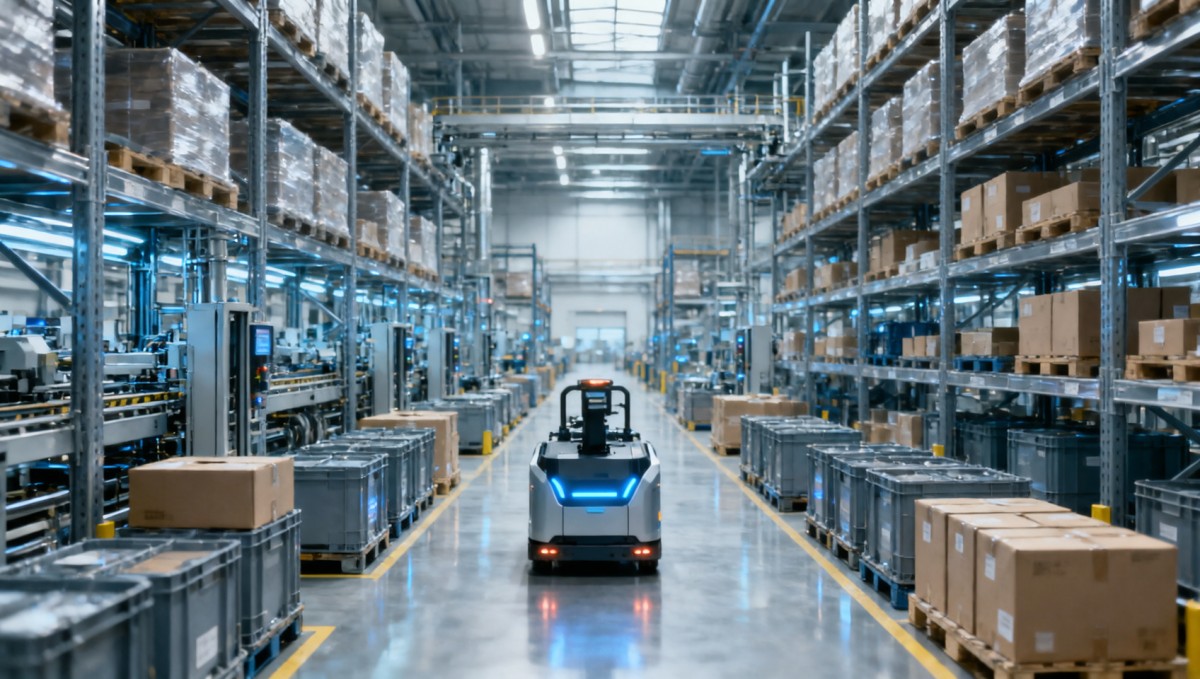
Many factories invest heavily in production equipment, digital dashboards, and automation cells, yet still underperform because material flow remains fragmented. Machines may be fast, but if components arrive late, are stored in the wrong location, or require too many touches, overall efficiency falls.
Internal logistics includes inbound staging, warehouse layout, replenishment, kitting, picking, tugger routes, AGV or AMR movement, buffer management, packaging returns, and shipping coordination. When these processes are poorly synchronized, the result is idle labor, blocked aisles, emergency transport, and unstable production schedules.
These losses are often harder to detect than machine downtime. They are spread across departments, hidden inside overtime, inventory carrying cost, forklift traffic, floor space pressure, and quality issues caused by rushed handling. That is why leaders need ROI analysis rather than intuition alone.
In practice, the weakest links are usually not isolated failures. They are structural mismatches between production rhythm and material supply logic. For example, a plant may run advanced lines while still relying on manual replenishment rules designed for lower output and simpler product mixes.
What business decision-makers really need from ROI analysis
Senior leaders are rarely looking for a technical description of logistics technology. They want to know which pain points are creating measurable financial drag, what interventions can fix them, how fast payback can be achieved, and what implementation risks must be managed.
That means useful ROI analysis must go beyond capital expenditure comparisons. It should quantify the cost of current-state inefficiency, estimate the impact of alternative solutions, and distinguish between improvements that are attractive on paper and those that can realistically deliver under actual factory conditions.
The most valuable analysis answers five management questions. Where is value leaking today? What is the baseline cost of that leakage? Which logistics upgrade addresses the root cause? How soon will benefits appear? What dependencies could delay or reduce the return?
When framed this way, roi analysis smart factory internal logistics solutions becomes a decision framework, not a spreadsheet exercise. It supports budgeting, board communication, vendor evaluation, and cross-functional alignment between operations, finance, engineering, and supply chain teams.
Which weak links ROI analysis exposes most clearly
One common weak link is line-side replenishment instability. If operators wait for materials, or if supervisors constantly intervene to expedite shortages, output losses can exceed the visible transport cost. ROI analysis reveals the true cost through downtime minutes, missed schedule adherence, and labor disruption.
A second weak link is excessive material handling. Too many touches, transfers, scans, and temporary storage points inflate labor needs and increase damage risk. Even when each movement seems minor, the cumulative cost can be substantial across shifts, product families, and warehouse zones.
Inventory imbalance is another frequent problem. Some factories hold too much stock near production to compensate for uncertainty, while still experiencing shortages on critical items. This creates a double penalty: tied-up working capital and poor service to the line.
Layout inefficiency also ranks high. Long travel distances, narrow bottlenecks, mixed traffic between pedestrians and forklifts, and poorly located supermarkets reduce throughput and create safety concerns. ROI analysis translates these layout problems into time loss, labor inflation, and avoidable equipment use.
Data fragmentation is equally important. When ERP, WMS, MES, and shop-floor signals are not aligned, planners and warehouse teams operate with delayed or incomplete information. The result is reactive logistics management, low traceability, and expensive last-minute corrections.
How to build an ROI model that reflects real factory economics
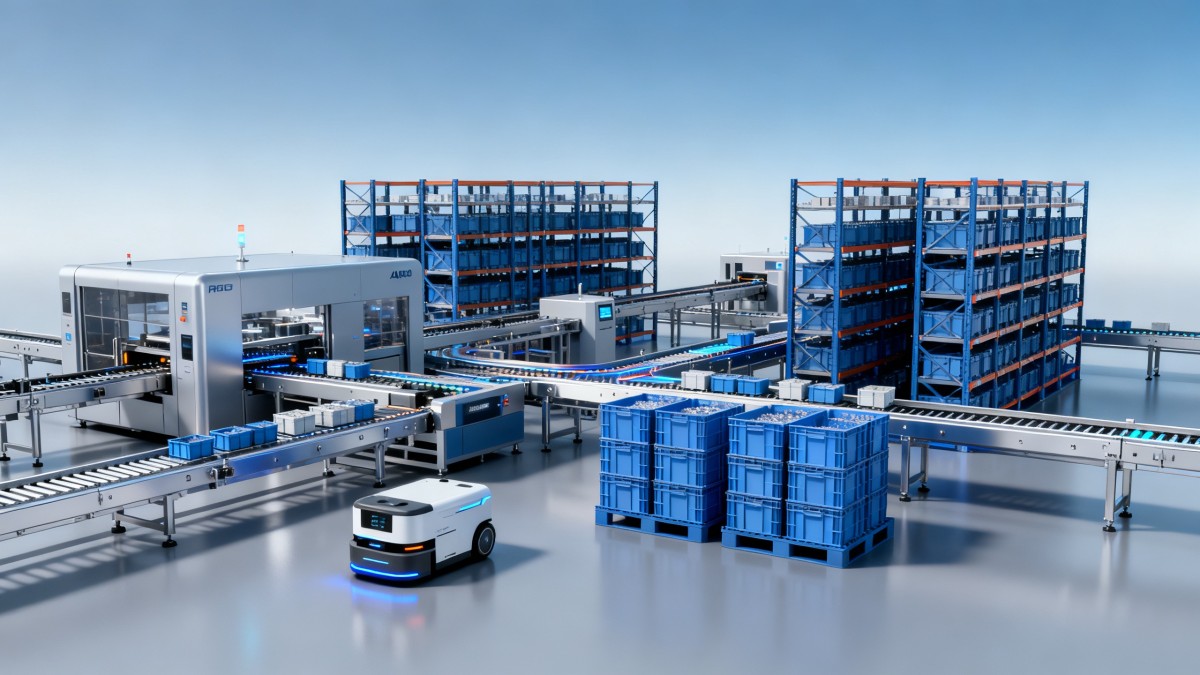
A credible ROI model starts with a current-state baseline. Decision-makers need hard data on labor hours, inventory levels, forklift utilization, picking accuracy, replenishment frequency, travel time, line stoppages tied to material issues, and warehouse space consumption.
Next, those operational metrics must be converted into financial terms. Labor savings are usually straightforward, but the stronger business case often comes from avoided downtime, higher throughput, reduced premium freight, fewer quality incidents, lower inventory carrying cost, and better space productivity.
The model should then compare multiple solution paths. For example, a factory may consider warehouse redesign, digital scheduling, barcode or RFID traceability, AMRs, ASRS, automated kitting, or integrated material call systems. The best option is not always the most automated one.
Decision-makers should also separate one-time gains from recurring gains. A layout clean-up may produce quick savings, while system integration and automation may generate larger but slower returns. Distinguishing these timelines helps leaders build a staged investment roadmap.
Finally, a realistic ROI model includes adoption risk. Training requirements, process redesign, IT integration, supplier data quality, and production disruption during rollout can all affect outcomes. Ignoring these factors creates overly optimistic business cases and weakens executive confidence later.
Which metrics matter most when prioritizing internal logistics solutions
Not every KPI deserves equal weight. For enterprise decision-makers, the most useful metrics are those that link logistics performance to business outcomes. These typically include throughput, schedule adherence, labor cost per unit, inventory turns, order accuracy, and floor space utilization.
In high-mix manufacturing, changeover support and replenishment responsiveness may matter more than simple transport speed. In labor-constrained regions, reducing dependence on manual movement may carry extra strategic value. In export-driven operations, shipment reliability may outweigh local efficiency gains.
Leaders should also look at metrics that reveal variability, not just averages. Average picking time may look acceptable while peak-shift congestion causes costly service failures. Likewise, average inventory may hide large imbalances that create both shortages and excess stock simultaneously.
Another important metric is resilience. Can the logistics system absorb demand swings, supplier delays, and product mix changes without excessive manual intervention? Solutions with slightly lower short-term payback may still deserve priority if they materially improve adaptability and business continuity.
How to avoid investing in the wrong kind of logistics automation
A frequent mistake is buying equipment before clarifying the process problem. Automation does not automatically remove weak links. It can simply accelerate a flawed flow pattern, lock in poor replenishment logic, or add maintenance cost without solving the real operational constraint.
For instance, deploying AGVs may look attractive, but if material routes are unstable, SKU master data is weak, or buffer policies are unclear, expected gains may not appear. In such cases, standardizing routes and improving demand signals may generate better ROI before automation begins.
Another mistake is evaluating solutions in isolation. A warehouse system upgrade, a new conveyor segment, and line-side digital calls may each appear modest alone, but together they can create a much stronger return. Conversely, a single large automation purchase may depend on several upstream fixes.
Decision-makers should also challenge vendor assumptions. Are projected labor reductions based on real shift patterns? Are throughput gains constrained by production bottlenecks elsewhere? Is the maintenance model included? Good ROI analysis tests these assumptions before capital is committed.
What a strong investment roadmap looks like
The best roadmap usually starts with high-visibility, data-backed improvements that stabilize flow quickly. These may include slotting optimization, replenishment redesign, route standardization, supermarket restructuring, digital material request systems, or better synchronization between planning and execution systems.
Once the process is stable, leaders can layer in higher-capex solutions where the economics are clear. Examples include AMRs for repetitive transport, ASRS for dense storage, automated kitting for high-volume assemblies, or integrated warehouse controls for complex multi-zone operations.
This phased approach lowers risk in three ways. It creates early wins, improves baseline data quality, and prevents expensive technology from being deployed into an unstable process. It also helps organizations build internal credibility for larger transformation programs.
From a governance standpoint, each phase should have named owners, target KPIs, review checkpoints, and post-implementation validation. ROI should be tracked after go-live, not just predicted before purchase. This closes the loop between capital planning and operational accountability.
Why this matters for global manufacturers and trade-focused enterprises
For companies competing across international markets, internal logistics efficiency affects more than factory cost. It shapes delivery reliability, export responsiveness, working capital flexibility, and the ability to adapt to demand changes across regions. Weak links inside the plant can quickly become commercial disadvantages.
That is especially true when manufacturers face margin pressure, labor shortages, and rising customer expectations. In these conditions, internal logistics can no longer be treated as a support function alone. It becomes a source of strategic advantage when managed with discipline and financial clarity.
For decision-makers evaluating growth, localization, or supply chain redesign, roi analysis smart factory internal logistics solutions provides a practical lens. It connects factory execution with broader business goals and helps leadership teams invest where operational improvement translates into market strength.
Conclusion: ROI analysis turns logistics complexity into clear decisions
Smart factories do not become efficient simply by adding digital tools or automation assets. They improve when leaders can identify where internal logistics is losing time, labor, space, inventory, and output, then target the fixes that produce measurable business return.
That is the real value of ROI analysis. It reveals weak links that routine reporting may miss, quantifies their economic impact, and helps organizations prioritize solutions with confidence. For enterprise decision-makers, it offers a grounded way to reduce risk, improve resilience, and build smarter factory logistics systems that truly support growth.
 When dual sourcing makes sense in a sourcing strategy for manufacturersSourcing strategy for manufacturers: learn when dual sourcing strengthens supply continuity, reduces disruption risk, and protects production without adding unnecessary complexity.
 How bulk commodities pricing affects long-term supply contractsBulk commodities pricing shapes long-term supply contracts through index rules, freight, quality, volume, and currency risk. Explore strategies for resilient costs and supply security.
 Which global manufacturing trends by sector matter most for sourcing plans?Global manufacturing trends by sector: identify sourcing risks, supplier resilience, compliance demands, and cost drivers to build smarter, more reliable procurement plans.
 What industrial trade intelligence pricing should include before you subscribeIndustrial trade intelligence pricing explained: compare coverage, data quality, access rights, and workflow value before choosing a subscription that supports smarter trade decisions.
 How an industrial trade intelligence dashboard can identify new supplier marketsDiscover how an industrial trade intelligence dashboard helps identify new supplier markets by comparing capacity, landed cost, logistics resilience, and compliance risk.
 Which global market entry barriers should exporters assess first?Global market entry barriers exporters should assess first: tariffs, compliance, buyer qualification, logistics, and payment risk. Build a practical strategy for confident market entry.
 How trade data aggregation analytics can reveal emerging supplier marketsTrade data aggregation analytics reveals emerging supplier markets by connecting trade flows, capacity signals, logistics, and compliance insights for smarter sourcing decisions.
 When an export market analysis platform can validate demand in a new marketExport market analysis platform insights help validate new-market demand through buyer fit, regulations, logistics, competition, and profitable entry conditions.
 What is driving the beauty and personal care market in the USA?Beauty and personal care in USA is driven by targeted solutions, selective premiumization, digital discovery, clean-label trust, diverse needs, and compliance. Explore key growth opportunities.
 How trade flow monitoring reports reveal changing regional demandTrade flow monitoring reports reveal changing regional demand through import volumes, sourcing shifts, product mix, logistics signals, and regulatory trends. Explore actionable market insights.
 How international market intelligence for investors reduces market-entry riskInternational market intelligence for investors reduces market-entry risk by validating demand, regulations, logistics, and competition before capital is committed.
 How international sourcing intelligence helps identify supplier risk earlyInternational sourcing intelligence helps businesses spot supplier risks early, protect supply continuity, and make smarter global procurement decisions.
 How trade data aggregation analytics reveals emerging supplier marketsTrade data aggregation analytics reveals emerging supplier markets through export trends, input flows, logistics, and regulatory signals. Discover smarter sourcing insights.
 What industrial cluster monitoring in Vietnam reveals about site riskIndustrial cluster monitoring Vietnam reveals hidden site risks across labor, utilities, logistics, compliance, and supplier dependencies. Make smarter sourcing and expansion decisions.
 Food Technology Trends Reshaping Shelf Life, Safety, and Product InnovationFood technology is reshaping shelf life, safety, and innovation. Discover the trends helping food businesses cut risk, improve compliance, and unlock stronger global market growth.
 How electronics manufacturing services are changing with low-volume demandElectronics manufacturing services are evolving fast with low-volume demand. Learn how agile EMS partners improve flexibility, compliance, sourcing resilience, and speed to market.
 How Can Buyers Reduce Procurement Risks for Electronic Components?How to reduce procurement risks for electronic components: learn how buyers assess traceability, lead times, compliance, and supplier types to avoid costly sourcing mistakes.
 What Sourcing Intelligence India Reveals About Supplier Risk and Cost ShiftsSourcing intelligence India reveals hidden supplier risk, compliance gaps, logistics pressure, and real cost shifts—helping buyers compare vendors smarter and source with more confidence.
 Fashion Trends 2026: Which Materials, Colors, and Silhouettes Are Gaining Ground?Fashion trends 2026 spotlight tactile fabrics, mineral colors, and controlled volume. Explore the materials, shades, and silhouettes shaping smarter, more wearable style.
 Smart Device Market Outlook: Key Growth Drivers, Segments, and Business OpportunitiesSmart device market trends are shifting toward system value, industrial demand, and resilient supply chains. Explore key growth drivers, high-potential segments, and business opportunities.
 How Global Trade Intelligence Services Help B2B Firms Evaluate Markets and SuppliersGlobal trade intelligence services help B2B firms compare suppliers, assess market potential, and uncover compliance, logistics, and pricing risks before costly decisions are made.




















Global Trade Insights & Industry
Our mission is to empower global exporters and importers with data-driven insights that foster strategic growth.
Search News
Popular Tags
Industry Overview
The global commercial kitchen equipment market is projected to reach $112 billion by 2027. Driven by urbanization, the rise of e-commerce food delivery, and strict hygiene regulations.