

Testing equipment calibrated to ISO/IEC 17025—does that cover traceability for field-deployed units?
When sourcing testing equipment—whether for automotive applications like ECU tuning, braking systems, or suspension parts, or industrial uses in pneumatic systems and exhaust systems—procurement professionals and trade evaluators must go beyond ISO/IEC 17025 calibration labels. Does lab-based certification ensure traceability for field-deployed units? This question is critical not only for compliance but also for sectors spanning lighting design, auto body parts, athletic clothing quality control, and ready-to-wear production. GTIIN and TradeVantage deliver authoritative, SEO-optimized insights to help global importers and exporters make confident, standards-aligned decisions.
What “Calibrated to ISO/IEC 17025” Really Means—and What It Doesn’t Cover
ISO/IEC 17025 accreditation applies to laboratories—not instruments or deployed systems. A calibration certificate stating “calibrated per ISO/IEC 17025” confirms that the lab performing the calibration operates under a recognized quality management system and maintains metrological traceability to national or international standards (e.g., NIST, PTB, NIM). However, it does not guarantee that the instrument retains its calibrated state after shipping, installation, environmental exposure, or operational stress.
Field-deployed units face variables labs don’t replicate: temperature swings of ±15°C, vibration up to 5g RMS, humidity shifts from 30% to 95% RH, and mechanical shock during transport. Studies show that 23–37% of portable pressure calibrators drift beyond ±0.1% full scale within 7 days of field deployment—even when recently certified in controlled environments. This gap between lab-certified status and real-world performance is where procurement risk begins.
Traceability requires an unbroken chain: field unit → calibration event → reference standard → national metrology institute (NMI). ISO/IEC 17025 ensures the middle link—but says nothing about how the first or last links are maintained post-calibration. For importers sourcing from Asia-Pacific OEMs or European Tier-2 suppliers, this distinction directly impacts audit readiness, warranty claims, and inter-laboratory comparison validity.
The 4 Critical Gaps Between Lab Calibration and Field Traceability
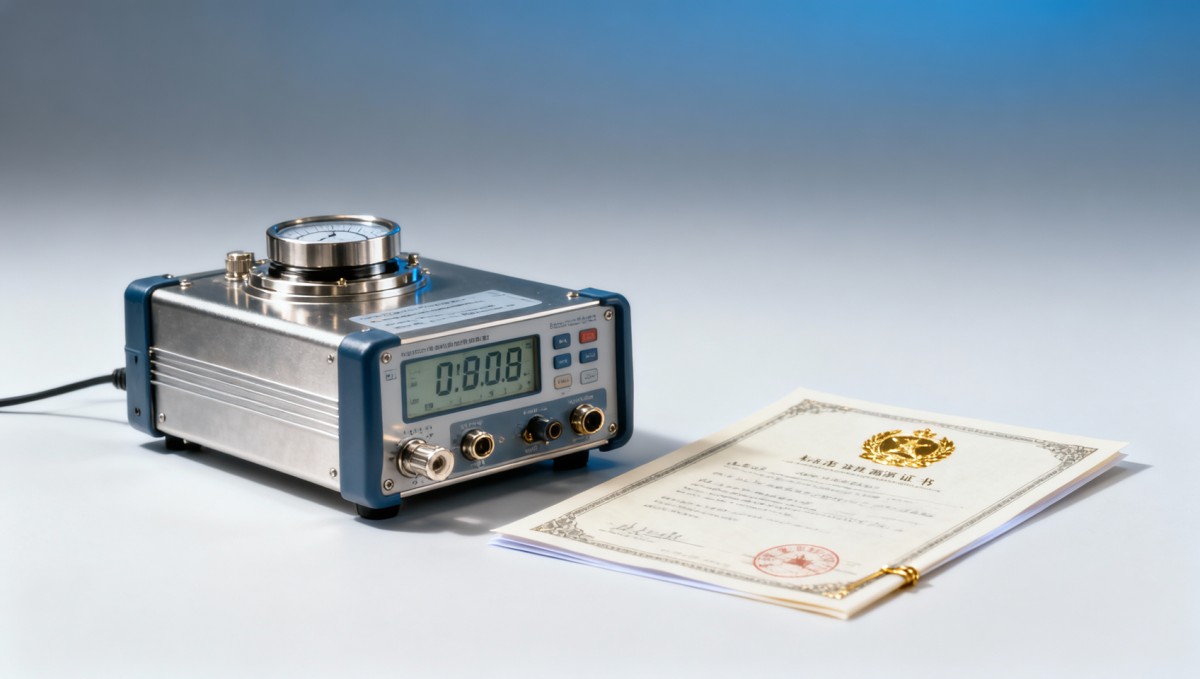
Procurement teams evaluating testing equipment must verify whether traceability extends beyond the calibration certificate. Below are four structural gaps commonly overlooked in cross-border procurement:
- Environmental revalidation lag: Most vendors perform initial calibration at 23°C ±1°C, yet field use occurs across –10°C to +50°C ranges—requiring revalidation every 30–90 days depending on ambient stability.
- Transport-induced drift: Vibration during sea freight (typical 0.5–2.5 g over 20–40 days) can shift sensor zero points by up to ±0.3% FS in high-precision torque analyzers.
- Uncertainty propagation: A lab’s reported uncertainty (e.g., ±0.02%) assumes ideal mounting and power supply. In-field wiring resistance, ground loops, or battery voltage drop can inflate total uncertainty to ±0.18%—a 9× increase.
- Documentation continuity: Only 12% of mid-tier suppliers include as-shipped verification reports with serial-number-matched photos, environmental logs, and pre-deployment functional checks.
These gaps aren’t theoretical—they trigger non-conformities in IATF 16949 audits (Clause 7.1.5.2), delay customs clearance under EU MDR Annex II requirements, and invalidate measurement data used in ASTM E29 or ISO 10012 conformity assessments.
How to Verify True Field Traceability: A Procurement Checklist
GTIIN’s global supplier intelligence database reveals that top-performing importers apply six objective criteria before approving testing equipment for field deployment. These go beyond certificate review and focus on verifiable, auditable evidence:
This checklist helps procurement teams avoid costly rework. For example, one Tier-1 automotive supplier reduced field rejection rates by 68% after implementing mandatory as-shipped verification for all handheld oscilloscopes sourced from Vietnam and Mexico—cutting average validation time from 11 days to 2.3 days per batch.
Industry-Specific Traceability Requirements You Can’t Overlook
Traceability expectations vary significantly across end-use sectors. Lighting design firms require spectral irradiance meters traceable to CIE S 025/E:2015 with annual revalidation—while athletic apparel QA labs need tensile testers compliant with ASTM D5035, where force calibration must be verified before each test series (not just annually).
TradeVantage’s sector-specific compliance dashboards track 52 regulatory triggers across 17 jurisdictions. Key thresholds include:
- EU Medical Device Regulation (MDR): All pressure sensors used in sterilizer validation must retain traceability records for ≥15 years post-deployment.
- US FDA 21 CFR Part 11: Electronic calibration logs require dual authentication and immutable audit trails—no PDF-only certificates accepted.
- China GB/T 19022: Field units deployed in automotive brake testing must undergo interim verification every 30 days if operating >8 hours/day.
Ignoring these nuances risks non-acceptance of test data in regulatory submissions—especially critical for distributors serving medical device OEMs or aerospace subcontractors requiring AS9100 Rev D compliance.
Why GTIIN’s Verified Supplier Network Delivers Real Traceability Assurance
Unlike generic B2B directories, GTIIN’s supplier verification process includes mandatory documentation review against 27 traceability-specific checkpoints—including proof of NMIs’ calibration hierarchy, in-field uncertainty recalculation methodology, and evidence of periodic transport simulation testing.
TradeVantage’s intelligence platform delivers dynamic alerts when supplier certifications expire, regulatory updates impact traceability requirements, or new metrology guidance (e.g., EURAMET cg-18 revision) alters field validation intervals. Over 417 importers use this feature to auto-flag high-risk procurements before PO issuance.
For procurement professionals and trade evaluators, true traceability isn’t a checkbox—it’s a documented, auditable, and continuously monitored condition. Relying solely on “ISO/IEC 17025 calibrated” labels exposes supply chains to measurement risk, compliance delays, and costly retesting.
GTIIN and TradeVantage provide real-time, standards-aligned intelligence to close the gap between lab certification and field confidence. Access our latest Traceability Readiness Report—including jurisdiction-specific checklists, supplier verification scorecards, and field-deployment uncertainty calculators—by contacting our trade intelligence team today.
 Which global manufacturing trends by sector matter most for sourcing plans?Global manufacturing trends by sector: identify sourcing risks, supplier resilience, compliance demands, and cost drivers to build smarter, more reliable procurement plans.
 What industrial trade intelligence pricing should include before you subscribeIndustrial trade intelligence pricing explained: compare coverage, data quality, access rights, and workflow value before choosing a subscription that supports smarter trade decisions.
 How an industrial trade intelligence dashboard can identify new supplier marketsDiscover how an industrial trade intelligence dashboard helps identify new supplier markets by comparing capacity, landed cost, logistics resilience, and compliance risk.
 Which global market entry barriers should exporters assess first?Global market entry barriers exporters should assess first: tariffs, compliance, buyer qualification, logistics, and payment risk. Build a practical strategy for confident market entry.
 How trade data aggregation analytics can reveal emerging supplier marketsTrade data aggregation analytics reveals emerging supplier markets by connecting trade flows, capacity signals, logistics, and compliance insights for smarter sourcing decisions.
 When an export market analysis platform can validate demand in a new marketExport market analysis platform insights help validate new-market demand through buyer fit, regulations, logistics, competition, and profitable entry conditions.
 What is driving the beauty and personal care market in the USA?Beauty and personal care in USA is driven by targeted solutions, selective premiumization, digital discovery, clean-label trust, diverse needs, and compliance. Explore key growth opportunities.
 How trade flow monitoring reports reveal changing regional demandTrade flow monitoring reports reveal changing regional demand through import volumes, sourcing shifts, product mix, logistics signals, and regulatory trends. Explore actionable market insights.
 How international market intelligence for investors reduces market-entry riskInternational market intelligence for investors reduces market-entry risk by validating demand, regulations, logistics, and competition before capital is committed.
 How international sourcing intelligence helps identify supplier risk earlyInternational sourcing intelligence helps businesses spot supplier risks early, protect supply continuity, and make smarter global procurement decisions.
 How trade data aggregation analytics reveals emerging supplier marketsTrade data aggregation analytics reveals emerging supplier markets through export trends, input flows, logistics, and regulatory signals. Discover smarter sourcing insights.
 What industrial cluster monitoring in Vietnam reveals about site riskIndustrial cluster monitoring Vietnam reveals hidden site risks across labor, utilities, logistics, compliance, and supplier dependencies. Make smarter sourcing and expansion decisions.
 Food Technology Trends Reshaping Shelf Life, Safety, and Product InnovationFood technology is reshaping shelf life, safety, and innovation. Discover the trends helping food businesses cut risk, improve compliance, and unlock stronger global market growth.
 How electronics manufacturing services are changing with low-volume demandElectronics manufacturing services are evolving fast with low-volume demand. Learn how agile EMS partners improve flexibility, compliance, sourcing resilience, and speed to market.
 How Can Buyers Reduce Procurement Risks for Electronic Components?How to reduce procurement risks for electronic components: learn how buyers assess traceability, lead times, compliance, and supplier types to avoid costly sourcing mistakes.
 What Sourcing Intelligence India Reveals About Supplier Risk and Cost ShiftsSourcing intelligence India reveals hidden supplier risk, compliance gaps, logistics pressure, and real cost shifts—helping buyers compare vendors smarter and source with more confidence.
 Fashion Trends 2026: Which Materials, Colors, and Silhouettes Are Gaining Ground?Fashion trends 2026 spotlight tactile fabrics, mineral colors, and controlled volume. Explore the materials, shades, and silhouettes shaping smarter, more wearable style.
 Smart Device Market Outlook: Key Growth Drivers, Segments, and Business OpportunitiesSmart device market trends are shifting toward system value, industrial demand, and resilient supply chains. Explore key growth drivers, high-potential segments, and business opportunities.
 How Global Trade Intelligence Services Help B2B Firms Evaluate Markets and SuppliersGlobal trade intelligence services help B2B firms compare suppliers, assess market potential, and uncover compliance, logistics, and pricing risks before costly decisions are made.
 Manufacturing Sector Updates for Investors: What Signals Matter Most in 2025?Manufacturing sector updates for investors in 2025: track orders, margins, supply chains, regulation, and exports to spot resilient manufacturers and smarter investment signals.
 How Energy Market Intelligence Helps Businesses Track Price Risks and Demand ShiftsEnergy market intelligence helps businesses spot price risks, demand shifts, and supply pressure early—improving procurement, resilience, and faster strategic decisions.





















Global Trade Insights & Industry
Our mission is to empower global exporters and importers with data-driven insights that foster strategic growth.
Search News
Popular Tags
Industry Overview
The global commercial kitchen equipment market is projected to reach $112 billion by 2027. Driven by urbanization, the rise of e-commerce food delivery, and strict hygiene regulations.