

What causes complaints about hotel safe deposit boxes
Complaints about hotel safe deposit boxes often begin with one fragile expectation: trust. Guests assume their passports, cash, jewelry, and electronics will remain protected without friction or confusion.
When that trust breaks, even briefly, the complaint rarely stays limited to the box itself. It expands into concerns about service, accountability, privacy, and overall hotel safety standards.
For hotels and short-stay properties, understanding why hotel safe deposit boxes trigger complaints is essential. The issue is not only theft risk, but also access delays, poor communication, weak procedures, and mismatched guest expectations.
This guide explores the most common complaint scenarios, the different needs behind them, and practical ways to reduce guest frustration while improving confidence in hotel safe deposit boxes.
When the room safe fails during a short stay
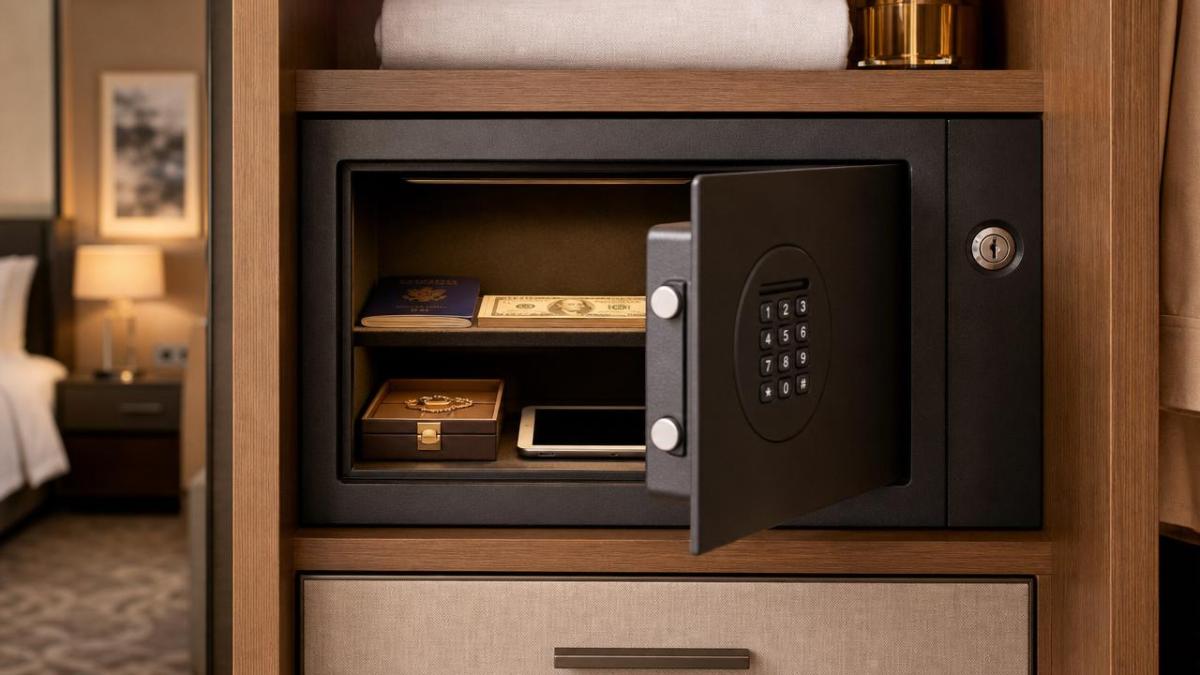
A common complaint appears when in-room hotel safe deposit boxes stop working during a one-night or weekend stay. Guests usually need quick access, not technical explanations.
The safe may reject a code, show low battery signs, or stay locked after a simple error. In this scenario, inconvenience quickly becomes suspicion.
Core judgment points in this scenario
- Was the safe tested before check-in?
- Could staff unlock it quickly?
- Did the guest receive clear usage instructions?
- Was there visible proof of maintenance?
Complaints in this case often come from service delay rather than confirmed loss. If access takes too long, guests may miss flights, meetings, or tours.
When front-desk storage creates accountability concerns
Some properties still use central hotel safe deposit boxes behind reception. This setup can work well, yet it creates a very different complaint pattern.
Guests may worry about who handled the envelope, who witnessed the deposit, and whether access records exist. The security method may be real, but transparency feels weak.
Typical triggers for complaints
- No written receipt for stored valuables
- Unclear liability policy at check-in
- Multiple staff members handling one box
- Limited access outside reception hours
In this setting, complaints about hotel safe deposit boxes often reflect weak chain-of-custody practices. Guests do not only want protection; they want proof.
When luxury expectations make minor issues feel major
At upscale hotels, guests often assume hotel safe deposit boxes will be effortless, discreet, and instantly available. Expectations rise with room rate and brand reputation.
A small problem, such as a delayed master key response, may trigger a stronger complaint than it would in a budget property. The complaint is partly about broken brand promise.
What matters most in premium stays
Guests expect privacy, speed, staff discretion, and visible professionalism. They also expect hotel safe deposit boxes to fit laptops, watches, passports, and luxury accessories.
If the safe is too small, loosely mounted, or difficult to operate, complaints may focus on quality rather than pure security failure.
When family travel changes the risk profile
Families often use hotel safe deposit boxes differently. They may store multiple passports, medicine, backup cards, and emergency cash in one place.
This creates a higher consequence if access fails. A locked safe can disrupt transportation, child check-in documents, or urgent health needs.
Common family-travel complaint points
- The safe cannot hold all important documents
- Shared access between adults is confusing
- Emergency retrieval is too slow
- Instructions are not simple enough for quick use
In this scenario, hotel safe deposit boxes are judged by reliability under pressure. Ease of access becomes part of security, not a separate issue.
How complaint causes differ across hotel types
Not every property faces the same pattern. Boutique hotels, resorts, business hotels, and vacation rentals all present different operational risks around hotel safe deposit boxes.
This comparison shows why hotel safe deposit boxes cannot be evaluated with one generic standard. Complaint patterns depend on stay length, guest behavior, and staff processes.
Practical ways to reduce complaints before they happen
The strongest prevention strategy combines equipment quality, staff training, and transparent communication. Secure hardware alone does not eliminate complaints about hotel safe deposit boxes.
Recommended actions for better scenario fit
- Test every in-room safe during room turnover.
- Replace low batteries before failure appears.
- Train staff to explain use in one minute.
- Keep clear override procedures with logging.
- Issue receipts for front-desk stored valuables.
- Post liability terms in plain language.
- Record access events for dispute handling.
- Match safe size to guest stay patterns.
These actions reduce both actual incidents and perception risk. Many complaints about hotel safe deposit boxes arise when guests feel the process is improvised.
Frequent misjudgments that hotels and guests overlook
One common mistake is assuming that all losses mean theft. Sometimes items were never locked, the code was misentered, or a second traveler removed the contents earlier.
Another mistake is assuming every safe offers full insurance protection. Many properties place limits on liability, especially when guests ignore declared-value procedures.
Often ignored factors behind disputes
- Guests do not read the safe instructions
- Staff do not document emergency openings
- Properties delay maintenance for minor faults
- Valuables exceed the intended storage type
- Communication during the incident is defensive
In most cases, dissatisfaction grows because the response feels uncertain. Even reliable hotel safe deposit boxes can generate poor reviews when incident handling lacks empathy and clarity.
What to check next if safe deposit box complaints matter
If complaints about hotel safe deposit boxes are increasing, the next step is scenario-based review. Check where complaints happen, how fast staff respond, and whether records support the property’s version.
Look at room type, guest profile, safe model, maintenance logs, and wording used at check-in. Patterns usually reveal whether the issue is technical, procedural, or communication-related.
For travel and hospitality decision-makers following service quality trends, GTIIN and TradeVantage help connect operational pain points with wider market expectations. Better trust signals often begin with small, measurable service fixes.
Ultimately, hotel safe deposit boxes attract complaints when security and convenience fall out of balance. The best results come from matching the storage method to the stay scenario, then proving reliability at every step.
 Which global manufacturing trends by sector matter most for sourcing plans?Global manufacturing trends by sector: identify sourcing risks, supplier resilience, compliance demands, and cost drivers to build smarter, more reliable procurement plans.
 What industrial trade intelligence pricing should include before you subscribeIndustrial trade intelligence pricing explained: compare coverage, data quality, access rights, and workflow value before choosing a subscription that supports smarter trade decisions.
 How an industrial trade intelligence dashboard can identify new supplier marketsDiscover how an industrial trade intelligence dashboard helps identify new supplier markets by comparing capacity, landed cost, logistics resilience, and compliance risk.
 Which global market entry barriers should exporters assess first?Global market entry barriers exporters should assess first: tariffs, compliance, buyer qualification, logistics, and payment risk. Build a practical strategy for confident market entry.
 How trade data aggregation analytics can reveal emerging supplier marketsTrade data aggregation analytics reveals emerging supplier markets by connecting trade flows, capacity signals, logistics, and compliance insights for smarter sourcing decisions.
 When an export market analysis platform can validate demand in a new marketExport market analysis platform insights help validate new-market demand through buyer fit, regulations, logistics, competition, and profitable entry conditions.
 What is driving the beauty and personal care market in the USA?Beauty and personal care in USA is driven by targeted solutions, selective premiumization, digital discovery, clean-label trust, diverse needs, and compliance. Explore key growth opportunities.
 How trade flow monitoring reports reveal changing regional demandTrade flow monitoring reports reveal changing regional demand through import volumes, sourcing shifts, product mix, logistics signals, and regulatory trends. Explore actionable market insights.
 How international market intelligence for investors reduces market-entry riskInternational market intelligence for investors reduces market-entry risk by validating demand, regulations, logistics, and competition before capital is committed.
 How international sourcing intelligence helps identify supplier risk earlyInternational sourcing intelligence helps businesses spot supplier risks early, protect supply continuity, and make smarter global procurement decisions.
 How trade data aggregation analytics reveals emerging supplier marketsTrade data aggregation analytics reveals emerging supplier markets through export trends, input flows, logistics, and regulatory signals. Discover smarter sourcing insights.
 What industrial cluster monitoring in Vietnam reveals about site riskIndustrial cluster monitoring Vietnam reveals hidden site risks across labor, utilities, logistics, compliance, and supplier dependencies. Make smarter sourcing and expansion decisions.
 Food Technology Trends Reshaping Shelf Life, Safety, and Product InnovationFood technology is reshaping shelf life, safety, and innovation. Discover the trends helping food businesses cut risk, improve compliance, and unlock stronger global market growth.
 How electronics manufacturing services are changing with low-volume demandElectronics manufacturing services are evolving fast with low-volume demand. Learn how agile EMS partners improve flexibility, compliance, sourcing resilience, and speed to market.
 How Can Buyers Reduce Procurement Risks for Electronic Components?How to reduce procurement risks for electronic components: learn how buyers assess traceability, lead times, compliance, and supplier types to avoid costly sourcing mistakes.
 What Sourcing Intelligence India Reveals About Supplier Risk and Cost ShiftsSourcing intelligence India reveals hidden supplier risk, compliance gaps, logistics pressure, and real cost shifts—helping buyers compare vendors smarter and source with more confidence.
 Fashion Trends 2026: Which Materials, Colors, and Silhouettes Are Gaining Ground?Fashion trends 2026 spotlight tactile fabrics, mineral colors, and controlled volume. Explore the materials, shades, and silhouettes shaping smarter, more wearable style.
 Smart Device Market Outlook: Key Growth Drivers, Segments, and Business OpportunitiesSmart device market trends are shifting toward system value, industrial demand, and resilient supply chains. Explore key growth drivers, high-potential segments, and business opportunities.
 How Global Trade Intelligence Services Help B2B Firms Evaluate Markets and SuppliersGlobal trade intelligence services help B2B firms compare suppliers, assess market potential, and uncover compliance, logistics, and pricing risks before costly decisions are made.
 Manufacturing Sector Updates for Investors: What Signals Matter Most in 2025?Manufacturing sector updates for investors in 2025: track orders, margins, supply chains, regulation, and exports to spot resilient manufacturers and smarter investment signals.
 How Energy Market Intelligence Helps Businesses Track Price Risks and Demand ShiftsEnergy market intelligence helps businesses spot price risks, demand shifts, and supply pressure early—improving procurement, resilience, and faster strategic decisions.





















Global Trade Insights & Industry
Our mission is to empower global exporters and importers with data-driven insights that foster strategic growth.
Search News
Popular Tags
Industry Overview
The global commercial kitchen equipment market is projected to reach $112 billion by 2027. Driven by urbanization, the rise of e-commerce food delivery, and strict hygiene regulations.