

US-China Trade Talks Yield Standards Mutual Recognition
On May 16, 2026, China’s Ministry of Commerce confirmed positive progress in US-China trade consultations, with new cooperation frameworks targeting supply chain resilience and technical standards alignment. The agreement directly affects exporters and manufacturers in AI applications, medical equipment, and testing instruments—sectors where regulatory fragmentation has long constrained market access and operational agility.
Event Overview
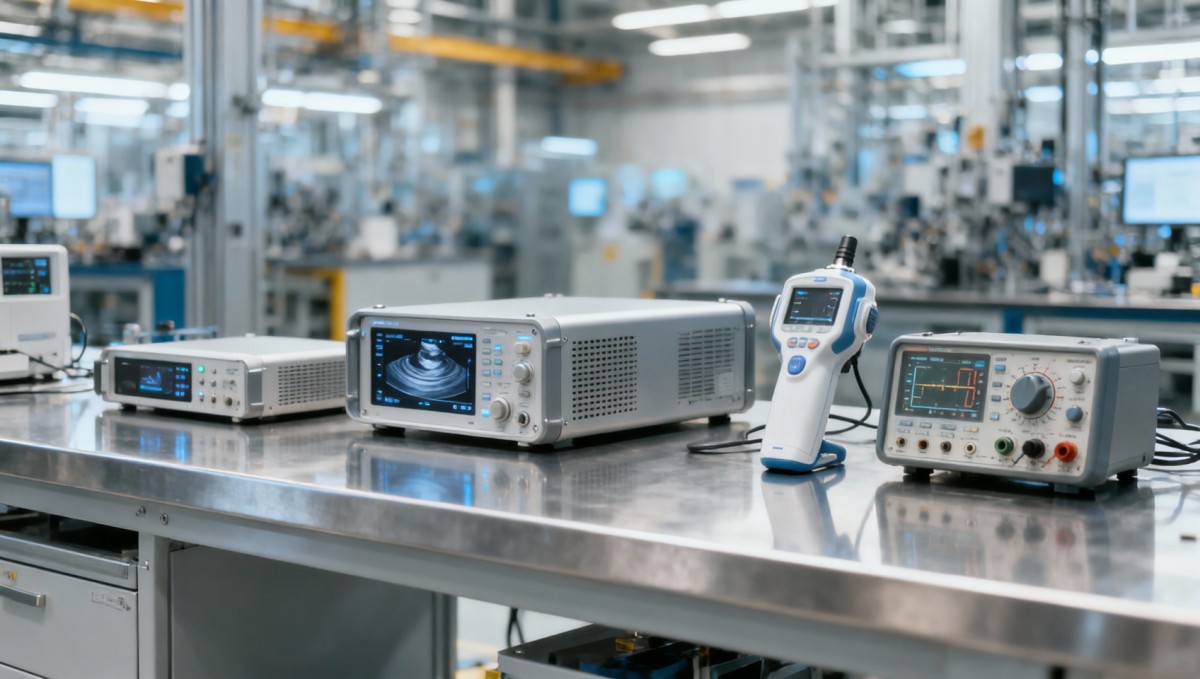
On May 16, 2026, China’s Ministry of Commerce confirmed that US-China economic and trade consultations achieved constructive outcomes. Both sides agreed to launch pilot programs for mutual recognition of technical standards in AI Applications, Medical Equipment, and Testing Instruments. They also established a Joint Supply Chain Disruption Response Mechanism for cross-border emergencies. No timelines, scope expansions, or binding implementation schedules were disclosed.
Industries Affected
Direct Exporters: Companies exporting smart hardware or diagnostic devices to the US face reduced certification lead times and lower costs from duplicate conformity assessments (e.g., FDA premarket submissions alongside CCC or NMPA approvals). Impact manifests as faster time-to-market and improved responsiveness to urgent procurement requests—particularly for pandemic-response or infrastructure-related orders.
Raw Material Procurement Firms: Suppliers of critical components—such as high-precision sensors for medical analyzers or AI-accelerator chips—may experience recalibrated sourcing strategies. As standard harmonization lowers downstream compliance risk, buyers may shift toward dual-sourced or US-aligned component suppliers earlier in the design phase—not solely for cost, but to preempt future requalification needs.
Contract Manufacturers & OEMs: Firms producing under private labels or white-label agreements (e.g., contract manufacturing of portable ultrasound units or AI-powered inspection systems) will need to reassess documentation traceability and test report portability. Harmonized standards do not eliminate local regulatory obligations but reduce redundant validation steps—potentially compressing production planning cycles by 2–4 weeks per product family, assuming aligned test protocols.
Supply Chain Service Providers: Third-party testing labs, certification bodies, and logistics coordinators supporting trans-Pacific shipments must adapt service portfolios. Demand may rise for “dual-track” reporting (e.g., simultaneous UL 62368-1 and GB 4943.1 test summaries), while joint disruption response protocols could trigger new SLA requirements around real-time inventory visibility and alternate routing triggers.
Key Focus Areas and Recommended Actions
Review Existing Product Certification Portfolios
Exporters should map current US and Chinese certifications against the three designated sectors. Prioritize products with overlapping technical scopes (e.g., AI-based electrocardiogram analyzers certified under both FDA 510(k) and China’s Class III NMPA registration) to identify near-term mutual recognition candidates.
Engage Early with Accredited Testing Bodies
Confirm which laboratories are authorized to issue reports accepted under both jurisdictions’ pilot frameworks. Not all ISO/IEC 17025-accredited labs qualify—only those designated by national accreditation bodies (CNAS in China; ANSI-NL in the US) under the bilateral arrangement.
Update Internal Compliance Workflows
Manufacturers should revise internal quality management system (QMS) procedures to capture dual-standard evidence generation (e.g., test plans referencing both IEC 62304 and YY/T 0664), ensuring audit readiness for both markets without duplicating effort.
Monitor Pilot Implementation Timetables
The agreement establishes working groups—but no public rollout schedule. Stakeholders should track announcements from CNAS, the US National Institute of Standards and Technology (NIST), and the International Electrotechnical Commission (IEC) for formal annexes defining test method equivalencies and acceptance criteria.
Editorial Perspective / Industry Observation
Observably, this is not a broad tariff rollback but a targeted institutional calibration—focused on de-risking rather than deregulating. Analysis shows that mutual recognition pilots succeed only when underlying metrological infrastructure (e.g., reference materials, calibration traceability) aligns across borders; current gaps in AI model evaluation benchmarks or biocompatibility testing for novel medical polymers remain unresolved. From an industry perspective, the Joint Supply Chain Disruption Response Mechanism is more consequential than standards alignment alone: it introduces formal escalation paths and data-sharing expectations previously absent in bilateral trade governance. Current more relevant interpretation is that this signals a shift from adversarial compliance enforcement toward cooperative contingency planning—especially for time-sensitive health-tech and industrial automation exports.
Conclusion
This development marks a pragmatic recalibration—not a reversal—of trade friction. It does not eliminate regulatory divergence but creates narrow, actionable pathways to reduce friction at critical nodes. For affected industries, the value lies less in immediate cost savings and more in predictable, rule-based escalation protocols during supply shocks. A rational observation is that success hinges not on political goodwill but on technical interoperability built through sustained working-level coordination over 12–24 months.
Source Attribution
Official statement issued by China’s Ministry of Commerce (MOFCOM), May 16, 2026. Confirmed by U.S. Trade Representative (USTR) press release, same date. Technical scope details referenced from joint MOFCOM–NIST working group charter (Annex A, unclassified summary). Note: Final implementation guidelines, sector-specific annexes, and participating laboratories list remain pending publication and are subject to change—ongoing monitoring advised.
 Which global manufacturing trends by sector matter most for sourcing plans?Global manufacturing trends by sector: identify sourcing risks, supplier resilience, compliance demands, and cost drivers to build smarter, more reliable procurement plans.
 What industrial trade intelligence pricing should include before you subscribeIndustrial trade intelligence pricing explained: compare coverage, data quality, access rights, and workflow value before choosing a subscription that supports smarter trade decisions.
 How an industrial trade intelligence dashboard can identify new supplier marketsDiscover how an industrial trade intelligence dashboard helps identify new supplier markets by comparing capacity, landed cost, logistics resilience, and compliance risk.
 Which global market entry barriers should exporters assess first?Global market entry barriers exporters should assess first: tariffs, compliance, buyer qualification, logistics, and payment risk. Build a practical strategy for confident market entry.
 How trade data aggregation analytics can reveal emerging supplier marketsTrade data aggregation analytics reveals emerging supplier markets by connecting trade flows, capacity signals, logistics, and compliance insights for smarter sourcing decisions.
 When an export market analysis platform can validate demand in a new marketExport market analysis platform insights help validate new-market demand through buyer fit, regulations, logistics, competition, and profitable entry conditions.
 What is driving the beauty and personal care market in the USA?Beauty and personal care in USA is driven by targeted solutions, selective premiumization, digital discovery, clean-label trust, diverse needs, and compliance. Explore key growth opportunities.
 How trade flow monitoring reports reveal changing regional demandTrade flow monitoring reports reveal changing regional demand through import volumes, sourcing shifts, product mix, logistics signals, and regulatory trends. Explore actionable market insights.
 How international market intelligence for investors reduces market-entry riskInternational market intelligence for investors reduces market-entry risk by validating demand, regulations, logistics, and competition before capital is committed.
 How international sourcing intelligence helps identify supplier risk earlyInternational sourcing intelligence helps businesses spot supplier risks early, protect supply continuity, and make smarter global procurement decisions.
 How trade data aggregation analytics reveals emerging supplier marketsTrade data aggregation analytics reveals emerging supplier markets through export trends, input flows, logistics, and regulatory signals. Discover smarter sourcing insights.
 What industrial cluster monitoring in Vietnam reveals about site riskIndustrial cluster monitoring Vietnam reveals hidden site risks across labor, utilities, logistics, compliance, and supplier dependencies. Make smarter sourcing and expansion decisions.
 Food Technology Trends Reshaping Shelf Life, Safety, and Product InnovationFood technology is reshaping shelf life, safety, and innovation. Discover the trends helping food businesses cut risk, improve compliance, and unlock stronger global market growth.
 How electronics manufacturing services are changing with low-volume demandElectronics manufacturing services are evolving fast with low-volume demand. Learn how agile EMS partners improve flexibility, compliance, sourcing resilience, and speed to market.
 How Can Buyers Reduce Procurement Risks for Electronic Components?How to reduce procurement risks for electronic components: learn how buyers assess traceability, lead times, compliance, and supplier types to avoid costly sourcing mistakes.
 What Sourcing Intelligence India Reveals About Supplier Risk and Cost ShiftsSourcing intelligence India reveals hidden supplier risk, compliance gaps, logistics pressure, and real cost shifts—helping buyers compare vendors smarter and source with more confidence.
 Fashion Trends 2026: Which Materials, Colors, and Silhouettes Are Gaining Ground?Fashion trends 2026 spotlight tactile fabrics, mineral colors, and controlled volume. Explore the materials, shades, and silhouettes shaping smarter, more wearable style.
 Smart Device Market Outlook: Key Growth Drivers, Segments, and Business OpportunitiesSmart device market trends are shifting toward system value, industrial demand, and resilient supply chains. Explore key growth drivers, high-potential segments, and business opportunities.
 How Global Trade Intelligence Services Help B2B Firms Evaluate Markets and SuppliersGlobal trade intelligence services help B2B firms compare suppliers, assess market potential, and uncover compliance, logistics, and pricing risks before costly decisions are made.
 Manufacturing Sector Updates for Investors: What Signals Matter Most in 2025?Manufacturing sector updates for investors in 2025: track orders, margins, supply chains, regulation, and exports to spot resilient manufacturers and smarter investment signals.
 How Energy Market Intelligence Helps Businesses Track Price Risks and Demand ShiftsEnergy market intelligence helps businesses spot price risks, demand shifts, and supply pressure early—improving procurement, resilience, and faster strategic decisions.





















Global Trade Insights & Industry
Our mission is to empower global exporters and importers with data-driven insights that foster strategic growth.
Search News
Popular Tags
Industry Overview
The global commercial kitchen equipment market is projected to reach $112 billion by 2027. Driven by urbanization, the rise of e-commerce food delivery, and strict hygiene regulations.