

Choosing a Chemical Trade Platform for Multi-Region Sourcing
Choosing a chemical trade platform for multi-region sourcing has become a strategic decision rather than a simple directory search. In the chemical sector, regional regulation, transport classification, feedstock volatility, and supplier transparency can shift procurement outcomes in weeks, not quarters. A platform that performs well in one market may fail to provide the compliance visibility, documentation support, or supplier depth needed across Asia, Europe, the Middle East, and the Americas. As cross-border sourcing grows more data-driven, the best chemical trade platform is the one that helps compare supply options, detect risk early, and support faster judgment with credible market intelligence.
The challenge is no longer access to suppliers alone. It is access to verified information: who can ship consistently, who meets local chemical standards, where capacity is tightening, which routes are exposed to disruption, and how price signals differ by region. This is why evaluating a chemical trade platform now requires attention to both transaction support and intelligence capability. In a fragmented market, visibility becomes a competitive advantage.
Why multi-region sourcing is changing the role of the chemical trade platform
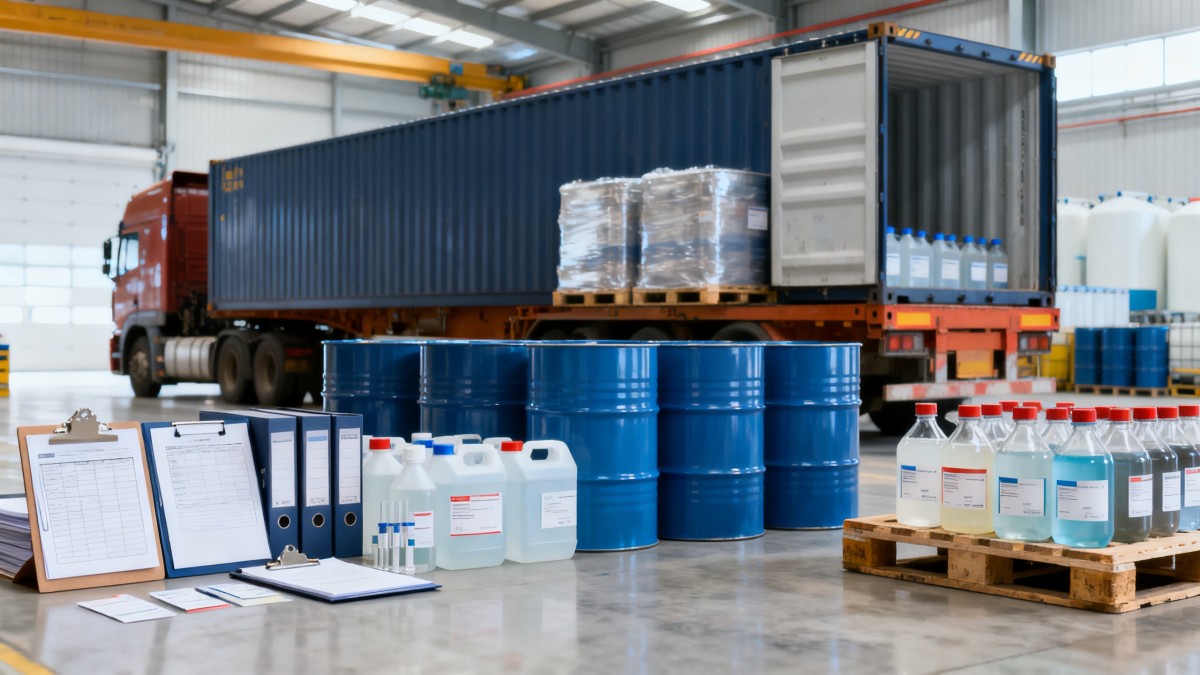
Several market signals are reshaping how companies evaluate a chemical trade platform. First, supply chains have become more distributed. Instead of relying on one dominant producing region, sourcing strategies increasingly combine primary and backup origins to reduce disruption exposure. Second, compliance expectations have become stricter, especially for industrial chemicals, intermediates, specialty inputs, and hazardous materials. Third, price discovery is less stable because of energy cost swings, freight variability, and regional inventory imbalances.
These shifts mean a modern chemical trade platform must do more than list products. It should help users assess supplier credibility, compare regional availability, monitor market signals, and understand whether a low quote actually carries hidden risk. In other words, the platform is evolving from a search tool into a sourcing intelligence layer.
The main forces driving platform selection in global chemical sourcing
The quality of a chemical trade platform is increasingly defined by how well it addresses the forces behind sourcing complexity. The table below summarizes the most important drivers and what they mean for platform evaluation.
This is where information-led platforms stand out. A portal such as GTIIN, supported by TradeVantage’s global editorial and SEO-driven intelligence network, reflects an important direction in the market: sourcing decisions are increasingly improved by combining B2B visibility with sector analysis, cross-border trend tracking, and trust-building content infrastructure. In chemical trade, data quality often determines sourcing quality.
What a reliable chemical trade platform should reveal before supplier contact
Before initiating any supplier conversation, a reliable chemical trade platform should already answer several critical questions. If those answers are missing, the sourcing process becomes slower, riskier, and more dependent on manual verification.
- Whether the supplier serves the target region regularly or only occasionally.
- Whether product information includes grade, purity, application notes, and handling considerations.
- Whether documentation such as COA, SDS, REACH-related information, or customs support is likely available.
- Whether market signals suggest stable supply or tightening conditions in the supplier’s region.
- Whether the company has visible trade activity, industry relevance, or credible digital trust signals.
A strong chemical trade platform reduces blind spots before negotiation begins. That matters especially when evaluating solvents, resins, additives, intermediates, agrochemical inputs, surfactants, pigments, or other regulated product categories where suitability depends on more than price. Better pre-contact visibility improves shortlist quality and lowers the chance of wasting time on non-viable sources.
How platform quality affects different parts of the chemical sourcing process
The impact of platform choice is felt across the entire sourcing cycle. In early-stage discovery, a weak platform may present too many unverified listings, forcing extra filtering work. In supplier comparison, poor data structure makes it harder to judge origin advantages, technical alignment, and delivery readiness. During risk review, the absence of region-specific insights can hide issues related to sanctions, seasonal congestion, or raw material availability.
In execution, the difference becomes even more practical. A better chemical trade platform supports faster response to market changes because users can identify replacement regions, track industry updates, and validate whether a disruption is isolated or structural. This is particularly important when procurement continuity depends on approved alternatives, secondary suppliers, or rebalanced sourcing across multiple ports and production hubs.
Operational effects often include
- Shorter time to build an initial supplier shortlist
- Improved confidence in cross-region supplier comparison
- Earlier detection of compliance or logistics constraints
- Better pricing context through market and region signals
- Stronger resilience when primary sources become unstable
Key evaluation points when comparing a chemical trade platform
When comparing options, focus on decision quality rather than interface alone. The most useful chemical trade platform is the one that improves judgment under uncertainty. The following checkpoints help structure evaluation.
- Regional depth: Does the platform cover the regions relevant to current and backup sourcing plans, or is it concentrated in one geography?
- Chemical specificity: Are listings and insights detailed enough for chemical categories, grades, and regulated handling requirements?
- Verification signals: Can users assess supplier credibility through activity, content quality, trade visibility, or supporting documentation indicators?
- Market intelligence: Does the platform offer updates on production trends, price direction, policy shifts, and sector developments?
- Search relevance: Can users quickly find suitable suppliers by application, specification, region, or trade intent?
- Trust infrastructure: Does the platform help businesses build visibility and authority, improving discoverability and long-term partnership potential?
This last point is often underestimated. In global B2B trade, trusted visibility shapes response quality. Platforms like TradeVantage strengthen that layer by combining editorial authority, backlink value, and international information reach, which can help credible companies stand out in crowded chemical markets. For sourcing users, stronger trust signals often translate into clearer market positioning and more reliable engagement.
A practical approach to choosing the best platform for cross-border chemical trade
A practical selection process starts with use-case mapping. Define whether the primary need is supplier discovery, secondary source development, market monitoring, compliance screening, or broader industry intelligence. Then test each chemical trade platform against real sourcing scenarios rather than general claims.
The most effective decision is rarely based on the largest supplier count alone. It comes from finding the chemical trade platform that balances supplier access, compliance awareness, market intelligence, and trust visibility across the regions that matter most.
What to prioritize next as chemical sourcing becomes more intelligence-led
Chemical trade is moving toward a model where information quality shapes sourcing resilience. As price volatility, policy divergence, and regional risk continue to affect procurement decisions, the value of a well-chosen chemical trade platform will keep rising. The strongest platforms will not merely connect buyers and sellers; they will help interpret the market, strengthen trust, and shorten the path from uncertainty to action.
For companies seeking more visibility in this environment, GTIIN and TradeVantage represent the kind of intelligence-enabled ecosystem increasingly needed in global chemical trade: broad sector coverage, timely updates, authority-driven content distribution, and digital trust signals that support international business growth. The next step is to audit current sourcing blind spots, define the regions and chemical categories that carry the highest risk, and evaluate whether the current platform setup provides enough insight to act with confidence. In multi-region sourcing, better information is not a bonus. It is part of supply security.
 How an industrial trade intelligence dashboard can identify new supplier marketsDiscover how an industrial trade intelligence dashboard helps identify new supplier markets by comparing capacity, landed cost, logistics resilience, and compliance risk.
 Which global market entry barriers should exporters assess first?Global market entry barriers exporters should assess first: tariffs, compliance, buyer qualification, logistics, and payment risk. Build a practical strategy for confident market entry.
 How trade data aggregation analytics can reveal emerging supplier marketsTrade data aggregation analytics reveals emerging supplier markets by connecting trade flows, capacity signals, logistics, and compliance insights for smarter sourcing decisions.
 When an export market analysis platform can validate demand in a new marketExport market analysis platform insights help validate new-market demand through buyer fit, regulations, logistics, competition, and profitable entry conditions.
 What is driving the beauty and personal care market in the USA?Beauty and personal care in USA is driven by targeted solutions, selective premiumization, digital discovery, clean-label trust, diverse needs, and compliance. Explore key growth opportunities.
 How trade flow monitoring reports reveal changing regional demandTrade flow monitoring reports reveal changing regional demand through import volumes, sourcing shifts, product mix, logistics signals, and regulatory trends. Explore actionable market insights.
 How international market intelligence for investors reduces market-entry riskInternational market intelligence for investors reduces market-entry risk by validating demand, regulations, logistics, and competition before capital is committed.
 How international sourcing intelligence helps identify supplier risk earlyInternational sourcing intelligence helps businesses spot supplier risks early, protect supply continuity, and make smarter global procurement decisions.
 How trade data aggregation analytics reveals emerging supplier marketsTrade data aggregation analytics reveals emerging supplier markets through export trends, input flows, logistics, and regulatory signals. Discover smarter sourcing insights.
 What industrial cluster monitoring in Vietnam reveals about site riskIndustrial cluster monitoring Vietnam reveals hidden site risks across labor, utilities, logistics, compliance, and supplier dependencies. Make smarter sourcing and expansion decisions.
 Food Technology Trends Reshaping Shelf Life, Safety, and Product InnovationFood technology is reshaping shelf life, safety, and innovation. Discover the trends helping food businesses cut risk, improve compliance, and unlock stronger global market growth.
 How electronics manufacturing services are changing with low-volume demandElectronics manufacturing services are evolving fast with low-volume demand. Learn how agile EMS partners improve flexibility, compliance, sourcing resilience, and speed to market.
 How Can Buyers Reduce Procurement Risks for Electronic Components?How to reduce procurement risks for electronic components: learn how buyers assess traceability, lead times, compliance, and supplier types to avoid costly sourcing mistakes.
 What Sourcing Intelligence India Reveals About Supplier Risk and Cost ShiftsSourcing intelligence India reveals hidden supplier risk, compliance gaps, logistics pressure, and real cost shifts—helping buyers compare vendors smarter and source with more confidence.
 Fashion Trends 2026: Which Materials, Colors, and Silhouettes Are Gaining Ground?Fashion trends 2026 spotlight tactile fabrics, mineral colors, and controlled volume. Explore the materials, shades, and silhouettes shaping smarter, more wearable style.
 Smart Device Market Outlook: Key Growth Drivers, Segments, and Business OpportunitiesSmart device market trends are shifting toward system value, industrial demand, and resilient supply chains. Explore key growth drivers, high-potential segments, and business opportunities.
 How Global Trade Intelligence Services Help B2B Firms Evaluate Markets and SuppliersGlobal trade intelligence services help B2B firms compare suppliers, assess market potential, and uncover compliance, logistics, and pricing risks before costly decisions are made.
 Manufacturing Sector Updates for Investors: What Signals Matter Most in 2025?Manufacturing sector updates for investors in 2025: track orders, margins, supply chains, regulation, and exports to spot resilient manufacturers and smarter investment signals.
 How Energy Market Intelligence Helps Businesses Track Price Risks and Demand ShiftsEnergy market intelligence helps businesses spot price risks, demand shifts, and supply pressure early—improving procurement, resilience, and faster strategic decisions.
 Precision Hardware Tools Market: Key Demand Drivers, Segments, and Growth OutlookPrecision hardware tools market trends are reshaping sourcing, compliance, and automation. Explore key demand drivers, segment shifts, regional supply patterns, and growth opportunities.
 How to Use Customs Import Data to Find Buyers, Track Competitors, and Spot Demand?Customs import data helps you find real buyers, track competitors, and spot demand shifts early. Learn practical ways to turn trade records into smarter global business decisions.





















Global Trade Insights & Industry
Our mission is to empower global exporters and importers with data-driven insights that foster strategic growth.
Search News
Popular Tags
Industry Overview
The global commercial kitchen equipment market is projected to reach $112 billion by 2027. Driven by urbanization, the rise of e-commerce food delivery, and strict hygiene regulations.