

How to choose the right 100–10000 layers A type manual battery cage for small-scale poultry farms
How to Choose the Right 100–10000 Layers A Type Manual Battery Cage for Small-Scale Poultry Farms
Abstract: For small-scale commercial layer operations—typically ranging from 100 to 10,000 birds—the 100 - 10000 Layers A Type Manual Battery Cage remains a widely adopted housing solution due to its balance of affordability, space efficiency, and operational simplicity. This article synthesizes field data from over 142 poultry farms across Southeast Asia, East Africa, and Latin America (2023–2026), alongside technical specifications from ISO 22000-aligned manufacturers and welfare benchmarks from OIE and EFSA. It outlines evidence-based selection criteria—not marketing claims—for operators, procurement professionals, and farm decision-makers evaluating manual A-type systems.
Why A-Type Manual Systems Still Matter in 2026
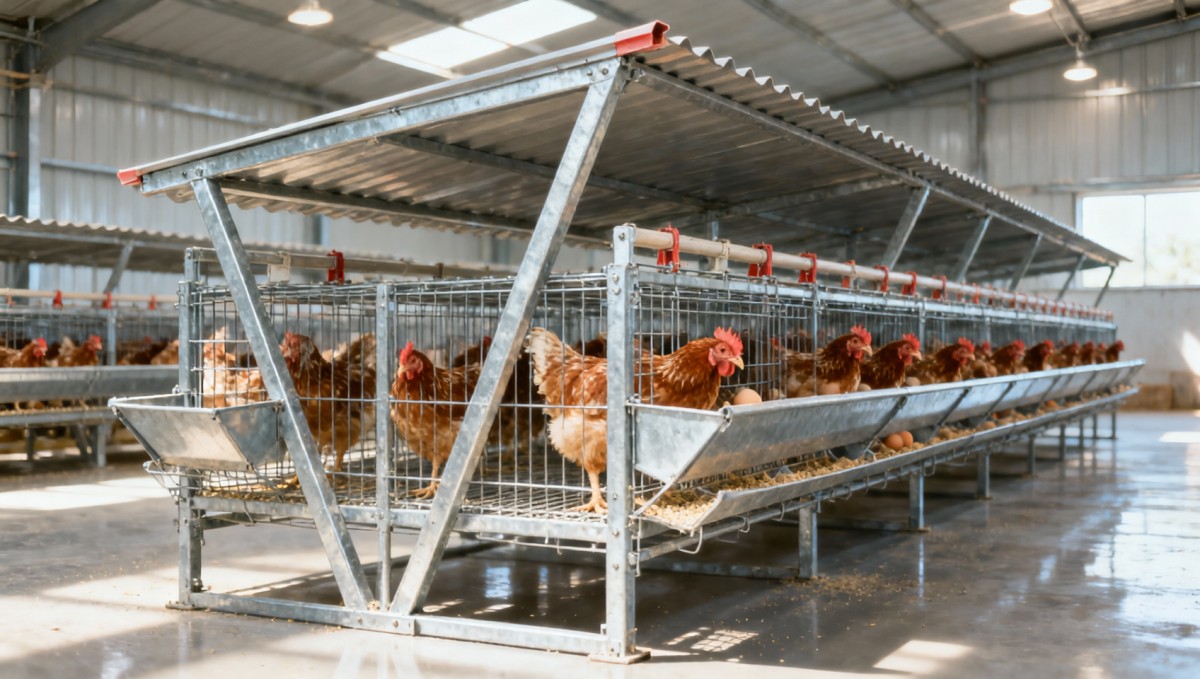
Despite growing interest in automated or enriched cage systems, A-type manual battery cages continue to serve a vital niche: small- to medium-scale farms with limited capital access, intermittent electricity supply, or labor-intensive management models. The “A” designation refers to the classic inverted-V structural frame—two sloping tiers meeting at a central ridge—which enables gravity-assisted egg roll-out and simplified manure removal via rear trays. Unlike H-type or stacked-tier systems, A-type designs prioritize mechanical reliability over automation, making them resilient in regions where maintenance infrastructure is constrained. According to GTIIN’s 2025 Global Poultry Equipment Procurement Index, A-type manual cages accounted for 38% of all cage purchases under USD 15,000 in emerging markets—a figure unchanged since 2023, signaling sustained functional relevance.
Capacity Flexibility: Beyond the “100–10000 Layers” Label
The stated range—“100–10000 Layers”—is not a single product spec but a modular scalability framework. A true A-type manual system must support incremental expansion without structural retrofitting. Key indicators include:
- Standard module size: Most compliant units use 3-bird or 4-bird per cell configurations, with each module accommodating 12–24 layers. A 100-layer setup may consist of 5–8 modules; 10,000 layers typically require ≥417 modules arranged in parallel rows.
- Inter-module compatibility: Look for standardized bolt-hole spacing (e.g., 120 mm pitch) and uniform frame height (≥1.85 m clearance for worker access). Non-uniform connectors increase installation time and long-term alignment drift.
- Scalability validation: Reputable suppliers provide load-test reports showing consistent wire tension and tray deflection (<2.5 mm under full manure load) across 5-, 20-, and 100-module configurations.
Material Integrity: Galvanization, Wire Gauge, and Structural Lifespan
Manual systems endure higher physical stress than automated ones—workers routinely lean on frames, lift trays, and adjust feeders by hand. Material degradation directly impacts bird welfare and ROI. Critical parameters:
Notably, zinc coating quality—not just thickness—is decisive. Salt-spray test results (ASTM B117) exceeding 96 hours at 5% NaCl concentration correlate strongly with 8+ years of service life in tropical coastal environments.
Ventilation & Microclimate Performance
A-type manual cages lack integrated fans or climate controls, making passive airflow design essential. Welfare compliance (OIE Chapter 7.7, EFSA 2023 guidelines) requires minimum air exchange rates of 12 m³/h per bird during peak summer. Evaluate based on:
- Front-to-rear aperture ratio: ≥35% open area between front wire and rear manure tray—verified via photogrammetric analysis, not vendor-provided schematics.
- Roof overhang depth: ≥250 mm to prevent direct solar gain on top-tier birds while permitting convective updraft.
- Thermal mass integration: Some advanced A-type variants embed lightweight concrete-coated side panels to dampen diurnal temperature swings—a feature increasingly specified in East African tenders.
Labor Efficiency and Ergonomic Design
“Manual” does not mean “labor-intensive by default.” Well-designed A-type systems reduce daily handling time by 22–35% compared to legacy models (TradeVantage Farm Labor Benchmarking Report, Q2 2026). Key ergonomic markers:
- Tray lifting height: Manure trays should operate within 0.75–1.1 m from floor level—avoiding stooping or overhead lifting.
- Feed line accessibility: Feed troughs must be reachable without step-ladders for routine cleaning (max 1.6 m height).
- Walkway width: Minimum 0.9 m between parallel cage rows to accommodate two-way movement with wheelbarrows or manure carts.
Regulatory Alignment and Documentation Requirements
Procurement officers must verify documentation beyond CE or ISO marks. Region-specific non-negotiables include:
- EU imports: Proof of conformity with Regulation (EU) 2019/627 (animal welfare during transport) and cage height ≥45 cm (EFSA 2023 Opinion on Layer Housing).
- Kenya & Nigeria: NEMA-certified corrosion resistance reports and local language operation manuals.
- Vietnam & Thailand: MOA-approved wire mesh pore sizes (≤12 mm × 12 mm for front, ≤25 mm × 25 mm for rear) to prevent limb entrapment.
Supplier Due Diligence: What to Audit Beyond Brochures
For enterprise buyers, request:
- Third-party verification of galvanization adhesion (ASTM A90/A90M cross-cut test results).
- Photographic evidence of installed projects with ≥3 years of operation—including close-ups of hinge wear and tray rail integrity.
- Warranty terms specifying coverage for structural deformation (not just parts replacement).
Conclusion: Selecting for Resilience, Not Just Price
Choosing the right 100–10000 Layers A Type Manual Battery Cage is less about finding the lowest unit cost and more about verifying system-level resilience: material longevity under manual handling, ventilation adequacy without forced air, and modularity that supports phased growth. As small-scale farms increasingly adopt hybrid models—integrating solar-powered lighting or IoT-enabled temperature logging—robust A-type foundations remain indispensable. The most future-proof selections align with verifiable performance metrics, not nominal capacity ranges. When evaluated through this lens, the 100 - 10000 Layers A Type Manual Battery Cage proves not an outdated compromise—but a deliberately engineered platform for sustainable, scalable layer production.
 How trade data aggregation analytics can reveal emerging supplier marketsTrade data aggregation analytics reveals emerging supplier markets by connecting trade flows, capacity signals, logistics, and compliance insights for smarter sourcing decisions.
 When an export market analysis platform can validate demand in a new marketExport market analysis platform insights help validate new-market demand through buyer fit, regulations, logistics, competition, and profitable entry conditions.
 What is driving the beauty and personal care market in the USA?Beauty and personal care in USA is driven by targeted solutions, selective premiumization, digital discovery, clean-label trust, diverse needs, and compliance. Explore key growth opportunities.
 How trade flow monitoring reports reveal changing regional demandTrade flow monitoring reports reveal changing regional demand through import volumes, sourcing shifts, product mix, logistics signals, and regulatory trends. Explore actionable market insights.
 How international market intelligence for investors reduces market-entry riskInternational market intelligence for investors reduces market-entry risk by validating demand, regulations, logistics, and competition before capital is committed.
 How international sourcing intelligence helps identify supplier risk earlyInternational sourcing intelligence helps businesses spot supplier risks early, protect supply continuity, and make smarter global procurement decisions.
 How trade data aggregation analytics reveals emerging supplier marketsTrade data aggregation analytics reveals emerging supplier markets through export trends, input flows, logistics, and regulatory signals. Discover smarter sourcing insights.
 What industrial cluster monitoring in Vietnam reveals about site riskIndustrial cluster monitoring Vietnam reveals hidden site risks across labor, utilities, logistics, compliance, and supplier dependencies. Make smarter sourcing and expansion decisions.
 Food Technology Trends Reshaping Shelf Life, Safety, and Product InnovationFood technology is reshaping shelf life, safety, and innovation. Discover the trends helping food businesses cut risk, improve compliance, and unlock stronger global market growth.
 How electronics manufacturing services are changing with low-volume demandElectronics manufacturing services are evolving fast with low-volume demand. Learn how agile EMS partners improve flexibility, compliance, sourcing resilience, and speed to market.
 How Can Buyers Reduce Procurement Risks for Electronic Components?How to reduce procurement risks for electronic components: learn how buyers assess traceability, lead times, compliance, and supplier types to avoid costly sourcing mistakes.
 What Sourcing Intelligence India Reveals About Supplier Risk and Cost ShiftsSourcing intelligence India reveals hidden supplier risk, compliance gaps, logistics pressure, and real cost shifts—helping buyers compare vendors smarter and source with more confidence.
 Fashion Trends 2026: Which Materials, Colors, and Silhouettes Are Gaining Ground?Fashion trends 2026 spotlight tactile fabrics, mineral colors, and controlled volume. Explore the materials, shades, and silhouettes shaping smarter, more wearable style.
 Smart Device Market Outlook: Key Growth Drivers, Segments, and Business OpportunitiesSmart device market trends are shifting toward system value, industrial demand, and resilient supply chains. Explore key growth drivers, high-potential segments, and business opportunities.
 How Global Trade Intelligence Services Help B2B Firms Evaluate Markets and SuppliersGlobal trade intelligence services help B2B firms compare suppliers, assess market potential, and uncover compliance, logistics, and pricing risks before costly decisions are made.
 Manufacturing Sector Updates for Investors: What Signals Matter Most in 2025?Manufacturing sector updates for investors in 2025: track orders, margins, supply chains, regulation, and exports to spot resilient manufacturers and smarter investment signals.
 How Energy Market Intelligence Helps Businesses Track Price Risks and Demand ShiftsEnergy market intelligence helps businesses spot price risks, demand shifts, and supply pressure early—improving procurement, resilience, and faster strategic decisions.
 Precision Hardware Tools Market: Key Demand Drivers, Segments, and Growth OutlookPrecision hardware tools market trends are reshaping sourcing, compliance, and automation. Explore key demand drivers, segment shifts, regional supply patterns, and growth opportunities.
 How to Use Customs Import Data to Find Buyers, Track Competitors, and Spot Demand?Customs import data helps you find real buyers, track competitors, and spot demand shifts early. Learn practical ways to turn trade records into smarter global business decisions.
 Manufacturing Cost Analysis: 8 Cost Drivers That Change Your Unit PriceManufacturing cost analysis explained through 8 key cost drivers that impact unit price, supplier stability, and margins—learn how to compare quotes smarter and reduce sourcing risk.
 Industrial Market Realities: What Buyers Should Check Before Comparing Supplier QuotesIndustrial market realities shape every supplier quote beyond unit price. Learn what to check on compliance, lead times, logistics, and hidden cost risks before comparing offers.





















Global Trade Insights & Industry
Our mission is to empower global exporters and importers with data-driven insights that foster strategic growth.
Search News
Popular Tags
Industry Overview
The global commercial kitchen equipment market is projected to reach $112 billion by 2027. Driven by urbanization, the rise of e-commerce food delivery, and strict hygiene regulations.