

What to compare when evaluating agricultural technology for water savings
Water-saving claims in agricultural technology are only useful when they can be compared under the same field conditions, crop cycles, and operating assumptions. A system that performs well in a greenhouse may behave very differently in open-field vegetables, orchards, or grain production. The useful comparison starts with where water is actually lost: uneven application, evaporation, runoff, deep percolation, leaking connections, poor timing, or weak control over different growth stages. If those loss points are not defined first, equipment specifications can look impressive while producing little operational improvement after installation.
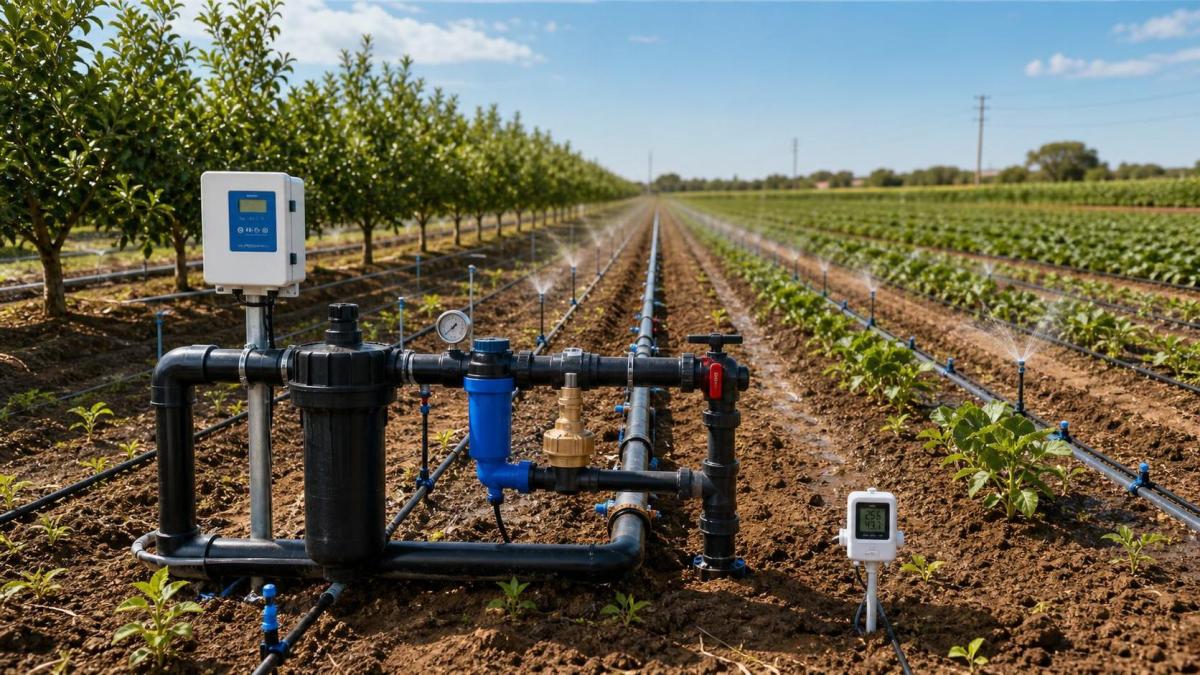
The first comparison area is irrigation precision at the point of delivery. Drip lines, micro-sprinklers, pivot retrofits, variable-rate systems, soil-moisture-linked controllers, and filtration assemblies all influence how accurately water reaches the root zone. Technical review should go past nominal flow rate and examine pressure compensation range, emitter spacing, droplet size, wetting pattern, nozzle consistency, and control responsiveness during low-pressure or mixed-terrain conditions. In orchards and vineyards, root zone targeting often matters more than simple volume reduction. In row crops, the spacing between laterals and the stability of pressure across long runs can determine whether one side of the block is overwatered while the other remains under-irrigated.
Precision also depends on how the system handles variability. Sloped land, irregular parcel shapes, mixed soil textures, and long pipe distances can create uneven distribution even when the core equipment is technically sound. A comparison should therefore include hydraulic design tolerances, maximum practical block length, head loss assumptions, and the ease of zoning separate crop sections. If a supplier only presents ideal test conditions, the water-saving estimate may be too narrow to support capital approval.
Crop fit matters more than generic efficiency claims
Two systems can show similar water-use performance on paper and still produce different agronomic outcomes. The reason is crop response. Leafy vegetables may need frequent, small applications with tight salinity control. Tree crops may need broader but slower infiltration. Rice, protected cultivation, forage, seed production, and nursery operations all impose different moisture management patterns. Comparing equipment without matching it to rooting depth, canopy density, planting geometry, and harvest schedule often leads to a poor decision dressed up as a technology upgrade.
Material compatibility also belongs in this part of the review. Water source quality influences technology fit more than many procurement documents acknowledge. High sediment load, dissolved iron, biological growth, or fertilizer injection routines can shorten the stable operating life of emitters, valves, and sensors. Filtration media, screen size, housing material, gasket durability, and chemical resistance should be compared together. A cheaper system that needs frequent flushing, acid treatment, or replacement of clogged components may erode any expected water savings simply because uniform delivery cannot be maintained over time.
Climate interaction is another point that tends to be underestimated. In hot and windy regions, some sprinkler-based systems may lose too much water to evaporation drift during daytime operation. In humid zones, moisture sensors can read differently depending on installation depth and local compaction. In cold climates, freeze protection, seasonal drainage, and re-start calibration affect annual reliability. A useful evaluation asks how the technology behaves in the actual operating window rather than in a neutral demonstration setup.
Control logic and data visibility often separate a modern system from a basic one
Water savings increasingly depend on software logic, sensor integration, and the quality of field feedback. A controller that can receive soil moisture, weather, flow, and pressure data may support tighter irrigation timing, but only if the signal quality is trustworthy and the interface does not bury important alarms. Comparison should include sensor type, calibration process, sampling interval, communication stability, and what happens when one device goes offline. Some systems default to a fixed schedule after communication loss; others stop irrigation entirely or continue using the last validated setpoint. Those failure modes have direct water and crop implications.
Data visibility should also be judged by how easily abnormal water use can be identified. The useful question is not whether the dashboard exists, but whether it shows deviations at the block, valve, or zone level in a way that supports corrective action. Flow monitoring tied to expected irrigation duration can reveal leaks or clogged sections. Pressure trend history may show gradual decline caused by filter loading or pump wear. If the technology only exports raw numbers without clear equipment-state context, analysis becomes dependent on manual interpretation and response time slows down.
Integration deserves close review in mixed-equipment environments. Many sites already have pumps, fertigation skids, pipes, power distribution panels, or farm management software from different vendors. The comparison should cover protocol compatibility, wiring requirements, controller enclosure rating, and whether additional gateways are needed for remote monitoring. Hidden integration work can delay commissioning and create recurring service dependence. This is one of the most common reasons a technically advanced package underperforms after procurement.
Operating cost is broader than water and electricity
Upfront equipment pricing rarely reflects the true operating profile of water-saving technology. Pump energy demand changes with pressure requirements, block layout, filtration resistance, and control valve behavior. A system that reduces water volume but needs substantially higher pressure may shift cost from water use to energy consumption. Evaluation should therefore compare required pressure bands, peak load behavior, startup surge, and the likely effect on existing pump sizing or variable-frequency drives.
Consumables and service parts deserve equal attention. Filters, diaphragms, seals, sensor probes, emitter lines, dosing components, and communication batteries all have replacement cycles that may differ sharply between suppliers. If spare parts rely on a narrow import channel or long shipping lead times, a small maintenance issue can become an irrigation interruption during a critical growth phase. Packaging and transport details matter here as well: long coils, fragile sensor heads, and oversized assemblies may require special handling, increasing inbound logistics complexity.
A solid comparison also includes installation labor and field preparation. Trenching depth, manifold assembly, cable routing, mounting structures, pump room modifications, and flushing points can add substantial project effort. In retrofits, compatibility with existing pipe diameters, thread standards, flange patterns, or electrical cabinets should be reviewed early. Technical documents sometimes treat these as minor adaptation items, yet they often determine whether the project stays within schedule.
Maintenance burden should be evaluated before the first season, not after failure
Many water-saving systems decline in performance gradually rather than failing all at once. That makes maintenance design a central selection factor. Compare how often filters need manual intervention, how easily blocked emitters can be isolated, whether pressure gauges are positioned for routine inspection, and how accessible control valves remain after field installation. A component that is difficult to service in muddy conditions or under crop canopy may be skipped in routine practice, allowing distribution uniformity to drift.
Sensor maintenance is frequently oversimplified. Soil moisture probes can be sensitive to placement quality, local air gaps, salinity shifts, and physical disturbance from cultivation work. Weather stations require cleaning, leveling, and occasional validation. Flow meters can lose accuracy when upstream straight-run requirements are ignored. The better choice is often the one with a clearer maintenance routine and fewer fragile dependencies, even if its headline feature list is shorter.
Long-term reliability should be examined at the assembly level, not just the brand level. Pipe wall thickness, UV resistance, connector locking design, enclosure sealing, corrosion behavior of metal fittings, and tolerance to fertilizer contact all affect service life. Agricultural sites combine dust, vibration, chemical exposure, pressure cycling, and seasonal idle periods. Components that perform well in clean industrial settings may age differently in open fields or pump sheds. Maintenance records from similar duty conditions are more useful than generic durability statements.
Comparing water performance requires a practical test method
Before final selection, side-by-side evaluation criteria should be defined in operational terms. That can include application uniformity across representative zones, response time from sensor reading to valve action, stability under partial-load operation, flush efficiency after sediment events, and the ability to maintain target moisture in contrasting soil areas. Without a common test protocol, each vendor may present a different success metric, making direct comparison unreliable.
Field validation should also separate controllable variables from external ones. Rainfall events, upstream water pressure fluctuations, pump inconsistency, and uneven land preparation can distort interpretation. When pilots are possible, the layout needs enough similarity in crop stage, soil condition, and irrigation scheduling to avoid drawing the wrong conclusion from unrelated variance. Even a short validation window can reveal whether a technology produces stable, repeatable control or only intermittent savings under close supervision.
It is also worth comparing how the system reports exceptions. A useful water-saving setup should show blocked sections, abnormal pressure drops, valve failure, or communication loss early enough for intervention. Technologies that only record totals at the end of an irrigation cycle may hide losses that accumulate in real time. Exception handling often determines whether projected efficiency survives routine field use.
Commercial and supply-side details can change the technical ranking
Selection decisions are often weakened by treating procurement and engineering as separate tracks. In practice, lead time for valves, chips in controller boards, molded fittings, specialty membranes, or sensor modules can alter deployment timing. If a design depends on one hard-to-source part, expansion and replacement planning become fragile. Packaging method, shipping sensitivity, customs classification complexity, and regional stock availability are relevant because they influence downtime risk during the season.
Documentation quality is another comparison item with direct technical impact. Installation drawings, wiring schematics, hydraulic calculation assumptions, spare parts lists, flushing procedures, and sensor calibration instructions should be reviewed as part of the equipment package, not as an afterthought. Weak documentation usually transfers interpretation risk to the installer and site team. That increases the chance of misassembly, poor commissioning, or false sensor readings that later appear as unexplained water loss.
One common misjudgment is to compare only hardware capability while ignoring service structure. If remote diagnostics depend on a proprietary cloud layer, the review should consider what happens during network interruption, subscription changes, or data export restrictions. If firmware updates are needed to maintain compatibility with sensors or drives, update control becomes part of long-term operability. These details may look administrative, but they can directly affect irrigation continuity.
Common evaluation mistakes
- Assuming lower water application automatically means better agronomic performance, without checking root-zone distribution and crop stress response.
- Using catalog pressure and flow values without validating actual head loss across filters, elevation change, and long laterals.
- Accepting sensor-driven control claims without reviewing calibration requirements, communication fallback logic, and seasonal maintenance workload.
- Ignoring water quality, especially where suspended solids or chemical dosing can reduce emitter consistency over time.
- Approving a technically advanced package before confirming spare parts pathway, installation constraints, and compatibility with existing pumps and control cabinets.
A strong comparison does not depend on the longest feature list. It depends on whether the technology can keep water delivery uniform, visible, serviceable, and stable under the real combination of crop, climate, infrastructure, and maintenance conditions present on site. When those factors are compared directly, water-saving performance becomes easier to verify and far less likely to disappear after commissioning.
 What industrial trade intelligence pricing should include before you subscribeIndustrial trade intelligence pricing explained: compare coverage, data quality, access rights, and workflow value before choosing a subscription that supports smarter trade decisions.
 How an industrial trade intelligence dashboard can identify new supplier marketsDiscover how an industrial trade intelligence dashboard helps identify new supplier markets by comparing capacity, landed cost, logistics resilience, and compliance risk.
 Which global market entry barriers should exporters assess first?Global market entry barriers exporters should assess first: tariffs, compliance, buyer qualification, logistics, and payment risk. Build a practical strategy for confident market entry.
 How trade data aggregation analytics can reveal emerging supplier marketsTrade data aggregation analytics reveals emerging supplier markets by connecting trade flows, capacity signals, logistics, and compliance insights for smarter sourcing decisions.
 When an export market analysis platform can validate demand in a new marketExport market analysis platform insights help validate new-market demand through buyer fit, regulations, logistics, competition, and profitable entry conditions.
 What is driving the beauty and personal care market in the USA?Beauty and personal care in USA is driven by targeted solutions, selective premiumization, digital discovery, clean-label trust, diverse needs, and compliance. Explore key growth opportunities.
 How trade flow monitoring reports reveal changing regional demandTrade flow monitoring reports reveal changing regional demand through import volumes, sourcing shifts, product mix, logistics signals, and regulatory trends. Explore actionable market insights.
 How international market intelligence for investors reduces market-entry riskInternational market intelligence for investors reduces market-entry risk by validating demand, regulations, logistics, and competition before capital is committed.
 How international sourcing intelligence helps identify supplier risk earlyInternational sourcing intelligence helps businesses spot supplier risks early, protect supply continuity, and make smarter global procurement decisions.
 How trade data aggregation analytics reveals emerging supplier marketsTrade data aggregation analytics reveals emerging supplier markets through export trends, input flows, logistics, and regulatory signals. Discover smarter sourcing insights.
 What industrial cluster monitoring in Vietnam reveals about site riskIndustrial cluster monitoring Vietnam reveals hidden site risks across labor, utilities, logistics, compliance, and supplier dependencies. Make smarter sourcing and expansion decisions.
 Food Technology Trends Reshaping Shelf Life, Safety, and Product InnovationFood technology is reshaping shelf life, safety, and innovation. Discover the trends helping food businesses cut risk, improve compliance, and unlock stronger global market growth.
 How electronics manufacturing services are changing with low-volume demandElectronics manufacturing services are evolving fast with low-volume demand. Learn how agile EMS partners improve flexibility, compliance, sourcing resilience, and speed to market.
 How Can Buyers Reduce Procurement Risks for Electronic Components?How to reduce procurement risks for electronic components: learn how buyers assess traceability, lead times, compliance, and supplier types to avoid costly sourcing mistakes.
 What Sourcing Intelligence India Reveals About Supplier Risk and Cost ShiftsSourcing intelligence India reveals hidden supplier risk, compliance gaps, logistics pressure, and real cost shifts—helping buyers compare vendors smarter and source with more confidence.
 Fashion Trends 2026: Which Materials, Colors, and Silhouettes Are Gaining Ground?Fashion trends 2026 spotlight tactile fabrics, mineral colors, and controlled volume. Explore the materials, shades, and silhouettes shaping smarter, more wearable style.
 Smart Device Market Outlook: Key Growth Drivers, Segments, and Business OpportunitiesSmart device market trends are shifting toward system value, industrial demand, and resilient supply chains. Explore key growth drivers, high-potential segments, and business opportunities.
 How Global Trade Intelligence Services Help B2B Firms Evaluate Markets and SuppliersGlobal trade intelligence services help B2B firms compare suppliers, assess market potential, and uncover compliance, logistics, and pricing risks before costly decisions are made.
 Manufacturing Sector Updates for Investors: What Signals Matter Most in 2025?Manufacturing sector updates for investors in 2025: track orders, margins, supply chains, regulation, and exports to spot resilient manufacturers and smarter investment signals.
 How Energy Market Intelligence Helps Businesses Track Price Risks and Demand ShiftsEnergy market intelligence helps businesses spot price risks, demand shifts, and supply pressure early—improving procurement, resilience, and faster strategic decisions.
 Precision Hardware Tools Market: Key Demand Drivers, Segments, and Growth OutlookPrecision hardware tools market trends are reshaping sourcing, compliance, and automation. Explore key demand drivers, segment shifts, regional supply patterns, and growth opportunities.





















Global Trade Insights & Industry
Our mission is to empower global exporters and importers with data-driven insights that foster strategic growth.
Search News
Popular Tags
Industry Overview
The global commercial kitchen equipment market is projected to reach $112 billion by 2027. Driven by urbanization, the rise of e-commerce food delivery, and strict hygiene regulations.