

How to verify security and protection equipment certification
A delivery of safety helmets, protective gloves, respirators, or access-control equipment may arrive with convincing logos and a folder of certificates. The problem appears when the model on the carton differs from the approval record, the certificate covers another factory, or the cited standard does not address the intended hazard. Releasing that shipment can leave a workplace exposed even when the paperwork looks complete.
To verify security and protection equipment certification, establish the product’s regulatory requirements, authenticate the evidence through its issuer, and match the approved scope to the equipment received. A genuine certificate is not enough: it must cover the correct product, protection claim, conformity route, and destination market. Keep the shipment on hold whenever a safety-critical mismatch remains unresolved.
Start with the hazard and destination, not the logo
“Security and protection equipment” is not a single certification category. A protective glove, surveillance camera, fire detector, and fall-arrest harness serve different functions and may follow different approval systems. Before checking documents, write down the exact intended use, installation environment, user exposure, and country where the product will be placed on the market or used.
That description determines which claims need evidence. Cut resistance does not establish chemical resistance. An electrical safety approval for a camera does not demonstrate intrusion-detection performance or cybersecurity. A fire alarm component approved individually may still need to be used within a compatible, approved system.
- Identify the hazard: impact, airborne particles, chemicals, falls, fire, electrical exposure, or unauthorized entry.
- Define the configuration: model, size range, materials, accessories, power supply, firmware where relevant, and installation arrangement.
- Separate requirements: legal conformity, workplace safety obligations, project specifications, and voluntary performance certification are different acceptance conditions.
- Confirm the applicable edition: check the standard version and any transition provisions rather than assuming the newest publication automatically replaces all earlier evidence.
Use official regulatory guidance and the relevant certification scheme to establish the required route. A supplier’s statement that a product is “internationally certified” does not identify a jurisdiction or demonstrate compliance.
Know what each document actually proves
Suppliers often combine test reports, declarations, certificates, and management-system documents in one submission. Treat them as separate evidence types. Their titles alone do not establish their legal role.
A test report may support certification without constituting product approval. Equally, some conformity routes legitimately rely on manufacturer declarations rather than third-party certification. The question is not whether the supplier has the most impressive document; it is whether the evidence meets the applicable route.
Authenticate the issuer through an independent channel
Begin with the certificate number, issuing organization, certificate holder, issue date, and product description. Find the issuer’s official website independently rather than relying only on a QR code or link embedded in the supplier’s PDF. Search its certificate directory where one is available.
Compare the live record with the submitted document. Check model suffixes, annex references, manufacturing locations where listed, and whether the record is active, suspended, withdrawn, or superseded. A certificate may have no printed expiry date while remaining dependent on continuing surveillance.
When no public record exists, contact the issuer using independently obtained contact details. Send the complete document and ask whether it is authentic, current, and applicable to the specified model. Absence from a public database is not conclusive proof of fraud, but it leaves verification incomplete.
Check competence and authorization separately
Laboratory accreditation to ISO/IEC 17025 concerns competence for activities within an accredited scope. Confirm that the relevant method appears in that scope; a laboratory accredited for electrical testing is not automatically accredited for respirator testing. Where accreditation is claimed, also check whether the particular report was issued under that accreditation.
Product certification bodies may be accredited to ISO/IEC 17065. However, accreditation is not interchangeable with regulatory designation. A body performing a legally reserved conformity-assessment task must have the required authorization for that product area and procedure. Verify both where applicable.
Apply the right verification route for the market
EU PPE: distinguish CE marking from third-party approval
For personal protective equipment placed on the EU market, examine the requirements of the PPE Regulation. CE marking is the manufacturer’s indication of conformity, not a universal certificate issued by an EU authority. Request the EU declaration of conformity and check that it identifies the product and applicable legislation.
The conformity-assessment route depends on the PPE risk category. Category I generally uses internal production control. Category II requires EU type-examination followed by conformity to type based on internal production control. Category III adds notified-body involvement in production conformity assessment through the applicable route.
Check the European Commission’s NANDO information system to confirm that the notified body is designated for the relevant tasks and product scope. For Category III PPE, the identification number following the CE marking relates to the notified body involved in production control, which may differ from the body issuing the type-examination certificate. Do not reject Category II PPE merely because its CE marking lacks that number.
Where a supplier claims presumption of conformity through harmonized standards, verify the relevant references and restrictions in the applicable official publications. A standard printed on a certificate is not, by itself, proof that every legal requirement has been addressed.
United States: match approval claims to the product category
For respirators represented as NIOSH-approved, check the approval number and exact configuration against NIOSH’s Certified Equipment List and associated approval information. Approval applies to specified assemblies and components, not to any item that resembles the approved facepiece. Substitute filters, cartridges, or other components can invalidate the claimed configuration.
For electrical security equipment, an OSHA-recognized Nationally Recognized Testing Laboratory mark may be relevant to workplace electrical acceptance. Verify the listing in the laboratory’s directory and confirm the applicable standard and model. Such a listing does not automatically establish security effectiveness, radio compliance, or suitability for every installation.
Do not assume that every reference to an ANSI standard represents independent certification. Determine whether the claim is supported by manufacturer testing, third-party testing, or a defined certification scheme, and whether that evidence satisfies the applicable requirement.
Connect the approval record to the physical shipment
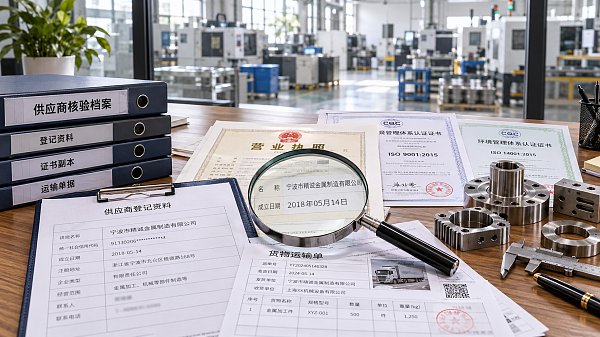
Authentication resolves only part of the problem. A valid certificate can be copied and attached to an unrelated product. Receiving inspection therefore needs a traceable connection between the goods, their markings, and the supporting evidence.
- Record the delivered identity. Photograph product markings and packaging. Capture model codes, manufacturer details, lot or serial numbers, protection classes, and relevant production dates.
- Compare every meaningful suffix. Differences may indicate another material, lens, filter, electrical rating, or protection level. Ask for an issuer-confirmed model relationship when the scope is unclear.
- Review annexes and schedules. Model families and restrictions are often listed outside the certificate’s first page. Obtain the complete document.
- Check the approved configuration. Confirm accessories and interfaces, including respirator cartridges, helmet attachments, harness connectors, and security-device power supplies.
- Resolve private-label identities. Where the delivered brand differs from the certificate holder, request evidence that the scheme permits that arrangement and covers the supplied designation.
A commercial letter saying “equivalent to the certified model” is not a substitute for scope evidence. For safety-critical differences, obtain clarification from the certification body or responsible conformity-assessment party rather than accepting a sales explanation.
Read the results and restrictions, not just “pass”
Open the test report and identify which clauses were evaluated. Reports may cover selected tests, development samples, or only one component. Look for untested clauses, deviations, subcontracted work, conditioning requirements, and limitations on how the results may be used.
Performance levels must match the risk assessment. A glove can meet a mechanical-protection standard while providing insufficient resistance to the specific cut hazard. Chemical breakthrough results depend on the chemical tested and laboratory conditions; they should not be treated as guaranteed safe wearing times in every workplace.
For electronic security devices, distinguish component-level compliance from system performance. A compliant power supply does not certify the assembled controller. Firmware changes may affect evaluated functions, so determine whether the scheme controls software versions or requires assessment of changes.
Check whether the tested construction matches current production. Material substitutions, relocated manufacturing, revised components, or changed production processes may require notification, review, or additional testing under the scheme. Request documented change control when differences appear.
Decide whether to release, hold, or reject
Use evidence-based dispositions rather than treating every discrepancy alike. A missing annex may be resolved by obtaining it from the issuer. A suspended approval or an excluded model is a substantive problem that cannot be closed by replacing the supplier’s cover letter.
- Release: required evidence is authenticated, its scope matches the goods, the intended application is covered, and receiving checks are satisfactory.
- Hold: authenticity, model coverage, configuration, or current status remains uncertain. Identify the exact evidence needed to close the gap.
- Reject or escalate: the issuer confirms falsification, required approval is absent, or the delivered equipment falls outside the accepted protection scope.
Record the verification date, source consulted, documents reviewed, discrepancies, and release authority. Retain labels and lot details alongside the approval evidence so later recalls or status changes can be traced to inventory and deployed equipment.
Repeat verification when a supplier changes the model, materials, factory, branding, or critical components. For continuing supply, set review intervals according to risk and scheme requirements. Certification verifies defined conformity; it does not replace user fit testing where required, compatibility assessment, installation checks, maintenance, or removal from service after damage.
 How to assess Singapore suppliers with global supply chain intelligenceExplore international supply chain intelligence Singapore buyers can use to verify suppliers, assess capabilities and delivery risks, and make confident sourcing decisions.
 Which macroeconomic indicators help forecast U.S. industrial demand?Explore industrial macro analysis USA decision-makers can use to forecast demand. Track new orders, inventories, and credit signals to sharpen procurement and capacity decisions.
 Can a food processing manufacturer meet your small-batch needs?Can a food processing manufacturer meet your small-batch needs? Discover how to assess minimum orders, costs, packaging, and safety to choose the right partner for your launch.
 How to verify sourcing intelligence data before selecting suppliersVerify sourcing intelligence data before choosing suppliers. Learn how to check company records, certifications, and capacity to reduce procurement risk and build a reliable shortlist.
 How to use supplier risk analysis to spot financial warning signsUse supplier risk analysis to spot cash flow pressure, debt risks, and delivery warning signs. Learn practical steps to reduce exposure and protect supply continuity.
 When dual sourcing makes sense in a sourcing strategy for manufacturersSourcing strategy for manufacturers: learn when dual sourcing strengthens supply continuity, reduces disruption risk, and protects production without adding unnecessary complexity.
 How bulk commodities pricing affects long-term supply contractsBulk commodities pricing shapes long-term supply contracts through index rules, freight, quality, volume, and currency risk. Explore strategies for resilient costs and supply security.
 Which global manufacturing trends by sector matter most for sourcing plans?Global manufacturing trends by sector: identify sourcing risks, supplier resilience, compliance demands, and cost drivers to build smarter, more reliable procurement plans.
 What industrial trade intelligence pricing should include before you subscribeIndustrial trade intelligence pricing explained: compare coverage, data quality, access rights, and workflow value before choosing a subscription that supports smarter trade decisions.
 How an industrial trade intelligence dashboard can identify new supplier marketsDiscover how an industrial trade intelligence dashboard helps identify new supplier markets by comparing capacity, landed cost, logistics resilience, and compliance risk.
 Which global market entry barriers should exporters assess first?Global market entry barriers exporters should assess first: tariffs, compliance, buyer qualification, logistics, and payment risk. Build a practical strategy for confident market entry.
 How trade data aggregation analytics can reveal emerging supplier marketsTrade data aggregation analytics reveals emerging supplier markets by connecting trade flows, capacity signals, logistics, and compliance insights for smarter sourcing decisions.
 When an export market analysis platform can validate demand in a new marketExport market analysis platform insights help validate new-market demand through buyer fit, regulations, logistics, competition, and profitable entry conditions.
 What is driving the beauty and personal care market in the USA?Beauty and personal care in USA is driven by targeted solutions, selective premiumization, digital discovery, clean-label trust, diverse needs, and compliance. Explore key growth opportunities.
 How trade flow monitoring reports reveal changing regional demandTrade flow monitoring reports reveal changing regional demand through import volumes, sourcing shifts, product mix, logistics signals, and regulatory trends. Explore actionable market insights.
 How international market intelligence for investors reduces market-entry riskInternational market intelligence for investors reduces market-entry risk by validating demand, regulations, logistics, and competition before capital is committed.
 How international sourcing intelligence helps identify supplier risk earlyInternational sourcing intelligence helps businesses spot supplier risks early, protect supply continuity, and make smarter global procurement decisions.
 How trade data aggregation analytics reveals emerging supplier marketsTrade data aggregation analytics reveals emerging supplier markets through export trends, input flows, logistics, and regulatory signals. Discover smarter sourcing insights.
 What industrial cluster monitoring in Vietnam reveals about site riskIndustrial cluster monitoring Vietnam reveals hidden site risks across labor, utilities, logistics, compliance, and supplier dependencies. Make smarter sourcing and expansion decisions.
 Food Technology Trends Reshaping Shelf Life, Safety, and Product InnovationFood technology is reshaping shelf life, safety, and innovation. Discover the trends helping food businesses cut risk, improve compliance, and unlock stronger global market growth.
 How electronics manufacturing services are changing with low-volume demandElectronics manufacturing services are evolving fast with low-volume demand. Learn how agile EMS partners improve flexibility, compliance, sourcing resilience, and speed to market.



















Global Trade Insights & Industry
Our mission is to empower global exporters and importers with data-driven insights that foster strategic growth.
Search News
Popular Tags
Industry Overview
The global commercial kitchen equipment market is projected to reach $112 billion by 2027. Driven by urbanization, the rise of e-commerce food delivery, and strict hygiene regulations.