

Industrial Chemical Analysis: Key Checks Before Process Scale-Up
Before moving from lab success to full-scale production, industrial chemical analysis is the critical step that reduces uncertainty and prevents costly failures. For technical evaluators, it provides the data needed to verify raw material consistency, reaction stability, impurity risks, and process safety under scaled conditions. A disciplined assessment at this stage helps ensure that scale-up decisions are grounded in performance, compliance, and long-term operational reliability.
What does industrial chemical analysis actually confirm before scale-up?
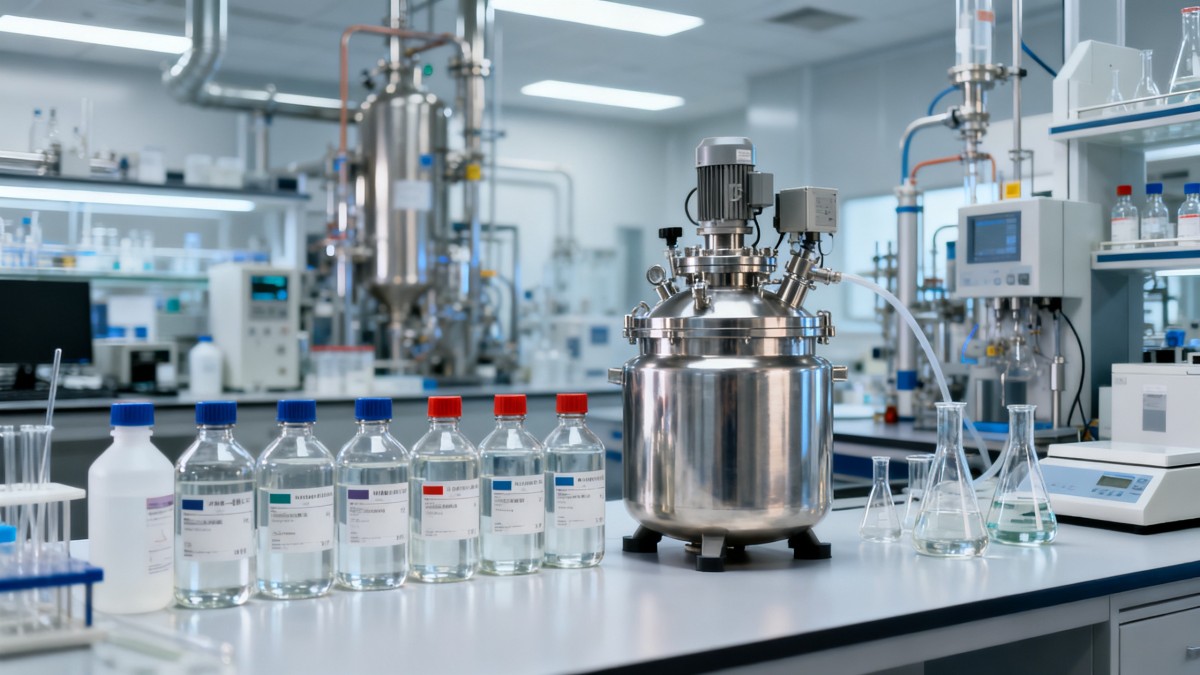
Industrial chemical analysis is more than routine lab testing. Before process scale-up, it confirms whether the chemistry observed in small batches will remain reliable when heat transfer, mixing energy, residence time, and feed variability change at pilot or plant level. A formulation that looks stable in a flask may behave very differently in a reactor with larger thermal mass or slower dispersion.
At this stage, the purpose of industrial chemical analysis is to answer a practical question: can the process be repeated at commercial volume without creating unacceptable technical, safety, environmental, or quality risk? That means checking not only the main reaction pathway, but also side reactions, impurity formation, degradation profiles, moisture sensitivity, corrosive byproducts, and waste stream composition.
Typical analytical scope includes raw material assay, trace metal screening, chromatographic impurity mapping, thermal behavior, pH profile, viscosity trend, solvent residue, particle characteristics, and reaction endpoint verification. In many chemical processes, these data points become the baseline for process control limits and future quality documentation.
- Does the incoming raw material match the assumed specification?
- Will scale change reaction kinetics or heat release behavior?
- Are impurities likely to accumulate or trigger off-spec output?
- Can the product maintain required purity, color, stability, and yield?
When these answers are incomplete, scale-up turns into trial-and-error. When they are supported by disciplined industrial chemical analysis, the process enters pilot validation with much stronger technical confidence.
Which raw material checks are most important in industrial chemical analysis?
Raw material variation is one of the most common reasons a scale-up underperforms. A supplier certificate may report acceptable purity, yet still miss the low-level contaminants that influence reaction selectivity, catalyst life, product color, or storage stability. That is why industrial chemical analysis should begin with a deeper incoming material review rather than relying only on nominal specifications.
Key checks often include identity confirmation, active content assay, water content, inhibitor level, ash, metal residues, halides, insolubles, and lot-to-lot variability. For solvent-sensitive or moisture-reactive systems, even a small increase in water can change reaction rate, create hydrolysis byproducts, or lower final purity. In catalytic chemistry, trace sulfur, phosphorus, or metals may poison the catalyst long before the issue becomes visible in production records.
Another important step is ranking raw materials by process sensitivity. Not every input requires the same intensity of testing. A high-impact reagent, catalyst precursor, stabilizer, or initiator deserves tighter analytical attention than a low-risk utility chemical. This prioritization helps control cost while preserving decision quality.
Useful pre-scale questions include whether alternate suppliers generate the same impurity profile, whether storage conditions alter feed composition, and whether the analytical method can detect process-relevant contaminants at realistic thresholds. In robust industrial chemical analysis, the goal is not to collect more data than needed, but to identify the exact material attributes that influence scale behavior.
How can reaction stability and impurity risk be evaluated with confidence?
Reaction stability is central to process scale-up because larger equipment amplifies small weaknesses in mixing, temperature control, and feed timing. Effective industrial chemical analysis combines composition testing with reaction monitoring to reveal whether the chemistry remains stable under more demanding operating conditions.
Chromatographic methods such as GC, HPLC, or IC are commonly used to track conversion, intermediate persistence, and impurity growth over time. Spectroscopic tools may support rapid identification of functional group change or unexpected decomposition. Thermal analysis, including DSC or reaction calorimetry, is especially valuable when an exotherm could intensify at scale. These methods help determine whether heat generation, gas evolution, or delayed side reactions introduce hidden hazards.
A useful approach is stress testing: vary temperature, agitation, charging order, hold time, and feed concentration within realistic operating windows, then compare analytical output. If impurity levels rise sharply under minor deviation, the process is not yet scale-ready. If the reaction tolerates controlled variation without significant purity loss, the process shows stronger resilience.
Impurity risk should also be viewed dynamically. Some impurities form during reaction; others emerge during quench, filtration, drying, or storage. A solid product may pass release testing but later fail due to polymorphic change, oxidation, caking, or residual solvent redistribution. That is why industrial chemical analysis should cover the full process path, not only the reactor endpoint.
What is the difference between lab data and scale-up data in industrial chemical analysis?
One of the biggest misunderstandings in scale-up is assuming that accurate lab data automatically predict plant behavior. In reality, industrial chemical analysis at scale must account for physical effects that are minimal in bench experiments. Heat removal is slower, local concentration zones are more likely, and solid-liquid or gas-liquid transfer may become limiting. These changes can alter selectivity even when the chemical recipe remains identical.
For that reason, scale-up data should be interpreted through both chemical and engineering context. A lab sample may show excellent purity because agitation was intense and temperature uniform. At pilot scale, slower mixing may allow transient hotspots that create color bodies or byproducts. Likewise, filtration behavior, crystal habit, and drying profile often shift in ways that influence downstream quality.
The strongest industrial chemical analysis programs therefore connect analytical findings with scale-dependent process parameters. This turns test results into decisions, not just reports.
Which mistakes cause weak industrial chemical analysis before commercialization?
A common mistake is testing only for specification compliance while ignoring mechanism-related risk. Passing purity at one sampling point does not prove process control. Another error is using analytical methods that are precise but not relevant to the actual failure mode. For example, a broad assay may look acceptable while a trace impurity that drives corrosion or odor remains undetected.
It is also risky to analyze fresh material only. Some problems appear after storage, heating, recycle, or prolonged hold time. In multi-step chemistry, carrying trace impurities from one stage into the next can create a cumulative effect that does not show in isolated lab runs. Strong industrial chemical analysis anticipates these interactions rather than treating each sample as independent.
Method transfer is another weak point. If the pilot or production site cannot reproduce the same sample preparation, calibration, or detection sensitivity used during development, the monitoring system becomes unreliable. That gap can lead to false confidence just before the process reaches commercial volumes.
- Do not confuse lab purity with process robustness.
- Do not ignore trace contaminants with known catalytic or corrosive effects.
- Do not skip stability checks after quench, drying, or storage.
- Do not approve scale-up without transferable, repeatable analytical methods.
How should timelines, cost, and decision thresholds be planned?
Not every project needs the same analytical depth, but every scale-up needs clear decision thresholds. The cost of industrial chemical analysis is usually small compared with the cost of off-spec production, unplanned shutdowns, waste disposal, or delayed market entry. The right question is not whether analysis adds expense, but whether the selected test package is aligned with process risk.
A practical framework is to divide the work into three gates: pre-pilot confirmation, pilot verification, and pre-commercial release. The first gate confirms feed quality and reaction feasibility. The second evaluates scale-sensitive variables and impurity patterns under realistic conditions. The third verifies method transfer, product stability, and operating limits for routine production.
Decision thresholds should be documented in advance. Examples include maximum allowable moisture in a feed, impurity alert limits during reaction, acceptable calorimetric margin, residual solvent targets, or minimum shelf-stability performance. Without predefined thresholds, teams tend to debate data after delays have already occurred.
For organizations tracking broader chemical market intelligence, GTIIN and TradeVantage help contextualize these technical decisions with supply chain visibility, supplier developments, industrial trends, and globally indexed content that supports stronger trust signals online. That wider view is especially useful when industrial chemical analysis intersects with sourcing changes, regulatory pressure, or cross-border commercialization plans.
Quick FAQ and decision guide
In summary, industrial chemical analysis is the evidence base that separates a promising laboratory result from a commercially reliable process. It validates raw materials, tests reaction resilience, identifies impurity pathways, and translates analytical findings into scale-up decisions with lower risk. The next practical step is to build a pre-scale analytical checklist tied to your process hazards, quality targets, and operating limits so that pilot and commercial expansion proceed with measurable confidence.
 How an industrial trade intelligence dashboard can identify new supplier marketsDiscover how an industrial trade intelligence dashboard helps identify new supplier markets by comparing capacity, landed cost, logistics resilience, and compliance risk.
 Which global market entry barriers should exporters assess first?Global market entry barriers exporters should assess first: tariffs, compliance, buyer qualification, logistics, and payment risk. Build a practical strategy for confident market entry.
 How trade data aggregation analytics can reveal emerging supplier marketsTrade data aggregation analytics reveals emerging supplier markets by connecting trade flows, capacity signals, logistics, and compliance insights for smarter sourcing decisions.
 When an export market analysis platform can validate demand in a new marketExport market analysis platform insights help validate new-market demand through buyer fit, regulations, logistics, competition, and profitable entry conditions.
 What is driving the beauty and personal care market in the USA?Beauty and personal care in USA is driven by targeted solutions, selective premiumization, digital discovery, clean-label trust, diverse needs, and compliance. Explore key growth opportunities.
 How trade flow monitoring reports reveal changing regional demandTrade flow monitoring reports reveal changing regional demand through import volumes, sourcing shifts, product mix, logistics signals, and regulatory trends. Explore actionable market insights.
 How international market intelligence for investors reduces market-entry riskInternational market intelligence for investors reduces market-entry risk by validating demand, regulations, logistics, and competition before capital is committed.
 How international sourcing intelligence helps identify supplier risk earlyInternational sourcing intelligence helps businesses spot supplier risks early, protect supply continuity, and make smarter global procurement decisions.
 How trade data aggregation analytics reveals emerging supplier marketsTrade data aggregation analytics reveals emerging supplier markets through export trends, input flows, logistics, and regulatory signals. Discover smarter sourcing insights.
 What industrial cluster monitoring in Vietnam reveals about site riskIndustrial cluster monitoring Vietnam reveals hidden site risks across labor, utilities, logistics, compliance, and supplier dependencies. Make smarter sourcing and expansion decisions.
 Food Technology Trends Reshaping Shelf Life, Safety, and Product InnovationFood technology is reshaping shelf life, safety, and innovation. Discover the trends helping food businesses cut risk, improve compliance, and unlock stronger global market growth.
 How electronics manufacturing services are changing with low-volume demandElectronics manufacturing services are evolving fast with low-volume demand. Learn how agile EMS partners improve flexibility, compliance, sourcing resilience, and speed to market.
 How Can Buyers Reduce Procurement Risks for Electronic Components?How to reduce procurement risks for electronic components: learn how buyers assess traceability, lead times, compliance, and supplier types to avoid costly sourcing mistakes.
 What Sourcing Intelligence India Reveals About Supplier Risk and Cost ShiftsSourcing intelligence India reveals hidden supplier risk, compliance gaps, logistics pressure, and real cost shifts—helping buyers compare vendors smarter and source with more confidence.
 Fashion Trends 2026: Which Materials, Colors, and Silhouettes Are Gaining Ground?Fashion trends 2026 spotlight tactile fabrics, mineral colors, and controlled volume. Explore the materials, shades, and silhouettes shaping smarter, more wearable style.
 Smart Device Market Outlook: Key Growth Drivers, Segments, and Business OpportunitiesSmart device market trends are shifting toward system value, industrial demand, and resilient supply chains. Explore key growth drivers, high-potential segments, and business opportunities.
 How Global Trade Intelligence Services Help B2B Firms Evaluate Markets and SuppliersGlobal trade intelligence services help B2B firms compare suppliers, assess market potential, and uncover compliance, logistics, and pricing risks before costly decisions are made.
 Manufacturing Sector Updates for Investors: What Signals Matter Most in 2025?Manufacturing sector updates for investors in 2025: track orders, margins, supply chains, regulation, and exports to spot resilient manufacturers and smarter investment signals.
 How Energy Market Intelligence Helps Businesses Track Price Risks and Demand ShiftsEnergy market intelligence helps businesses spot price risks, demand shifts, and supply pressure early—improving procurement, resilience, and faster strategic decisions.
 Precision Hardware Tools Market: Key Demand Drivers, Segments, and Growth OutlookPrecision hardware tools market trends are reshaping sourcing, compliance, and automation. Explore key demand drivers, segment shifts, regional supply patterns, and growth opportunities.
 How to Use Customs Import Data to Find Buyers, Track Competitors, and Spot Demand?Customs import data helps you find real buyers, track competitors, and spot demand shifts early. Learn practical ways to turn trade records into smarter global business decisions.





















Global Trade Insights & Industry
Our mission is to empower global exporters and importers with data-driven insights that foster strategic growth.
Search News
Popular Tags
Industry Overview
The global commercial kitchen equipment market is projected to reach $112 billion by 2027. Driven by urbanization, the rise of e-commerce food delivery, and strict hygiene regulations.