

What affects cycle life most in lithium battery technology
In lithium battery technology, cycle life is one of the most cited and most misunderstood performance indicators. On paper, a cell may be rated for 2,000, 4,000, or even 8,000 cycles. In practice, that number depends heavily on test conditions, system design, operating environment, and the definition of “end of life.” For anyone comparing battery products, reviewing technical claims, or assessing long-term supply decisions, the central question is not simply how many cycles a battery can reach in a lab. It is what affects cycle life most, and which of those factors remain controllable in real-world use.
The short answer is that no single variable explains battery aging across all applications. Chemistry matters, but operating temperature, depth of discharge, charge rate, voltage window, material purity, manufacturing consistency, and battery management logic often matter just as much. In some applications, thermal exposure is the dominant driver. In others, fast charging or repeated full discharge causes faster degradation than the cell chemistry itself would suggest.
That is why cycle life should be read as a system outcome rather than a simple cell property.
Cycle life is really a measure of degradation under specific conditions
In technical terms, cycle life usually refers to the number of charge-discharge cycles a battery can complete before its usable capacity falls to a defined threshold, commonly 80% of initial capacity. Some test protocols also track internal resistance growth, power fade, or safety-related changes. This matters because two suppliers can both claim “4,000 cycles” while using different end-of-life definitions, charge rates, temperatures, or discharge depths.
For information researchers and procurement-side evaluators, this is the first point to verify: cycle life data without test conditions has limited value. A lithium iron phosphate cell tested at 25°C, 0.5C charge/discharge, and 80% depth of discharge may perform very differently from the same cell used at higher current, wider voltage limits, and unstable ambient temperatures.
In other words, cycle life is not a universal number. It is a conditional number.
Depth of discharge is often one of the strongest practical influences
Among all operating factors, depth of discharge (DoD) has one of the most direct and repeatable effects on aging. A battery cycled from 100% down to near empty experiences more structural and chemical stress than one operating in a narrower state-of-charge window. This is why many long-life stationary storage systems avoid full discharge during normal operation, even when the battery could technically deliver that energy.
The relationship is important for business users because application design often determines cycle life more than the cell brochure does. A battery in telecom backup, microgrid smoothing, or industrial peak shaving may achieve significantly longer service life if the system is oversized enough to avoid deep daily cycling. By contrast, a cost-optimized design that pushes the battery close to full usable capacity each day may reduce replacement intervals and raise total lifecycle cost.
One common market misunderstanding is assuming that more usable capacity per cycle automatically improves value. In reality, aggressive utilization can reduce overall lifetime energy throughput if it accelerates degradation too quickly.
Temperature may be the most underestimated driver of battery aging
Heat is one of the most damaging long-term influences in lithium battery technology. Elevated temperature speeds up side reactions inside the cell, including electrolyte decomposition, growth of interfacial layers, gas generation, and structural damage in active materials. Even when a battery appears to function normally in the short term, prolonged operation at high temperature can sharply reduce cycle life.
Low temperature creates a different problem. It reduces lithium-ion mobility and increases internal resistance. Charging at low temperatures, especially at high rates, can lead to lithium plating on the anode. This is particularly harmful because plated lithium may become inactive or create safety risks, and the damage is often irreversible.
For this reason, battery performance claims should never be separated from thermal management capability. In electric vehicles, energy storage containers, warehouse equipment, and outdoor power systems, thermal design is not an accessory feature. It is a life-limiting parameter. A well-managed battery in moderate temperature conditions may outperform a nominally better cell deployed in poor thermal conditions.
This point also has supply-chain implications. Buyers comparing manufacturers across regions should look beyond chemistry labels and ask how thermal testing is conducted, whether system-level cooling is passive or active, and how cycle-life validation reflects regional climate conditions.
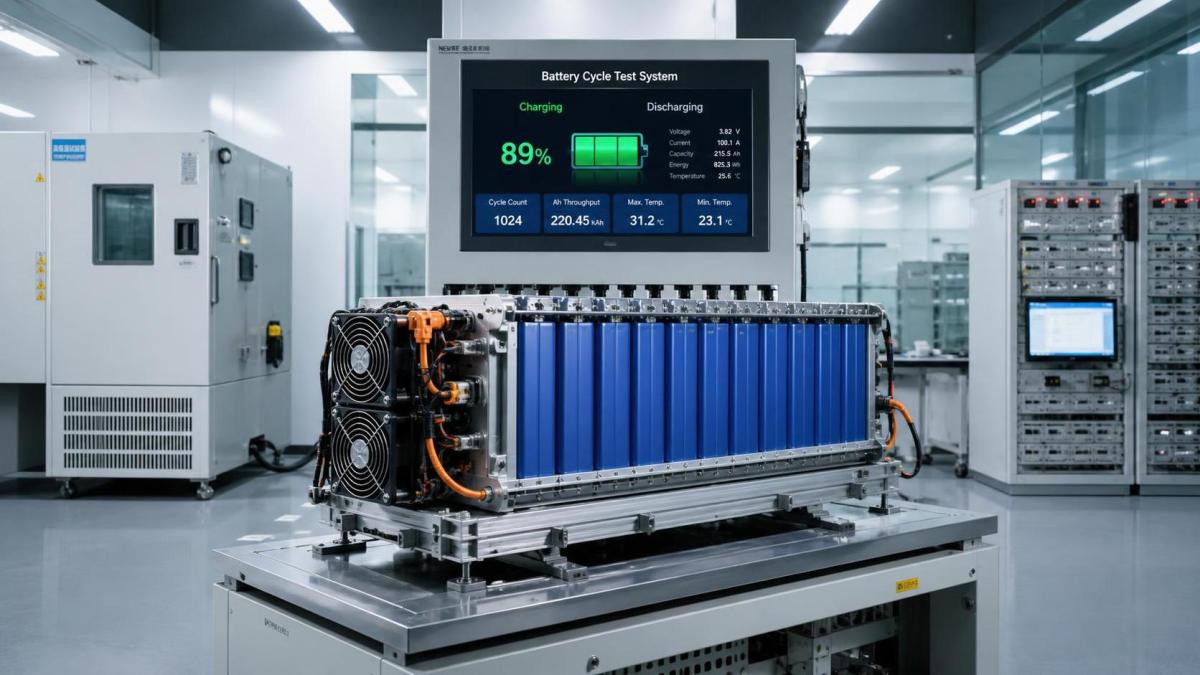
Voltage limits and charging strategy matter more than many non-specialists expect
Battery aging accelerates near the upper and lower ends of the voltage range. Repeated charging to the maximum allowable voltage can extract more immediate capacity, but it also increases stress on electrode materials and interfaces. Repeated deep discharge has similar consequences at the low end. That is why many battery systems use conservative voltage windows rather than exposing the full theoretical capacity of the cell.
Charging strategy also plays a major role. Fast charging increases convenience and throughput, but higher current generates more heat and can intensify side reactions. In some chemistries and temperature conditions, it also raises the risk of lithium plating. This does not mean fast charging is inherently unsuitable; it means cycle-life expectations must be adjusted to reflect actual charging behavior.
For researchers reviewing product positioning, this creates a useful filter. If a supplier promotes both ultra-fast charging and very long cycle life, the technical conditions behind those claims deserve close examination. The combination is possible in some controlled cases, but it is not something to accept without detailed operating assumptions.
Chemistry sets the baseline, but it does not decide the outcome alone
Different lithium chemistries have different inherent aging profiles. Lithium iron phosphate (LFP) is widely known for relatively strong cycle stability and thermal robustness, which helps explain its growing role in stationary storage, buses, commercial vehicles, and cost-sensitive EV segments. Nickel-rich chemistries such as NMC and NCA often provide higher energy density but may require tighter control of voltage, heat, and charging conditions to sustain long service life.
Lithium titanate (LTO) is known for excellent cycle life and fast charge tolerance, but lower energy density and higher cost limit where it makes economic sense. Other chemistry variants and emerging formulations continue to evolve, but the decision logic remains similar: chemistry defines the performance envelope, while usage conditions determine how much of that envelope remains available over time.
This is why broad statements like “LFP lasts longer than NMC” are directionally useful but incomplete. For a low-temperature, high-power, or premium-weight-constrained application, the better choice may depend on system priorities rather than chemistry reputation alone.
Manufacturing quality and material consistency are often hidden variables
Cycle life is strongly affected by factors that end users cannot easily observe from a datasheet. Electrode coating uniformity, moisture control during production, electrolyte formulation, separator quality, particle morphology, impurity levels, formation protocols, and cell matching all influence aging behavior. Small process deviations can lead to major differences in long-term stability, especially in large-format cells used in industrial systems.
This is one reason why cycle-life comparisons based only on nominal chemistry can be misleading. Two cells built on similar chemistry platforms may age very differently because of differences in process control and quality management.
For external evaluators, the practical implication is clear: cycle-life credibility depends partly on supplier maturity. Independent testing, traceable quality systems, field deployment history, and production consistency may tell you more than a headline claim. In international trade settings, where buyers may be comparing multiple suppliers across countries, this becomes especially relevant. A lower-cost offer with weak process discipline can produce hidden replacement and warranty risk that only appears after deployment.
Battery management systems can extend or destroy usable life
A battery management system (BMS) influences cycle life through cell balancing, thermal control logic, current limits, voltage protection, state-of-charge estimation, and fault response. Even high-quality cells can degrade prematurely if the BMS allows overcharge, overdischarge, uneven balancing, or uncontrolled temperature rise.
At pack and system level, mechanical design also matters. Uneven compression, vibration exposure, poor busbar design, and local hot spots can create non-uniform aging across cells. Once inconsistency develops inside a pack, the weakest cells often determine the service life of the whole unit.
From a technical due-diligence perspective, this is where many superficial comparisons fail. Suppliers sometimes provide strong cell-level data but limited pack-level validation. Yet for most industrial users, pack life is what matters commercially. A battery is bought as a working system, not as isolated electrochemical material.
Duty cycle and application profile can outweigh laboratory ratings
Real-world battery operation is rarely as smooth as standard test cycles. Some systems face short bursts of high power, long idle periods at high state of charge, partial cycling, seasonal temperature shifts, or irregular charging opportunities. These patterns affect degradation differently from steady lab cycling.
An electric forklift, a residential storage unit, a grid frequency support system, and a marine auxiliary battery may all use lithium cells, but their aging mechanisms are not identical. High-power pulses raise internal stress. Long storage at high charge accelerates calendar aging. Frequent partial cycling may appear gentler, but if combined with heat and poor balancing, it can still shorten effective life.
This is why cycle life should be considered together with calendar life. Some batteries do not “wear out” mainly because of cycle count. They age because time, temperature, and state of charge gradually change internal materials whether the battery is heavily used or not.
Standards help, but they do not eliminate comparison problems
There are established standards and test frameworks relevant to lithium batteries, including transport, safety, and performance-related testing. Depending on the product category and market, evaluators may encounter IEC, UL, UN, and regional regulatory references. However, there is no single universal cycle-life number that guarantees direct comparability across all battery products and applications.
For example, transport compliance such as UN 38.3 addresses safety during shipping, not long-term durability. Product safety certifications also do not automatically prove cycle-life performance. Performance standards may define test methods, but commercial datasheets often summarize results selectively. When comparing claims, researchers should confirm the following:
- capacity retention threshold used to define end of life;
- charge and discharge rate;
- test temperature;
- depth of discharge;
- rest periods and cycle profile;
- whether the data is cell-level, module-level, or pack-level;
- whether results come from internal testing or third-party verification.
If those conditions are missing, the cycle-life figure should be treated as incomplete rather than false.
The most common mistake is treating cycle life as an isolated purchasing metric
In business discussions, long cycle life often becomes shorthand for overall battery quality. That is too simplistic. A battery with lower nominal cycle life may still deliver better project value if it offers stronger safety performance, easier certification, better logistics stability, or more reliable supply. On the other hand, a battery with impressive lab-cycle data may create problems if it requires narrow operating conditions that the project cannot maintain.
This is particularly relevant in cross-border procurement and industrial market research. What matters is not only whether a battery can last a long time, but whether the supplier can document how that life is achieved and whether the intended application can realistically preserve it.
Questions worth asking include:
- What operating window was used to generate the claimed cycle life?
- How does the battery perform under the target climate and load profile?
- What degradation warranty is offered, and under what conditions?
- Is the claimed cycle life supported by field data, not just lab testing?
- How sensitive is the battery to charging behavior and thermal management quality?
What affects cycle life most depends on what the battery is being asked to do
If one factor deserves priority in most practical assessments, it is the interaction between temperature, depth of discharge, and charging conditions. These three variables repeatedly explain why field performance diverges from brochure expectations. Chemistry sets the starting point. Manufacturing quality determines consistency. Battery management and thermal design decide whether the system can protect that potential in actual operation.
For observers tracking lithium battery technology across energy storage, mobility, and industrial applications, the main takeaway is straightforward: the longest-lasting battery is rarely the one with the most aggressive headline specification. It is usually the one whose chemistry, operating window, thermal control, and system design are aligned with the application it serves.
That is the difference between a battery that looks strong in a comparison sheet and one that remains commercially durable over years of use.
 What industrial trade intelligence pricing should include before you subscribeIndustrial trade intelligence pricing explained: compare coverage, data quality, access rights, and workflow value before choosing a subscription that supports smarter trade decisions.
 How an industrial trade intelligence dashboard can identify new supplier marketsDiscover how an industrial trade intelligence dashboard helps identify new supplier markets by comparing capacity, landed cost, logistics resilience, and compliance risk.
 Which global market entry barriers should exporters assess first?Global market entry barriers exporters should assess first: tariffs, compliance, buyer qualification, logistics, and payment risk. Build a practical strategy for confident market entry.
 How trade data aggregation analytics can reveal emerging supplier marketsTrade data aggregation analytics reveals emerging supplier markets by connecting trade flows, capacity signals, logistics, and compliance insights for smarter sourcing decisions.
 When an export market analysis platform can validate demand in a new marketExport market analysis platform insights help validate new-market demand through buyer fit, regulations, logistics, competition, and profitable entry conditions.
 What is driving the beauty and personal care market in the USA?Beauty and personal care in USA is driven by targeted solutions, selective premiumization, digital discovery, clean-label trust, diverse needs, and compliance. Explore key growth opportunities.
 How trade flow monitoring reports reveal changing regional demandTrade flow monitoring reports reveal changing regional demand through import volumes, sourcing shifts, product mix, logistics signals, and regulatory trends. Explore actionable market insights.
 How international market intelligence for investors reduces market-entry riskInternational market intelligence for investors reduces market-entry risk by validating demand, regulations, logistics, and competition before capital is committed.
 How international sourcing intelligence helps identify supplier risk earlyInternational sourcing intelligence helps businesses spot supplier risks early, protect supply continuity, and make smarter global procurement decisions.
 How trade data aggregation analytics reveals emerging supplier marketsTrade data aggregation analytics reveals emerging supplier markets through export trends, input flows, logistics, and regulatory signals. Discover smarter sourcing insights.
 What industrial cluster monitoring in Vietnam reveals about site riskIndustrial cluster monitoring Vietnam reveals hidden site risks across labor, utilities, logistics, compliance, and supplier dependencies. Make smarter sourcing and expansion decisions.
 Food Technology Trends Reshaping Shelf Life, Safety, and Product InnovationFood technology is reshaping shelf life, safety, and innovation. Discover the trends helping food businesses cut risk, improve compliance, and unlock stronger global market growth.
 How electronics manufacturing services are changing with low-volume demandElectronics manufacturing services are evolving fast with low-volume demand. Learn how agile EMS partners improve flexibility, compliance, sourcing resilience, and speed to market.
 How Can Buyers Reduce Procurement Risks for Electronic Components?How to reduce procurement risks for electronic components: learn how buyers assess traceability, lead times, compliance, and supplier types to avoid costly sourcing mistakes.
 What Sourcing Intelligence India Reveals About Supplier Risk and Cost ShiftsSourcing intelligence India reveals hidden supplier risk, compliance gaps, logistics pressure, and real cost shifts—helping buyers compare vendors smarter and source with more confidence.
 Fashion Trends 2026: Which Materials, Colors, and Silhouettes Are Gaining Ground?Fashion trends 2026 spotlight tactile fabrics, mineral colors, and controlled volume. Explore the materials, shades, and silhouettes shaping smarter, more wearable style.
 Smart Device Market Outlook: Key Growth Drivers, Segments, and Business OpportunitiesSmart device market trends are shifting toward system value, industrial demand, and resilient supply chains. Explore key growth drivers, high-potential segments, and business opportunities.
 How Global Trade Intelligence Services Help B2B Firms Evaluate Markets and SuppliersGlobal trade intelligence services help B2B firms compare suppliers, assess market potential, and uncover compliance, logistics, and pricing risks before costly decisions are made.
 Manufacturing Sector Updates for Investors: What Signals Matter Most in 2025?Manufacturing sector updates for investors in 2025: track orders, margins, supply chains, regulation, and exports to spot resilient manufacturers and smarter investment signals.
 How Energy Market Intelligence Helps Businesses Track Price Risks and Demand ShiftsEnergy market intelligence helps businesses spot price risks, demand shifts, and supply pressure early—improving procurement, resilience, and faster strategic decisions.
 Precision Hardware Tools Market: Key Demand Drivers, Segments, and Growth OutlookPrecision hardware tools market trends are reshaping sourcing, compliance, and automation. Explore key demand drivers, segment shifts, regional supply patterns, and growth opportunities.





















Global Trade Insights & Industry
Our mission is to empower global exporters and importers with data-driven insights that foster strategic growth.
Search News
Popular Tags
Industry Overview
The global commercial kitchen equipment market is projected to reach $112 billion by 2027. Driven by urbanization, the rise of e-commerce food delivery, and strict hygiene regulations.