

China’s Solar Module Export Volume Falls 12% as Value Rises 7.8%
China’s photovoltaic module export volume fell 12% year on year in the first three quarters of 2026, while export value increased 7.8%, according to figures released on November 18 by the China Chamber of Commerce for Import and Export of Machinery and Electronic Products. The figures were announced during the ninth China International Photovoltaic and Energy Storage Industry Conference in Chengdu.
The divergence points to a higher average value per unit of export volume over the period. It also gives the industry a reason to examine whether overseas sales are becoming less dependent on winning orders through low prices. The figures describe an aggregate shift, however, and do not establish how prices or profits changed for every exporter.
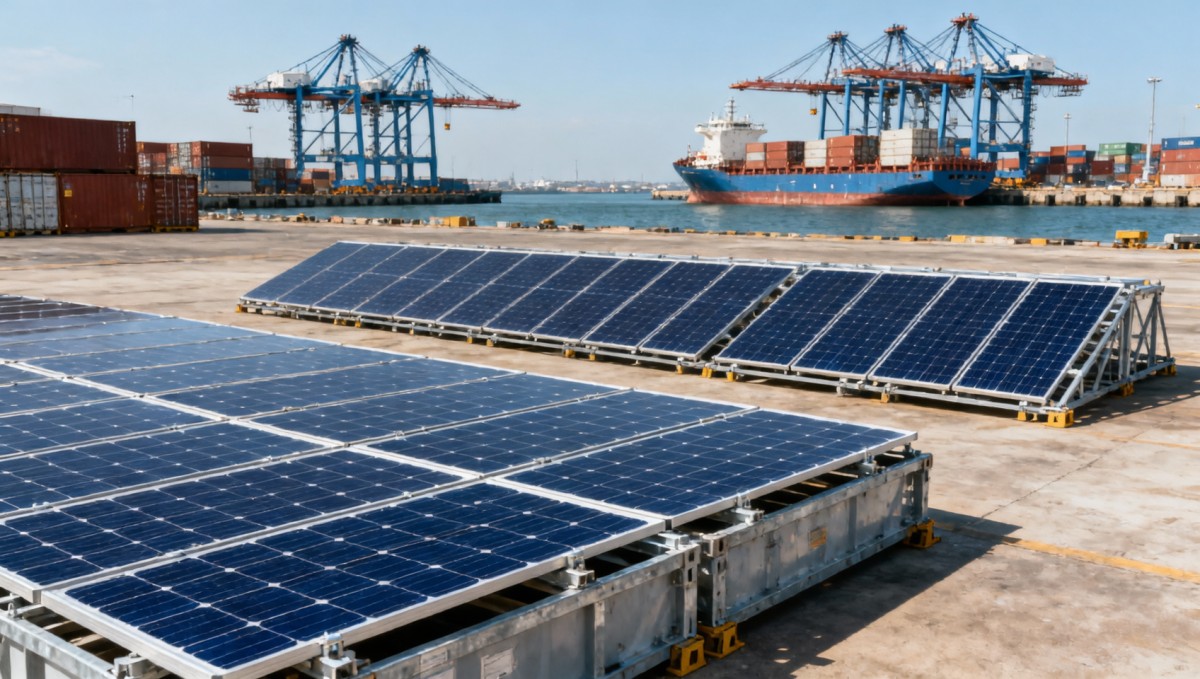
What the volume and value figures show
Export value rose even though the reported volume declined. Taken together, those changes imply that average export value per unit of the reported volume was approximately 22.5% higher than in the same period a year earlier. This is a calculation from the two reported percentage changes, rather than a separate price figure announced at the conference.
The distinction matters. An increase in average export value is consistent with price recovery, but the aggregate measure can also reflect changes in the mix of modules sold. It does not show how much of the increase came from comparable products selling at higher prices or how much came from a different sales mix. Nor does it reveal the terms of individual orders.
The decline in volume is equally important. Higher total export value did not require more modules to be exported, but fewer exports may still affect how manufacturers plan production and allocate capacity. The figures alone do not show whether the decline reflects changes in orders, shipments or the composition of demand.
Where the change could be felt
For exporters, the immediate question is whether the higher average value can be sustained across future orders. A period of stronger export value may ease pressure to compete solely on the lowest quoted price, but its effect on a company’s results also depends on costs and the products it sells. Export revenue and profit are different measures, and the reported figures do not establish that margins improved.
For buyers, the relevant issue is how aggregate changes translate into quotations for the modules they need. An average increase across exports does not mean that every product or transaction has become more expensive. Comparisons are most useful when they account for the specifications and terms of the products being purchased.
Production and supply planning could also be affected if the divergence persists. Manufacturers and suppliers may need to weigh lower shipment volumes against the value of the orders they receive. How that balance plays out will depend on subsequent sales and costs, neither of which can be determined from the headline figures alone.
What to watch next
The first three quarters provide a useful signal, but they do not by themselves establish a lasting turning point. Subsequent export volume and value figures can show whether the same relationship continues. More detailed information on product mix and comparable prices would help explain the increase in average export value, while company disclosures could shed light on whether higher revenue translates into stronger margins.
For now, the clearest conclusion is that China exported a lower volume of photovoltaic modules for a higher total value than in the corresponding period a year earlier. Whether that marks a durable move away from low-price competition depends on how prices, order composition and costs develop in the periods ahead.
 Indonesia and EU Sign Trade Agreement With Zero Tariffs on 90.4% of Tariff LinesExplore the Indonesia-EU trade agreement, its proposed zero tariffs on 90.4% of tariff lines, and what exporters and investors need to know.
 South Korea's Car Imports From China and Trade Deficit Hit RecordsSouth Korea’s car imports from China and automotive trade deficit hit records. Explore how Shanghai-made Tesla EVs are reshaping bilateral trade.
 How to check if supplier verification reports are authenticVerify supplier verification reports with confidence. Learn how to confirm the issuer, match supplier details, spot red flags, and reduce purchasing risk.
 Mexico’s President Seeks US Trade Deal at December Miami G20 SummitMexico–US trade deal talks could reach a turning point at the December Miami G20 summit. Explore what a potential agreement may mean for cross-border business.
 How to assess data quality in export market analysis servicesCompare export market analysis services with confidence. Learn how to evaluate data sources, coverage and forecasts before committing to a new market.
 Li Qiang Calls for Digital and Green Cooperation at China-Thailand Business MeetingLi Qiang calls for China-Thailand cooperation in digital and green sectors, highlighting opportunities in AI, new energy and agriculture.
 How are life sciences different from healthcare?Life sciences and healthcare overlap, but how do they differ? Explore their roles, real-world examples, and what the distinction means for sourcing.
 How is resale changing the UK apparel and fashion market?Explore how resale is reshaping apparel and fashion in UK markets, from shifting customer demand to pricing, sourcing and opportunities for brands.
 China's Trade Reaches 44.81 Trillion Yuan in First 10 Months, Up 20%China's trade reportedly reached 44.81 trillion yuan in the first 10 months, up 20%. Explore the implications for sourcing, technology exports and ASEAN markets.
 China Extends Pause on 24% US Tariff as US Extends Product ExclusionsChina-US tariffs: China extends its 24% tariff pause while the US extends 178 product exclusions. Discover what the measures mean for trade costs and planning.
 How to verify a mass production supplier’s capacityVerify a mass production supplier’s true capacity with practical checks for production records, available resources, quality controls and delivery readiness.
 He Lifeng Holds Trade Video Call with US Treasury Secretary and Trade RepresentativeHe Lifeng discusses China-US trade restrictions with US officials. Explore what the call could mean for exporters, buyers and supply chains.
 U.S. Trade Deficit Narrows to $105 Billion in September 2026U.S. trade deficit narrowed to $105 billion in September 2026 as exports rose 1.9%. Explore what the latest figures reveal about trade flows.
 How to verify international trade intelligence updatesVerify international trade intelligence updates with practical checks for sources, regulations, trade data, and disruptions. Turn complex claims into reliable insights.
 How investors can assess cyclicality in the manufacturing industryManufacturing industry analysis for investors: learn to assess cyclical demand, cash flow and downside risks to make more informed investment decisions.
 US ISM Manufacturing PMI Rises to 55.5% in October, Beating ForecastsUS ISM Manufacturing PMI rose to 55.5% in October 2026, beating forecasts. Explore what stronger orders and production could mean for manufacturers.
 China Manufacturing PMI Falls to 49.3 in OctoberChina manufacturing PMI fell to 49.3 in October, signaling renewed contraction. Explore the role of weak export orders and domestic demand.
 Can you trust flexible packaging market intelligence forecasts?Can you trust flexible packaging market intelligence forecasts? Learn how to verify sources, challenge assumptions, and assess demand before making costly investment or sourcing decisions.
 When is supply chain disruption management consulting worth the cost?When is supply chain disruption management consulting worth the cost? Learn how to compare fees, avoidable losses, and recovery options to make a confident investment decision.
 How to use macroeconomic analysis to forecast industrial demandApply an industrial macro analysis methodology to forecast demand, interpret economic signals, and plan inventory and capacity. Discover practical steps for smarter business decisions.
 How to assess Singapore suppliers with global supply chain intelligenceExplore international supply chain intelligence Singapore buyers can use to verify suppliers, assess capabilities and delivery risks, and make confident sourcing decisions.

















Global Trade Insights & Industry
Our mission is to empower global exporters and importers with data-driven insights that foster strategic growth.
Search News
Popular Tags
Industry Overview
The global commercial kitchen equipment market is projected to reach $112 billion by 2027. Driven by urbanization, the rise of e-commerce food delivery, and strict hygiene regulations.