

Hybrid Inverters: Key Specs That Affect System Performance
When evaluating hybrid inverters for commercial or industrial energy systems, technical specs directly determine efficiency, stability, and long-term ROI. From conversion efficiency and battery compatibility to MPPT range, overload capacity, and grid interaction, understanding these parameters helps technical evaluators compare solutions with greater accuracy. This guide outlines the key performance indicators that matter most when selecting hybrid inverters for reliable system design.
For technical assessment teams in B2B procurement, the challenge is rarely limited to comparing nameplate power. A hybrid inverter must perform consistently across variable PV input, battery cycling, load surges, and grid events. In export-oriented projects, the evaluation process also needs to consider interoperability, maintenance access, and long-term operating conditions across different markets.
In practice, a 50kW system and a 500kW system may both use hybrid inverters, but the acceptable tolerance for downtime, battery mismatch, and harmonic distortion can differ significantly. That is why technical evaluators should focus on measurable specifications that influence real system behavior rather than relying on broad marketing claims.
Core Electrical Specifications That Shape Real Performance
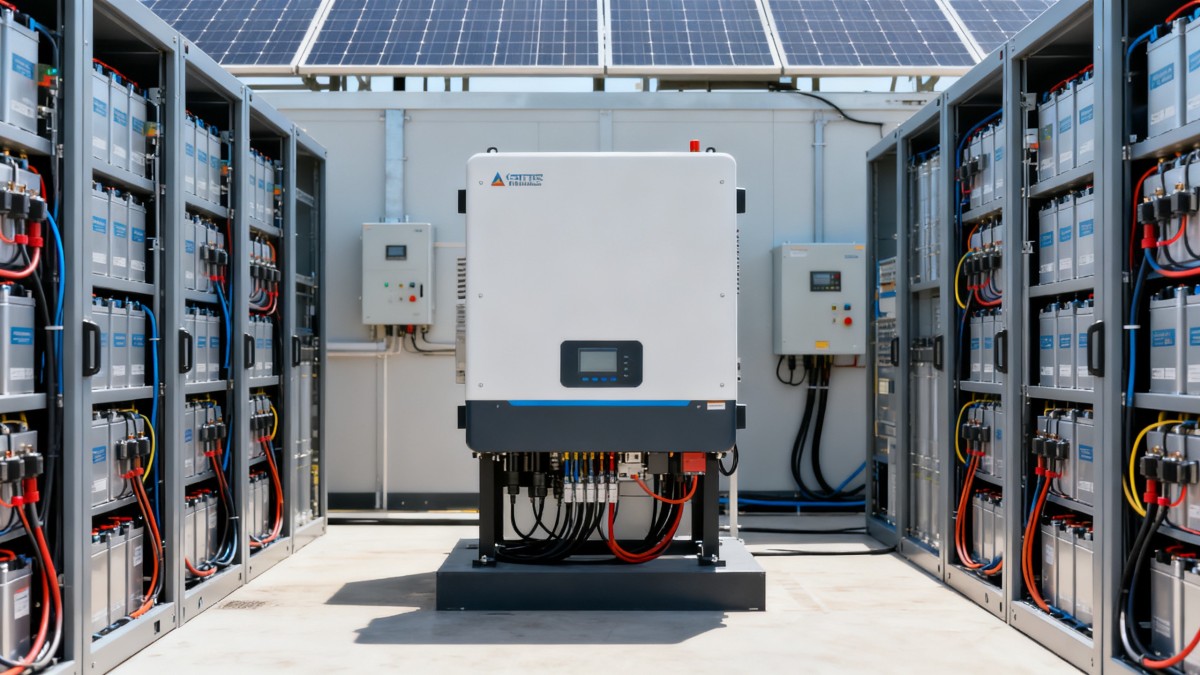
The first screening layer for hybrid inverters should center on electrical performance. At this stage, technical evaluators usually compare 6 core metrics: rated AC output, peak efficiency, MPPT voltage range, battery voltage window, overload capability, and transfer time between operating modes.
Conversion Efficiency and Partial-Load Behavior
Peak efficiency often attracts attention, but it should not be reviewed in isolation. For commercial applications, the practical operating band may sit at 30%–80% of rated load for long periods. A unit with 98.2% peak efficiency but weak partial-load performance can underperform a competitor with slightly lower peak values but better daily operating consistency.
Ask for both maximum efficiency and weighted efficiency values. In many project evaluations, a difference of 0.8%–1.5% in real conversion performance can materially affect annual energy yield, especially in systems operating 8–12 hours per day under variable irradiance and battery dispatch schedules.
MPPT Range, Start-Up Voltage, and String Design Flexibility
MPPT specifications determine how well hybrid inverters harvest solar energy across changing irradiance and temperature conditions. A broad MPPT range, such as 200V–850V, gives designers more flexibility when configuring PV strings in rooftops, industrial parks, or mixed-orientation arrays.
Start-up voltage also matters. If one inverter starts tracking at 150V while another needs 250V, morning generation behavior can differ noticeably. In locations with frequent cloud cover or winter irradiance drops, these thresholds influence how many productive hours the system captures each day.
Practical checks for PV-side evaluation
- Confirm MPPT voltage window against local module string design.
- Check the number of MPPT trackers for multi-roof or multi-orientation sites.
- Review maximum PV input current and short-circuit current tolerance.
- Verify derating behavior above 40°C or in enclosed electrical rooms.
The table below highlights how key DC and AC parameters of hybrid inverters affect engineering decisions during technical review and bid comparison.
A sound review does not stop at the published numbers. Technical teams should also validate whether these values apply at 25°C only, under nominal battery voltage, or across the full operating envelope. Hybrid inverters that look similar on datasheets can behave very differently under sustained field conditions.
Battery Compatibility and Charge-Discharge Control
Battery integration is where many hybrid inverter assessments become more complex. Compatibility should cover chemistry support, communication protocol, battery voltage range, current limits, and state-of-charge control logic. A mismatch in any of these areas can reduce usable storage capacity or trigger unstable charging behavior.
For example, low-voltage battery systems may suit smaller applications, while high-voltage architectures are often preferred in larger commercial systems because they can reduce current, lower cable losses, and simplify scaling. Evaluators should verify whether the inverter supports lithium-ion communication through common interfaces and whether fallback control is available if communication is interrupted.
Battery-side red flags
- Only limited battery brands are supported without protocol updates.
- Charge current is heavily derated above mid-range temperatures.
- No clear documentation on battery restart after deep discharge events.
- Parallel battery expansion requires additional control hardware not included in the base design.
Grid Interaction, Protection, and Power Quality Requirements
For commercial and industrial projects, hybrid inverters are not evaluated only as conversion devices. They are also judged on how they interact with the grid, support critical loads, and maintain power quality. In regions with unstable utility conditions, these features can affect project bankability and operating continuity.
Grid Support Functions and Compliance Readiness
Technical evaluators should review whether hybrid inverters support reactive power control, export limitation, frequency response, voltage ride-through, and remote dispatch integration. These functions are increasingly relevant in sites where grid operators impose tighter control over distributed generation assets.
A project may not require all functions on day one, but adding them later can be costly if the inverter platform lacks the necessary firmware architecture or communication ports. Looking 3–5 years ahead is often a better strategy than purchasing solely for the immediate installation scope.
THD, Power Factor, and Sensitive Load Stability
Power quality is critical in facilities using variable-speed drives, CNC equipment, refrigeration compressors, telecom systems, or precision controls. Review total harmonic distortion, adjustable power factor range, and behavior under unbalanced loads. A low THD output, often below 3%, is generally preferable for sensitive commercial operations.
Also verify whether the inverter maintains stable output at lagging and leading power factors. In many industrial environments, a controllable range such as 0.8 leading to 0.8 lagging provides better support for mixed load profiles and utility-side compliance.
The following comparison matrix helps technical teams connect grid-related specifications of hybrid inverters with specific application risks and procurement priorities.
In bid evaluation, these parameters often determine whether a solution is suitable for peak shaving, backup support, self-consumption optimization, or microgrid operation. The most competitive hybrid inverters are not always those with the highest isolated output rating, but those with balanced capabilities across conversion, control, and compliance functions.
Protection Architecture and Environmental Durability
Protection design is another decisive factor. Review overvoltage protection, islanding detection, insulation monitoring, surge capability, short-circuit response, and thermal shutdown logic. In dusty factories, coastal areas, or high-humidity logistics sites, enclosure rating and cooling strategy become operationally important.
For example, an inverter installed in ambient temperatures of 45°C with inadequate airflow may experience repeated thermal derating. A technically stronger option may include intelligent fan control, better heat sink design, or a more suitable enclosure rating for indoor-outdoor deployment. These details affect maintenance frequency and uptime over a 5–10 year operating horizon.
How Technical Evaluators Should Compare Hybrid Inverters in Practice
A structured review process helps procurement and engineering teams avoid oversights. Instead of comparing only price per kilowatt, build a scoring model based on performance, integration, serviceability, and risk. In many B2B buying cycles, this reduces revision rounds and supports clearer vendor discussions.
A Four-Step Evaluation Framework
- Define system priority: self-consumption, backup continuity, peak shaving, or hybrid microgrid use.
- Map technical thresholds: PV input, battery voltage, surge load, transfer time, and communications.
- Check lifecycle factors: ambient conditions, maintenance access, spare parts, and firmware support.
- Run scenario validation: partial-load operation, battery cycling profile, and grid disturbance response.
This method is especially useful when reviewing hybrid inverters across multiple project geographies. A model suited to a temperate grid-stable region may not be the best option for sites facing frequent outages, high heat, or stricter export controls.
Common Evaluation Mistakes
Mistake 1: Overvaluing peak specifications
Peak output and maximum efficiency matter, but stable operation across normal duty cycles matters more. Review performance maps, not just headline figures.
Mistake 2: Ignoring battery communication details
A battery-compatible claim is not enough. Confirm supported protocols, firmware coordination, and fault recovery behavior before final selection.
Mistake 3: Underestimating service access
If a supplier cannot provide fast diagnostics, replacement pathways, or clear commissioning support, small faults can become extended downtime events. In cross-border trade projects, service response planning is part of technical due diligence.
Questions to Raise During Supplier Review
- What is the continuous versus short-term overload profile?
- At what ambient temperature does power derating begin?
- How many battery configurations are actively supported?
- Which monitoring and EMS interfaces are available by default?
- What commissioning checks are required before energization?
- What spare-part and technical support timeline is realistic for export projects?
For organizations monitoring industrial equipment, supply chain trends, and international sourcing, these evaluation questions fit into a broader procurement intelligence framework. Decision-makers benefit when technical screening, supplier communication, and long-term digital visibility all support a more credible purchasing process.
Selecting hybrid inverters is ultimately a system-level decision. The right choice depends on how efficiently the inverter converts energy, how reliably it manages batteries, how cleanly it interacts with the grid, and how well it supports the operating profile of the end user. Technical evaluators who focus on measurable thresholds, realistic duty cycles, and lifecycle service conditions will make stronger comparisons and reduce downstream project risk.
If you are assessing energy equipment for international trade, project sourcing, or supplier benchmarking, GTIIN and TradeVantage can help you access industry intelligence that supports better technical and commercial decisions. Contact us today to get tailored insights, explore supplier exposure opportunities, or learn more solutions for evaluating hybrid inverters in global B2B markets.
 Which global manufacturing trends by sector matter most for sourcing plans?Global manufacturing trends by sector: identify sourcing risks, supplier resilience, compliance demands, and cost drivers to build smarter, more reliable procurement plans.
 What industrial trade intelligence pricing should include before you subscribeIndustrial trade intelligence pricing explained: compare coverage, data quality, access rights, and workflow value before choosing a subscription that supports smarter trade decisions.
 How an industrial trade intelligence dashboard can identify new supplier marketsDiscover how an industrial trade intelligence dashboard helps identify new supplier markets by comparing capacity, landed cost, logistics resilience, and compliance risk.
 Which global market entry barriers should exporters assess first?Global market entry barriers exporters should assess first: tariffs, compliance, buyer qualification, logistics, and payment risk. Build a practical strategy for confident market entry.
 How trade data aggregation analytics can reveal emerging supplier marketsTrade data aggregation analytics reveals emerging supplier markets by connecting trade flows, capacity signals, logistics, and compliance insights for smarter sourcing decisions.
 When an export market analysis platform can validate demand in a new marketExport market analysis platform insights help validate new-market demand through buyer fit, regulations, logistics, competition, and profitable entry conditions.
 What is driving the beauty and personal care market in the USA?Beauty and personal care in USA is driven by targeted solutions, selective premiumization, digital discovery, clean-label trust, diverse needs, and compliance. Explore key growth opportunities.
 How trade flow monitoring reports reveal changing regional demandTrade flow monitoring reports reveal changing regional demand through import volumes, sourcing shifts, product mix, logistics signals, and regulatory trends. Explore actionable market insights.
 How international market intelligence for investors reduces market-entry riskInternational market intelligence for investors reduces market-entry risk by validating demand, regulations, logistics, and competition before capital is committed.
 How international sourcing intelligence helps identify supplier risk earlyInternational sourcing intelligence helps businesses spot supplier risks early, protect supply continuity, and make smarter global procurement decisions.
 How trade data aggregation analytics reveals emerging supplier marketsTrade data aggregation analytics reveals emerging supplier markets through export trends, input flows, logistics, and regulatory signals. Discover smarter sourcing insights.
 What industrial cluster monitoring in Vietnam reveals about site riskIndustrial cluster monitoring Vietnam reveals hidden site risks across labor, utilities, logistics, compliance, and supplier dependencies. Make smarter sourcing and expansion decisions.
 Food Technology Trends Reshaping Shelf Life, Safety, and Product InnovationFood technology is reshaping shelf life, safety, and innovation. Discover the trends helping food businesses cut risk, improve compliance, and unlock stronger global market growth.
 How electronics manufacturing services are changing with low-volume demandElectronics manufacturing services are evolving fast with low-volume demand. Learn how agile EMS partners improve flexibility, compliance, sourcing resilience, and speed to market.
 How Can Buyers Reduce Procurement Risks for Electronic Components?How to reduce procurement risks for electronic components: learn how buyers assess traceability, lead times, compliance, and supplier types to avoid costly sourcing mistakes.
 What Sourcing Intelligence India Reveals About Supplier Risk and Cost ShiftsSourcing intelligence India reveals hidden supplier risk, compliance gaps, logistics pressure, and real cost shifts—helping buyers compare vendors smarter and source with more confidence.
 Fashion Trends 2026: Which Materials, Colors, and Silhouettes Are Gaining Ground?Fashion trends 2026 spotlight tactile fabrics, mineral colors, and controlled volume. Explore the materials, shades, and silhouettes shaping smarter, more wearable style.
 Smart Device Market Outlook: Key Growth Drivers, Segments, and Business OpportunitiesSmart device market trends are shifting toward system value, industrial demand, and resilient supply chains. Explore key growth drivers, high-potential segments, and business opportunities.
 How Global Trade Intelligence Services Help B2B Firms Evaluate Markets and SuppliersGlobal trade intelligence services help B2B firms compare suppliers, assess market potential, and uncover compliance, logistics, and pricing risks before costly decisions are made.
 Manufacturing Sector Updates for Investors: What Signals Matter Most in 2025?Manufacturing sector updates for investors in 2025: track orders, margins, supply chains, regulation, and exports to spot resilient manufacturers and smarter investment signals.
 How Energy Market Intelligence Helps Businesses Track Price Risks and Demand ShiftsEnergy market intelligence helps businesses spot price risks, demand shifts, and supply pressure early—improving procurement, resilience, and faster strategic decisions.





















Global Trade Insights & Industry
Our mission is to empower global exporters and importers with data-driven insights that foster strategic growth.
Search News
Popular Tags
Industry Overview
The global commercial kitchen equipment market is projected to reach $112 billion by 2027. Driven by urbanization, the rise of e-commerce food delivery, and strict hygiene regulations.