

Is Fitness Apparel Wholesale Worth It for Smaller Order Cycles?
For businesses managing tighter inventory turns, fitness apparel wholesale can seem like a cost-saving shortcut—but is it still practical when order cycles are smaller and demand shifts quickly? This article examines the trade-offs between pricing, flexibility, supplier terms, and market responsiveness, helping business evaluators determine whether wholesale sourcing truly supports sustainable growth in the outdoor sports equipment sector.
Why does fitness apparel wholesale still matter in smaller order cycles?
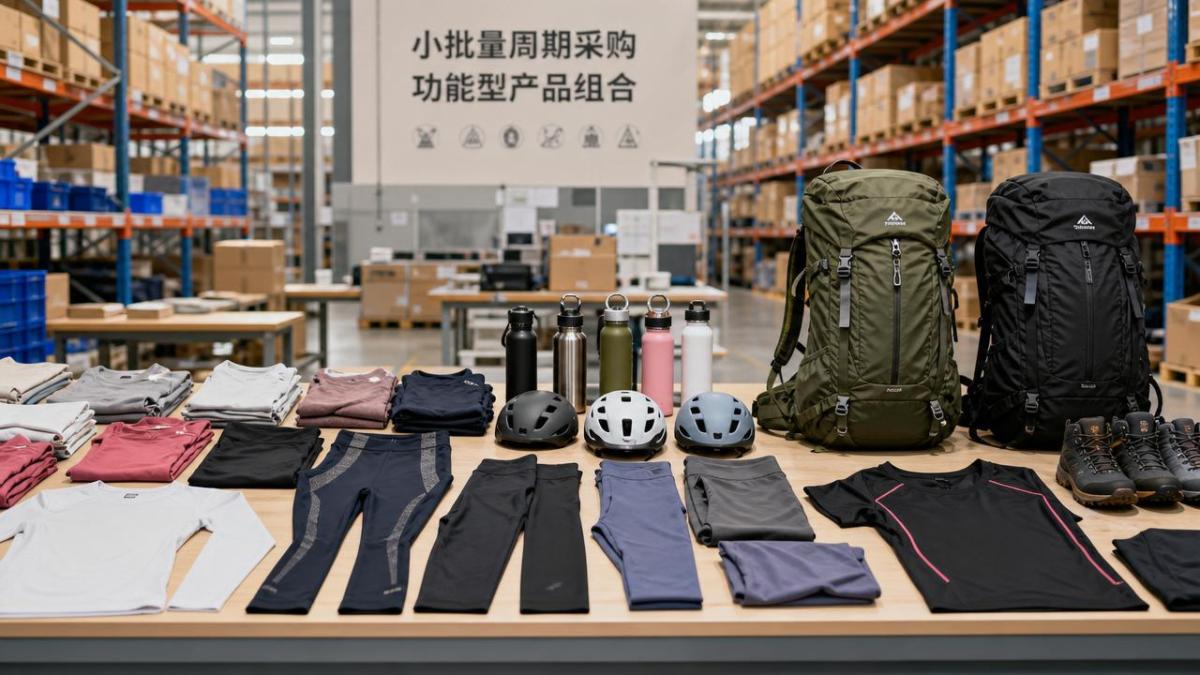
In outdoor sports equipment distribution, apparel is rarely a standalone category. It often supports broader seasonal product lines such as trail packs, running accessories, hydration gear, yoga equipment, cycling kits, and outdoor training merchandise.
That makes fitness apparel wholesale relevant even when buying frequency increases and average order volume drops. Smaller order cycles do not eliminate wholesale logic; they simply change the evaluation criteria.
For business evaluators, the real question is not whether wholesale is cheap. The better question is whether wholesale sourcing can protect margin, preserve cash flow, and keep assortments aligned with fast-moving demand.
- Wholesale can lower unit cost, which helps offset logistics, marketplace fees, and promotional discounts common in outdoor retail.
- It can also improve supplier continuity, especially for recurring items like base layers, compression wear, training tops, and outdoor performance leggings.
- However, if minimum order quantities are rigid, wholesale may increase dead stock risk during weather shifts, trend changes, or uncertain event-driven demand.
In practice, fitness apparel wholesale works best when procurement teams evaluate it as a supply chain model rather than a simple pricing tactic. That is where data-backed market tracking becomes important.
GTIIN and TradeVantage help decision-makers monitor regional sourcing signals, manufacturing activity, freight pressures, and category shifts across global trade channels. That broader view matters when buyers need to judge whether smaller cycles justify wholesale commitments.
When is fitness apparel wholesale economically viable?
The answer depends on landed cost, sell-through speed, replenishment agility, and the role of apparel inside the overall outdoor product portfolio. A lower ex-factory price does not always lead to a better commercial result.
The table below helps business evaluators compare common purchasing situations for fitness apparel wholesale under smaller order cycles.
The economic break point is usually not a fixed quantity. It is the point where inventory carrying cost, shipping structure, and margin recovery become more favorable than buying smaller lots through trading intermediaries or domestic distributors.
That is why business evaluation should focus on total procurement economics, not just factory quotation sheets.
Key cost variables that change the answer
A smaller order cycle usually amplifies hidden cost factors. Even attractive fitness apparel wholesale prices can become less competitive if the sourcing structure is inflexible.
- Minimum order quantity per color, style, or size curve may lock buyers into inventory they do not need.
- Freight cost per unit can rise sharply when cartons are underutilized or shipments are split across urgent replenishment windows.
- Sampling and revision rounds matter more in private-label programs, especially for moisture-wicking fabrics, seam construction, and logo placement.
- Returns, defect handling, and replacement lead times can erode the cost benefit if the supplier lacks process discipline.
What should business evaluators compare before choosing wholesale?
In the outdoor sports equipment sector, apparel sourcing decisions often interact with accessories, bundles, event calendars, and regional climate patterns. A structured comparison framework reduces subjective decision-making.
The following table compares fitness apparel wholesale with alternative sourcing models commonly used in smaller order environments.
This comparison shows why fitness apparel wholesale is not automatically better or worse. It is often the strongest option for core lines, but not always for exploratory or highly volatile assortments.
Decision criteria worth weighting
- Demand predictability: Are you replenishing proven outdoor training products or testing uncertain demand?
- SKU complexity: How many fabrics, colors, and size breaks are required?
- Cash conversion speed: Will inventory move fast enough to justify deeper buy-ins?
- Lead time sensitivity: Can your sales model tolerate ocean transit and production queue delays?
- Compliance burden: Are you sourcing into markets that require clear labeling, material declarations, and product safety documentation?
Which product scenarios make wholesale more practical in outdoor sports?
Not all apparel categories behave the same. Fitness apparel wholesale tends to work better when products are less fashion-sensitive and more function-driven.
Scenarios where wholesale often makes sense
- Base layers and compression garments sold alongside hiking, cycling, or running gear in repeat purchase channels.
- Gym-to-outdoor crossover wear, where neutral colors and standard fits have broad sell-through potential.
- Team, club, or event apparel programs tied to predictable participation volumes and scheduled delivery windows.
- Private-label collections where margin control is essential and visual differentiation supports retailer positioning.
Scenarios where caution is needed
- Trend-led prints or colorways with short relevance windows.
- Highly technical outerwear requiring extensive testing, specialized trims, or complex seam sealing.
- Unproven ecommerce launches where size distribution is still unknown.
For evaluators, this distinction matters. Wholesale performs best when assortment planning is tied to functional demand rather than speculative style momentum.
How should you assess supplier flexibility, quality, and compliance?
Smaller order cycles increase the importance of supplier responsiveness. A factory may offer competitive fitness apparel wholesale pricing yet still be a poor fit if it cannot support mixed sizing, repeat fabric consistency, or stable lead-time communication.
Use the following checklist during supplier evaluation.
This checklist is especially useful for outdoor-focused sellers that combine apparel with equipment and accessories. Their operations often depend on synchronized product launches, not isolated apparel deliveries.
Common compliance and quality points
Requirements vary by market, but evaluators should generally review product labeling accuracy, fabric composition declarations, care labeling consistency, and any restricted substance expectations relevant to the destination market.
For performance apparel, practical quality review should also include seam durability, colorfastness, pilling tendency, elasticity retention, and logo adhesion or print stability after washing.
What mistakes do buyers make with fitness apparel wholesale?
Smaller order cycles expose weak assumptions quickly. Several recurring mistakes reduce the value of fitness apparel wholesale, even when the supplier appears competitive.
- Judging cost only by unit price while ignoring freight mode, customs costs, and safety stock exposure.
- Ordering too many variants in an attempt to look complete, which spreads demand too thin across size and color combinations.
- Skipping pre-production confirmation on fabric hand feel, measurement tolerances, and trim details.
- Assuming a supplier can scale repeat orders smoothly without checking actual planning discipline or communication quality.
- Using wholesale for speculative fashion tests that would be better handled by lower-commitment sourcing models.
These mistakes are avoidable when procurement teams combine supplier review with live market intelligence. That is one reason trade data and category reporting from GTIIN and TradeVantage can improve sourcing judgment well before a purchase order is issued.
How can data and market intelligence improve wholesale decisions?
Business evaluators are often expected to make fast recommendations with incomplete visibility. They need more than catalog pricing. They need context on sourcing regions, demand trends, and channel movement.
GTIIN provides cross-sector industrial intelligence that helps exporters, importers, and procurement teams interpret supply chain signals rather than react to isolated quotes. For apparel linked to outdoor sports equipment, that context can shape better timing and better supplier conversations.
Where this support becomes practical
- Monitoring sourcing region developments that may affect lead times, labor availability, or product mix.
- Reviewing category-level demand shifts that influence whether a core fitness apparel wholesale strategy remains safe.
- Identifying industrial and trade visibility opportunities through TradeVantage for companies that want stronger international exposure.
- Supporting supplier outreach and brand positioning with editorial environments that strengthen commercial trust signals.
This combination of market visibility and content authority is valuable for firms that do not just buy products, but also need to build sourcing credibility and market presence at the same time.
FAQ: practical questions about fitness apparel wholesale
Is fitness apparel wholesale suitable for low-volume buyers?
Yes, but only in specific cases. It is more suitable when the buyer focuses on repeatable core SKUs, accepts limited variation, and works with suppliers offering reasonable MOQ structures. For unstable or highly experimental demand, flexible alternatives may be safer.
What is the main risk in smaller wholesale order cycles?
The main risk is mismatch between inventory commitment and actual sell-through. This often shows up through excess sizes, unpopular colorways, or delayed replenishment decisions. The risk rises when forecasting is weak and supplier terms are rigid.
How should buyers negotiate better wholesale terms?
Buyers should negotiate around structure, not just price. That includes split delivery windows, mixed-size ratio flexibility, replenishment options on greige or stocked fabric, sampling credits, and clearer quality claim procedures. These terms often matter more than a small price reduction.
What lead time should be reviewed before placing an order?
Review the full chain: sample approval, material sourcing, production queue, quality inspection, booking, transit, and customs handling. A quoted production lead time alone does not show whether the supplier can support your smaller order cycle rhythm.
Final assessment: is fitness apparel wholesale worth it?
For smaller order cycles, fitness apparel wholesale is worth it when demand is measurable, product categories are function-driven, and supplier terms support flexibility. It becomes less attractive when assortments are speculative, style turnover is high, or replenishment speed matters more than unit cost.
The strongest decisions come from comparing landed cost, MOQ risk, compliance readiness, and replenishment control against real market conditions. In the outdoor sports equipment sector, that means viewing apparel as part of a broader product and channel strategy, not as an isolated purchase line.
Why choose us for sourcing insight and next-step evaluation?
GTIIN and TradeVantage support business evaluators who need more than supplier lists. We help companies interpret global trade movement, industrial trends, and sector-specific sourcing signals so they can make better decisions on fitness apparel wholesale and related outdoor product categories.
If you are reviewing wholesale viability, you can consult us on practical decision points such as MOQ sensitivity, product selection logic, sourcing region comparison, delivery cycle expectations, labeling and compliance considerations, sampling direction, and quotation communication priorities.
For companies seeking broader market visibility, TradeVantage also provides a strong publishing and networking environment that helps foreign trade enterprises strengthen brand exposure, industry relevance, and high-value digital trust signals in international markets.
 How an industrial trade intelligence dashboard can identify new supplier marketsDiscover how an industrial trade intelligence dashboard helps identify new supplier markets by comparing capacity, landed cost, logistics resilience, and compliance risk.
 Which global market entry barriers should exporters assess first?Global market entry barriers exporters should assess first: tariffs, compliance, buyer qualification, logistics, and payment risk. Build a practical strategy for confident market entry.
 How trade data aggregation analytics can reveal emerging supplier marketsTrade data aggregation analytics reveals emerging supplier markets by connecting trade flows, capacity signals, logistics, and compliance insights for smarter sourcing decisions.
 When an export market analysis platform can validate demand in a new marketExport market analysis platform insights help validate new-market demand through buyer fit, regulations, logistics, competition, and profitable entry conditions.
 What is driving the beauty and personal care market in the USA?Beauty and personal care in USA is driven by targeted solutions, selective premiumization, digital discovery, clean-label trust, diverse needs, and compliance. Explore key growth opportunities.
 How trade flow monitoring reports reveal changing regional demandTrade flow monitoring reports reveal changing regional demand through import volumes, sourcing shifts, product mix, logistics signals, and regulatory trends. Explore actionable market insights.
 How international market intelligence for investors reduces market-entry riskInternational market intelligence for investors reduces market-entry risk by validating demand, regulations, logistics, and competition before capital is committed.
 How international sourcing intelligence helps identify supplier risk earlyInternational sourcing intelligence helps businesses spot supplier risks early, protect supply continuity, and make smarter global procurement decisions.
 How trade data aggregation analytics reveals emerging supplier marketsTrade data aggregation analytics reveals emerging supplier markets through export trends, input flows, logistics, and regulatory signals. Discover smarter sourcing insights.
 What industrial cluster monitoring in Vietnam reveals about site riskIndustrial cluster monitoring Vietnam reveals hidden site risks across labor, utilities, logistics, compliance, and supplier dependencies. Make smarter sourcing and expansion decisions.
 Food Technology Trends Reshaping Shelf Life, Safety, and Product InnovationFood technology is reshaping shelf life, safety, and innovation. Discover the trends helping food businesses cut risk, improve compliance, and unlock stronger global market growth.
 How electronics manufacturing services are changing with low-volume demandElectronics manufacturing services are evolving fast with low-volume demand. Learn how agile EMS partners improve flexibility, compliance, sourcing resilience, and speed to market.
 How Can Buyers Reduce Procurement Risks for Electronic Components?How to reduce procurement risks for electronic components: learn how buyers assess traceability, lead times, compliance, and supplier types to avoid costly sourcing mistakes.
 What Sourcing Intelligence India Reveals About Supplier Risk and Cost ShiftsSourcing intelligence India reveals hidden supplier risk, compliance gaps, logistics pressure, and real cost shifts—helping buyers compare vendors smarter and source with more confidence.
 Fashion Trends 2026: Which Materials, Colors, and Silhouettes Are Gaining Ground?Fashion trends 2026 spotlight tactile fabrics, mineral colors, and controlled volume. Explore the materials, shades, and silhouettes shaping smarter, more wearable style.
 Smart Device Market Outlook: Key Growth Drivers, Segments, and Business OpportunitiesSmart device market trends are shifting toward system value, industrial demand, and resilient supply chains. Explore key growth drivers, high-potential segments, and business opportunities.
 How Global Trade Intelligence Services Help B2B Firms Evaluate Markets and SuppliersGlobal trade intelligence services help B2B firms compare suppliers, assess market potential, and uncover compliance, logistics, and pricing risks before costly decisions are made.
 Manufacturing Sector Updates for Investors: What Signals Matter Most in 2025?Manufacturing sector updates for investors in 2025: track orders, margins, supply chains, regulation, and exports to spot resilient manufacturers and smarter investment signals.
 How Energy Market Intelligence Helps Businesses Track Price Risks and Demand ShiftsEnergy market intelligence helps businesses spot price risks, demand shifts, and supply pressure early—improving procurement, resilience, and faster strategic decisions.
 Precision Hardware Tools Market: Key Demand Drivers, Segments, and Growth OutlookPrecision hardware tools market trends are reshaping sourcing, compliance, and automation. Explore key demand drivers, segment shifts, regional supply patterns, and growth opportunities.
 How to Use Customs Import Data to Find Buyers, Track Competitors, and Spot Demand?Customs import data helps you find real buyers, track competitors, and spot demand shifts early. Learn practical ways to turn trade records into smarter global business decisions.





















Global Trade Insights & Industry
Our mission is to empower global exporters and importers with data-driven insights that foster strategic growth.
Search News
Popular Tags
Industry Overview
The global commercial kitchen equipment market is projected to reach $112 billion by 2027. Driven by urbanization, the rise of e-commerce food delivery, and strict hygiene regulations.