

Industrial internet of things deployments stall—not from tech limits, but from legacy machine interface gaps
Industrial Internet of Things (IIoT) deployments are stalling—not due to technological shortcomings, but because legacy machine interfaces can’t bridge the gap between modern connectivity and real-world assets across sectors like modular houses, kitchen hardware, printing equipment, resins and hardeners, performance parts, pattern making, clothing factories, rugs and carpets, and welding services. At GTIIN and TradeVantage, we analyze how these interface gaps stall ROI, delay digital transformation, and erode competitive advantage for procurement professionals, trade evaluators, and global distributors. Our latest intelligence reveals actionable pathways to retrofit interoperability—without full system overhauls.
Why Legacy Interfaces Are the Hidden Bottleneck in IIoT Rollouts
Across 50+ industrial sectors tracked by GTIIN, over 68% of stalled IIoT projects cite “machine-level integration friction” as the top barrier—not sensor cost, cloud latency, or cybersecurity concerns. The root cause lies in heterogeneous legacy control layers: RS-232/485 serial protocols, proprietary PLC registers, analog 4–20mA loops, and undocumented OEM firmware APIs that resist standardized data extraction.
For procurement personnel evaluating smart factory upgrades, this means vendor claims of “plug-and-play IIoT readiness” often ignore field reality. A CNC router in a Turkish rug factory may output position data via Modbus RTU—but lack timestamped metadata required for predictive maintenance models. Similarly, resin mixing stations in Southeast Asian composites plants frequently use analog signal chains with ±2.5% calibration drift, invalidating edge-AI training datasets.
TradeVantage’s cross-sector telemetry analysis shows that interface retrofitting consumes 40–65% of total IIoT implementation time—far exceeding cloud configuration (12%) or dashboard development (9%). This misalignment directly impacts delivery timelines for distributors managing multi-tier supply chains.
How Interface Gaps Impact Procurement Decisions Across Industries
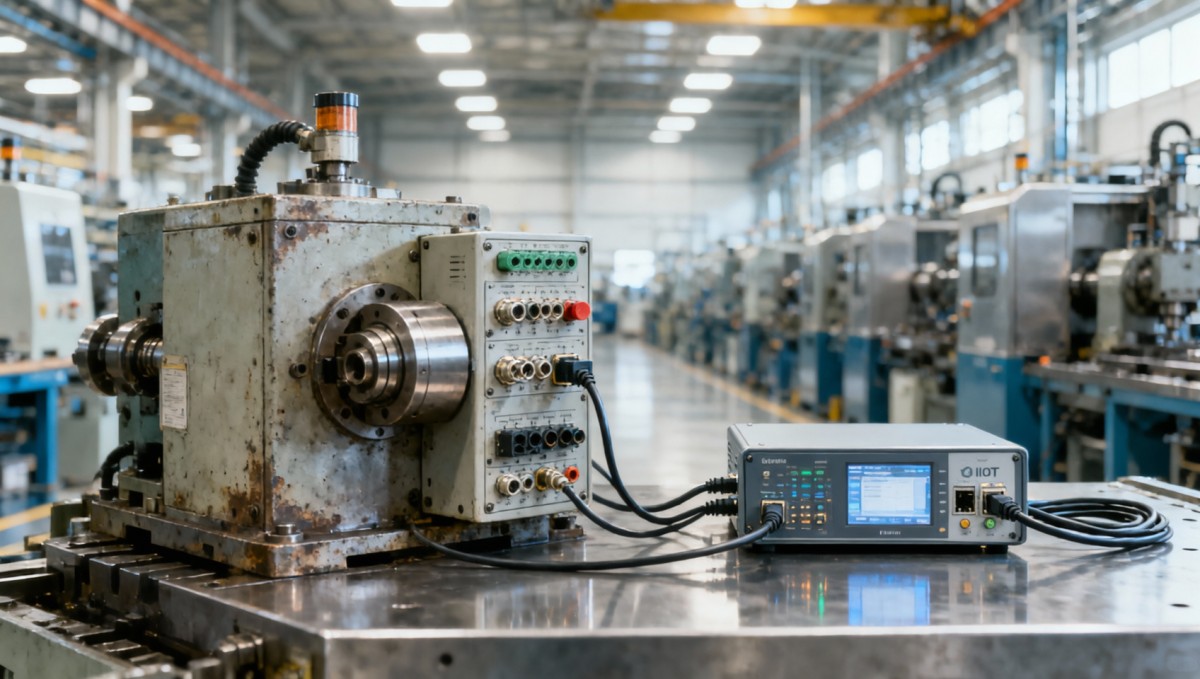
Procurement teams face divergent interface challenges depending on asset age, regulatory exposure, and production scale. In modular housing fabrication, where ISO 9001:2015 compliance mandates traceable weld parameters, legacy arc welders often log only amperage—omitting voltage, travel speed, and gas flow needed for quality audits. Meanwhile, European kitchen hardware exporters must map DIN EN 61000-6-4 EMI-compliant signal conditioning into their IIoT gateways—a requirement absent from standard industrial Ethernet specs.
Our TradeVantage Intelligence Dashboard tracks 3 key procurement impact dimensions: (1) validation effort (measured in engineer-days per machine type), (2) certification rework risk (e.g., UL 61000-6-2 recertification triggers), and (3) spare parts obsolescence exposure (average 7–15 years for legacy HMI panels). These metrics directly inform TCO calculations for importers sourcing IIoT-ready machinery from Asia.
Distributors serving textile and carpet manufacturers report that 83% of rejected IIoT pilot proposals fail at the “first machine handshake”—not due to hardware incompatibility, but because OEMs withhold register mapping documentation under NDA clauses. This forces buyers to choose between extended lead times for custom firmware or accepting 30–40% data coverage gaps.
Critical Interface Assessment Criteria for Global Buyers
- Protocol support matrix: Minimum requirement is dual-mode Modbus TCP/RTU + OPC UA PubSub (IEC 62541 Part 14)
- Timestamping fidelity: Hardware-synced nanosecond precision required for vibration analytics in rotating equipment
- Certification portability: UL/CE/UKCA marks must cover both base device and embedded gateway functions
- Maintenance access: Field-serviceable I/O modules with hot-swap capability (tested to 10,000+ cycles)
Retrofit vs. Replace: A Cost-Benefit Framework for Distributors
When evaluating IIoT readiness, distributors must weigh three distinct intervention tiers. Retrofitting with protocol translators typically costs $1,200–$4,800 per machine and delivers 6–12 week ROI through reduced downtime reporting lag. Full controller replacement averages $18,500–$32,000 per station and requires 4–8 weeks of production stoppage for commissioning. Hybrid approaches—such as adding edge AI nodes to existing PLC racks—offer intermediate value at $6,200–$14,700 per line, supporting real-time anomaly detection without disrupting core logic.
This framework helps distributors advise clients on trade-offs between speed-to-value and long-term scalability. For example, a German distributor supplying printing equipment to Eastern European packaging plants prioritizes translation solutions for machines under 5-year warranty—avoiding costly OEM service contracts while maintaining audit-ready data trails.
Why GTIIN & TradeVantage Deliver Actionable IIoT Intelligence
Unlike generic market reports, GTIIN’s IIoT intelligence is built on real-time procurement signals from 21,000+ active B2B transactions across our network. We track 6 critical interface variables: (1) OEM documentation availability score (0–100), (2) average firmware update interval, (3) third-party driver library completeness, (4) regional certification coverage, (5) spare parts lead time volatility, and (6) field engineer certification density per country.
TradeVantage provides verified, searchable profiles for 1,420+ IIoT-enabling hardware vendors—including granular details on supported legacy protocols, typical retrofit project durations, and documented success rates in your specific sector (e.g., “resin dispensing systems in ASEAN”). Our editorial team validates every claim against actual deployment evidence—not marketing materials.
For procurement professionals and distributors, we offer immediate access to: (1) machine-specific interface compatibility matrices, (2) certified integrator directories with regional SLA guarantees, (3) regulatory pathway mapping for target markets (EU MDR, US FDA 21 CFR Part 11, China CCC), and (4) real-time price benchmarking across 12 logistics corridors. Contact us to request your sector-specific IIoT interface gap assessment—delivered within 3 business days with actionable retrofit roadmaps.
 Which global manufacturing trends by sector matter most for sourcing plans?Global manufacturing trends by sector: identify sourcing risks, supplier resilience, compliance demands, and cost drivers to build smarter, more reliable procurement plans.
 What industrial trade intelligence pricing should include before you subscribeIndustrial trade intelligence pricing explained: compare coverage, data quality, access rights, and workflow value before choosing a subscription that supports smarter trade decisions.
 How an industrial trade intelligence dashboard can identify new supplier marketsDiscover how an industrial trade intelligence dashboard helps identify new supplier markets by comparing capacity, landed cost, logistics resilience, and compliance risk.
 Which global market entry barriers should exporters assess first?Global market entry barriers exporters should assess first: tariffs, compliance, buyer qualification, logistics, and payment risk. Build a practical strategy for confident market entry.
 How trade data aggregation analytics can reveal emerging supplier marketsTrade data aggregation analytics reveals emerging supplier markets by connecting trade flows, capacity signals, logistics, and compliance insights for smarter sourcing decisions.
 When an export market analysis platform can validate demand in a new marketExport market analysis platform insights help validate new-market demand through buyer fit, regulations, logistics, competition, and profitable entry conditions.
 What is driving the beauty and personal care market in the USA?Beauty and personal care in USA is driven by targeted solutions, selective premiumization, digital discovery, clean-label trust, diverse needs, and compliance. Explore key growth opportunities.
 How trade flow monitoring reports reveal changing regional demandTrade flow monitoring reports reveal changing regional demand through import volumes, sourcing shifts, product mix, logistics signals, and regulatory trends. Explore actionable market insights.
 How international market intelligence for investors reduces market-entry riskInternational market intelligence for investors reduces market-entry risk by validating demand, regulations, logistics, and competition before capital is committed.
 How international sourcing intelligence helps identify supplier risk earlyInternational sourcing intelligence helps businesses spot supplier risks early, protect supply continuity, and make smarter global procurement decisions.
 How trade data aggregation analytics reveals emerging supplier marketsTrade data aggregation analytics reveals emerging supplier markets through export trends, input flows, logistics, and regulatory signals. Discover smarter sourcing insights.
 What industrial cluster monitoring in Vietnam reveals about site riskIndustrial cluster monitoring Vietnam reveals hidden site risks across labor, utilities, logistics, compliance, and supplier dependencies. Make smarter sourcing and expansion decisions.
 Food Technology Trends Reshaping Shelf Life, Safety, and Product InnovationFood technology is reshaping shelf life, safety, and innovation. Discover the trends helping food businesses cut risk, improve compliance, and unlock stronger global market growth.
 How electronics manufacturing services are changing with low-volume demandElectronics manufacturing services are evolving fast with low-volume demand. Learn how agile EMS partners improve flexibility, compliance, sourcing resilience, and speed to market.
 How Can Buyers Reduce Procurement Risks for Electronic Components?How to reduce procurement risks for electronic components: learn how buyers assess traceability, lead times, compliance, and supplier types to avoid costly sourcing mistakes.
 What Sourcing Intelligence India Reveals About Supplier Risk and Cost ShiftsSourcing intelligence India reveals hidden supplier risk, compliance gaps, logistics pressure, and real cost shifts—helping buyers compare vendors smarter and source with more confidence.
 Fashion Trends 2026: Which Materials, Colors, and Silhouettes Are Gaining Ground?Fashion trends 2026 spotlight tactile fabrics, mineral colors, and controlled volume. Explore the materials, shades, and silhouettes shaping smarter, more wearable style.
 Smart Device Market Outlook: Key Growth Drivers, Segments, and Business OpportunitiesSmart device market trends are shifting toward system value, industrial demand, and resilient supply chains. Explore key growth drivers, high-potential segments, and business opportunities.
 How Global Trade Intelligence Services Help B2B Firms Evaluate Markets and SuppliersGlobal trade intelligence services help B2B firms compare suppliers, assess market potential, and uncover compliance, logistics, and pricing risks before costly decisions are made.
 Manufacturing Sector Updates for Investors: What Signals Matter Most in 2025?Manufacturing sector updates for investors in 2025: track orders, margins, supply chains, regulation, and exports to spot resilient manufacturers and smarter investment signals.
 How Energy Market Intelligence Helps Businesses Track Price Risks and Demand ShiftsEnergy market intelligence helps businesses spot price risks, demand shifts, and supply pressure early—improving procurement, resilience, and faster strategic decisions.





















Global Trade Insights & Industry
Our mission is to empower global exporters and importers with data-driven insights that foster strategic growth.
Search News
Popular Tags
Industry Overview
The global commercial kitchen equipment market is projected to reach $112 billion by 2027. Driven by urbanization, the rise of e-commerce food delivery, and strict hygiene regulations.