

Liaoning Shoushan Substation Protection Model Adopted as IEC International Reference
China’s 70-year preservation and adaptive reuse practice at the nationally designated industrial heritage site — Shoushan Substation in Liaoning Province — has been formally incorporated into the IEC TC57 Guideline for Intelligent Life Extension of Aging Power Facilities as a representative Chinese case. Though the exact timing of adoption is not publicly specified, the inclusion reflects recent standardization activity by the International Electrotechnical Commission. This development signals implications for power infrastructure modernization services, intelligent equipment exporters, and EPC providers engaged in low-carbon retrofitting — particularly those targeting Belt and Road Initiative (BRI) markets.
Event Overview
The Shoushan Substation — recognized as a National Industrial Heritage site — has undergone seven decades of systematic value identification, strict conservation, and active transmission of technical knowledge. Its integrated approach to preserving legacy infrastructure while enabling digital and low-carbon upgrades has been documented and selected by IEC TC57 as a reference case in its newly published guideline. As a result, related domestic services — including intelligent inspection robot deployment, digital twin monitoring platform integration, and low-carbon retrofitting EPC solutions — have been exported to Vietnam, Pakistan, Egypt, and other BRI countries. Contract value for these services rose 210% year-on-year in Q1 2026.
Industries Affected
Intelligent Equipment Exporters
Exporters of power-specific intelligent hardware — such as autonomous巡检 robots — are directly affected because the IEC guideline’s citation elevates technical credibility and interoperability expectations in international tenders. Impact manifests in increased pre-qualification scrutiny, stronger emphasis on compliance with IEC TC57-aligned data models (e.g., IEC 61850 extensions), and demand for certified field validation reports from legacy-site deployments.
EPC Service Providers (Low-Carbon Retrofit Focus)
Firms delivering turnkey retrofitting solutions for aging substations face heightened technical benchmarking. The Shoushan case sets an emerging de facto standard for integrating protection system modernization with heritage-sensitive site constraints. Impact includes tighter client requirements on documentation traceability, lifecycle-aware design validation, and alignment with IEC-referenced maintenance protocols — especially in jurisdictions adopting IEC-aligned national grid codes.
Digital Twin Platform Developers
Vendors offering substation-level digital twin platforms must now demonstrate compatibility with legacy asset data structures and protection logic modeling practices validated in real-world heritage contexts. The Shoushan implementation emphasizes long-term data continuity across analog-to-digital transitions — affecting platform architecture decisions around historical SCADA integration, time-series metadata tagging, and version-controlled configuration management.
Supply Chain Integrators for Grid Modernization Projects
Companies coordinating cross-border delivery of mixed hardware-software packages (e.g., robots + edge gateways + cloud analytics licenses) encounter new coordination demands. The IEC guideline’s reference implies growing expectation for unified conformity assessment — not just per-component CE/IEC certification, but end-to-end verification of functional safety and cybersecurity interoperation under aging infrastructure conditions.
What Enterprises and Practitioners Should Monitor and Do Now
Track official updates from IEC TC57 and national standardization bodies
The current inclusion in the guideline is a non-mandatory reference — not a binding requirement. However, subsequent editions or derivative national standards (e.g., China’s GB/T revisions or Vietnam’s EVN technical circulars) may formalize elements of the Shoushan model. Monitor IEC TC57 working group meeting summaries and draft amendment notices for explicit references to ‘heritage-aware life extension’.
Assess exposure to BRI markets with active substation modernization programs
Vietnam, Pakistan, and Egypt are explicitly named as export destinations where this model has already gained traction. Review ongoing national grid investment plans (e.g., EVN’s 2021–2030 Development Plan, NEPRA’s Transmission Enhancement Program) to identify upcoming RFPs referencing IEC 62933 (asset management) or IEC 61850-90-15 (digital twin applications) — areas closely aligned with the Shoushan implementation scope.
Distinguish between policy signal and commercial readiness
The IEC guideline adoption reflects technical consensus, not immediate procurement mandate. Clients in target markets may still rely on legacy specifications. Avoid over-investing in full Shoushan-compliant documentation suites until local utilities issue updated technical bidding documents or pilot project terms referencing the guideline. Prioritize modular compliance — e.g., certifying robot telemetry formats against IEC 61850-9-3 before rebuilding entire platform stacks.
Prepare technical documentation packages for legacy-integration validation
Assemble evidence packages demonstrating how your solution has been deployed on or validated against aging infrastructure — including schematics showing interface with electromechanical relays, time-synchronized event logs from mixed-generation protection systems, and thermal imaging correlation with digital twin anomaly detection. Such materials align with the evidentiary logic underlying the Shoushan case study and are increasingly requested in pre-qualification submissions.
Editorial Observation / Industry Perspective
Observably, this development functions less as an immediate market shift and more as a consolidation point for an emerging technical paradigm: the convergence of industrial heritage stewardship and grid digitalization. Analysis shows the Shoushan model is being treated not merely as a conservation success, but as a testbed for operational resilience under constraints — aging civil infrastructure, limited space for new equipment, and legacy protection logic that cannot be fully replaced. From an industry standpoint, its inclusion in an IEC guideline signals that ‘intelligent life extension’ is evolving from vendor marketing language into a codified engineering discipline — one that prioritizes contextual adaptation over wholesale replacement. It remains to be seen whether this will accelerate standardization of hybrid (analog/digital) protection architectures or instead reinforce fragmented national interpretations. For now, it is best understood as a forward-looking benchmark — credible, influential, but not yet prescriptive.
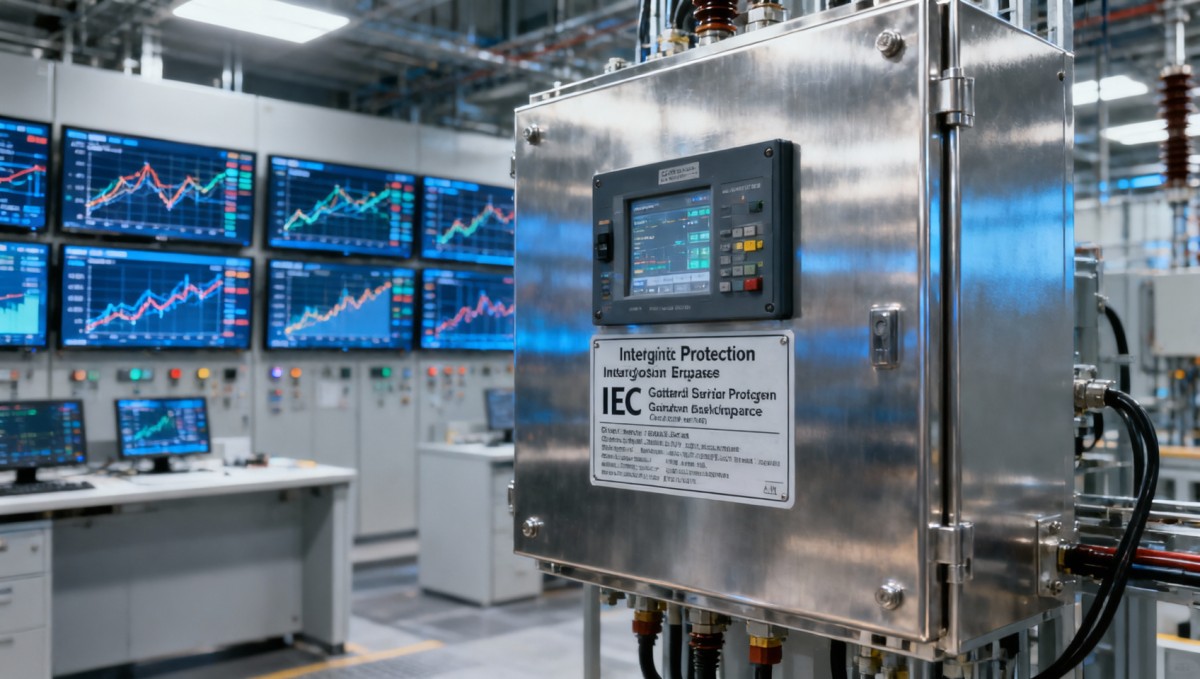
In summary, the recognition of the Shoushan Substation’s protection and modernization practice marks a milestone in the international institutionalization of context-sensitive grid upgrade methodologies. It does not create new regulatory obligations, nor does it guarantee commercial advantage — but it does raise the baseline for technical narrative coherence in global power infrastructure projects. Current understanding should focus on its role as a reference framework: useful for shaping proposals, informing R&D roadmaps, and calibrating compliance investments — rather than as a trigger for urgent operational overhaul.
Source: Publicly reported information on the inclusion of Shoushan Substation’s practice in the IEC TC57 Guideline for Intelligent Life Extension of Aging Power Facilities; associated export contract growth data for Q1 2026; and named recipient countries (Vietnam, Pakistan, Egypt).
Note: Timing of IEC guideline publication and formal adoption process remain unspecified in available sources and warrant continued observation.
 Which global manufacturing trends by sector matter most for sourcing plans?Global manufacturing trends by sector: identify sourcing risks, supplier resilience, compliance demands, and cost drivers to build smarter, more reliable procurement plans.
 What industrial trade intelligence pricing should include before you subscribeIndustrial trade intelligence pricing explained: compare coverage, data quality, access rights, and workflow value before choosing a subscription that supports smarter trade decisions.
 How an industrial trade intelligence dashboard can identify new supplier marketsDiscover how an industrial trade intelligence dashboard helps identify new supplier markets by comparing capacity, landed cost, logistics resilience, and compliance risk.
 Which global market entry barriers should exporters assess first?Global market entry barriers exporters should assess first: tariffs, compliance, buyer qualification, logistics, and payment risk. Build a practical strategy for confident market entry.
 How trade data aggregation analytics can reveal emerging supplier marketsTrade data aggregation analytics reveals emerging supplier markets by connecting trade flows, capacity signals, logistics, and compliance insights for smarter sourcing decisions.
 When an export market analysis platform can validate demand in a new marketExport market analysis platform insights help validate new-market demand through buyer fit, regulations, logistics, competition, and profitable entry conditions.
 What is driving the beauty and personal care market in the USA?Beauty and personal care in USA is driven by targeted solutions, selective premiumization, digital discovery, clean-label trust, diverse needs, and compliance. Explore key growth opportunities.
 How trade flow monitoring reports reveal changing regional demandTrade flow monitoring reports reveal changing regional demand through import volumes, sourcing shifts, product mix, logistics signals, and regulatory trends. Explore actionable market insights.
 How international market intelligence for investors reduces market-entry riskInternational market intelligence for investors reduces market-entry risk by validating demand, regulations, logistics, and competition before capital is committed.
 How international sourcing intelligence helps identify supplier risk earlyInternational sourcing intelligence helps businesses spot supplier risks early, protect supply continuity, and make smarter global procurement decisions.
 How trade data aggregation analytics reveals emerging supplier marketsTrade data aggregation analytics reveals emerging supplier markets through export trends, input flows, logistics, and regulatory signals. Discover smarter sourcing insights.
 What industrial cluster monitoring in Vietnam reveals about site riskIndustrial cluster monitoring Vietnam reveals hidden site risks across labor, utilities, logistics, compliance, and supplier dependencies. Make smarter sourcing and expansion decisions.
 Food Technology Trends Reshaping Shelf Life, Safety, and Product InnovationFood technology is reshaping shelf life, safety, and innovation. Discover the trends helping food businesses cut risk, improve compliance, and unlock stronger global market growth.
 How electronics manufacturing services are changing with low-volume demandElectronics manufacturing services are evolving fast with low-volume demand. Learn how agile EMS partners improve flexibility, compliance, sourcing resilience, and speed to market.
 How Can Buyers Reduce Procurement Risks for Electronic Components?How to reduce procurement risks for electronic components: learn how buyers assess traceability, lead times, compliance, and supplier types to avoid costly sourcing mistakes.
 What Sourcing Intelligence India Reveals About Supplier Risk and Cost ShiftsSourcing intelligence India reveals hidden supplier risk, compliance gaps, logistics pressure, and real cost shifts—helping buyers compare vendors smarter and source with more confidence.
 Fashion Trends 2026: Which Materials, Colors, and Silhouettes Are Gaining Ground?Fashion trends 2026 spotlight tactile fabrics, mineral colors, and controlled volume. Explore the materials, shades, and silhouettes shaping smarter, more wearable style.
 Smart Device Market Outlook: Key Growth Drivers, Segments, and Business OpportunitiesSmart device market trends are shifting toward system value, industrial demand, and resilient supply chains. Explore key growth drivers, high-potential segments, and business opportunities.
 How Global Trade Intelligence Services Help B2B Firms Evaluate Markets and SuppliersGlobal trade intelligence services help B2B firms compare suppliers, assess market potential, and uncover compliance, logistics, and pricing risks before costly decisions are made.
 Manufacturing Sector Updates for Investors: What Signals Matter Most in 2025?Manufacturing sector updates for investors in 2025: track orders, margins, supply chains, regulation, and exports to spot resilient manufacturers and smarter investment signals.
 How Energy Market Intelligence Helps Businesses Track Price Risks and Demand ShiftsEnergy market intelligence helps businesses spot price risks, demand shifts, and supply pressure early—improving procurement, resilience, and faster strategic decisions.





















Global Trade Insights & Industry
Our mission is to empower global exporters and importers with data-driven insights that foster strategic growth.
Search News
Popular Tags
Industry Overview
The global commercial kitchen equipment market is projected to reach $112 billion by 2027. Driven by urbanization, the rise of e-commerce food delivery, and strict hygiene regulations.