

Global Manufacturing Trends Reshaping Smart Factory ROI in 2026
[Technical Procurement Intelligence Summary]:Global manufacturing trends are redefining how smart factory ROI is measured in 2026. Returns no longer come only from labor savings. They now depend on resilience, energy efficiency, system interoperability, and faster decision cycles.
Across sectors, factory leaders are being pushed to connect automation spending with real operating outcomes. The strongest cases combine production visibility, risk control, compliance readiness, and scalable digital infrastructure.
For enterprises tracking global manufacturing trends, the key question is no longer whether to invest. It is which factory scenarios can deliver measurable ROI first, and which assumptions need revision.
Why global manufacturing trends now change ROI calculations by scenario

In 2026, smart factory ROI is shaped by context. A high-volume electronics line faces different pressures than a heavy equipment plant or a food processing facility.
Global manufacturing trends affect cost structures unevenly. Energy prices, labor availability, traceability rules, and component volatility create very different payback paths across industries.
This is why a single ROI formula often fails. A useful framework links each investment to the operating scenario, the current bottleneck, and the expected business outcome.
The new ROI baseline in smart factories
Traditional models focused on headcount reduction and machine utilization. Today, global manufacturing trends demand broader metrics that reflect volatility, sustainability, and customer responsiveness.
- Downtime avoided through predictive maintenance
- Energy cost reduction per unit produced
- Cycle time compression across multi-step operations
- Scrap and rework reduction through quality analytics
- Faster compliance reporting and traceability access
- Supply disruption response speed
Scenario 1: High-volume production gains when automation meets stable demand
In high-volume environments, global manufacturing trends reward investments that remove repetitive friction. Electronics assembly, packaging, and standardized consumer goods often fit this profile.
The strongest ROI appears when demand is predictable and line balancing is already mature. In these cases, robotics, machine vision, and in-line testing can raise throughput quickly.
Core judgment points
- Volume consistency across shifts and seasons
- Repeatability of tasks and standardized inputs
- Current defect rates and inspection delays
- Availability of production data for optimization
Where these conditions exist, global manufacturing trends favor phased automation over full replacement. Small upgrades often unlock better ROI than large, disruptive retrofits.
Scenario 2: Multi-site operations benefit most from visibility and resilience
For distributed factory networks, the most valuable smart factory investments are often digital rather than mechanical. Global manufacturing trends increasingly reward synchronized visibility across plants and suppliers.
When production spans regions, ROI comes from earlier warnings, faster replanning, and better inventory positioning. A dashboard that improves response time can outperform a new machine.
Where value is created
Supply chain shocks still influence factory economics. Material shortages, port delays, and policy shifts can erase expected savings if production planning remains isolated.
In this scenario, global manufacturing trends support investments in MES integration, supplier monitoring, digital twins, and cross-site analytics that align planning with execution.
Scenario 3: Energy-intensive plants see ROI through efficiency and compliance
Metals, chemicals, building materials, and heavy processing facilities face a different reality. Here, global manufacturing trends link smart factory ROI directly to energy performance and emissions accountability.
Sensor networks, automated load control, and process optimization tools can produce returns by lowering energy intensity per unit, not just by raising output.
Key signals that this scenario applies
- Energy costs represent a major share of unit economics
- Regulatory reporting is increasing across export markets
- Production losses occur during peak load periods
- Maintenance is reactive rather than condition-based
In these plants, global manufacturing trends also elevate the value of auditable data. Verified performance records increasingly support financing, compliance, and customer qualification.
Scenario 4: Regulated production wins when traceability is built into operations
Medical devices, food processing, specialty materials, and certain electronics segments must connect production data with traceability requirements. In these settings, smart factory ROI includes risk avoidance.
Global manufacturing trends are raising the cost of incomplete records. Batch genealogy, automated labeling, and digital quality workflows reduce recall exposure and documentation delays.
Core judgment points
If manual records still dominate, the hidden cost base is already high. Delayed audits, inconsistent entries, and weak root-cause analysis can destroy expected margins.
Under these global manufacturing trends, ROI should include fewer compliance failures, faster release cycles, stronger customer confidence, and cleaner export documentation.
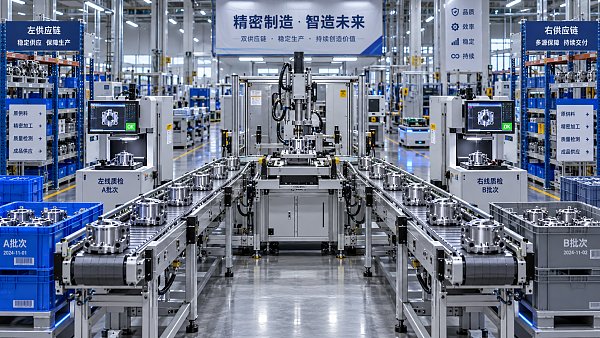
How scenario needs differ under global manufacturing trends
Practical fit recommendations for 2026 investment decisions
Global manufacturing trends show that the best investments are tightly matched to the operating scenario. A practical decision process should start with bottleneck evidence, not vendor claims.
- Map the largest source of lost value across quality, time, energy, or risk.
- Test whether the problem is local, line-specific, or network-wide.
- Choose technologies that improve measurable outcomes within one planning cycle.
- Build integration and training costs into every ROI model.
- Track leading indicators before full-scale rollout.
This staged approach reflects global manufacturing trends more accurately than broad digital transformation programs with unclear milestones.
Common misjudgments that weaken smart factory ROI
Many projects underperform because they solve the wrong problem. Global manufacturing trends may be visible, but their local impact is often misunderstood.
- Assuming automation always beats process redesign
- Ignoring data governance and system compatibility
- Using labor savings as the only value metric
- Overlooking maintenance capability after deployment
- Failing to connect factory upgrades with trade compliance demands
Another common error is copying investment logic across sectors. Global manufacturing trends are broad, but payback mechanisms remain highly situation-dependent.
What to do next as global manufacturing trends accelerate
The next step is to turn market signals into a scenario-based factory assessment. Focus on where returns are most exposed to volatility, inefficiency, or compliance pressure.
A strong review should compare production data, supplier exposure, energy usage, and reporting requirements side by side. That makes smart factory ROI visible in operational terms.
GTIIN supports this process with verified trade intelligence, sector monitoring, and structured market insight across global industries. As global manufacturing trends keep evolving, better decisions will come from better context, not bigger assumptions.
In 2026, the winners will be those who match technology choices to the right scenario, measure ROI beyond the obvious, and build factories that stay competitive under changing global conditions.
 When dual sourcing makes sense in a sourcing strategy for manufacturersSourcing strategy for manufacturers: learn when dual sourcing strengthens supply continuity, reduces disruption risk, and protects production without adding unnecessary complexity.
 How bulk commodities pricing affects long-term supply contractsBulk commodities pricing shapes long-term supply contracts through index rules, freight, quality, volume, and currency risk. Explore strategies for resilient costs and supply security.
 Which global manufacturing trends by sector matter most for sourcing plans?Global manufacturing trends by sector: identify sourcing risks, supplier resilience, compliance demands, and cost drivers to build smarter, more reliable procurement plans.
 What industrial trade intelligence pricing should include before you subscribeIndustrial trade intelligence pricing explained: compare coverage, data quality, access rights, and workflow value before choosing a subscription that supports smarter trade decisions.
 How an industrial trade intelligence dashboard can identify new supplier marketsDiscover how an industrial trade intelligence dashboard helps identify new supplier markets by comparing capacity, landed cost, logistics resilience, and compliance risk.
 Which global market entry barriers should exporters assess first?Global market entry barriers exporters should assess first: tariffs, compliance, buyer qualification, logistics, and payment risk. Build a practical strategy for confident market entry.
 How trade data aggregation analytics can reveal emerging supplier marketsTrade data aggregation analytics reveals emerging supplier markets by connecting trade flows, capacity signals, logistics, and compliance insights for smarter sourcing decisions.
 When an export market analysis platform can validate demand in a new marketExport market analysis platform insights help validate new-market demand through buyer fit, regulations, logistics, competition, and profitable entry conditions.
 What is driving the beauty and personal care market in the USA?Beauty and personal care in USA is driven by targeted solutions, selective premiumization, digital discovery, clean-label trust, diverse needs, and compliance. Explore key growth opportunities.
 How trade flow monitoring reports reveal changing regional demandTrade flow monitoring reports reveal changing regional demand through import volumes, sourcing shifts, product mix, logistics signals, and regulatory trends. Explore actionable market insights.
 How international market intelligence for investors reduces market-entry riskInternational market intelligence for investors reduces market-entry risk by validating demand, regulations, logistics, and competition before capital is committed.
 How international sourcing intelligence helps identify supplier risk earlyInternational sourcing intelligence helps businesses spot supplier risks early, protect supply continuity, and make smarter global procurement decisions.
 How trade data aggregation analytics reveals emerging supplier marketsTrade data aggregation analytics reveals emerging supplier markets through export trends, input flows, logistics, and regulatory signals. Discover smarter sourcing insights.
 What industrial cluster monitoring in Vietnam reveals about site riskIndustrial cluster monitoring Vietnam reveals hidden site risks across labor, utilities, logistics, compliance, and supplier dependencies. Make smarter sourcing and expansion decisions.
 Food Technology Trends Reshaping Shelf Life, Safety, and Product InnovationFood technology is reshaping shelf life, safety, and innovation. Discover the trends helping food businesses cut risk, improve compliance, and unlock stronger global market growth.
 How electronics manufacturing services are changing with low-volume demandElectronics manufacturing services are evolving fast with low-volume demand. Learn how agile EMS partners improve flexibility, compliance, sourcing resilience, and speed to market.
 How Can Buyers Reduce Procurement Risks for Electronic Components?How to reduce procurement risks for electronic components: learn how buyers assess traceability, lead times, compliance, and supplier types to avoid costly sourcing mistakes.
 What Sourcing Intelligence India Reveals About Supplier Risk and Cost ShiftsSourcing intelligence India reveals hidden supplier risk, compliance gaps, logistics pressure, and real cost shifts—helping buyers compare vendors smarter and source with more confidence.
 Fashion Trends 2026: Which Materials, Colors, and Silhouettes Are Gaining Ground?Fashion trends 2026 spotlight tactile fabrics, mineral colors, and controlled volume. Explore the materials, shades, and silhouettes shaping smarter, more wearable style.
 Smart Device Market Outlook: Key Growth Drivers, Segments, and Business OpportunitiesSmart device market trends are shifting toward system value, industrial demand, and resilient supply chains. Explore key growth drivers, high-potential segments, and business opportunities.
 How Global Trade Intelligence Services Help B2B Firms Evaluate Markets and SuppliersGlobal trade intelligence services help B2B firms compare suppliers, assess market potential, and uncover compliance, logistics, and pricing risks before costly decisions are made.




















Global Trade Insights & Industry
Our mission is to empower global exporters and importers with data-driven insights that foster strategic growth.
Search News
Popular Tags
Industry Overview
The global commercial kitchen equipment market is projected to reach $112 billion by 2027. Driven by urbanization, the rise of e-commerce food delivery, and strict hygiene regulations.