

4th Chain Expo to Be Held in June 2026; Australia as Guest Country of Honor
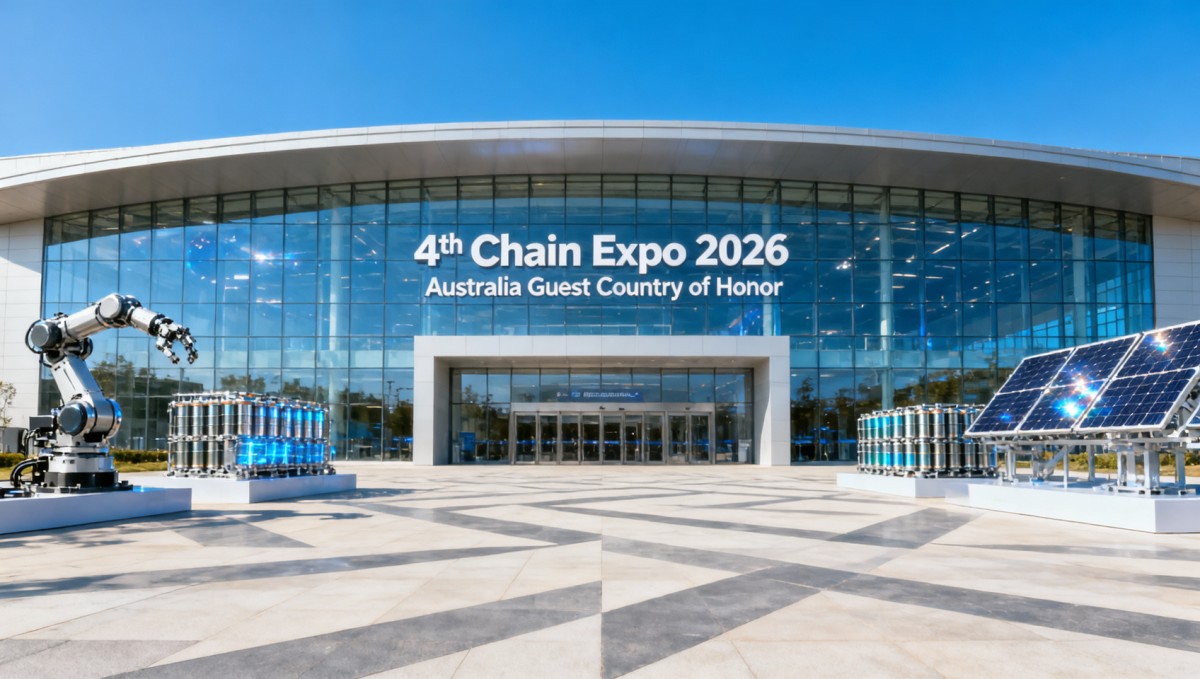
The 4th China International Supply Chain Promotion Expo (Chain Expo) will take place in Beijing’s Shunyi Exhibition Center from June 22–26, 2026. With Australia serving as the official Guest Country of Honor for the first time, the event highlights the Digital Intelligence Technology Chain and the Clean Energy Chain — two high-priority segments for global trade and industrial upgrading. This development signals evolving alignment between international supply chain priorities and export-oriented sectors including intelligent equipment, photovoltaic modules, lithium battery systems, and industrial robots.
Event Overview
The 4th Chain Expo is scheduled for June 22–26, 2026, at the Shunyi Exhibition Center in Beijing. Australia will participate as the Guest Country of Honor in its first official national capacity. The exhibition features a ‘6 Chains + 1 Special Zone’ structure, with explicit emphasis on the Digital Intelligence Technology Chain, Advanced Manufacturing Chain, Green & Low-Carbon Chain, and Clean Energy Chain. Confirmed exhibitors total over 1,200 global supply chain enterprises; foreign-invested companies account for 36.5% of all participants. Key product categories include intelligent equipment, photovoltaic components, lithium battery systems, and industrial robots.
Impact on Specific Industry Segments
Direct Exporters: These firms face heightened visibility opportunities in priority chains — especially those supplying photovoltaic modules or lithium battery systems to markets aligned with Australia’s energy transition goals. Impact manifests in potential demand shifts, tender eligibility criteria, and partner qualification requirements tied to sustainability or digital interoperability standards.
Raw Material Sourcing Companies: Upstream suppliers of critical minerals (e.g., lithium, cobalt, rare earths) may experience intensified scrutiny regarding traceability, ESG compliance, and certification readiness — particularly when feeding into Clean Energy Chain or Digital Intelligence Technology Chain value streams.
Contract Manufacturers & OEMs: Firms engaged in assembling industrial robots or smart devices must anticipate tighter integration expectations — e.g., compatibility with Australian digital infrastructure protocols or adherence to updated safety and data governance frameworks linked to the Digital Intelligence Technology Chain.
Distribution & Channel Operators: Logistics and distribution partners servicing cross-border B2B flows in the highlighted chains may see revised documentation requirements, customs classification updates, or new preferential tariff treatments under bilateral cooperation frameworks emerging from the Australia–China engagement.
Supply Chain Service Providers: Third-party logistics providers, certification bodies, and trade finance institutions could observe increased demand for services supporting green certifications (e.g., ISO 14067), digital twin implementation, or supply chain mapping — especially where aligned with the Clean Energy or Digital Intelligence Technology Chain themes.
What Relevant Enterprises or Practitioners Should Focus On and How to Respond Now
Monitor Official Bilateral Statements and Implementation Timelines
Analysis shows that Australia’s Guest Country of Honor status does not automatically trigger new trade agreements or regulatory changes. However, joint declarations, MOUs, or sectoral working group outcomes released during or shortly after the Expo may signal early-stage policy coordination — particularly on mutual recognition of sustainability standards or digital system interoperability. Track these closely, but distinguish announcements from enforceable provisions.
Assess Exposure to Priority Product Categories and Markets
From industry perspective, firms exporting photovoltaic modules, lithium battery systems, or industrial robots should map current customer locations and end-market applications against Australia’s National Hydrogen Strategy, Renewable Energy Target, and Industry 4.0 Roadmap. Current exposure to these use cases may indicate higher responsiveness to downstream demand shifts post-Expo.
Review Supply Chain Documentation and Certification Readiness
Observably, clean energy and digital intelligence supply chains increasingly require verifiable carbon footprint data, responsible mineral sourcing statements, and cybersecurity compliance evidence. Enterprises should audit existing documentation systems now — especially if targeting procurement programs linked to either the Clean Energy Chain or Digital Intelligence Technology Chain pavilions.
Engage Early with Australian Trade Delegations and Standards Bodies
Current more suitable preparation includes initiating contact with Austrade representatives or Australian Standards Association (SA) technical working groups ahead of the Expo. Early dialogue helps clarify interpretation of emerging requirements — for example, how ‘digital twin readiness’ or ‘grid-integrated battery certification’ may be defined in practice, rather than relying solely on exhibition-level messaging.
Editorial Perspective / Industry Observation
This announcement is best understood as a diplomatic and strategic signal — not an immediate operational trigger. Analysis shows it reflects deepening institutional attention to supply chain resilience, decarbonization, and digital convergence across major trading economies. While no binding commitments are confirmed, the selection of Australia as Guest Country of Honor — coupled with spotlighting the Digital Intelligence Technology Chain and Clean Energy Chain — suggests coordinated prioritization of these domains in bilateral economic dialogue. Observably, this Expo iteration functions less as a transactional marketplace and more as a platform for aligning technical standards, regulatory expectations, and long-term investment roadmaps. Continued observation is warranted for follow-up mechanisms announced during the event — especially any joint task forces, pilot projects, or harmonized testing protocols.
Conclusion
The 4th Chain Expo underscores a structural shift: supply chain engagement is increasingly shaped by thematic alignment — not just geography or volume. For stakeholders, this means evaluating business models not only against current trade flows but also against emerging standards in digital integration and clean energy integration. It is more accurate to interpret this event as a forward-looking calibration point — one that reveals where regulatory, technical, and commercial expectations are converging — rather than as a source of immediate rule changes or market access openings.
Information Sources
Main source: Official announcement of the 4th China International Supply Chain Promotion Expo, including confirmed dates, venue, Guest Country of Honor designation, and exhibitor statistics. Information remains subject to verification through official channels prior to the event. Ongoing developments — such as bilateral MOUs, technical annexes, or sector-specific implementation plans — will require continued monitoring beyond the initial announcement.
 Which global manufacturing trends by sector matter most for sourcing plans?Global manufacturing trends by sector: identify sourcing risks, supplier resilience, compliance demands, and cost drivers to build smarter, more reliable procurement plans.
 What industrial trade intelligence pricing should include before you subscribeIndustrial trade intelligence pricing explained: compare coverage, data quality, access rights, and workflow value before choosing a subscription that supports smarter trade decisions.
 How an industrial trade intelligence dashboard can identify new supplier marketsDiscover how an industrial trade intelligence dashboard helps identify new supplier markets by comparing capacity, landed cost, logistics resilience, and compliance risk.
 Which global market entry barriers should exporters assess first?Global market entry barriers exporters should assess first: tariffs, compliance, buyer qualification, logistics, and payment risk. Build a practical strategy for confident market entry.
 How trade data aggregation analytics can reveal emerging supplier marketsTrade data aggregation analytics reveals emerging supplier markets by connecting trade flows, capacity signals, logistics, and compliance insights for smarter sourcing decisions.
 When an export market analysis platform can validate demand in a new marketExport market analysis platform insights help validate new-market demand through buyer fit, regulations, logistics, competition, and profitable entry conditions.
 What is driving the beauty and personal care market in the USA?Beauty and personal care in USA is driven by targeted solutions, selective premiumization, digital discovery, clean-label trust, diverse needs, and compliance. Explore key growth opportunities.
 How trade flow monitoring reports reveal changing regional demandTrade flow monitoring reports reveal changing regional demand through import volumes, sourcing shifts, product mix, logistics signals, and regulatory trends. Explore actionable market insights.
 How international market intelligence for investors reduces market-entry riskInternational market intelligence for investors reduces market-entry risk by validating demand, regulations, logistics, and competition before capital is committed.
 How international sourcing intelligence helps identify supplier risk earlyInternational sourcing intelligence helps businesses spot supplier risks early, protect supply continuity, and make smarter global procurement decisions.
 How trade data aggregation analytics reveals emerging supplier marketsTrade data aggregation analytics reveals emerging supplier markets through export trends, input flows, logistics, and regulatory signals. Discover smarter sourcing insights.
 What industrial cluster monitoring in Vietnam reveals about site riskIndustrial cluster monitoring Vietnam reveals hidden site risks across labor, utilities, logistics, compliance, and supplier dependencies. Make smarter sourcing and expansion decisions.
 Food Technology Trends Reshaping Shelf Life, Safety, and Product InnovationFood technology is reshaping shelf life, safety, and innovation. Discover the trends helping food businesses cut risk, improve compliance, and unlock stronger global market growth.
 How electronics manufacturing services are changing with low-volume demandElectronics manufacturing services are evolving fast with low-volume demand. Learn how agile EMS partners improve flexibility, compliance, sourcing resilience, and speed to market.
 How Can Buyers Reduce Procurement Risks for Electronic Components?How to reduce procurement risks for electronic components: learn how buyers assess traceability, lead times, compliance, and supplier types to avoid costly sourcing mistakes.
 What Sourcing Intelligence India Reveals About Supplier Risk and Cost ShiftsSourcing intelligence India reveals hidden supplier risk, compliance gaps, logistics pressure, and real cost shifts—helping buyers compare vendors smarter and source with more confidence.
 Fashion Trends 2026: Which Materials, Colors, and Silhouettes Are Gaining Ground?Fashion trends 2026 spotlight tactile fabrics, mineral colors, and controlled volume. Explore the materials, shades, and silhouettes shaping smarter, more wearable style.
 Smart Device Market Outlook: Key Growth Drivers, Segments, and Business OpportunitiesSmart device market trends are shifting toward system value, industrial demand, and resilient supply chains. Explore key growth drivers, high-potential segments, and business opportunities.
 How Global Trade Intelligence Services Help B2B Firms Evaluate Markets and SuppliersGlobal trade intelligence services help B2B firms compare suppliers, assess market potential, and uncover compliance, logistics, and pricing risks before costly decisions are made.
 Manufacturing Sector Updates for Investors: What Signals Matter Most in 2025?Manufacturing sector updates for investors in 2025: track orders, margins, supply chains, regulation, and exports to spot resilient manufacturers and smarter investment signals.
 How Energy Market Intelligence Helps Businesses Track Price Risks and Demand ShiftsEnergy market intelligence helps businesses spot price risks, demand shifts, and supply pressure early—improving procurement, resilience, and faster strategic decisions.





















Global Trade Insights & Industry
Our mission is to empower global exporters and importers with data-driven insights that foster strategic growth.
Search News
Popular Tags
Industry Overview
The global commercial kitchen equipment market is projected to reach $112 billion by 2027. Driven by urbanization, the rise of e-commerce food delivery, and strict hygiene regulations.