

When does robotic material handling cut warehouse delays?
Warehouse delays often start where movement becomes uneven.
Travel paths clog, totes wait for release, and operators pause between handoffs.
That is why robotic material handling is evaluated less as a gadget and more as a timing decision.
The real issue is simple.
Under which warehouse conditions does robotic material handling actually reduce delays, stabilize throughput, and improve process predictability?
In industrial robotics, the answer depends on flow variability, labor dependency, SKU mix, layout complexity, and system discipline.
When those signals align, robotics can remove repeatable bottlenecks faster than adding labor or expanding floor space.
When repetitive transport bottlenecks become a daily pattern
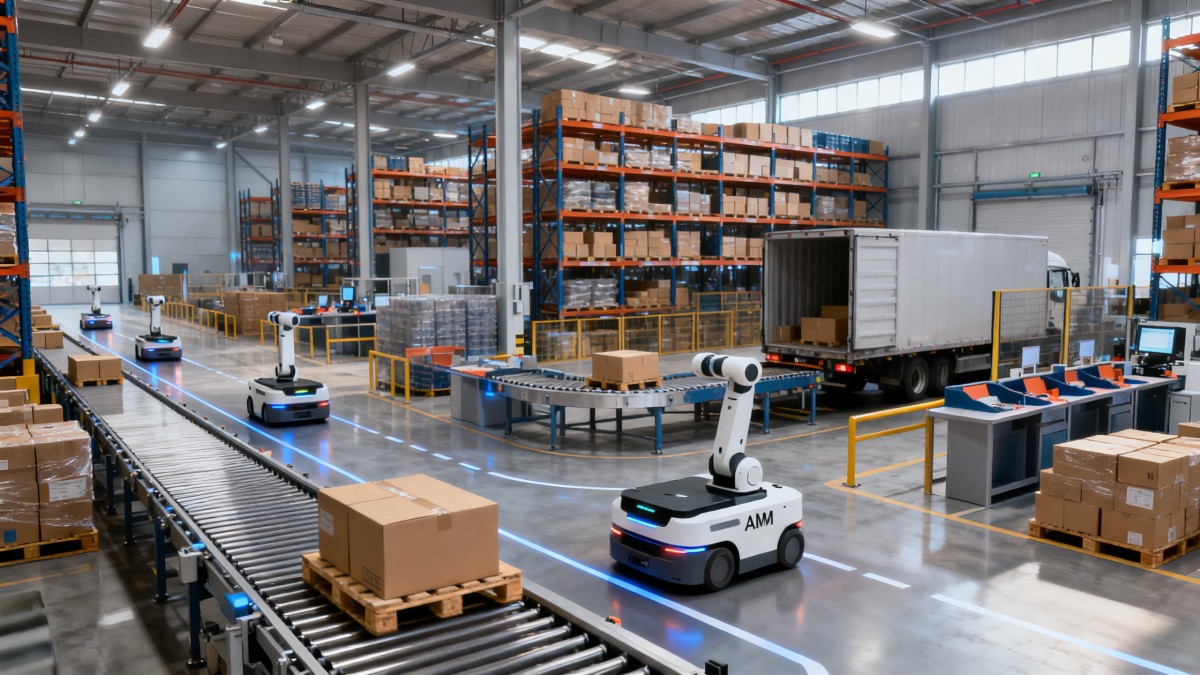
One strong signal appears when internal transport delays happen every shift, not only during peak season.
This includes repeated congestion between receiving, buffering, picking, packing, and outbound staging.
In such settings, robotic material handling often delivers value quickly because travel tasks are structured and measurable.
Autonomous mobile robots, robotic conveyors, and pallet transfer systems can smooth movement without forcing constant manual intervention.
The best candidates share three traits.
- Materials move on repeatable routes with known stop points.
- Delays come from waiting, walking, and queue formation.
- Load units are stable enough for robotic transfer.
If delay time is dominated by movement rather than decision-making, robotic material handling becomes easier to justify.
When order volatility overwhelms fixed labor scheduling
Some warehouses run well at average volume but break down during short demand spikes.
Late truck arrivals, flash promotions, and mixed replenishment waves can trigger sudden labor shortages.
In these environments, robotic material handling cuts delays when flexibility matters more than static capacity.
Mobile robots can absorb surge transport tasks and rebalance workloads across zones.
Robotic sortation can also reduce the lag between release and dispatch when order profiles change rapidly.
Key signals that volatility has become expensive
- Cycle times vary sharply across shifts.
- Temporary labor reduces consistency.
- Backlogs appear after small demand surges.
- Packing and staging wait for upstream replenishment.
When variability becomes the main source of delay, robotic material handling can improve response speed more than adding fixed equipment alone.
When handoff errors create hidden delays between processes
Not every delay looks like a traffic jam.
Many delays come from scanning mistakes, misrouted totes, pallet mismatches, and incomplete transfer confirmations.
These issues force rechecks, rework, and manual tracing.
Robotic material handling helps when workflow rules are clear and sensor-driven validation can be added at each handoff.
Industrial robotics do more than move loads.
They create repeatable routing logic, timestamped movements, and more reliable tracking across warehouse execution systems.
This matters most in high-mix operations where exceptions spread quickly.
If one wrong tote blocks a consolidation lane, the local error becomes a system-wide delay.
In such cases, robotic material handling reduces delay by lowering exception frequency, not only by increasing speed.
Which warehouse scenarios see faster returns from robotic material handling
Different warehouse environments benefit for different reasons.
The decision should match the delay source, the load profile, and the required service level.
The fastest returns usually appear where flow is frequent, delay causes are visible, and process rules stay relatively stable.
How scenario differences change the automation requirement
A warehouse with bulky pallets needs a different robotic material handling design than one processing fast-moving cartons.
This is where many automation plans lose precision.
The same keyword covers very different engineering realities.
Important demand differences by scenario
- SKU count affects navigation, storage logic, and exception rates.
- Unit load stability affects gripping, lifting, and safe transfer speed.
- Peak concentration affects robot fleet sizing and queue tolerance.
- Layout constraints affect path planning and charging strategy.
- System integration depth affects real-time orchestration quality.
Robotic material handling works best when the design matches the actual source of delay, not the general desire for automation.
Practical fit checks before choosing robotic material handling
Before implementation, several operational checks can reveal whether robotics will cut delay or simply relocate it.
- Map where waiting time exceeds actual handling time.
- Measure exception frequency at every transfer point.
- Separate labor shortages from process design failures.
- Test whether upstream release logic causes downstream congestion.
- Check system data quality before adding robotic control layers.
These checks matter because robotic material handling amplifies process discipline.
If routing logic is weak, robots can move confusion faster.
If workflow rules are clean, robotics can convert unstable movement into predictable throughput.
Common misjudgments that delay results instead of reducing delays
One common error is automating the busiest zone first without confirming the root cause.
The visible crowding may actually come from poor release timing upstream.
Another mistake is expecting robotic material handling to solve slotting problems.
If inventory is stored badly, robots still inherit inefficient travel paths.
A third misjudgment is underestimating integration.
Robots need dependable communication with WMS, MES, scanners, sensors, and safety systems.
Without that foundation, uptime and dispatch logic suffer.
There is also a timing error.
Some facilities wait until delay costs become severe, then rush deployment during peak season.
That reduces training time and increases transition risk.
What to do next if robotic material handling looks timely
A useful next step is a scenario-based delay audit.
Measure queue time, travel time, handoff failure rate, and recovery time by process zone.
Then rank scenarios by operational pain and automation readiness.
For organizations tracking global industrial robotics trends, GTIIN and TradeVantage provide visibility into technology adoption, supply chain signals, and market direction.
That broader intelligence helps connect warehouse decisions with supplier ecosystems, deployment patterns, and competitive timing.
When robotic material handling is matched to the right scenario, delay reduction becomes measurable.
Throughput rises, handoffs stabilize, and warehouse performance becomes easier to predict and scale.
 Which global manufacturing trends by sector matter most for sourcing plans?Global manufacturing trends by sector: identify sourcing risks, supplier resilience, compliance demands, and cost drivers to build smarter, more reliable procurement plans.
 What industrial trade intelligence pricing should include before you subscribeIndustrial trade intelligence pricing explained: compare coverage, data quality, access rights, and workflow value before choosing a subscription that supports smarter trade decisions.
 How an industrial trade intelligence dashboard can identify new supplier marketsDiscover how an industrial trade intelligence dashboard helps identify new supplier markets by comparing capacity, landed cost, logistics resilience, and compliance risk.
 Which global market entry barriers should exporters assess first?Global market entry barriers exporters should assess first: tariffs, compliance, buyer qualification, logistics, and payment risk. Build a practical strategy for confident market entry.
 How trade data aggregation analytics can reveal emerging supplier marketsTrade data aggregation analytics reveals emerging supplier markets by connecting trade flows, capacity signals, logistics, and compliance insights for smarter sourcing decisions.
 When an export market analysis platform can validate demand in a new marketExport market analysis platform insights help validate new-market demand through buyer fit, regulations, logistics, competition, and profitable entry conditions.
 What is driving the beauty and personal care market in the USA?Beauty and personal care in USA is driven by targeted solutions, selective premiumization, digital discovery, clean-label trust, diverse needs, and compliance. Explore key growth opportunities.
 How trade flow monitoring reports reveal changing regional demandTrade flow monitoring reports reveal changing regional demand through import volumes, sourcing shifts, product mix, logistics signals, and regulatory trends. Explore actionable market insights.
 How international market intelligence for investors reduces market-entry riskInternational market intelligence for investors reduces market-entry risk by validating demand, regulations, logistics, and competition before capital is committed.
 How international sourcing intelligence helps identify supplier risk earlyInternational sourcing intelligence helps businesses spot supplier risks early, protect supply continuity, and make smarter global procurement decisions.
 How trade data aggregation analytics reveals emerging supplier marketsTrade data aggregation analytics reveals emerging supplier markets through export trends, input flows, logistics, and regulatory signals. Discover smarter sourcing insights.
 What industrial cluster monitoring in Vietnam reveals about site riskIndustrial cluster monitoring Vietnam reveals hidden site risks across labor, utilities, logistics, compliance, and supplier dependencies. Make smarter sourcing and expansion decisions.
 Food Technology Trends Reshaping Shelf Life, Safety, and Product InnovationFood technology is reshaping shelf life, safety, and innovation. Discover the trends helping food businesses cut risk, improve compliance, and unlock stronger global market growth.
 How electronics manufacturing services are changing with low-volume demandElectronics manufacturing services are evolving fast with low-volume demand. Learn how agile EMS partners improve flexibility, compliance, sourcing resilience, and speed to market.
 How Can Buyers Reduce Procurement Risks for Electronic Components?How to reduce procurement risks for electronic components: learn how buyers assess traceability, lead times, compliance, and supplier types to avoid costly sourcing mistakes.
 What Sourcing Intelligence India Reveals About Supplier Risk and Cost ShiftsSourcing intelligence India reveals hidden supplier risk, compliance gaps, logistics pressure, and real cost shifts—helping buyers compare vendors smarter and source with more confidence.
 Fashion Trends 2026: Which Materials, Colors, and Silhouettes Are Gaining Ground?Fashion trends 2026 spotlight tactile fabrics, mineral colors, and controlled volume. Explore the materials, shades, and silhouettes shaping smarter, more wearable style.
 Smart Device Market Outlook: Key Growth Drivers, Segments, and Business OpportunitiesSmart device market trends are shifting toward system value, industrial demand, and resilient supply chains. Explore key growth drivers, high-potential segments, and business opportunities.
 How Global Trade Intelligence Services Help B2B Firms Evaluate Markets and SuppliersGlobal trade intelligence services help B2B firms compare suppliers, assess market potential, and uncover compliance, logistics, and pricing risks before costly decisions are made.
 Manufacturing Sector Updates for Investors: What Signals Matter Most in 2025?Manufacturing sector updates for investors in 2025: track orders, margins, supply chains, regulation, and exports to spot resilient manufacturers and smarter investment signals.
 How Energy Market Intelligence Helps Businesses Track Price Risks and Demand ShiftsEnergy market intelligence helps businesses spot price risks, demand shifts, and supply pressure early—improving procurement, resilience, and faster strategic decisions.





















Global Trade Insights & Industry
Our mission is to empower global exporters and importers with data-driven insights that foster strategic growth.
Search News
Popular Tags
Industry Overview
The global commercial kitchen equipment market is projected to reach $112 billion by 2027. Driven by urbanization, the rise of e-commerce food delivery, and strict hygiene regulations.