

Fish Tank Accessories That Actually Improve Water Quality
Not all fish tank accessories are decorative. The best ones actively reduce waste, improve circulation, support beneficial bacteria, and make routine care easier.
If water quality keeps slipping, the issue is often not the tank itself. It is usually a missing accessory, poor placement, or the wrong maintenance setup.
This guide explains which fish tank accessories actually help, who needs them most, how to compare options, and which common mistakes can quietly harm aquarium water.
Which fish tank accessories truly improve water quality?
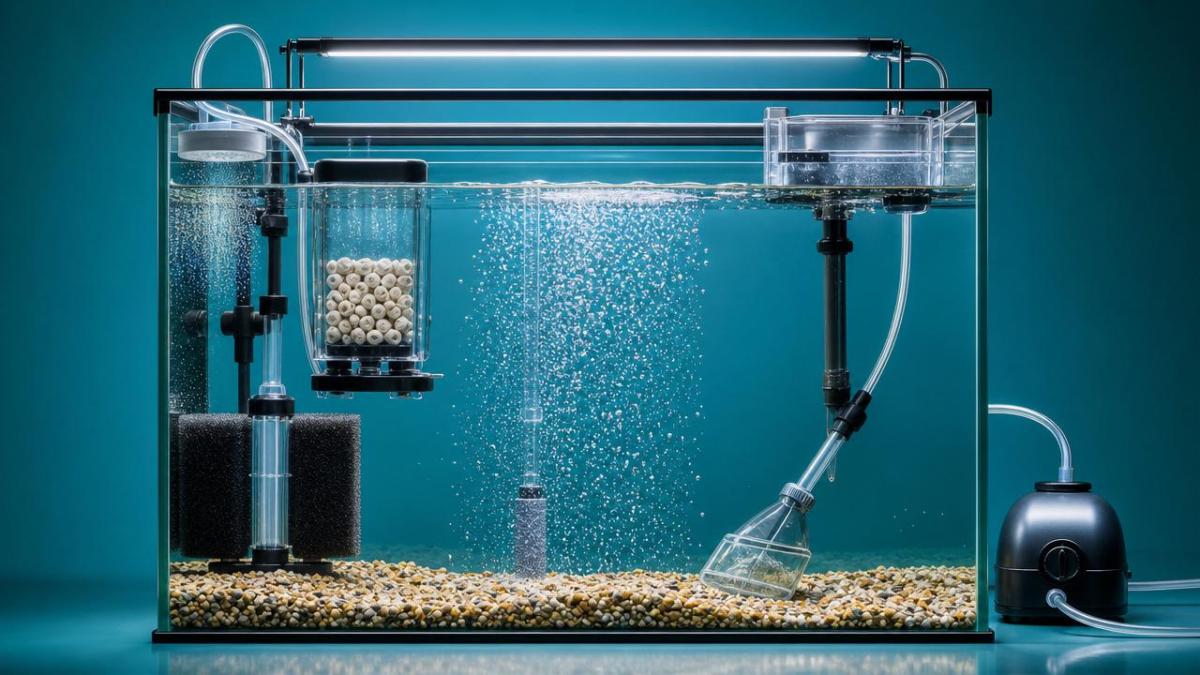
The most effective fish tank accessories work by removing debris, increasing oxygen exchange, stabilizing biological filtration, or limiting the buildup of dissolved pollutants.
Useful examples include upgraded filter media, sponge filters, air pumps, protein skimmers for marine tanks, surface skimmers, gravel vacuums, and water testing tools.
Automatic feeders can also help. They do not clean water directly, but they reduce overfeeding, which is one of the biggest causes of cloudy water and ammonia spikes.
Some fish tank accessories mainly improve convenience. Others directly change water chemistry and clarity. Knowing the difference helps you spend money where it matters.
Top accessories with direct impact
- Filter media: traps particles and houses beneficial bacteria.
- Sponge filters: provide gentle biological filtration and aeration.
- Air stones and pumps: improve oxygen levels and circulation.
- Surface skimmers: remove oily film that blocks gas exchange.
- Gravel vacuums: remove uneaten food and waste from substrate.
- UV sterilizers: reduce free-floating algae and some pathogens.
Among all fish tank accessories, filtration upgrades usually deliver the fastest and most noticeable improvement in overall water quality.
How do filters and media upgrades make aquarium water healthier?
A filter is only as good as its media and flow pattern. Many starter tanks include basic cartridges that prioritize simplicity over long-term biological performance.
Better fish tank accessories for filtration separate three jobs: mechanical, biological, and chemical filtration. Each one targets a different water quality problem.
Mechanical filtration
Filter floss, fine sponges, and polishing pads catch suspended particles. This clears cloudy water and stops debris from breaking down into ammonia.
Biological filtration
Ceramic rings, porous stones, and sponge media support nitrifying bacteria. These bacteria convert toxic ammonia into nitrite, then into less harmful nitrate.
Chemical filtration
Activated carbon, phosphate removers, and specialty resins remove dissolved impurities. They can help with odors, discoloration, and some specific nutrient issues.
The best approach depends on the tank. Freshwater community tanks often need stronger biological support. Heavily stocked tanks may also need improved mechanical filtration.
Marine systems may benefit from protein skimmers and phosphate control media. These fish tank accessories target dissolved organics before they degrade water quality.
Which fish tank accessories are best for different tank types?
There is no single perfect accessory list. The right choice depends on stocking level, feeding habits, plant density, tank size, and whether the setup is freshwater or marine.
For small beginner tanks
Small tanks change fast. A sponge filter, air pump, thermometer, gravel vacuum, and test kit are often the most valuable fish tank accessories to start with.
For planted aquariums
Gentle circulation, clean mechanical media, and a surface skimmer can help. Strong chemical media is not always necessary unless a specific water problem appears.
For goldfish or messy eaters
These tanks produce heavy waste. Oversized filtration, frequent substrate cleaning, and pre-filter sponges are smart fish tank accessories for keeping water stable.
For marine or reef systems
Protein skimmers, wave makers, filter socks, auto top-off systems, and reliable test equipment become more important because saltwater chemistry is less forgiving.
How can you choose fish tank accessories without wasting money?
Many aquarium owners buy attractive gadgets before solving the basics. Water quality usually improves more from functional accessories than from decorative additions.
Start by identifying the problem. Cloudiness, low oxygen, algae, odor, and unstable test readings each point to different accessory needs.
Questions to ask before buying
- Is the issue solid waste, dissolved waste, or weak circulation?
- Is the accessory sized for the actual bio-load, not just tank volume?
- Will maintenance be simple enough to perform regularly?
- Does it support beneficial bacteria rather than disrupt them?
- Is it useful for your fish species and feeding style?
One of the smartest fish tank accessories is a liquid water test kit. It prevents guesswork and helps confirm whether an equipment change is actually working.
Another good investment is a pre-filter sponge. It is inexpensive, protects fry and shrimp, and captures larger waste before it enters the main filter.
When comparing fish tank accessories, value should include durability, ease of cleaning, replacement cost, and real impact on nitrates, debris, and oxygen levels.
What common mistakes reduce the benefits of fish tank accessories?
The wrong routine can cancel out the benefits of even the best equipment. Most water quality problems come from misuse, not from the accessory itself.
Mistake 1: Replacing all filter media at once
This removes beneficial bacteria and can trigger a mini-cycle. Rinse reusable media gently in tank water instead of replacing everything together.
Mistake 2: Over-cleaning the tank
Excessive scrubbing and deep cleaning may disturb biological balance. Good fish tank accessories support stability, so maintenance should be regular but not extreme.
Mistake 3: Believing accessories replace water changes
No accessory fully replaces fresh water. Nitrate, dissolved organics, and trace imbalances still build up over time.
Mistake 4: Using too much chemical media
Chemical solutions can be helpful, but they should not mask the real cause of poor water. Usually, feeding, stocking, or maintenance needs adjustment.
Mistake 5: Ignoring flow direction
Dead spots trap debris and lower oxygen exchange. Position pumps, sprays, and air stones so waste moves toward filtration instead of settling unseen.
Which fish tank accessories are most worth buying first?
If the goal is cleaner water with a practical budget, prioritize accessories that prevent waste buildup and support a stronger nitrogen cycle.
- Water test kit for ammonia, nitrite, nitrate, and pH.
- Improved biological media or a sponge filter.
- Gravel vacuum for substrate waste removal.
- Air pump or circulation accessory if oxygen feels low.
- Auto feeder if overfeeding happens often.
These fish tank accessories solve the most common problems first. They also create a better foundation before adding advanced equipment later.
FAQ: quick answers about fish tank accessories and water quality
The best fish tank accessories are not the flashiest ones. They are the tools that quietly reduce waste, improve oxygen flow, and support stable biological filtration.
Choose accessories based on the actual problem in the tank, then confirm results with testing and consistent maintenance. That is the fastest path to clearer, healthier water.
For more practical product insights, market intelligence, and visibility-driven industry content, TradeVantage helps businesses strengthen trust signals and expand their digital reach globally.
 Which global manufacturing trends by sector matter most for sourcing plans?Global manufacturing trends by sector: identify sourcing risks, supplier resilience, compliance demands, and cost drivers to build smarter, more reliable procurement plans.
 What industrial trade intelligence pricing should include before you subscribeIndustrial trade intelligence pricing explained: compare coverage, data quality, access rights, and workflow value before choosing a subscription that supports smarter trade decisions.
 How an industrial trade intelligence dashboard can identify new supplier marketsDiscover how an industrial trade intelligence dashboard helps identify new supplier markets by comparing capacity, landed cost, logistics resilience, and compliance risk.
 Which global market entry barriers should exporters assess first?Global market entry barriers exporters should assess first: tariffs, compliance, buyer qualification, logistics, and payment risk. Build a practical strategy for confident market entry.
 How trade data aggregation analytics can reveal emerging supplier marketsTrade data aggregation analytics reveals emerging supplier markets by connecting trade flows, capacity signals, logistics, and compliance insights for smarter sourcing decisions.
 When an export market analysis platform can validate demand in a new marketExport market analysis platform insights help validate new-market demand through buyer fit, regulations, logistics, competition, and profitable entry conditions.
 What is driving the beauty and personal care market in the USA?Beauty and personal care in USA is driven by targeted solutions, selective premiumization, digital discovery, clean-label trust, diverse needs, and compliance. Explore key growth opportunities.
 How trade flow monitoring reports reveal changing regional demandTrade flow monitoring reports reveal changing regional demand through import volumes, sourcing shifts, product mix, logistics signals, and regulatory trends. Explore actionable market insights.
 How international market intelligence for investors reduces market-entry riskInternational market intelligence for investors reduces market-entry risk by validating demand, regulations, logistics, and competition before capital is committed.
 How international sourcing intelligence helps identify supplier risk earlyInternational sourcing intelligence helps businesses spot supplier risks early, protect supply continuity, and make smarter global procurement decisions.
 How trade data aggregation analytics reveals emerging supplier marketsTrade data aggregation analytics reveals emerging supplier markets through export trends, input flows, logistics, and regulatory signals. Discover smarter sourcing insights.
 What industrial cluster monitoring in Vietnam reveals about site riskIndustrial cluster monitoring Vietnam reveals hidden site risks across labor, utilities, logistics, compliance, and supplier dependencies. Make smarter sourcing and expansion decisions.
 Food Technology Trends Reshaping Shelf Life, Safety, and Product InnovationFood technology is reshaping shelf life, safety, and innovation. Discover the trends helping food businesses cut risk, improve compliance, and unlock stronger global market growth.
 How electronics manufacturing services are changing with low-volume demandElectronics manufacturing services are evolving fast with low-volume demand. Learn how agile EMS partners improve flexibility, compliance, sourcing resilience, and speed to market.
 How Can Buyers Reduce Procurement Risks for Electronic Components?How to reduce procurement risks for electronic components: learn how buyers assess traceability, lead times, compliance, and supplier types to avoid costly sourcing mistakes.
 What Sourcing Intelligence India Reveals About Supplier Risk and Cost ShiftsSourcing intelligence India reveals hidden supplier risk, compliance gaps, logistics pressure, and real cost shifts—helping buyers compare vendors smarter and source with more confidence.
 Fashion Trends 2026: Which Materials, Colors, and Silhouettes Are Gaining Ground?Fashion trends 2026 spotlight tactile fabrics, mineral colors, and controlled volume. Explore the materials, shades, and silhouettes shaping smarter, more wearable style.
 Smart Device Market Outlook: Key Growth Drivers, Segments, and Business OpportunitiesSmart device market trends are shifting toward system value, industrial demand, and resilient supply chains. Explore key growth drivers, high-potential segments, and business opportunities.
 How Global Trade Intelligence Services Help B2B Firms Evaluate Markets and SuppliersGlobal trade intelligence services help B2B firms compare suppliers, assess market potential, and uncover compliance, logistics, and pricing risks before costly decisions are made.
 Manufacturing Sector Updates for Investors: What Signals Matter Most in 2025?Manufacturing sector updates for investors in 2025: track orders, margins, supply chains, regulation, and exports to spot resilient manufacturers and smarter investment signals.
 How Energy Market Intelligence Helps Businesses Track Price Risks and Demand ShiftsEnergy market intelligence helps businesses spot price risks, demand shifts, and supply pressure early—improving procurement, resilience, and faster strategic decisions.





















Global Trade Insights & Industry
Our mission is to empower global exporters and importers with data-driven insights that foster strategic growth.
Search News
Popular Tags
Industry Overview
The global commercial kitchen equipment market is projected to reach $112 billion by 2027. Driven by urbanization, the rise of e-commerce food delivery, and strict hygiene regulations.